How to write AI listicles that actually rank

Stevia Putri
Last edited January 30, 2026
Listicles are pretty much the comfort food of the internet. They’re easy to scan, simple to digest, and you know exactly what you're getting into. It’s no surprise they’ve remained one of the most popular content formats for years. Now that AI is part of the mix, it feels like you can whip up a dozen listicles before your coffee even has a chance to cool.
But here’s the thing.
While AI is great at generating text, just hitting "generate" isn't going to give you a blog post that connects with readers or climbs search rankings. A truly high-quality listicle that people actually want to read and share needs a smart process and the right kind of tool. It's about more than a wall of text; it's about the structure, the visuals, and delivering real value.
What is an AI listicle?
At its heart, a listicle is just an article built around a list, usually with numbers or bullet points. You’ve seen them everywhere: "Top 10 Gadgets," "5 Ways to Improve Your Workflow," and so on. Their magic is in their simplicity and scannability.
An "AI listicle" is simply a listicle where artificial intelligence has a hand in its creation. This could be anything from brainstorming topics and structuring the outline to drafting the content and even generating the images and tables that go with it.
This format is so effective for a couple of reasons:
- For readers: The structure is predictable and easy to skim. You know what you're in for, and you can quickly find the specific bit of information you need without having to read every single word.
- For SEO: Search engines like structured content. The clear headings and lists are easy for them to crawl and understand, which can lead to better visibility and those sought-after featured snippets at the top of search results. This is also becoming super important for AI-powered search results, like Google's AI Overviews, which depend on well-organized info.
An infographic explaining the benefits for readers and SEO of knowing how to write AI listicles.
The difference between a great AI listicle and a mediocre one often boils down to the tool you use. A generic AI chatbot might spit out a basic text draft, but a specialized AI blog writer can produce a complete, formatted article with all the extras, like charts, images, and embedded media, making it ready to publish.
The modern workflow for how to write AI listicles
Step 1: Topic selection and research
Before you write anything, you need a topic that people are actually looking for. AI tools are fantastic for this. They can analyze search trends, check keyword difficulty, and see what your competitors are ranking for to help you spot some golden opportunities for new listicles.
You can also use AI to brainstorm fresh angles on a popular topic. Instead of another generic "Top 10 X," it might suggest "Top 10 X for Small Teams" or "The Most Underrated X of 2026." While the AI provides the data, your brain is still the strategist, making sure the topic aligns with what your audience wants and what your business offers.
Step 2: Outlining and structuring for readability
Once you've got your topic, you need a solid outline. A good structure is the backbone of any great listicle. AI can analyze the top-ranking articles for your target keyword and generate a logical outline based on what's already performing well.
But don't just take it as is. This is where a human editor needs to jump in. Review the AI-generated structure, move sections around for better flow, and make sure it tells a coherent story. Think of the outline as a blueprint; a clear and detailed one will guide the AI to produce a much better final draft.
Step 3: Content generation and drafting
This is where the AI really shines. But modern AI writing tools do a lot more than just stringing sentences together. There's a big difference between giving a generic prompt to a chatbot and using a purpose-built system that understands what a listicle actually needs.
The best tools are context-aware. If you're writing a product comparison, they'll know to pull in pricing and feature details. If you're reviewing software, they can find technical specs. This saves you manual research and helps make sure the information is accurate.
Step 4: Fact-checking and adding the human touch
This step is an absolute must. AI models can be confident, even when they're making things up. A human editor has to verify every statistic, product feature, price, and claim.
This is also your chance to inject your brand's personality into the content. Add a personal story, an expert opinion, or a unique insight that an AI could never generate on its own. This is what builds trust with your audience and makes your content memorable, turning a generic article into something truly valuable.
Step 5: Generating assets and rich media
A wall of text is a snooze-fest. Great listicles break things up with visuals that add value and keep people engaged. Modern AI platforms can automatically create things like infographics, comparison tables, and custom images right inside the article.
This is one of the biggest time-savers in the entire process and a key thing that separates an okay listicle from a great one. It keeps readers on the page longer and helps explain complex information in a simple, visual way.
The best tools to help you write AI listicles
The tool you choose will have a big impact on your workflow and the final quality of your content. While there are many AI writers out there, not all of them are built to produce a complete, publish-ready listicle.
What are your favorite AI tools to write listicle type articles (X Best Headphones) I've been looking into Koala and Cuppa and both look promising. Any other tools you guys would recommend that can produce a decent listicle article? (Minor adjustments will be made by our editor)

eesel AI blog writer: For publish-ready, asset-rich content
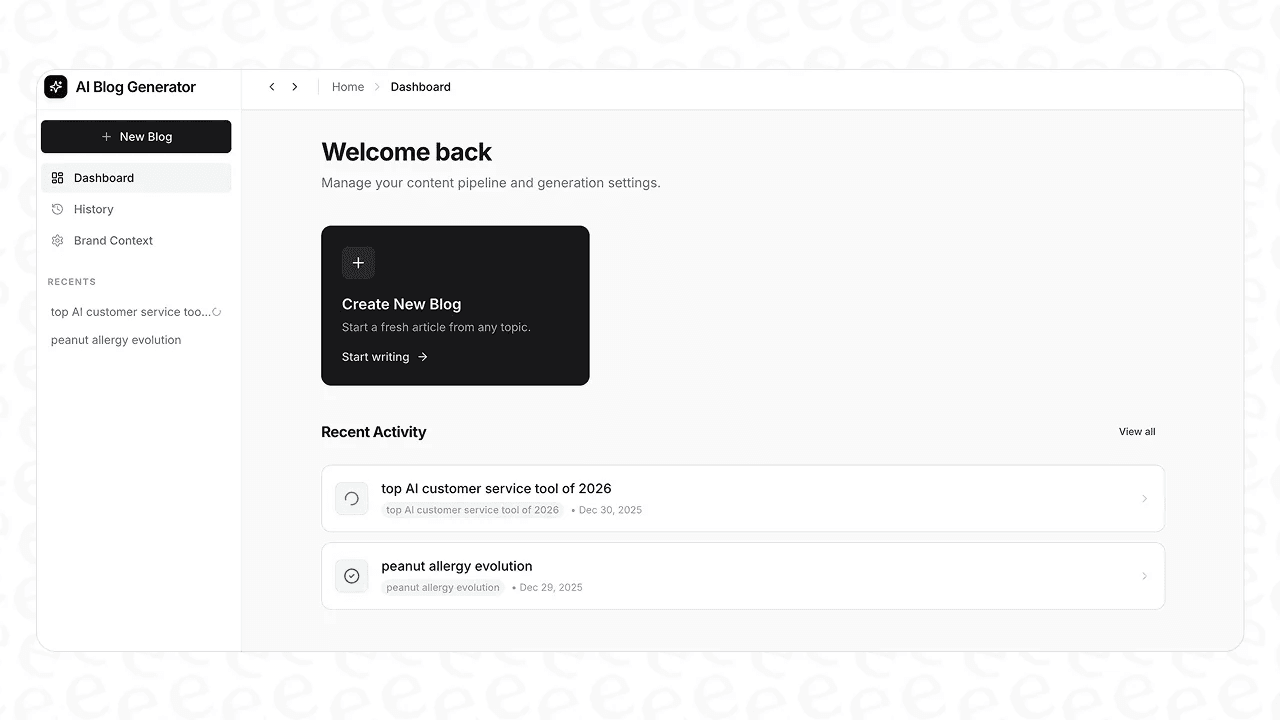
If your goal is to go from a keyword to a complete article without a bunch of manual steps in between, the eesel AI blog writer is made for you. It's designed to create a finished product, not just a rough draft.
Key Features & Differentiators:
- Context-Aware Research: It automatically researches the topic for you. Writing a tool roundup? It will pull in features. A comparison post? It will find the pricing data.
- Automatic Asset Generation: This is a huge deal. It creates tables, infographics, and AI-generated images directly within the article, so you don't have to spend hours in a design tool.
- Social Media Integration: To add a layer of authenticity, it can embed relevant YouTube videos and pull real quotes from Reddit discussions into your post.
- AEO (AI Engine Optimization): The content is structured from the start to be easily understood and cited by AI answer engines like Google AI Overviews and Perplexity.
Pricing: It starts at $99 for 50 blog credits, and you can try it completely free to see the quality for yourself.
ChatGPT: For foundational drafts and brainstorming
ChatGPT is an incredible all-around tool. It's fantastic for kicking around ideas, generating a quick outline, or drafting the basic text for each item on your list. Think of it as a smart assistant that can help you get started.
Key considerations:
- Requires detailed prompting: To achieve the desired tone, structure, and content, users need to provide specific, iterative instructions.
- Manual optimization required: It does not automatically optimize for keywords or structure content for search engines or AI answer engines; this must be done manually.
- Text-only output: As a text-generation tool, any visual assets like images, tables, or charts need to be created using other applications.
- Information cutoff: Its knowledge is limited to the date of its last training model, so it is important to fact-check any time-sensitive information.
Pricing: There's a free version available, and the ChatGPT Plus subscription is $20/month for access to newer models.
Jasper AI: For versatile marketing copy and templates

Jasper is a well-known AI writer with a huge library of templates for all kinds of marketing copy, from ads to emails to blog posts. It’s a powerful tool if you need to create a wide variety of content.
Considerations for listicle creation:
- Brand voice alignment: The generated copy may need editing to fully match a specific brand's unique voice and style.
- Separate asset creation: The platform's primary focus is on copy generation. Rich media like infographics or embedded social content are typically created in separate steps.
- Section-based workflow: The tool is highly effective for generating individual sections of an article using its templates. Assembling these into a complete, asset-rich post may require additional steps.
Pricing: The Pro plan costs $59 per seat/month when you pay annually.
Best practices for writing AI listicles
Creating content that stands out is about more than just the tools you use; it's about the strategy behind them. Here are a few best practices to keep in mind.
- Focus on search intent: Before you start, really think about what someone searching for your keyword is looking for. Are they trying to compare options? Find instructions? Get ideas? Structure your listicle to give them the most direct and helpful answer you can.
- Balance automation with authenticity: Let the AI do the heavy lifting, like the initial research and drafting. But always, always add your brand's unique voice, perspective, and expertise to the final article. A personal anecdote or a bit of humor can go a long way.
- Go beyond text with rich media: A visually engaging listicle will always perform better. Use comparison tables, charts, and custom images to make your content more scannable and valuable. Tools like the eesel AI blog writer are perfect for this because they automate the entire asset creation process.
- Fact-check everything: This is so important it's worth repeating. Never publish AI-generated facts, prices, or stats without checking them against a primary source. Your audience's trust is your most valuable asset.
- Be transparent and helpful: When you're comparing products or services (even your own), be fair. Acknowledge that the "best" choice is different for everyone. This builds credibility and shows you're there to help, not just to sell.
For a more hands-on look at how these workflows come together, the following video provides a complete tutorial on using AI to generate high-quality listicles and comparison articles from start to finish.
Final thoughts on creating AI listicles
AI has totally changed the game for content creation, but it hasn't eliminated the need for strategy and quality. To create listicles that actually get results, you need a smart workflow and the right tools for the job.
Generic AI chatbots are a great starting point for getting words on the page. But specialized platforms are what deliver a complete, high-performance article with all the assets included. The goal isn't just to publish content faster; it's to publish better content that serves your readers, ranks on search engines, and helps you hit your business goals.
By combining the raw power of AI with your own human expertise, you can create a content engine that consistently delivers value.
Start writing better listicles today
Ready to stop wrestling with prompts and start publishing content that ranks? The eesel AI blog writer turns a single keyword into a complete, SEO-optimized listicle with all the assets you need.
It's the exact tool we used to grow our traffic over 1000x. Try it for free and generate your first publish-ready blog post in minutes.

Frequently Asked Questions
Share this article

Article by
Stevia Putri
Stevia Putri is a marketing generalist at eesel AI, where she helps turn powerful AI tools into stories that resonate. She’s driven by curiosity, clarity, and the human side of technology.
