How to run a B2B content marketing strategy that actually works

Katelin Teen
Last edited January 15, 2026
B2B content marketing can sometimes feel like you're shouting into an empty room. You know it's important, but getting it right is a different story. It’s not like B2C where you’re aiming for a quick, flashy sale. Here, you’re dealing with a long sales cycle, a whole committee of decision-makers, and a whole lot of logic, data, and ROI to justify.
A lot of businesses just post random blogs when they can, without any real plan. The result? A ton of work for almost nothing to show for it.
If this is hitting a little too close to home, you're in the right place. We’re going to walk through a straightforward framework for building a B2B content strategy that brings in leads, builds your authority, and shows real growth. And while a good strategy is key, the execution doesn't have to be a nightmare. Smart tools like the eesel AI blog writer can do the heavy lifting, helping you turn that strategy into great content without the grind.
What is B2B content marketing, and why is it different?
B2B content marketing is simply creating and sharing useful, relevant content to attract and hold the attention of a professional audience. The goal isn't just one sale; it's about establishing your company as an authority in your field and encouraging profitable actions from customers.
The B2B buyer’s journey is:
- Longer and more complicated: It can take months and involves many more interactions with your brand.
- A group decision: You’re usually trying to win over a team, not one person. The CFO, the CTO, and the person who will actually use the product all have different priorities.
- Based on logic and data: Buyers have to justify their choices with facts. They want to see case studies, whitepapers, and a clear return on investment.
Because of this, your content needs to do more than just look good. It has to educate, build trust, and paint your brand as the expert. You're not aiming for a single transaction; you're starting a long-term relationship.
The building blocks of a B2B content marketing strategy
Before you write a single word, you need to lay the groundwork. This is where you connect your content to your business goals, making sure every piece you create has a clear purpose.
Define your goals and KPIs
You wouldn't start a road trip without a destination, right? The same goes for content. Setting SMART (Specific, Measurable, Achievable, Relevant, Time-bound) goals is essential.
Here are a few common goals for B2B content:
- Brand Awareness: Just getting your name out there. You can measure this with things like organic traffic, social media shares, and brand mentions.
- Lead Generation: Turning website visitors into potential customers. You can track this by monitoring form submissions for gated content (like ebooks) and free trial sign-ups.
- Customer Nurturing: Keeping prospects engaged as they move through the sales process. Look at email open rates, click-through rates, and engagement with your later-stage content.
Without clear goals and a way to track them with tools like Google Analytics, you're flying blind. You won't know what’s working or how to prove your content is worth the investment.
Understand your audience's challenges
You can't create content that connects if you don't know who you're talking to. It’s time to build out your Ideal Customer Profile (ICP), or buyer persona. This needs to go deeper than just age and location.
Your ICP should cover things like:
- Their job title, industry, and company size.
- What their biggest daily challenges and frustrations are.
- What success looks like for them in their role.
- Where they go online for information (think LinkedIn, industry forums, or trade publications).
The easiest way to get this info? Go talk to your sales and customer support teams. They're on the front lines every day, hearing directly from customers about what they need and struggle with.
Match content to the buyer's journey
-
Awareness (Top of Funnel): At this point, the buyer is just starting to realize they have a problem. They aren't looking for your product specifically; they're looking for information and education.
- Content to use: SEO-focused blog posts that answer common questions, infographics that break down complex ideas, and educational videos.
-
Consideration (Middle of Funnel): Now, the buyer has a name for their problem and is actively looking for solutions. They're comparing different vendors and approaches.
- Content to use: Detailed case studies, in-depth whitepapers, expert webinars, and comparison guides.
-
Decision (Bottom of Funnel): The buyer is about to make a choice. They've got a shortlist and just need that last bit of confidence to sign on the dotted line.
- Content to use: Customer testimonials, free trials, product demos, and straightforward pricing pages.
By mapping your content this way, you make sure you're sending the right message at the right time, guiding people from being aware of a problem to being ready for your solution.
Creating and distributing effective content
Once your strategy is set, it's time for the fun part: creating and sharing your content. This is all about producing high-quality material that genuinely helps your audience and then making sure they see it.
Pick the right content formats
Different content formats serve different purposes. A blog post is perfect for attracting new visitors through search, while a case study is great for convincing someone who is close to making a purchase. The key is to match the format to the funnel stage and the complexity of the topic.
Here’s a quick look at popular B2B content formats:
| Content Format | Primary Goal | Best for (Funnel Stage) |
|---|---|---|
| Blog Posts | Drive organic traffic, answer specific questions | Awareness |
| Whitepapers/Ebooks | Generate leads, establish thought leadership | Consideration |
| Case Studies | Build trust, prove value with real-world results | Decision |
| Webinars | Educate deeply, generate high-quality leads | Consideration / Decision |
| Videos | Explain complex topics, showcase product demos | All stages |
Choose the right distribution channels
Making great content is only half the battle. If nobody sees it, it doesn't matter how brilliant it is. Promotion is just as critical as creation.
Here are the main channels to consider for B2B distribution:
- SEO & Owned Media: Your blog is your home base. Optimizing it for search engines is non-negotiable for long-term traffic. It's also smart to think about Answer Engine Optimization (AEO), which focuses on getting your content featured in AI-powered search results like Google's AI Overviews.
- Email Marketing: Don't neglect your existing audience. Newsletters and targeted email campaigns are great for nurturing leads and keeping your brand on their radar.
- Social Media: For B2B, LinkedIn is the place to be. It’s perfect for sharing content and joining professional discussions. But don't ignore niche communities on sites like Reddit, where your ideal customers might be hanging out.
Now, you're posting on LinkedIn, which is a good step, but are you posting in industry forums? Are you sharing material with industry thought leaders? Are you partnering with organizations that complement your organization and its solutions? Building momentum within your ideal audience will go much farther than posting and hoping.

Scaling your B2B content with AI: Using the eesel AI blog writer
Trying to run a consistent B2B content strategy is a huge amount of work. The research, writing, editing, and creating visuals for every post really adds up.
This is where AI can step in and make a real difference. It’s not about replacing your strategy, but about executing it faster and better than you could on your own.
Go from a single keyword to a publish-ready post
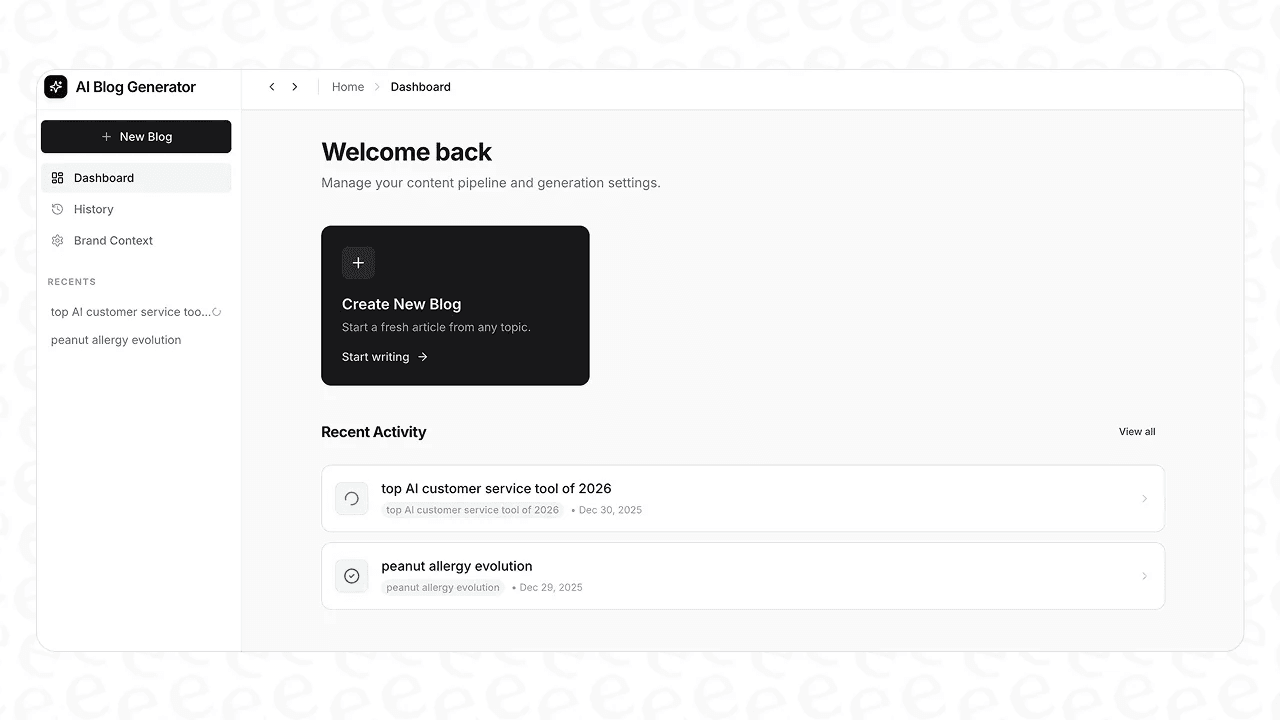
The eesel AI blog writer is built to remove the friction from content creation. You just give it a topic or keyword and your website URL, and it generates a complete, SEO-optimized blog post in minutes.
Beyond text: Automatic assets and authentic social proof
Key features that address common content production challenges include:
- Automatic Assets: It doesn't just spit out a wall of text. The eesel AI blog writer automatically creates relevant AI-generated images, infographics, and data tables to make your content more professional and engaging.
- Authentic Social Proof: To build trust, it can embed relevant YouTube videos and pull real quotes from Reddit threads related to your topic. This adds genuine, third-party voices and a layer of credibility that’s tough to manufacture.
My two cents is yes. I use Active Inspiration (A.I.) software to 'break me out' of the blank page freeze. The issue is when the content is 70% AI or more. AI should really be used as an Assistive Interface for writing great content, not producing mechanical bastardized word slop by running and rerunning paragraphs through GPT-3.
A case study in content scaling
We don't just sell this tool; we used it to fuel our own growth. At eesel, we used our own AI blog writer to grow our organic traffic from 700 to over 750,000 impressions in just three months. We achieved this by publishing over 1,000 optimized blog posts that the tool helped us create.
The best part? It’s completely free to try, so you can see the quality for yourself with no strings attached.
Measuring success and proving ROI
Content marketing is an investment, and you need to show that it’s delivering a return. To keep getting budget and buy-in, you have to track performance, figure out what's working, and connect your content directly to revenue.
Key metrics to watch across the funnel
Using a tool like Google Analytics, you can track metrics that line up with your goals for each stage of the funnel:
- For Awareness: Keep an eye on website traffic (especially from organic search), keyword rankings, and social media reach.
- For Engagement: Look at metrics like time on page, bounce rate, social shares, and comments. Are people actually reading and interacting with your content?
- For Conversion: This is where it gets real. Track lead generation (downloads, sign-ups), the quality of those leads, and, ultimately, your customer conversion rate.
Don’t just create, refresh: The power of a content audit
One of the fastest ways to get more traffic is to improve the content you already have. A content audit is simply going back through your old posts and giving them a refresh.
Updating old articles with new statistics, better SEO, and fresh visuals tells Google that your content is still relevant. This can give your rankings a nice boost without the effort of starting from scratch.
Pro tip
Set a calendar reminder to review your top 10-20 blog posts every six months. Look for outdated info, broken links, and opportunities to add new sections or visuals to make the content even more valuable.
To see these principles in action, check out this video which breaks down a practical approach to B2B content marketing that gets results.
Your path to a winning B2B content strategy
A successful B2B content strategy isn't about luck. It's a process: understand your audience deeply, create content that solves their problems, share it through the right channels, and measure everything.
It takes work, but you don't have to do it all manually. Tools like the eesel AI blog writer can handle the heavy lifting of content creation, freeing you up to focus on the big-picture strategy.
Ready to stop struggling and start scaling? Generate your first SEO-optimized blog post for free and see how easy it is to publish content that gets results.

Frequently Asked Questions
Share this article

Article by
Katelin Teen
Katelin is an operations specialist at eesel where she uses her psychology training and education experience to optimize B2B SaaS processes. Outside of work, she unwinds with story-driven games, writing, and keeping up with latest tech innovations.