How to optimize alternative pages for SEO: A complete guide

Stevia Putri

Katelin Teen
Last edited January 19, 2026
Imagine this: a potential customer is just about to sign up with your biggest competitor. But right before they commit, they type one last thing into Google: "[competitor] alternative." That simple search is a huge opportunity, a signal that they're having second thoughts and are actively looking for another option.
This isn't just a handful of people, either. Searches for "Photoshop alternatives" pull in over 27,100 searches a month on Google. That's a massive group of users who are either unhappy with their current tool or just curious about what else is out there. They’re motivated, ready to make a switch, and are basically asking you to show them a better way.
So, what's the problem? Creating a genuinely good, asset-rich page for every competitor is a lot of work. It takes time and resources, which is why most companies either don't bother or just put up a generic page that gets lost on page ten of Google.
This is where a smart SEO strategy comes into play. "Alternative" pages can be your best tool for grabbing this high-intent traffic at the perfect moment. And the good news is, you don't have to do it all by hand. An AI content generation platform can help you turn this big task into a smooth, scalable process, getting you from a keyword to a published post in minutes.
What are SEO alternative pages?
Before we get into the weeds, let's define what we're talking about. When it comes to this kind of SEO content, there are usually two types of pages:
- Alternative Pages: These are designed to target keywords like "[competitor name] alternatives." The goal is simple: show people who are looking for a change why your product is the better choice. You're positioning your product as the ideal solution to their problem.
- Comparison Pages: These go after "vs" keywords, such as "[your product] vs [competitor name]." This is for an audience that's a bit further along in their research. They've likely narrowed their options down to you and one other, and they need a direct, feature-by-feature comparison to make a final decision.
What makes these pages so effective is the user's mindset. Their search has strong commercial and transactional intent. In simple terms, they're at the end of the buying cycle and are ready to purchase a product.
That’s why you can't approach these pages like a typical blog post. They are built to convert. They need to address competitor pain points, clearly show your unique strengths, and give the user every reason to pick you.
Step 1: Uncover high-intent competitor keywords
Good content is built on good data. Before you write anything, you need a plan for finding the right keywords and figuring out what users are actually looking for.
Identify your true SEO competitors
First, let's clear up a common point of confusion. Your business rivals aren't always the same as your SEO competitors.
A business rival is a company selling a similar product. An SEO competitor, however, is any website that ranks for the keywords you're targeting. This might be a direct competitor, but it could also be a review site, an industry blog, or a major publication.
Your aim is to outrank your SEO competitors because Google sees them as the ones currently doing the best job of answering the user's search.
Find competitor keywords with Semrush
Instead of guessing, you need to use a keyword research tool to see what people are actually searching for.
- Single Competitor Analysis: A good starting point is the Organic Research report in a tool like Semrush. Just enter a competitor's domain, and you'll see a list of all the organic keywords they rank for. You can filter this list for terms containing "alternative," "vs," or "competitor" to find some easy wins.
- Gap Analysis: To be more strategic, use the Keyword Gap tool. This allows you to compare your site against several competitors at once. Look for "Missing" or "Untapped" keywords, these are terms your competitors rank for that you don't. This is your low-hanging fruit, a ready-made list of content ideas.
Analyze the SERPs to map your content
Once you have a list of keywords, it's time to do some detective work. Search for your keywords on Google and take a good look at the pages ranking at the top.
What do you see? Pay attention to the format. Are the top results listicles comparing several tools? Are they direct head-to-head comparisons? Or are they detailed reviews? You'll often find that review aggregators dominate this space. This is a big clue: it tells you that users want comprehensive, well-organized, and scannable comparisons.
Note the common themes, features, and pricing points mentioned in the top results. Google is essentially giving you a blueprint of what it considers helpful and relevant for that search query.
Step 2: Create content that converts
Alright, you've done your homework and have a plan. Now it's time to actually build the page. Here’s how to create something that not only ranks but also persuades visitors to choose you.
Craft titles and meta descriptions that win clicks
Your title and meta description are your first impression on the search results page. They have to be good enough to get that click.
- Title Tag: Your title should include the target keyword and a clear benefit for the user. Keep it straightforward.
- Example: "5 Best [Competitor] Alternatives for Small Businesses" or "[Your Product] vs [Competitor]: An Honest Comparison"
- Meta Description: This is your 155-character pitch. It should summarize the page and give the user a solid reason to click, like mentioning a key advantage of your product.
Structure your page for clarity and conversion
People searching for alternatives are usually in a hurry and want answers quickly. Your page structure needs to cater to that.
- Start with the Answer: Don't make people scroll to find what they're looking for. Place a summary and a comparison table right at the top. Successful SaaS alternative pages from companies like HubSpot and Ahrefs are great examples of this. Give users the quick answer, and they'll be more inclined to stay for the details.
- The Comparison Table: This is a must-have. A good comparison table provides a clean, at-a-glance look at how you compare to the competition. It feels objective and makes it simple for users to evaluate features, pricing, and support.
| Feature | Your Product | Competitor |
|---|---|---|
| Ease of Use | Simple, intuitive interface | Requires extensive training |
| Pricing Model | Transparent, flat-rate | Complex, with hidden fees |
| Key Feature 1 | ✓ | ✗ |
| Key Feature 2 | ✓ | ✓ |
| Customer Support | 24/7 Live Chat & Phone | Email only (48hr response) |
- Logical Headings: Use clear H2s and H3s to break down the rest of the page. This makes the content easy to scan and helps users find exactly what they need. Think in sections like "Feature-by-Feature Breakdown," "Pricing Comparison," and "Why Users Switch to [Your Product]."
Write honest and persuasive copy
Your content needs to find the right balance. It should be persuasive but not pushy, and honest but not overly negative.
- Be Objective, but Favorable: It's fine to admit your competitor's strengths; in fact, it helps build trust. Acknowledge what they do well, then explain why your product is a better option for certain needs. Just don't make claims you can't support.
- Use Social Proof: Nothing is more powerful than hearing from real customers. Sprinkle testimonials and reviews throughout the page. For an extra touch of authenticity, you can even include real Reddit quotes where people discuss their frustrations with a competitor. This shows you understand real user feelings.
For SaaS specifically, I'd prioritize: Comparison and alternative pages early these convert like crazy for SaaS and are easier to rank for than head terms

Step 3: Technical SEO and internal linking
Great content is just one piece of the puzzle. You also need to handle the technical side of things so search engines can find and understand your pages.
- Handling Similar Pages: You might create several pages that target similar keywords, like "alternative to X" and "X competitor." To avoid confusing Google, use a canonical tag (
rel="canonical") to signal which page is the main one. This focuses all your ranking power on a single page and prevents duplicate content issues. - Building Authority with Internal Links: After your new page is live, link to it from other relevant pages on your site, like related blog posts, feature pages, or your pricing page. This helps users find the content and spreads "link equity" across your site, giving your new page an SEO lift.
- The Hub-and-Spoke Model: If you plan to create many of these pages, think about a hub-and-spoke model. Create a central "Competitors" page (the hub) that links out to all your individual alternative pages (the spokes). This creates an organized content cluster that shows search engines you're an authority on the topic.
Visualizing these strategies can make them easier to implement. For a deeper dive into how different types of alternative pages function and how to structure them effectively, the following video offers a great strategic hack.
How to scale your alternative page strategy with the eesel AI blog writer
Let's be real: manually researching, writing, designing, and optimizing dozens of high-quality alternative pages is a huge undertaking. For most marketing teams, it's a bottleneck that kills the strategy before it even begins.
But what if you could remove that friction? An all-in-one platform can turn this into a scalable growth machine. The eesel AI blog writer is an AI content generation platform built for this exact purpose. You give it a keyword, and it delivers a complete, publish-ready post.
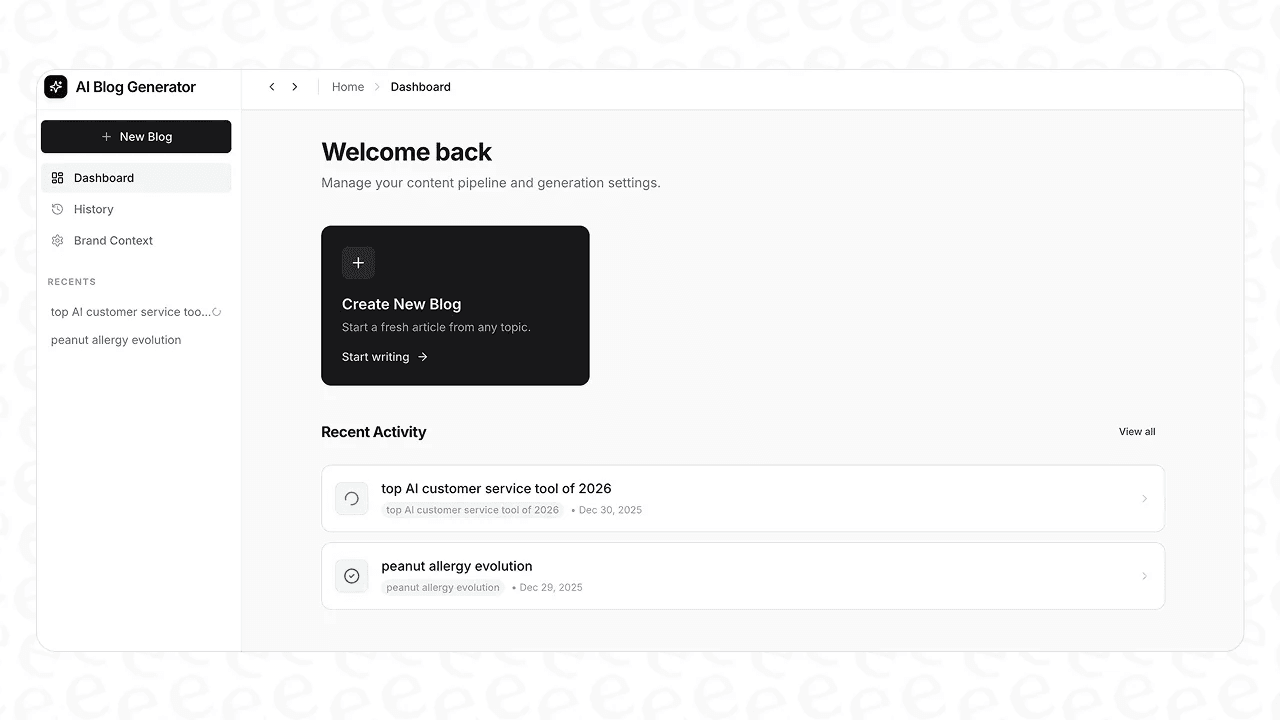
We know it works because we used it to grow our own organic traffic from 700 to 750,000 daily impressions. We did this by publishing over 1,000 optimized articles, many of which were competitor comparison pages.
Here’s how it helps you build better alternative pages, faster:
- Context-Aware Research: It doesn't just generate generic text. It automatically researches your competitors to create factual, well-researched comparisons.
- Automatic Asset Generation: No more spending hours in Canva. It automatically creates comparison tables, infographics, and other visuals to make your page engaging and easy to read.
- Authentic Social Proof: It can pull in relevant Reddit quotes and YouTube videos to add that human element and build trust with your audience.
- Built-in SEO & AEO: Every article is automatically structured with proper headings, metadata, and optimization for AI Answer Engines like Google's AI Overviews, so you're prepared for the future of search.
Final thoughts
Alternative pages are one of the most effective plays in your SEO strategy. They let you connect with highly motivated users right when they're making a buying decision. But remember, these aren't just blog posts, they're valuable conversion assets that require a thoughtful approach.
Success comes from a clear, repeatable process. Start with thorough keyword research using tools like Semrush, build a well-structured page that provides answers upfront, write honest copy backed by social proof, and don't skip the technical SEO details.
The biggest hurdle isn't creating one great page; it's scaling that effort to cover all your main competitors. If you want to see how you can put this entire strategy on autopilot, give it a try. Generate your first blog post for free with the eesel AI blog writer and get a publish-ready alternative page in minutes.

Frequently Asked Questions
Share this article

Article by
Stevia Putri
Stevia Putri is a marketing generalist at eesel AI, where she helps turn powerful AI tools into stories that resonate. She’s driven by curiosity, clarity, and the human side of technology.
