How to master blog writing: A complete guide for 2026

Stevia Putri
Written by

Stevia Putri

Reviewed by

Katelin Teen

Last edited January 20, 2026

Expert Verified

Image alt text

Anyone can put some words together and call it a blog post. But mastering blog writing requires a more strategic approach. This is what separates posts that fail to gain traction from those that spark real conversations. With millions of articles published daily, "good enough" is often not sufficient to stand out. You must create content that people can find, enjoy reading, and remember later.

Mastering this craft involves three key elements: a smart plan, quality writing, and effective promotion. Managing all of these manually can be challenging. We experienced this firsthand, scaling our own blog from 70,000 to over 750,000 impressions in three months by adopting a more automated workflow.

The fundamentals remain human-centric, but modern tools can handle much of the repetitive work. For example, an AI platform like the eesel AI blog writer can assist with the content creation process, freeing you to focus on strategy and the unique ideas that only you can provide.

The eesel AI dashboard, a tool that helps with how to master blog writing by automating content creation.

What does it mean to master blog writing?

Mastering the art of the blog post is not about using complex vocabulary or having perfect grammar, although those help. It is a strategic game. It is about making your words work for you, whether that means generating traffic, acquiring new leads, or building a reader community who value your content.

It comes down to three interconnected components:

  1. Audience Connection: This is about writing content that solves a real problem for a specific person. Think of it as empathy in text form. If your reader does not feel understood, they will likely leave.
  2. Search Visibility: You need to create content that search engines can find and understand. This means using the same language your audience uses when searching for answers. According to Yoast, even factors like word count are important; posts generally need to be over 300 words for search engines to properly index them.
  3. Consistent Quality: One great post is a good start, but a library of high-quality content is what builds real authority. Mastery involves consistently producing valuable material that earns trust.

These three elements are codependent. If you only write for your audience and ignore search engines, no one will find your content. If you only write for search engines, your content may sound robotic and unengaging. And if you cannot produce content consistently, you will struggle to build momentum. Mastering blog writing is about balancing these three components, as this visual guide shows.

An infographic showing the three pillars of how to master blog writing: audience connection, search visibility, and consistent quality.

The strategic foundation: Before you write

This preliminary stage is often overlooked but is arguably the most critical. Great blog posts are not created by chance; they are built on a solid strategic foundation. Nailing this part makes the writing process significantly easier.

A three-step workflow diagram explaining the strategic foundation of how to master blog writing.

Understand your audience and their pain points

Before you can write for someone, you need to know them. Who are you addressing? What are their primary challenges? What are they trying to achieve, and what obstacles are they facing?

Creating a simple reader persona can be very helpful. It does not need to be a formal document, just a clear picture of your ideal reader. Here are a few ways to understand their perspective:

  • Monitor online communities: Visit the places where your audience gathers, such as forums like Reddit or Quora. Note the recurring questions and the language they use to describe their problems.
  • Read the comments: The comments sections on competitors' blogs or popular industry websites are a valuable source of insight. You will find follow-up questions, objections, and frustrations.
  • Talk to your customers: If you have customers, they are your best source of information. Review support tickets or ask them directly about their struggles.

Every post you write should answer the "so what?" question from the reader's perspective. Your strategy must provide a clear answer to "What's in it for me?" before you begin writing.

Conduct keyword research to uncover search intent

Keyword research may sound technical, but it is essentially about identifying the exact words your audience types into Google. It connects their problem to your content.

It is often more effective to target specific, long-tail keywords like "how to use AI for blog content research" rather than broad topics like "AI," which can be highly competitive. These longer phrases are less competitive and often indicate that the searcher is closer to taking action.

A key step is to analyze the SERPs (Search Engine Result Pages). Google your target keyword and examine the first page results. Are they "how-to" guides, listicles, or opinion pieces? As Brafton notes, observing what already ranks well indicates what Google considers relevant for that search.

Find your unique angle and create an outline

The goal is not to simply rehash what is already on Google. You need to add something new to the conversation. Find a way to present the information better, offer a different perspective, or fill a gap that others have missed. Perhaps you have newer data, a personal story, or a unique take.

Once you have your angle, create an outline. An outline serves as a roadmap for your blog post, preventing you from staring at a blank screen by providing a clear path forward. It also ensures your post flows logically and stays on topic.

A good outline should include:

  • Main headings (H2s): The major sections of your post.
  • Subheadings (H3s): These break down the major sections into smaller, digestible chunks.
  • Key points for each section: A few bullet points on what you plan to cover.
  • Notes for examples or data: Reminders to include a specific statistic, quote, or image.

The art of crafting a readable post

With your strategy in place, it is time to turn that outline into content that readers will find engaging. This is where writing craft becomes important.

Write a headline that makes a promise

Your headline is the most important sentence in your entire post. If the headline does not capture attention, your content will go unread. A good headline makes a clear promise about the value the reader will receive.

A few classic formulas that work well include:

  • "How to...": How to Master Blog Writing in 5 Simple Steps
  • "X Ways to...": 7 Proven Ways to Write More Engaging Content
  • "The Ultimate Guide to...": The Ultimate Guide to SEO for Bloggers

Consider using numbers, asking a question, or sparking curiosity. Also, ensure your target keyword is included, preferably near the beginning.

Hook readers with your introduction

You have only a few seconds to convince someone to continue reading. Your introduction must be concise and effective, serving three main purposes:

  1. Acknowledge their problem: Show that you understand their situation.
  2. Promise a solution: Explain what they will learn or how you will help.
  3. Establish credibility: Briefly mention why you are qualified to discuss the topic (e.g., "we used this process to...").

Keep it short, direct, and empathetic. Get to the point and assure them they are in the right place.

Structure the body for readability

It is important to remember that many people scan online content rather than reading every word. Your task is to make your content as scannable as possible. Large blocks of text can be intimidating and may deter readers. Good formatting helps keep people on your page longer, which is a positive signal to search engines, as noted by Single Grain.

Here are a few simple rules for better readability:

  • Use short paragraphs: Aim for 3-4 sentences maximum. White space improves readability.
  • Break it up with headings: H2s and H3s act as signposts, guiding the reader through your content.
  • Use bullet points and lists: These are great for breaking down complex information into digestible pieces.
  • Incorporate visuals: Images, tables, and charts can break up text and often explain concepts more quickly than words.

See for yourself:

Poorly Formatted TextWell-Formatted Text
Writing for the web is different. You can't just write long blocks of text because people don't read online, they scan. You need to use headings to break up the content and you should also use lists to make information easier to understand. Also, bolding key terms is a good idea so people can pick out the important parts. Finally, remember that short paragraphs are better than long ones because they feel less intimidating to the reader.Writing for the web is different. Online readers often scan rather than read word-for-word. To keep them engaged, format your content for scannability.

Here’s how:
- Use short paragraphs (2-3 sentences max).
- Break up text with clear headings (H2s and H3s).
- Use bullet points to simplify complex information.
- Bold key terms to help readers find important information quickly.

Find your authentic voice and use storytelling

People connect with other people, not with faceless brands. The most effective blogs have a distinct voice that feels genuine and builds trust. Do not be afraid to write in a conversational tone. Use contractions, ask questions, and let your personality show.

Storytelling is one of the most powerful tools available. Instead of just listing facts, weave them into a narrative. Use personal anecdotes, customer stories, or hypothetical scenarios to make abstract concepts feel tangible and memorable. A good story can transform a dry post into something that truly connects with readers.

A master workflow: From writing to ranking

Finishing the draft is an accomplishment, but a professional knows that publishing is just one part of the job. The modern content workflow is about ensuring all your hard work gets seen and produces results.

Reddit
That was really helpful and is a an eye opener for how much I have to improve my practice.

Perfect your on-page SEO before publishing

Before you publish, perform a quick on-page SEO check. These details help search engines understand your content's topic.

  • Keywords: Is your main keyword in the URL, meta description, and a few headings?
  • Images: Have you added descriptive alt text to your images? This improves both SEO and accessibility.
  • Internal Links: Have you linked to 2-3 other relevant posts on your site? This encourages visitors to stay on your site longer and helps search engines map your content.
  • External Links: Have you linked to 1-2 credible sources to support your points? This demonstrates that your content is well-researched.

How the eesel AI blog writer automates the content workflow

Manually handling all the research, outlining, drafting, SEO, and asset creation for every post is time-consuming. This is a common reason content strategies become difficult to maintain consistently.

This is an area where you can work more efficiently. The eesel AI blog writer is a platform designed to automate this process from a single keyword. It is designed to deliver a complete, publish-ready post, handling many steps from research to formatting.

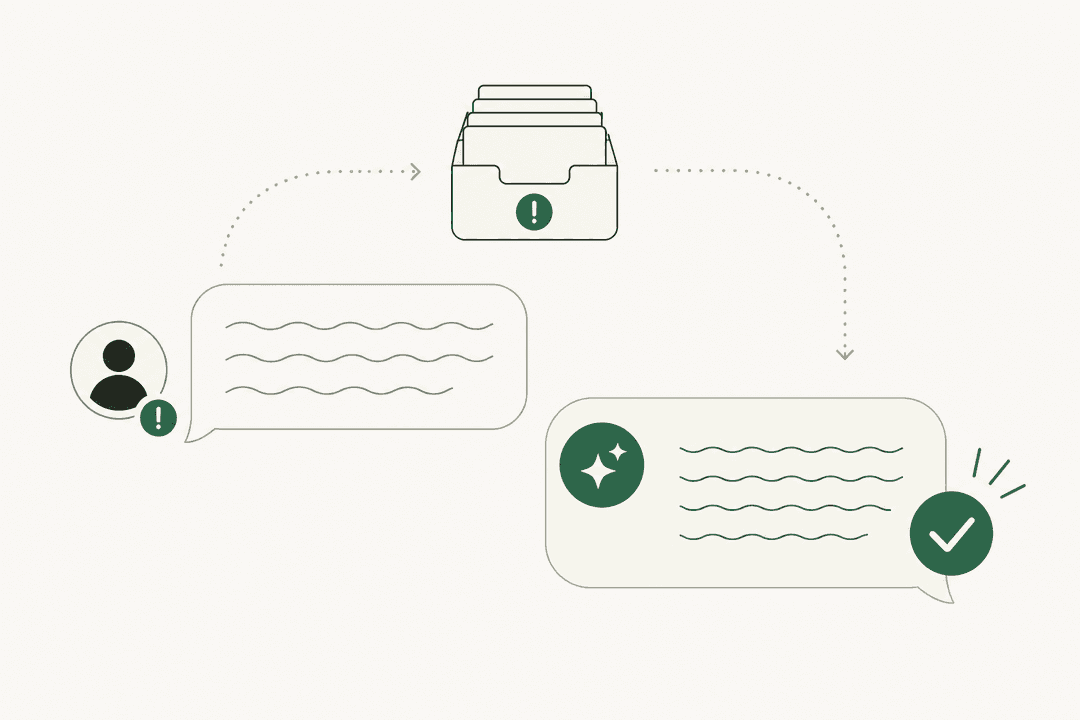
An illustration of the eesel AI blog writer's automated process, a key part of how to master blog writing.

Here’s what makes it helpful for mastering your workflow:

  • Context-aware research: It performs context-aware research instead of generating generic text. It analyzes the intent behind your keyword. If you are writing a comparison post, it finds and includes pricing data. For a product review, it pulls technical specifications.
  • Automatic asset generation: To make your post more engaging, it creates and embeds relevant visuals like AI-generated images, infographics, and data tables directly into the content.
  • Social proof integration: It can automatically find and embed relevant Reddit quotes and YouTube videos to add credibility and a human element to your content.
    Reddit
    I work at eesel AI, and our whole approach with our AI blog writer is to avoid that exact problem. Instead of just scraping the SERPs, it can pull context from a specific URL you give it. This means it can learn a company's actual brand voice, product details, and unique perspective, rather than just regurgitating what's already out there.
* **Built-in SEO and AEO:** It handles on-page SEO basics and is also optimized for Answer Engine Optimization (AEO). This means the content is structured to be featured in formats like Google's AI Overviews.

Promote your content to the right audience

Your work is not finished once the post is live. Now, you must get it in front of people. A small amount of promotion can make a significant difference.

  • Share your post on the social media platforms where your audience is active.
  • Send it to your email list, as they are your most dedicated readers.
  • Post it in relevant online communities or forums, ensuring you are being helpful and not spammy.
  • Encourage your team to share it with their networks.

For a visual walkthrough of a complete blog writing process, from ideation to final polish, check out this detailed guide. It covers many of the strategic and tactical steps discussed here, offering another perspective on how to structure a high-performing post.

This video offers a visual walkthrough of a complete blog writing process, from ideation to final polish.

Final thoughts

Mastering blog writing is not about a single secret trick. It is a complete process that combines a deep understanding of your audience, smart content creation, and consistent promotion. It is a long-term endeavor where consistency is key.

A modern approach is an 80/20 split. Let smart automation handle 80% of the repetitive work, such as the research, first draft, SEO checks, and asset creation. This frees you to spend your time on the crucial 20%: adding your unique insights, polishing the voice, and building a real connection with your audience.

The process is demanding, but the tools available today can manage the most technical and time-consuming parts. This allows creators to return to what they do best: sharing valuable ideas that help people.

To see how automation can streamline your workflow, generate your first blog for free with the eesel AI blog writer and see how quickly you can turn a keyword into a complete, SEO-optimized post.

Frequently Asked Questions

The very first step is strategy. Before you write anything, you need to understand who you're writing for (your audience), what their problems are, and what keywords they use to find solutions. This [foundational work](https://www.eesel.ai/blog/beginner-guide-blog-writing) makes the actual writing process much smoother and more effective.
It's incredibly important. SEO (Search Engine Optimization) is what helps people find your content through search engines like Google. Mastering blog writing means balancing great, human-centric writing with smart SEO practices so your work actually gets discovered by the right audience.
Absolutely. [Modern AI tools](https://www.eesel.ai/blog/best-ai-writing-generators), like the eesel AI blog writer, can automate the most time-consuming parts of the process, like research, outlining, first drafts, and even creating visuals. This lets you focus on the high-level strategy and adding your unique voice, which can significantly accelerate the process of mastering the craft.
There's no set timeline, as it's a continuous process of learning and adapting. However, by focusing on a solid strategy, consistent practice, and analyzing what works, you can see significant improvement in a matter of months. Using tools to streamline your workflow can also speed up the learning curve.
A common mistake is skipping the strategy phase. Many writers jump straight into writing without understanding their audience or search intent. This often leads to creating content that no one is looking for, or that doesn't resonate with readers, no matter how well-written it is.

Share this post

Stevia undefined

Article by

Stevia Putri

Stevia Putri is a marketing generalist at eesel AI, where she helps turn powerful AI tools into stories that resonate. She’s driven by curiosity, clarity, and the human side of technology.