How to increase content velocity without sacrificing quality

Stevia Putri
Written by

Stevia Putri

Reviewed by

Stanley Nicholas

Last edited January 16, 2026

Expert Verified

Image alt text

Ever feel like you’re on a content treadmill that just keeps speeding up? Marketing and support teams are under constant pressure to create more, and faster. More blog posts, more help articles, more social updates, you name it. The demand for high-quality, relevant information never stops, and trying to keep up can feel like a losing battle.

This is where the idea of "content velocity" comes into play. It’s basically a measure of how quickly your team can get from an idea to a published piece of content that’s actually out there doing its job. But here’s the thing: it's not just about speed. Anyone can churn out content quickly, but if the quality is terrible, you're doing more harm than good. The real trick is figuring out how to pick up the pace while maintaining the quality that builds trust with your audience.

Don't worry, this isn't about working 80-hour weeks or hiring a dozen new writers. It's about working smarter. In this guide, we’ll walk through the strategies that actually work: building smart workflows, thinking about your content more flexibly, and using AI to get more out of the knowledge you already have.

What is content velocity?

At its core, content velocity is the metric that measures how much valuable content you produce and publish over a certain time. Think of it as your team's content output rate. But it's a lot more nuanced than just counting how many blog posts you shipped this month.

Remember high school physics? Velocity isn't just speed; it's speed with direction. The same principle applies to content. Pumping out a ton of articles that don't align with your business goals or what your audience needs is just motion, not progress. True content velocity measures how efficiently you can create content that has a purpose and gets results. It covers the entire pipeline, from the initial idea to the final analytics report.

An infographic explaining the difference between undirected motion and purposeful velocity in content creation.

You can measure it in a few different ways:

  • The number of new URLs published per quarter.
  • The number of specific assets (like case studies or help docs) created.
  • The time it takes to update critical information across your knowledge base.
  • How quickly your team can find and use internal information to do their jobs.

Getting this right is a big deal. For SEO, search engines love to see sites that are regularly updated with fresh, high-quality content. It signals that you're an active and authoritative source. For your audience, it means you’re consistently providing value, which keeps them engaged. In a world where trends change in a flash, having high content velocity means you can stay relevant and responsive.

The core challenge: A constant balancing act

Trying to increase content velocity often feels like walking a tightrope. Lean too far in one direction, and you’ll fall.

If you focus only on speed, you risk creating a mountain of low-quality, off-brand content. We've all seen it: generic articles that say nothing new, or even worse, that dreaded "AI slop" full of nonsense and factual errors. This stuff doesn't just fail to attract an audience; it actively pushes them away. It chips away at customer trust and can even get you penalized by search engines.

On the other hand, if you focus only on quality, you can become painfully slow. When every sentence has to be a literary masterpiece and every article needs approval from six different departments, you'll never hit your publishing goals. You'll miss out on timely opportunities and fall behind competitors.

Think of it like a factory assembly line. If you push for maximum speed with no quality control, you'll end up with a pile of defective products. But if you spend weeks over-engineering every single item, you'll never have enough to sell. The goal isn't to choose between speed and quality. It's to build a production system that delivers both. The rest of this article is about how to build that system.

A visual scale illustrating the importance of balancing speed and quality for optimal content velocity.

How to increase content velocity with strategic operations

Boosting your content velocity isn't about telling your team to "just write faster." That's a recipe for burnout and bad content. The real secret is to work smarter by building efficient, scalable systems that remove friction from your content production process. Let’s get into how you can do that.

Build streamlined workflows

To get the most value and efficiency out of your content, you need to manage it through its entire lifecycle. According to the experts at Siege Media, this breaks down into five key stages. Building a streamlined workflow for each one is essential.

A circular diagram showing the five key stages of the content lifecycle, from planning to updates.

  1. Planning: It all starts here. Instead of writing about random topics, you need a solid plan. Do your audience and keyword research to understand what your customers are actually looking for. Use that data to create a content roadmap that lines up with your business goals. A clear plan ensures every piece of content has a purpose from day one.
  2. Creation: This is the writing, designing, and building phase. A structured process is your best friend here. Create detailed briefs for every piece of content so writers know exactly what's expected. Use templates for common content types (like blog posts or case studies) to keep things consistent. A clear, step-by-step process from first draft to editing keeps things moving.
  3. Publication & Distribution: Hitting "publish" isn't the final step. You need a strategy to get your content in front of the right people. This means promoting it across different channels like your email newsletter, social media, and online communities. Automate what you can, but make sure your promotion is tailored to each channel.
  4. Performance Tracking: You have to know if your content is actually working. Monitor key metrics like organic traffic, time on page, conversion rates, and keyword rankings. This data tells you what's resonating with your audience and what's falling flat, so you can do more of what works.
  5. Content Updates: Your content isn't set in stone. The world changes, and your content needs to keep up. Regularly audit your existing content to find articles that are outdated or underperforming. A quick refresh can often bring in a flood of new traffic for a fraction of the effort it takes to create something new.

A clear content governance model holds all of this together. Define who is responsible for what at each stage. Who has final approval? Who handles distribution? When roles are clear, you eliminate the bottlenecks that slow everything down.

Pro Tip
Keep the number of people in each review stage as small as possible. A 'workflow ladder' with a single, clear owner for each step (like Drafting, SEO Review, and Final Approval) prevents tasks from getting stuck in a 'waiting for feedback' limbo for weeks.

Embrace a modular approach

Here’s an idea that can completely change how you create content: stop thinking of content as big, monolithic pieces. Instead, think of it as a collection of small, reusable "building blocks." This is called a modular content approach.

The idea is simple. You break your information down into small, self-contained chunks that can be mixed and matched to create different assets. Instead of writing every article or social post from scratch, your team can quickly assemble new pieces from a library of pre-approved components, like testimonials, product descriptions, or standard calls-to-action.

For example, when creating onboarding materials, you likely have core information that every new customer needs. You can create a set of introductory modules covering these basics. Then, you can combine them with unique modules to create tailored onboarding paths for different customer segments, like B2B enterprises and individual users, all without writing the core content twice.

This modular way of thinking is actually how smart AI tools operate. Platforms like eesel AI work by turning all your scattered documentation into a single, structured knowledge base. By connecting to all your sources, like your help center and Confluence pages, it creates a dynamic, modular engine. When a question comes in, it doesn't just spit out a generic answer; it assembles an accurate, context-aware response using the building blocks from your own trusted content.

eesel AI consolidates scattered knowledge sources like PDFs and internal documents into a single, structured knowledge base.

Repurpose and refresh existing content

Many people think content velocity is all about creating new things. But some of the biggest and fastest wins come from getting more mileage out of the content you already have.

Your existing content is a goldmine. Instead of letting it collect dust, find ways to repurpose it. Here are a few ideas:

  • Turn a long, comprehensive blog post into a series of bite-sized tips for social media.
  • Convert a webinar recording into a podcast episode and a summary article with key takeaways.
  • Use the data and quotes from a customer case study to create a compelling infographic.

Repurposing lets you reach new audiences on different platforms without starting from scratch every time. It's a massive velocity booster.

Equally important is refreshing your older content. A study from Siege Media found that the average page ranking on Google was last updated within the past two years. Search engines want to provide the most current information, so they tend to favor recently updated content. The study also found that for highly competitive keywords (with a difficulty score of 90+), the top-ranking pages were refreshed about every 320 days. For less competitive terms, you can go a bit longer, but the principle holds: fresh content performs better.

An infographic highlighting key statistics on how content freshness boosts SEO rankings.

Use AI to activate your content

AI is obviously making a huge splash in drafting and editing content. But for most teams, the biggest bottleneck isn't always creation. It's activation. Activation is about making sure your team and your customers can actually find and use the information that’s locked away in documents, wikis, and help articles.

Reddit
I did this recently with Zendesk. You'll need good documentation sources for any of them to be helpful, so make sure updating or creating documentation is set as a prerequisite if you don't already have it.

Think about it. If your team spends hours every week digging through Confluence for an answer they know exists somewhere, your content isn't working at full velocity. The real win with AI isn't just writing faster; it's making your entire library of existing, human-approved content instantly accessible.

This is where a tool like eesel AI can be applied. It connects to all your trusted knowledge sources and creates a single source of truth that can deliver instant, accurate answers.

  • For your internal teams: Instead of bugging a colleague on Slack or spending 20 minutes searching for a policy document, employees can just ask a question. An AI Internal Chat bot in Slack or Microsoft Teams, trained on your internal documentation, can provide an immediate answer. One of our customers, Simployer, put it perfectly: "Our employees are already reporting a huge boost in day-to-day productivity."
    The eesel AI Internal Chat bot in Slack provides instant answers to employee questions from internal documentation.
    The eesel AI Internal Chat bot in Slack provides instant answers to employee questions from internal documentation.
  • For your customer support: Imagine if your help center could answer questions on its own. An AI Agent can do exactly that, autonomously resolving up to 81% of support conversations by using your existing help articles and past tickets. This dramatically increases the velocity of your support team’s resolutions. CartonCloud, another one of our customers, saw an 80% time saving on repetitive support tasks. This frees up your human agents to focus on the complex issues where they're needed most.
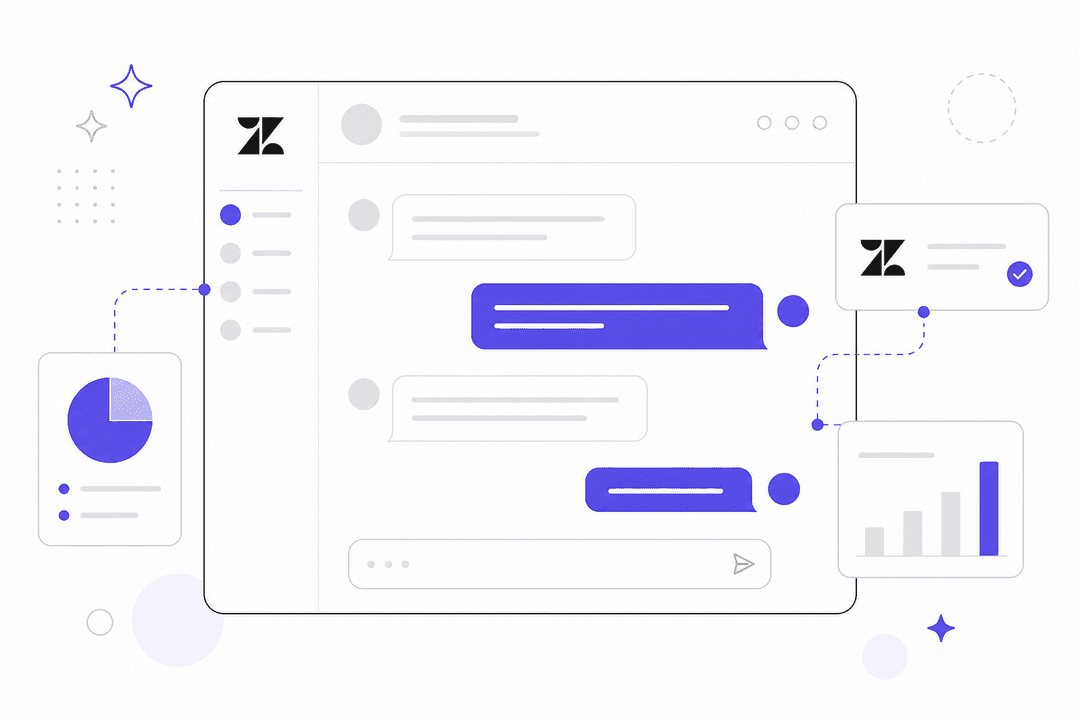
    The eesel AI Agent shown resolving a customer support ticket directly within the Zendesk interface.
    The eesel AI Agent shown resolving a customer support ticket directly within the Zendesk interface.

To get a deeper dive into practical methods, the following video from Claravine explores four highly effective ways to accelerate your content velocity across an organization, reinforcing the importance of streamlined processes.

Claravine's Chief Product Officer reviews four highly effective ways to increase content velocity across an organization.

Velocity is about smart systems, not just raw speed

Ultimately, true content velocity isn't about hustle and burnout. It's about building smart, scalable systems that let your team do their best work without friction. It's about quality and quantity, moving with purpose instead of just spinning your wheels.

By focusing on the key pillars we've covered, you can make a huge difference. Build streamlined workflows, embrace a modular content architecture, get more out of your existing content, and use AI to activate all the knowledge you've already created. You don't have to do it all at once. Start with one or two of these strategies, and you’ll be well on your way to building a more efficient and effective content engine.

Your existing documentation is a goldmine of untapped potential. Instead of letting it sit there, turn it into a high-velocity engine for answering questions and resolving issues automatically.

With eesel AI, you can build an AI bot trained on your unique knowledge in minutes. Free up your team, delight your customers, and get more value from the content you've already created.

Start your 7-day free trial today

Frequently Asked Questions

The best first step is to map out your current content lifecycle, from planning to updates. Look for bottlenecks, which are places where work gets stuck waiting for review or information. Streamlining this workflow is the foundation for everything else.
That's the classic dilemma, but it's a false choice. The goal is to build a system that supports both. Focusing only on speed leads to low-quality content that hurts your brand, while focusing only on quality makes you too slow. The key is creating efficient workflows and using modular content to produce high-quality work faster.
AI is a huge lever. While it can help with drafting, its biggest impact is in "activating" the knowledge you already have. Tools like eesel AI can connect to your existing documents and help centers to provide instant answers for your team and customers, which dramatically speeds up support resolutions and internal processes.
Absolutely. Some of the quickest wins come from your existing content. Regularly refreshing older posts with new information can boost their SEO performance for a fraction of the effort of creating a new piece. Repurposing content, like turning a blog post into social media snippets or a webinar into a podcast, is another great way to get more value without starting from scratch.
Yes, because it's about working smarter, not harder. Instead of just pushing for more output, focus on building better systems. A modular content approach, clear workflows with fewer reviewers, and leveraging AI to automate tasks can help a small team produce more without adding more hours to their week.
Look beyond just the number of articles published. Track the time it takes to go from idea to publication, the performance of your updated content (like traffic and rankings), and how often your repurposed content is engaged with. For internal velocity, you could track how quickly teams can find information or how many support tickets are resolved automatically.

Share this post

Stevia undefined

Article by

Stevia Putri

Stevia Putri is a marketing generalist at eesel AI, where she helps turn powerful AI tools into stories that resonate. She’s driven by curiosity, clarity, and the human side of technology.