How to find a good blog writer: A complete guide

Stevia Putri
Last edited January 19, 2026
Trying to create a steady stream of high-quality, SEO-optimized content is a huge task. It's a proven way to grow your business, but it's also a massive time sink. You know you need to publish consistently, but who really has the time to do it all themselves?
This is our complete guide on how to find, vet, and hire great blog writers. The definition of a "good" writer has completely changed. It’s not just about nice-sounding sentences anymore; it’s about a solid grasp of SEO, capturing your brand voice, and knowing how to use modern tools to get the job done right.
What to look for in a good blog writer
- SEO proficiency: A good writer doesn't just write; they build content that ranks. They need to understand search intent, know where to place keywords naturally, build a smart internal linking strategy, and structure an article in a way that search engines will favor.
- Deep research skills: Anyone can do a quick Google search. A great writer knows how to dig deeper. They find credible sources, unearth interesting statistics, and look for unique insights that make an article stand out. This is a huge differentiator from lazy, low-quality AI content that just rehashes the top 10 search results.
- Adaptable brand voice: You need someone who can be a chameleon. The writer shouldn't sound like themselves; they should sound like you. A top-tier writer can analyze your existing content and capture your brand's unique voice and tone, making sure everything they produce feels authentic and consistent.
- Blogging expertise (not just writing): There's a big difference between a writer and a blogger. A blogger knows how to craft headlines that grab attention, use subheadings to make content scannable, and write intros that hook the reader from the first sentence. They write for the internet, not for a novel.
- Ethical use of AI: In 2026, it's naive to think writers aren't using AI. The good ones use it as a powerful assistant for research, outlining, and brainstorming. Conversely, some may rely on it too heavily, passing off lightly edited AI drafts as original work. This is a common concern noted on platforms like Reddit and can be a red flag. A great writer knows AI is a tool, not a replacement for critical thinking and creativity.
The results were what you’d expect if you gave a third grade student access to chat gpt. Find a good AI tool yourself and give it your prompts and keywords, guide it into the paragraph headings you want, and edit it up some. Save yourself a mint and get better content by far.

Where to find a good blog writer
Alright, so you know what you’re looking for. Now, where do you actually find these people? The right platform really depends on your needs, your budget, and the kind of project you have in mind. Here’s a breakdown of the most common spots to source talent.
Freelance marketplaces: Upwork vs. Fiverr
Upwork and Fiverr are the two giants in the freelance world. They both connect you with a global pool of talent, but they operate in pretty different ways. Picking the right one is key to avoiding a headache.
- Upwork is set up like a traditional job market. You post a detailed job description, and freelancers submit proposals, almost like applying for a job. It's generally better for finding writers for long-term, complex projects where you want to build a relationship.
- Fiverr is more like an e-commerce store for services. Freelancers package their offerings into "Gigs" at set prices. You browse these Gigs and buy the one that fits your needs. It's great for quick, one-off tasks like a single blog post or a batch of social media captions.
Here's a quick look at how they stack up:
| Feature | Upwork | Fiverr |
|---|---|---|
| Best for | Long-term, complex projects (e.g., ongoing blog series, ghostwriting). | Short-term, single-service tasks (e.g., one-off articles, social media posts). |
| Workflow | You post a job, and freelancers submit proposals. | Freelancers (sellers) list pre-packaged "Gigs" that you (the buyer) purchase. |
| Pricing Model | Hourly or fixed-price projects. | Primarily fixed-price "Gigs." Hourly contracts are limited to Fiverr Pro clients. |
| Fees for Clients | One-time contract initiation fee ($0.99-$14.99) plus up to a 10% service fee on payments. | 5.5% service fee on each transaction, with an extra $3.50 fee for orders under $100. |
| Freelancer Fees | Tiered commission (15% down to 0%) rewards long-term client relationships. | Flat 20% commission on all earnings, regardless of project size. |
Specialized job boards
If you want to skip the noise of general marketplaces, specialized job boards are a solid option. Platforms like the ProBlogger Job Board are curated specifically for finding professional bloggers, content marketers, and SEO writers.
The main advantage here is that the talent pool is much more focused and generally higher quality. These are people who specialize in blogging, so you're not sifting through profiles of people who just list "writing" as one of their fifty skills. The downside is that it usually costs money to post a job, and the pool of applicants, while better, is naturally smaller.
Content agencies
If you want a completely hands-off approach, a content writing agency might be the way to go. Services like Writing Studio manage an entire team of vetted writers, editors, and content strategists for you. You just give them your topics, and they handle the rest.
The big pro here is convenience. You save a ton of time on recruiting, vetting, and project management. They have established workflows to ensure quality and consistency, and their positive Clutch reviews show they deliver. However, this convenience typically comes at a higher price point, making it one of the more expensive options. For example, Writing Studio's pricing starts at $0.20 per word, meaning a single 1,500-word blog post would set you back $300. You also get less direct communication with the actual writer, which can sometimes be a drawback.
Direct outreach
Sometimes the best way to find a great writer is to go hunting yourself. Read blogs in your niche that you admire. When you find an author whose style you love, reach out to them directly. Many freelance writers have a portfolio or contact link in their author bio.
Another powerful method is simply asking your professional network. Post on LinkedIn that you're looking for a writer in your industry. Referrals are often the best source of high-quality, trusted candidates. The obvious downside is that this is the most time-consuming method. It relies entirely on manual searching and networking, and there's no guarantee you'll find someone available.
An alternative solution: Using AI
And to be clear, we're not talking about asking a basic AI assistant to "write a blog post." We’re talking about specialized platforms designed from the ground up to handle the entire content workflow. This isn't about generating a rough first draft; it's about getting a complete, publish-ready article from a single keyword.
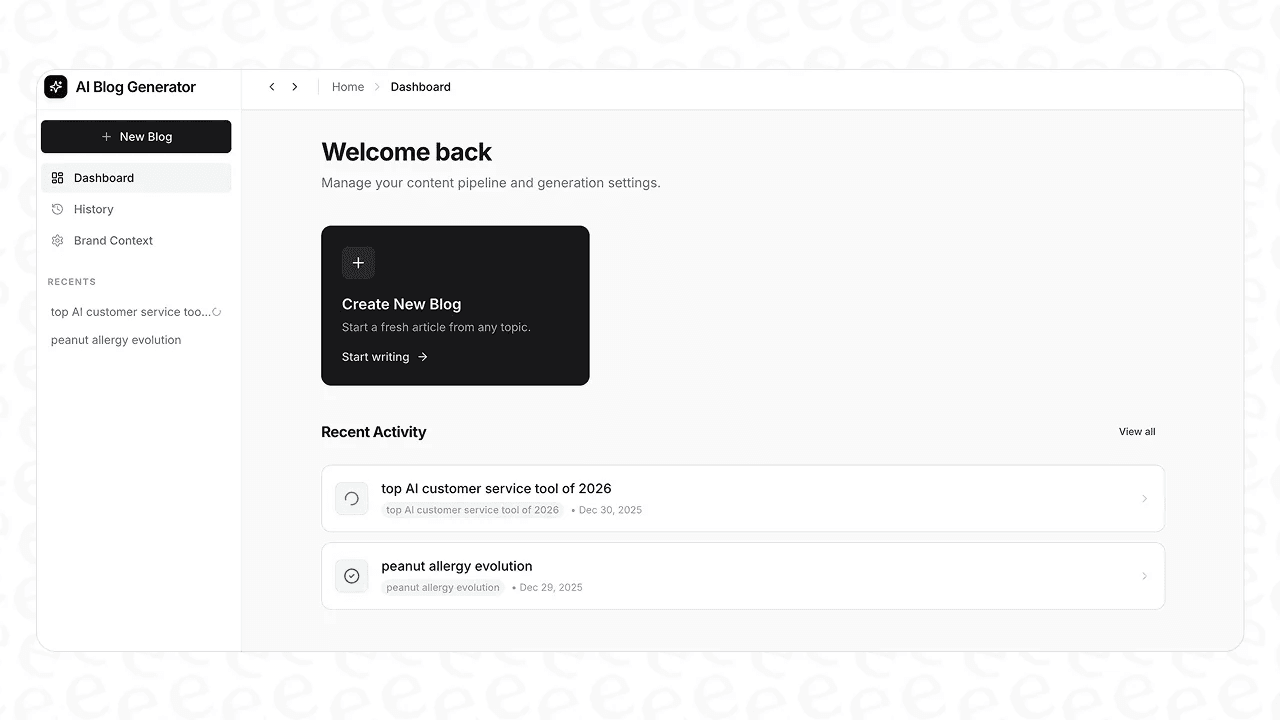
The eesel AI blog writer is a perfect example of this modern approach. It's built to solve the biggest headaches in content creation.
Here’s how it tackles the core challenges:
- Cost and scale: Finding, vetting, and paying a good freelance writer is a multi-day process that can cost hundreds of dollars per article. With an AI platform, you get a complete blog post in minutes for a fraction of the cost. A single 1,500-word article from an agency like Writing Studio costs around $300. With eesel, our plan gets you 50 complete blog posts for just $99.
- Built-in research and assets: A good article is more than just text. It needs data, visuals, and social proof. The eesel AI blog writer’s context-aware research does this automatically. It generates tables and infographics, finds relevant Reddit quotes to add authenticity, and even embeds YouTube videos to make your content more engaging. This automates many hours of manual work.
- Consistent quality and brand voice: One common challenge when hiring freelancers is ensuring their style consistently aligns with your brand. eesel solves this by letting you add your website URL and specific brand context. It learns your voice and applies it consistently across every single article, eliminating the risk of off-brand content.
- Proven SEO and AEO optimization: We built the eesel AI blog writer to power our own growth, and it worked. We went from 700 to over 750,000 daily impressions in just a few months. Every post is structured not just for Google's crawlers (SEO) but also for AI answer engines like Google AI Overviews (what we call AEO). This ensures your content is visible wherever people are searching.
For teams aiming to produce high-quality content at scale while managing the overhead of freelancers, the eesel AI blog writer can be a useful tool. It handles the process from research to asset creation, allowing teams to focus on strategy. It's also free to try.
A step-by-step hiring process
Step 1: Craft a specific job description
Your job post is your first filter. A vague description will get you a flood of unqualified applicants. Be as specific as possible.
- The niche/industry: Clearly state your industry. A great B2B SaaS writer might be a terrible e-commerce writer.
- The content types: Do you need long-form guides, quick listicles, or technical case studies?
- Required skills: Be explicit about needing SEO knowledge, experience with your CMS (like WordPress or Webflow), or familiarity with certain tools.
- The pay range: Including a budget up front saves everyone time by weeding out candidates with mismatched expectations.
- A simple instruction: Add a small request to your ad, like "start your application with the word ‘purple’." It’s a dead-simple way to see who actually reads instructions carefully.
Step 2: Review portfolios with a critical eye
When you get applications, don't just skim their work for good grammar. Dig deeper and evaluate their samples based on a few key criteria:
- Structure and flow: Is the content logically organized? Is it easy to scan, with clear headings and short paragraphs?
- Engagement: Is the writing actually interesting? Does it make you want to keep reading, or does it feel flat and boring?
- Evidence of research: Do they back up their claims with data? Do they cite credible sources?
- Voice variety: Can they write in different styles? Or does every article in their portfolio sound exactly the same? This tells you how adaptable they'll be to your brand voice.
Step 3: Use a paid test project
This is the single most important step in the entire process. Never hire a writer without a paid trial.
Give your top 2-3 candidates a small but real assignment that closely reflects the kind of work they'll be doing for you. Provide them with a clear, detailed content brief that outlines the goal, target keyword, audience, and any key points you want them to include. Pay them their standard rate for this trial article. Their performance on this task will tell you everything you need to know.
Pro tip
Use an AI-generated article as a quality baseline. You can generate a post on the same topic with a tool like the [eesel AI blog writer](https://blog-generator.eesel.ai/) to create a benchmark. Compare the human-written submission to the AI output on factors like research depth, structure, and included media assets. This can provide an objective measure of the value you're receiving.
Step 4: Onboard them like a team member
Once you’ve found your writer, set them up for success. Don't just email them a topic and hope for the best.
- Provide a comprehensive style guide that covers your brand's tone of voice, specific formatting rules, and examples of what you do and don't like.
- Give them access to any necessary tools, like your CMS, project management software, or analytics platforms.
- Establish clear communication channels (e.g., Slack) and be upfront about your expectations for revisions and deadlines. A good onboarding process is the foundation of a great long-term relationship.
For a more visual guide, this video offers additional perspectives and practical tips on where to source talented writers for your blog.
Finding a true growth partner
Finding a good blog writer in 2026 requires a smart, strategic approach. It's about knowing what modern skills to look for, where to search for top talent, and how to design a vetting process that filters for quality.
But it's also about recognizing that the content creation landscape has evolved. The "right writer" for your business might not be a person at all. For some teams, an AI tool that handles the entire workflow can deliver consistent content at scale. For others, it might be a skilled human writer who knows how to leverage that same technology to be more efficient and effective.
Ultimately, the goal is the same: find a solution that allows you to consistently publish great content that drives traffic, engages readers, and helps your business grow.
To see what a dedicated AI content platform can do, you can generate your first blog post for free with the eesel AI blog writer to experience a different approach to content creation.

Frequently Asked Questions
Share this article

Article by
Stevia Putri
Stevia Putri is a marketing generalist at eesel AI, where she helps turn powerful AI tools into stories that resonate. She’s driven by curiosity, clarity, and the human side of technology.