Copy.ai vs NeuronWriter: Which AI content tool is best?

Stevia Putri

Katelin Teen
Last edited January 18, 2026
The AI writing tool market is crowded. For content creators, that means more options, but also more confusion about which tool is right for the job.
This post is a straightforward comparison of Copy.ai and NeuronWriter. They're both well-known, but they do very different things. Copy.ai is for generating creative copy fast, while NeuronWriter is for optimizing content to rank better in search engines. Many teams end up using one for drafting and the other for optimizing.
But newer tools, like the eesel AI blog writer, now put content generation and SEO into one step.
What is Copy.ai?
Copy.ai is an AI tool for writing marketing and business copy. It's meant to help you overcome writer's block and create content for things like social media posts, ads, blog intros, and product descriptions.
The platform uses a large collection of templates to get you started. You pick a template, give it some basic info, and the AI gives you several copy options to choose from. It's all about speed and generating ideas.
Copy.ai: solid for short-form and idea generation.

It's a good fit for marketers, social media managers, or anyone who needs to produce a lot of short-form content quickly.
What is NeuronWriter?

NeuronWriter is a content optimization tool that uses SERP analysis and Natural Language Processing (NLP) to help your articles rank higher. It’s less of a content generator and more of an editor that guides your writing.
It gives you recommendations based on what's already ranking on Google for your keyword. NeuronWriter looks at the top results and tells you which terms to use, how long your article should be, and what questions to cover. As you write, it gives you a real-time score to show how well-optimized your content is.
Neuron actually does a decent job with suggesting terms based on the keyword (entity) you provide it and what the top ranking pages are using.
This tool is best for SEO specialists, content marketers, and agencies who want to improve on-page SEO of their articles and get more organic traffic.
Comparing core features: Copy.ai and NeuronWriter
Copy.ai: Generation and creativity tools
- Template Library: Copy.ai has over 90 templates for specific formats, covering everything from Facebook ad copy and YouTube video descriptions to email subject lines.
- Tone of Voice Options: The platform lets you choose a tone (like friendly, professional, or witty) to match the generated copy with your brand.
- Long-form Editor: It has a document editor for longer articles. You can use it to assemble different generated sections, but it’s best for producing shorter copy snippets.
- Language Support: Copy.ai generates content in over 25 languages, making it useful for international marketing teams.
NeuronWriter: SEO and optimization tools
- SERP Analysis: Before you start writing, NeuronWriter analyzes the top-ranking pages for your keyword. It uses this data to give you recommendations on article structure and keywords.
- Content Editor with Scoring: The editor includes a real-time content score that updates as you write. This score measures your optimization against competitors, giving you a clear target.
- NLP Term Recommendations: NeuronWriter suggests related keywords and phrases used by top-ranking pages. Including these helps search engines understand your content's topic.
- Content Planning: It also provides tools for finding and grouping related keywords, which helps you plan a content calendar and build topic clusters.
Pricing breakdown for Copy.ai vs NeuronWriter
Always check their official websites for the latest pricing.
Copy.ai pricing plans
Copy.ai has several tiers for individuals and teams.
- Free: Gives you 2,000 words per month and access to most tools for one user.
- Pro: Starts at $49/month for unlimited words, more user seats, and priority support. It's a good fit for individuals or small teams with high-volume needs.
- Enterprise: Offers custom pricing for larger companies, with more collaboration features and support.
NeuronWriter pricing plans
NeuronWriter’s pricing is tiered based on monthly projects and content analysis reports.
- Bronze Plan: Starts around $23/month. It includes 2 projects, 25 content analysis queries, and 15,000 AI writing credits.
- Silver Plan: A mid-tier option at about $45/month, with more projects, queries, and AI credits.
- Gold Plan: The highest standard tier is around $69/month. It provides the most projects and credits, making it suitable for agencies or large content teams. Custom tiers are also available.
The main difference is the AI writing credits. NeuronWriter’s credits are used for generation tasks, while Copy.ai's paid plan offers unlimited words.
For an all-in-one alternative, consider the eesel AI blog writer
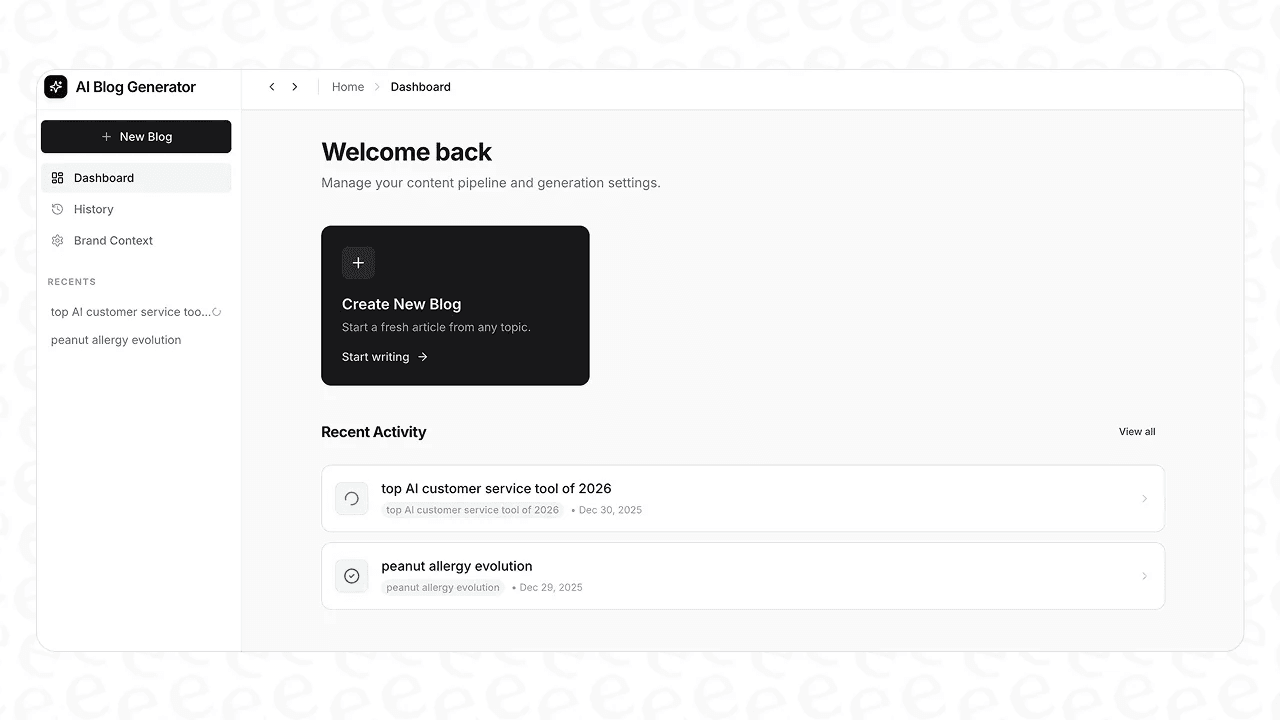
For teams that want to simplify this, the eesel AI blog writer offers a single solution for the entire process. It turns one keyword into a complete, SEO-optimized blog post that's ready to publish.
It was created to connect content generation with optimization. Here’s how it’s different:
- End-to-end workflow: It produces a full article with an introduction, body, conclusion, and FAQs based on your keyword and brand.
- Built-in SEO & AEO: Optimization is part of the generation process. The content is structured for search engines and optimized for AI Answer Engines like Google AI Overviews and Perplexity.
- Automatic assets: The platform automatically creates and adds relevant assets like AI-generated images, tables, and charts, so you don't need other tools for visuals.
- Social proof integration: It finds and embeds relevant YouTube videos and real Reddit quotes to add credibility to your topic.
This approach works. At eesel, we used this tool to grow our daily impressions from 700 to 750,000 in three months by publishing over 1,000 optimized blogs.
Copy.ai vs NeuronWriter: Which tool is right for the job?
- Choose Copy.ai if: You need to generate ideas and first drafts for short-form content like ads, social media posts, and emails.
- Choose NeuronWriter if: You need to optimize new or existing long-form articles to improve their search engine rankings.
However, if you want to scale content production without juggling multiple tools, a single platform can be more practical. A solution that combines research, writing, SEO, and asset creation into one workflow saves time and helps produce consistent, optimized content.
See what a fully optimized blog post looks like
If you want to skip drafting in one tool and optimizing in another, you can generate your first complete blog post for free.

Frequently Asked Questions
Share this article

Article by
Stevia Putri
Stevia Putri is a marketing generalist at eesel AI, where she helps turn powerful AI tools into stories that resonate. She’s driven by curiosity, clarity, and the human side of technology.