ChatGPT from OpenAI is a flexible conversational AI, while Scalenut is a platform built specifically for Generative Engine Optimization (GEO). They both generate text, but their core design, workflows, and intended users are quite different.
This article offers a side-by-side comparison of their features, who they're for, and what they're best used for. The goal is to help you decide which tool fits your needs, whether that’s a general-purpose writing assistant or a complete workflow for SEO and GEO. The right choice depends on your content strategy. For those who want to skip the manual drafting and optimization steps, tools like the eesel AI blog writer can generate complete, publish-ready articles from just a keyword.
An infographic comparing ChatGPT vs Scalenut, highlighting ChatGPT as a general-purpose AI and Scalenut as a specialized GEO platform.
What is ChatGPT?
A screenshot of the ChatGPT homepage, relevant for a ChatGPT vs Scalenut feature comparison.
ChatGPT is a general-purpose conversational AI from OpenAI. It's built to handle a variety of natural language tasks, such as writing, brainstorming, summarizing, and translating. Its main function is a simple prompt-and-response interface, which means the quality of the output depends heavily on how clear and detailed the user's instructions are.
Its uses are broad, from writing emails and social media updates to brainstorming article ideas and analyzing data. The platform is available on web browsers and has mobile apps for iOS and Android, making it useful for tasks on the go. Paid plans give you access to more advanced models like GPT-4o, along with features for data analysis, image interpretation, and coding assistance.
I rely on an SEO tool called Scalenut for all aspects of my work, including keyword planning, keyword clustering, competition analysis, content creation, optimization, and traffic analysis. They do have some good free tools also but with limited usage:)
Its main features are built around this GEO focus:
GEO Core: A set of tools for planning, creating, and optimizing content. It includes a feature called Cruise Mode for generating a first draft in about five minutes and provides a real-time GEO score to guide your writing.
Keyword Planner: This helps users group related topics to build authority in their niche.
GEO Watchtower: Tracks a brand's visibility and mentions on AI platforms like ChatGPT, Perplexity, and Google AI Overviews.
Social UpReach: Monitors Reddit conversations to find trends and see how people feel about a brand.
Scalenut's main purpose is to give content teams the tools to create long-form content that AI can find and cite.
Feature comparison
The fundamental difference between these tools is their approach. ChatGPT is a flexible, all-purpose AI assistant, while Scalenut is an integrated platform focused on a specific GEO content workflow.
Content generation and writing workflow
ChatGPT:
Creating content with ChatGPT is a manual process that relies on giving it a series of prompts. A user has to guide the AI step-by-step to create an outline, write each section, and then put it all together and format the final article. It's good for generating ideas and rough drafts, but it doesn't have a structured, built-in process for making a complete, optimized blog post. The user is responsible for the structure, flow, and optimization.
When you know how to prompt the models correctly, your output is generally much better. The idea is to find a model that works for you, learn how to prompt it correctly, and get the desired output.
Scalenut:
Scalenut provides a guided, step-by-step workflow with its Cruise Mode feature. This function is made to streamline the creation of a first draft in under five minutes. It walks the user through choosing a title, making an outline, and generating content. The process is designed for long-form content and uses SERP analysis and GEO data directly in the editor to make sure the content matches search intent from the beginning.
An infographic comparing the manual, prompt-based content workflow of ChatGPT vs Scalenut's guided, automated Cruise Mode workflow.
SEO vs GEO capabilities
ChatGPT:
ChatGPT doesn't have built-in, real-time SEO or GEO tools. The web browsing feature on paid plans can get current information from the internet, but it can be inconsistent and doesn't provide structured data like keyword volume. The plugin store has been discontinued, which limits its use as a dedicated optimization tool. To use it for SEO, you have to manually feed it data from other specialized tools.
Scalenut:
GEO is the core of the Scalenut platform. Its entire toolset is designed to help users create content that AI engines can easily read, understand, and cite. The Content Optimizer gives a real-time GEO score based on factors like NLP term usage and structure. The GEO Watchtower feature also lets users track their brand's visibility in answers from engines like ChatGPT and Google AI Overviews.
An infographic detailing the differences in SEO/GEO capabilities between ChatGPT vs Scalenut, showing Scalenut's built-in tools.
Integrations and platform support
ChatGPT:
For teams, the Business and Enterprise plans offer integrations with platforms like Google Drive, SharePoint, and Slack. These allow ChatGPT to use a company's internal information to give more personalized answers. The platform is available on the web, iOS, and Android.
Scalenut:Scalenut's integrations are centered on the content marketing workflow. It offers a WordPress Publisher to send drafts to a CMS, a Semrush integration for keyword data, Copyscape for plagiarism checks, and an integration for Shopify. It is a web-based platform.
Pricing breakdown
Both platforms have different pricing models for individual creators, small teams, and larger companies.
An infographic comparing the pricing plans of ChatGPT vs Scalenut, showing the features and costs for each tier.
ChatGPT pricing
According to the official ChatGPT Pricing page, the plans are:
Free Plan: Gives access to the base model with some usage limits.
Plus ($20/month): For individuals, this plan offers access to more advanced models like GPT-4o, faster responses, and tools like DALL·E for image generation and data analysis.
Business ($25/user/month, billed annually): For teams, this plan includes everything in Plus, along with a secure workspace, admin controls, and the ability to connect company data.
Essential Max ($49/month): For individual users. Includes 5 articles per month with Cruise Mode and allows optimization for 5 pages.
Growth Max ($103/month): For growing businesses. This plan raises the limits to 30 articles and 30 keyword clusters and unlocks GEO Watchtower and Social UpReach.
Pro Max ($193/month): For large teams. The article limit is increased to 75, and it adds features like cannibalization reports.
Key limitations
Each tool has limitations depending on what the user wants to achieve.
An infographic outlining the key limitations in a ChatGPT vs Scalenut comparison, focusing on workflow and specialization.
ChatGPT Limitations:
ChatGPT is not a specialized content optimization tool. Creating a publish-ready blog post is a time-consuming process that requires a lot of manual work. It doesn't automatically create visuals, format content with tables, or follow SEO/GEO best practices without detailed prompts. The browsing feature can be inconsistent, and the removal of its plugin store took away a feature that many content creators used.
Scalenut Limitations:
While Scalenut helps streamline the first draft and optimization, the content still needs a human to review and edit it to match a brand's voice and check for factual accuracy. As a platform focused on a new field (GEO), it might have a learning curve for new users. The workflow gives you an optimized draft, but it doesn't automatically generate a complete post with assets that's ready to be published.
eesel AI: An alternative for publish-ready content
For users who want to scale the production of complete, SEO-optimized blog posts with less manual work, the eesel AI blog writer offers a direct solution. Instead of being a flexible assistant or a multi-step workflow, its main function is to turn a single keyword into a finished article.
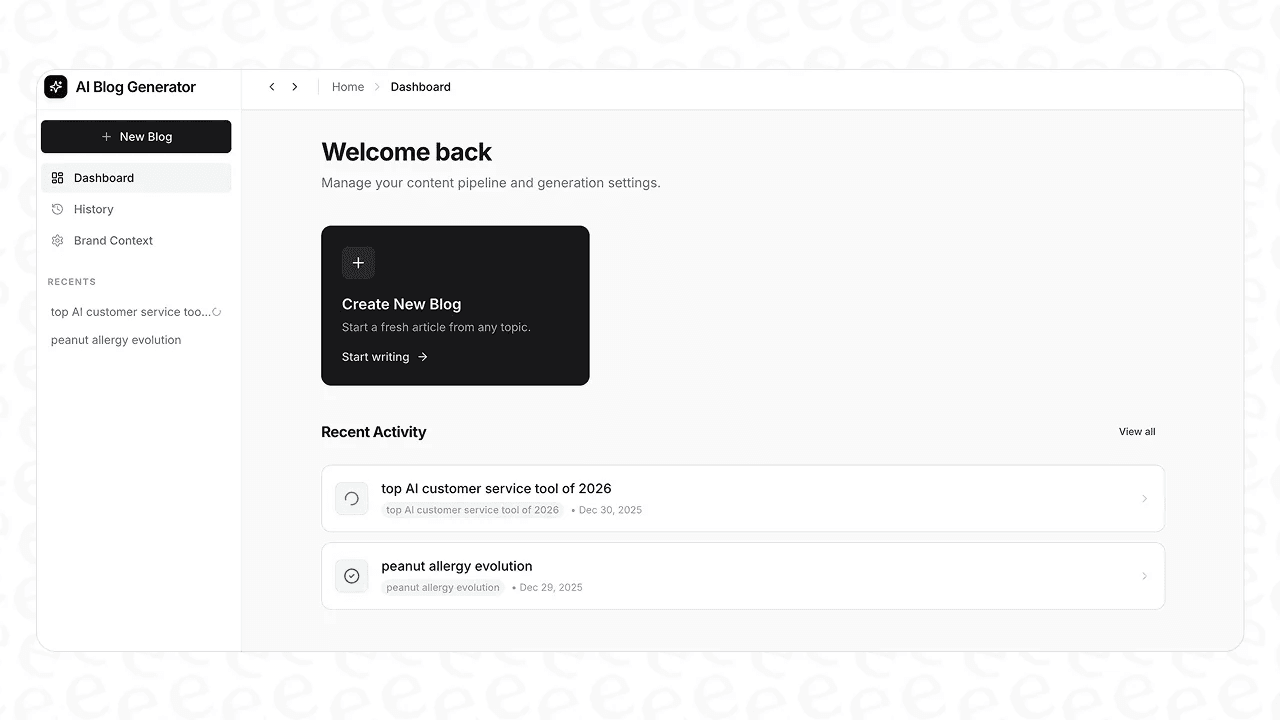
A screenshot of the eesel AI blog writer dashboard, shown as an alternative in a ChatGPT vs Scalenut comparison.
It offers a different approach by automating steps that are often manual in other workflows:
Automatic Asset Generation: The platform creates and adds relevant visuals like AI-generated images, infographics, and data tables directly into the article. This removes the manual step of finding or creating assets.
Rich Media and Social Integration: To add authenticity, it automatically embeds relevant YouTube videos and finds real quotes from Reddit threads related to the topic.
Context-Aware Research: The AI does research based on the type of blog post. For example, it will find pricing data for comparison posts or technical specs for reviews, leading to more detailed content.
AEO (AI Answer Engine) Optimization: Content is structured not just for search ranking but also to be easily understood and cited by AI Answer Engines like Google AI Overviews and Perplexity.
A workflow diagram showing how the eesel AI blog writer creates a complete blog post, positioned as an alternative in the ChatGPT vs Scalenut discussion.
At eesel AI, this tool was used to grow from 700 to 750,000 daily impressions in three months by publishing over 1,000 blogs. The pricing is $99 for 50 blogs, and you can try it for free to generate your first blog.
Choosing the right tool
The right tool is the one that fits your workflow and content goals. This table gives a quick summary to help you decide.
Tool
Best For
Key Strength
ChatGPT
General-purpose writing, brainstorming, and quick text generation.
Flexibility and a powerful conversational interface.
Scalenut
SEO specialists and content teams needing an end-to-end GEO platform.
Comprehensive GEO tools and AI citation optimization.
eesel AI blog writer
Businesses focused on efficiently scaling high-quality, publish-ready blog content.
Fully automated generation of complete, asset-rich articles.
ChatGPT is great for versatile, prompt-based tasks. Scalenut offers a solid toolkit for hands-on GEO content management. For those who want to scale the production of complete, ready-to-publish blogs efficiently, the eesel AI blog writer offers a streamlined alternative.
For another perspective on how these tools stack up, this video offers a direct comparison of their features for content creation.
This video offers a direct comparison of ChatGPT and Scalenut's features for content creation.
Summary
To sum up, ChatGPT is a powerful general-purpose AI, while Scalenut provides a specialized suite for the new field of Generative Engine Optimization. Your choice depends on whether you need a flexible partner for various tasks or a dedicated content marketing platform for the entire GEO workflow.
If your goal is to produce high-quality, optimized blogs at scale without the manual work of drafting, editing, and adding assets, try the eesel AI blog writer for free and generate your first publish-ready article.
The main difference is their core purpose. ChatGPT is a general-purpose conversational AI for a wide range of text-based tasks. Scalenut is a specialized content marketing platform designed specifically for Generative Engine Optimization (GEO), which focuses on making content citable by AI answer engines.
Scalenut is designed for SEO and GEO from the ground up. It includes tools for keyword planning, SERP analysis, and real-time optimization scores. ChatGPT can be used for SEO-related tasks with manual prompting and data from external tools, but it lacks the built-in, specialized features that Scalenut offers.
With ChatGPT, the workflow is manual and iterative; you must prompt it for an outline, each section, and then assemble the final post yourself. Scalenut offers a guided "Cruise Mode" that streamlines the creation of a first draft by walking you through title selection, outlining, and content generation based on GEO principles.
While you can prompt ChatGPT with GEO principles in mind, it does not have native GEO capabilities. Scalenut's entire platform is built around GEO, with features like a GEO score optimizer and a Watchtower to track brand mentions in AI answers. Achieving the same result with ChatGPT would require significant manual effort and expertise.
For users who want to generate complete, publish-ready blog posts with minimal intervention, the eesel AI blog writer is a strong alternative. It automates the entire process, from research and writing to generating and embedding assets like images, infographics, and YouTube videos, turning a single keyword into a finished article.
Share this article
Article by
Stevia Putri
Stevia Putri is a marketing generalist at eesel AI, where she helps turn powerful AI tools into stories that resonate. She’s driven by curiosity, clarity, and the human side of technology.