ChatGPT vs Bramework: Which AI writer is right for your content workflow?

Kenneth Pangan

Stanley Nicholas
Last edited January 22, 2026
Expert Verified

The main hurdle for content teams isn't coming up with ideas. It's actually creating great, SEO-friendly content consistently enough to make a difference. AI writers help, but they're not all the same. This leads to a common question: should you stick with a general AI like ChatGPT or go for a specialized tool like Bramework?
The right answer really comes down to how you work. ChatGPT is flexible, while Bramework gives bloggers a more structured toolkit. There's also a third option to consider. Tools like the eesel AI blog writer are made to handle the whole process automatically, taking a keyword and turning it into a complete, ready-to-publish article.
In this guide, we’ll compare ChatGPT and Bramework to help you figure out which one fits your needs.
What is ChatGPT?
ChatGPT is a well-known, general-purpose language model from OpenAI. It's built to understand and write human-like text for just about any task you can think of. You can use it to brainstorm blog ideas, summarize articles, write ad copy, or even code. Its chat-based interface is simple to use, so anyone can jump right in.
But its biggest strength, its flexibility, is also its main drawback for content teams. ChatGPT isn't a dedicated blogging tool. It gives you plain text based on your prompts, so the final quality really depends on how good you are at writing detailed instructions. After you get the text, you still have to do all the manual work: formatting, adding images and links, and optimizing it for SEO. It’s a great place to start, but it won’t get you a finished post.
What is Bramework?
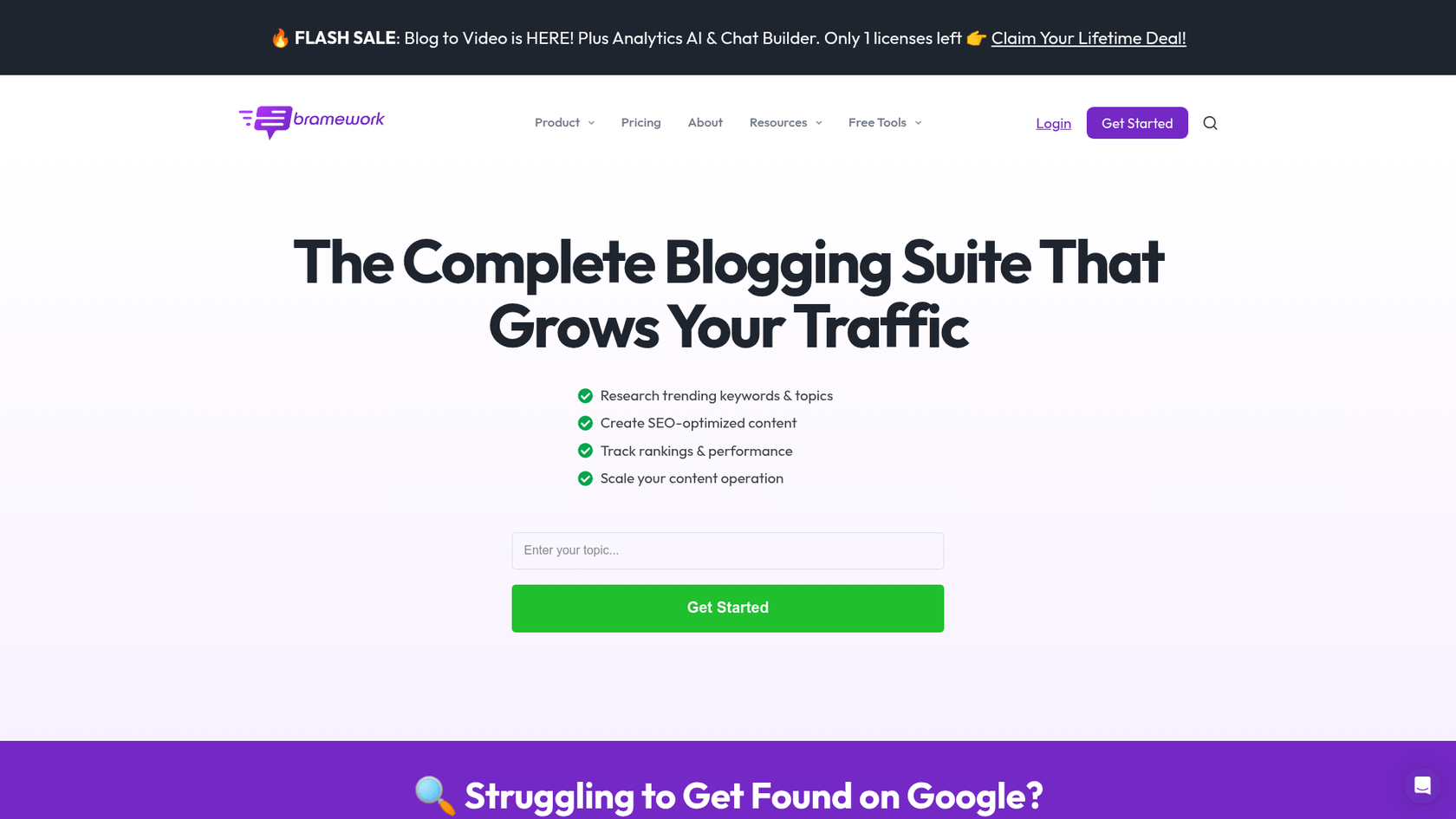
Bramework is an AI writing platform made specifically for bloggers, freelance writers, and content agencies. Instead of giving you a blank page, it offers a structured workflow that takes you from keyword research to a final draft, all in one place.
Its features are built to solve common blogging problems. The platform has a Keyword Analyzer that uses SEMrush data to help you find good topics. Its "First Draft PRO" feature can generate long articles up to 5,000 words, and the Blog Booster helps you refresh old content. It even connects directly with WordPress to make publishing easier. Bramework is for people who want a guided process and a full set of blogging tools without needing multiple subscriptions.
Writing workflow comparison
The experience of writing with a general tool that follows commands is very different from a specialized platform that guides you through steps.
ChatGPT's content creation approach
Using ChatGPT for content is like working with a writing assistant who needs clear, step-by-step directions.

This means you have to do all the work to turn that text into a blog post. You have to add headings, bold text, find images, create tables, and embed videos. Without very detailed prompts, the content can also sound generic and might not have the detail needed to rank for competitive keywords.
Bramework's content creation approach
Bramework provides a much more structured writing process. It’s built to guide you from a single keyword to a finished draft inside its platform. You start with its keyword tool, then move to the editor where it helps you build an outline and generate a first draft.
The "First Draft PRO" feature is the core of its workflow, creating posts that can automatically include research, citations, external links, and meta descriptions. This guided method can be a time-saver, particularly for those new to content creation. However, Bramework is very clear about its focus: it’s for bloggers. The company even notes that it might not be the right tool if you need to write whitepapers, website copy, or social media updates.
SEO and optimization features
For content to make an impact, people need to be able to find it. That's why built-in SEO tools are now a standard feature for most content platforms.
SEO in ChatGPT
ChatGPT has no built-in SEO tools. How well it works for SEO is entirely up to your expertise and the quality of your prompts. You have to do keyword research with another tool (like Ahrefs or SEMrush) and then tell ChatGPT how to use those keywords in the title, headings, and body. You can ask it to write a meta description or suggest related keywords, but it isn't actively checking your content against SEO best practices. While some third-party plugins are available, they aren't part of the core product and their quality varies.
SEO in Bramework
SEO is a major feature of Bramework, with tools built directly into the writing process. Its Keyword Analyzer gives you data on keyword difficulty and search volume, and it looks at SERP data to help you see what you're up against. As you write, the platform gives you a real-time SEO score, offering tips on things like keyword density and readability. This can be useful for covering the basics. Bramework is also upfront about its limitations, stating that its tools don't guarantee rankings since factors like domain authority and keyword competition are also important.
Pricing comparison
The pricing for these two tools reflects their different purposes: one is a general AI assistant, and the other is a specialized professional platform.
ChatGPT pricing
ChatGPT has a useful free tier that gives you access to a solid language model. For more features, it offers several paid plans.
- Go: $8/month for more access to the main model.
- Plus: $20/month for access to advanced models like GPT-4 and features like DALL-E for image creation.
- Pro: $200/month for full access and the highest usage limits.
- Business: A team plan at $25 per user/month (billed annually) with higher message limits and admin features.
Bramework pricing
Bramework uses a subscription model with a unique two-part cost system. Its plans, like Grow ($29/month) and Pro ($129/month), come with two different allowances:
- AI Word Allowance: Used for generating shorter content with features like the paragraph writer, rewriter, and "Quick Draft".
- First Draft PRO Credits: A separate credit system where one credit generates one long-form blog post.
This structure means you have to keep track of two types of usage. It's also worth noting that Bramework doesn't offer a free trial, so you can't test it out before buying a plan.
An alternative: The eesel AI blog writer
While ChatGPT involves a lot of manual work and Bramework has a very specific workflow, the eesel AI blog writer offers a more direct way to grow organic traffic. It’s a tool designed for one thing: turning a single keyword into a complete, SEO-optimized, and publish-ready blog post in minutes. It is designed to automate the entire content process, addressing common challenges of both general and specialized tools.
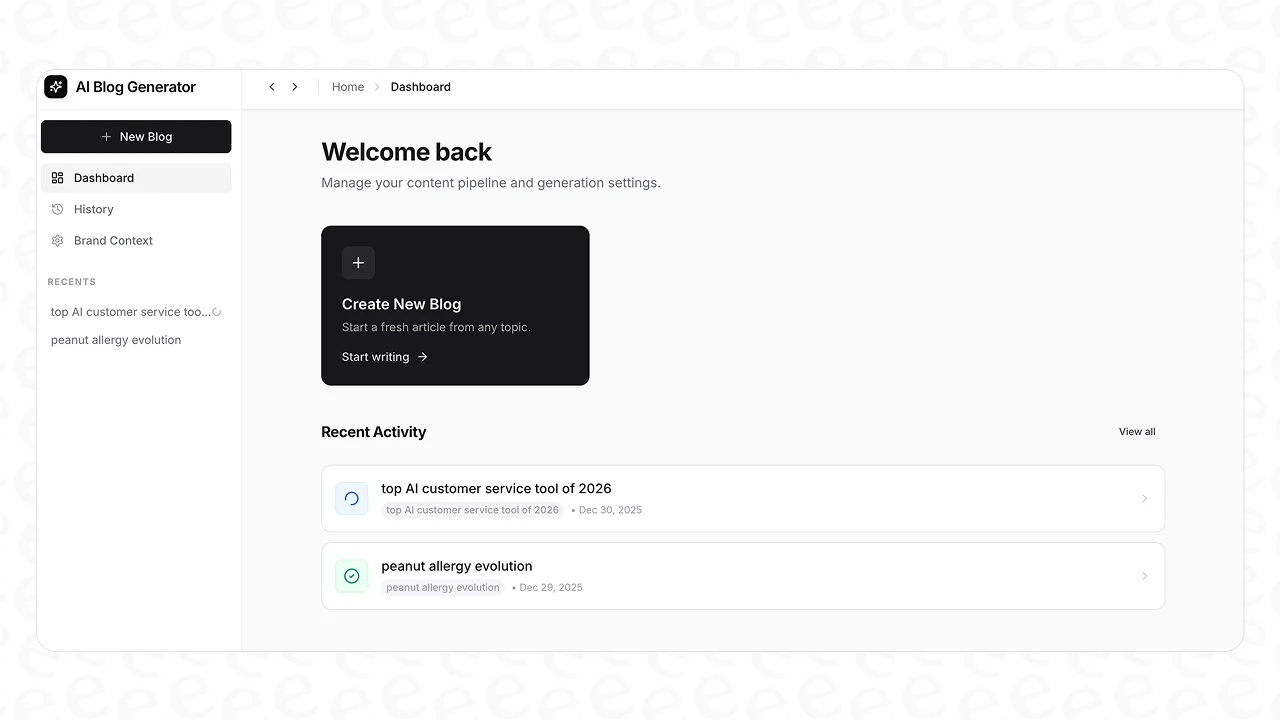
Instead of just giving you text, the eesel AI blog writer produces a finished article with everything you need. Here’s what sets it apart:
- Automatic asset generation: It creates and adds relevant images, infographics, and tables directly into the post. You don’t have to search for stock photos or build visuals yourself.
- Authentic social proof: The tool finds and embeds real Reddit quotes and relevant YouTube videos, adding depth and credibility that generic AI content often misses.
- Deep research with citations: It builds a network of links by automatically adding internal links to your content and external links to credible sources, which helps with SEO.
- AEO optimization: The content is structured to perform well in AI answer engines like Google AI Overviews and Perplexity.
We built this tool to solve our own problems with scaling content, and the results are clear. Using the eesel AI blog writer, we grew our daily search impressions from 700 to over 750,000 in just three months.
The pricing is simple: just $99 for 50 complete blog posts. Best of all, it's completely free to try, so you can see the quality for yourself.
ChatGPT vs Bramework: Which is right for you?
Picking the right AI writer comes down to your specific needs and how you like to work. After looking at the features, workflow, and pricing, the best choice should be clearer.
- Choose ChatGPT if: You need a flexible, all-purpose AI assistant for tasks beyond just blogging. It’s a good choice if you have the SEO knowledge to guide it and don’t mind doing the manual formatting and asset creation.
- Choose Bramework if: You are a blogger or a small agency that wants an all-in-one platform with a structured workflow. It's a solid option if you want built-in SEO guidance and mainly write long-form blog posts.
If your goal is to grow organic traffic efficiently, an alternative like the eesel AI blog writer could be a strong fit. It automates time-consuming parts of content creation like research, writing, formatting, and asset generation. It’s made for teams that need to publish quality content at scale.
Generate your first complete blog post for free with the eesel AI blog writer and see the difference.
Frequently Asked Questions

Share this post
Article by
Kenneth Pangan
Writer and marketer for over ten years, Kenneth Pangan splits his time between history, politics, and art with plenty of interruptions from his dogs demanding attention.