The blog writing future: 3 key trends and shifts to watch

Stevia Putri

Katelin Teen
Last edited January 20, 2026
Expert Verified

Let's be honest, someone probably asks "is blogging still a thing?" pretty much every day. With short-form video and AI search results dominating our feeds, it's a valid question. But here’s the deal: blogging isn't dead. It’s just grown up.
The old strategy of finding a keyword, cramming it into a generic article, and hitting "publish" is long gone. That approach just doesn't fly anymore. Today, blogging is more human, more technical, and deeply integrated with everything else you do. It's all about building real trust and showing you know your stuff.
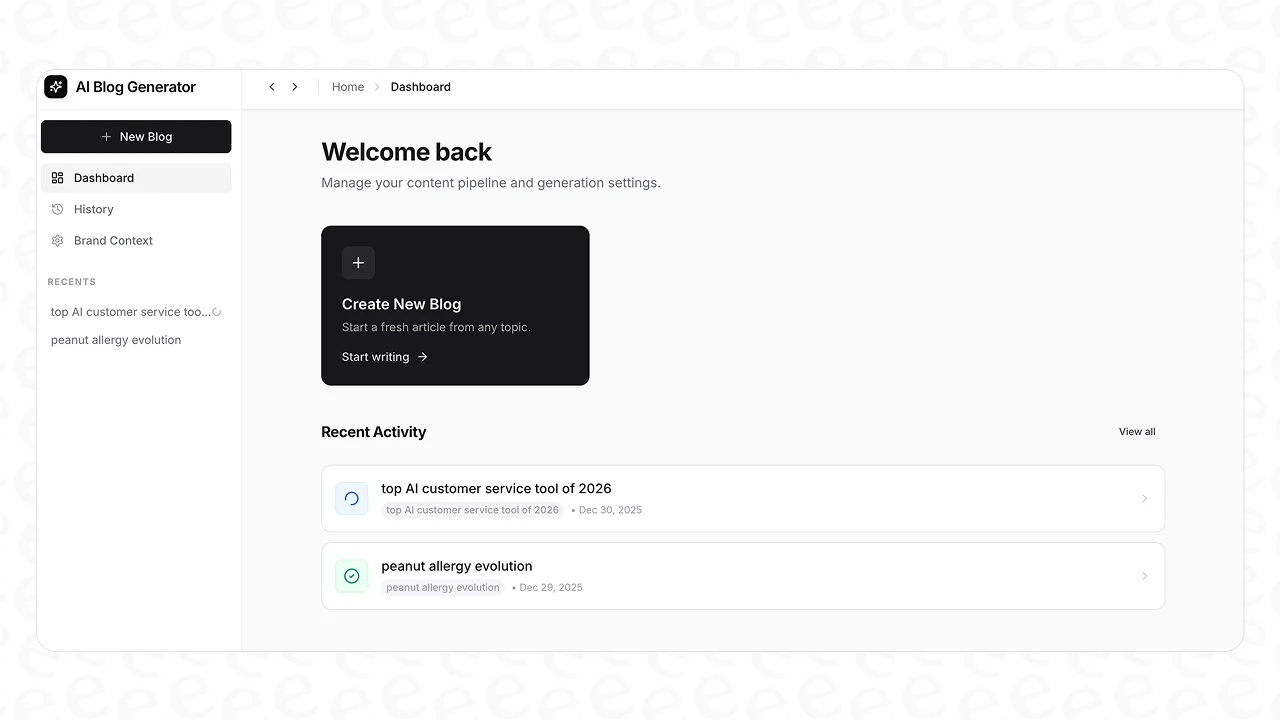
So, what actually works now? It comes down to adapting to a few major shifts: new standards for what makes content "good" (think E-E-A-T), new ways people find information (hello, AEO), and a demand for content that is more than just a wall of text. Keeping up with these changes means you need tools built for this new world. Tools like the eesel AI blog writer are designed to help creators and brands adapt by automating the modern content workflow, from initial research to a publish-ready post packed with media.
What the blog writing future looks like
The future of blogging isn't just about the final article. It’s about building a whole content engine where your blog acts as the main hub for your brand's expertise. It’s the foundation for your social media, newsletters, and even videos.
The whole game is now built on a few key ideas:
- Authenticity: In a world flooded with generic AI content, your actual, first-hand experience is your biggest advantage. People are looking for content from someone who's been in the trenches.
- Usefulness: Your content has to be genuinely helpful. It needs to solve a real problem or answer a question with depth and accuracy. No more surface-level fluff.
- Technology: Let's face it, creating high-quality content with lots of visuals at scale is a grind. AI and automation aren't just nice to have anymore, they're necessary to keep up without burning out.
- Distribution: A blog post is the beginning, not the end. It's the fuel for your social posts, email campaigns, and video scripts.
Trend 1: Experience-driven content in the blog writing future
You’ve seen them, those bland, soulless articles that sound like they were written by a robot that just discovered listicles. Generic AI content has flooded the internet, and frankly, everyone is over it. Readers are getting better at spotting it, and so are search engines.
This is where Google’s E-E-A-T guidelines come into play. It stands for Experience, Expertise, Authoritativeness, and Trustworthiness, and it's the new benchmark for quality content. That first "E" for Experience is the big one. Google added it in 2022, sending a clear message: they want content from people who actually know what they're talking about.
Google’s own advice is to create "people-first content" that demonstrates you have a real depth of knowledge on a subject.

So, what does that mean in practice?
- Instead of another generic post titled "10 Best Project Management Tools," you write something like, "How Our Team Uses Asana to Manage Projects (Our Exact Workflow)."
- You show, not just tell. You use your own case studies, share personal stories, and include real data to back up your claims and build credibility.
How AI enhances authenticity
A common misuse of AI is to generate generic content that fails the E-E-A-T test. The more effective approach is to use AI as an assistant that helps you scale your own expertise, not replace it.
Modern AI tools can actually help you ground your articles in real-world proof. For instance, the eesel AI blog writer doesn't just write text; it helps you build trust. It can automatically find and embed relevant quotes from Reddit discussions into your article, showing what real people are saying about a topic. This adds a layer of genuine user sentiment that you just can't fake.
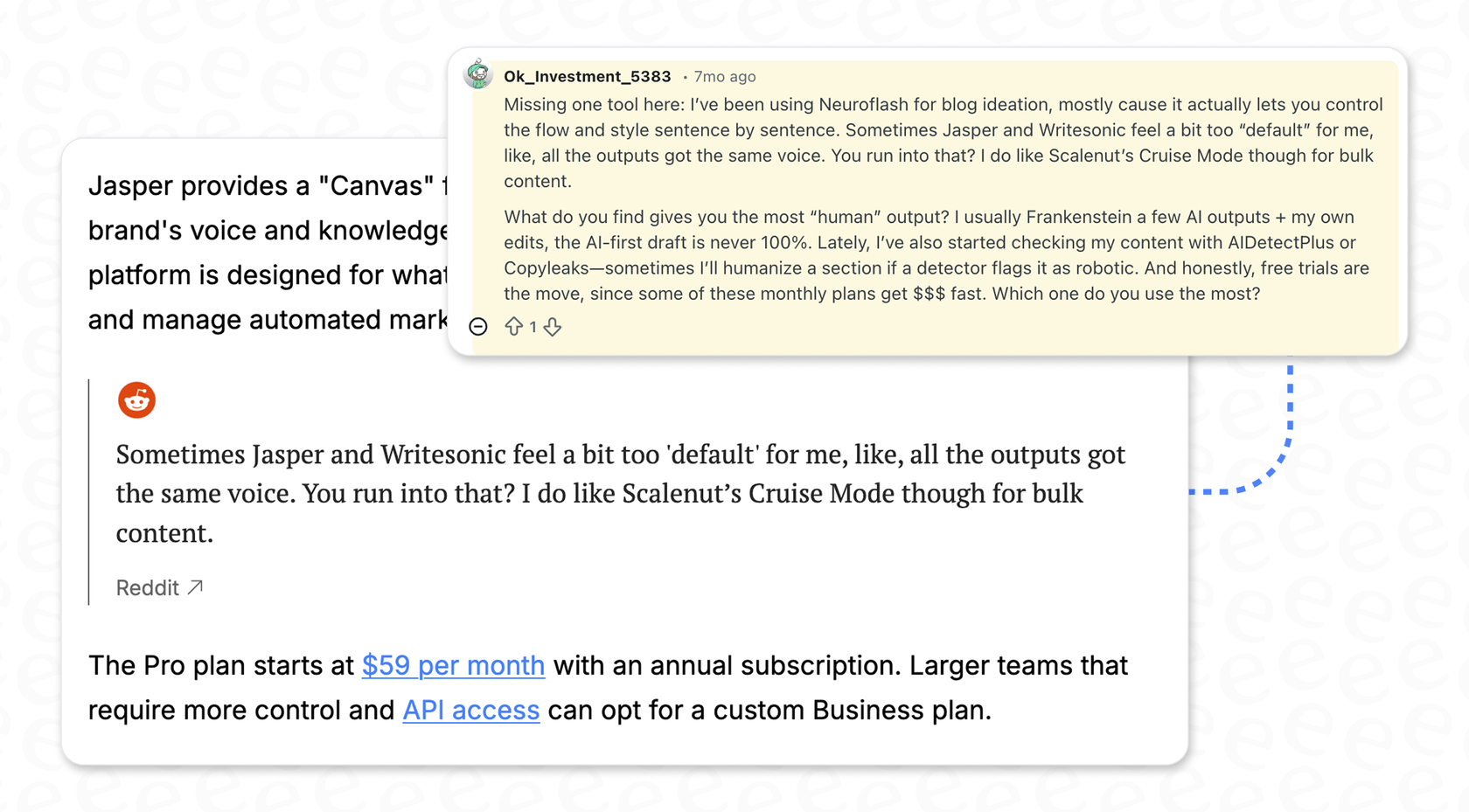
On top of that, its context-aware research finds specific data points, technical specs, and citations to support your claims. It saves you hours of manual digging while making sure your content is factual, trustworthy, and full of real experience.
Trend 2: The shift from SEO to AEO
The way we search for information is changing, and it's happening fast. We're moving away from typing a few keywords into a search bar and are now asking full, conversational questions to AI assistants like Google's AI Overviews, Perplexity, and ChatGPT.
This is a big deal. Gartner predicts that search engine volume will drop by 25% by 2026 because of this shift to AI-powered search. This is where Answer Engine Optimization (AEO) comes in.
So, what is AEO? It's about structuring your content to provide direct, clear, and verifiable answers that AI models can grab and use as a primary source for their summaries.
To visualize this shift, here’s a quick comparison:
- SEO: The goal is to get your link to rank in the top 10 search results.
- AEO: The goal is to become the source for the answer itself, so you're featured directly in the AI-generated summary.
Getting your content featured as the source is the new top spot.
Practical steps for optimizing for answer engines
So how do you actually do this? You need to structure your content in a way that makes it incredibly easy for an AI to understand and quote.
Here are a few practical tips:
- Use clear, question-based headings. Think "What is the best way to do X?" or "How does Y work?"
- Provide a short, factual answer right below the heading. Get straight to the point.
- Use structured data. Things like tables, bulleted lists, and FAQ sections are your best friends. They organize information in a way that AI can easily parse.
- Cite your sources. Linking to credible, authoritative sites builds trust with both your readers and the AI models.
This might sound like a lot of extra work, but it's a core function of tools designed for the modern web. The eesel AI blog writer is built specifically for AEO. It automatically structures content with those clear, question-based headings and even includes a ready-made FAQ section in every article. It's designed to help you show up in these new answer engine formats without having to manually reformat everything yourself.
Trend 3: Creating a full media experience
A giant wall of text just doesn't cut it anymore. To grab and hold a reader's attention today, a blog post needs to be a rich, multimedia experience. Think engaging visuals, helpful videos, and data that's easy to understand at a glance.
The problem is that creating all of that takes a ton of time. You need special skills and are often juggling a bunch of different tools: one for writing, one for images, another for finding videos. It’s a huge bottleneck for anyone trying to scale their content.
This is where AI becomes a true partner. We're moving beyond AI that just generates text to AI that can create a complete content package from start to finish.
How eesel AI automates assets
This is a challenge the eesel AI blog writer is designed to solve. Instead of providing just a text draft, it produces a fully-formed, publish-ready blog post with all the necessary assets included in one process.
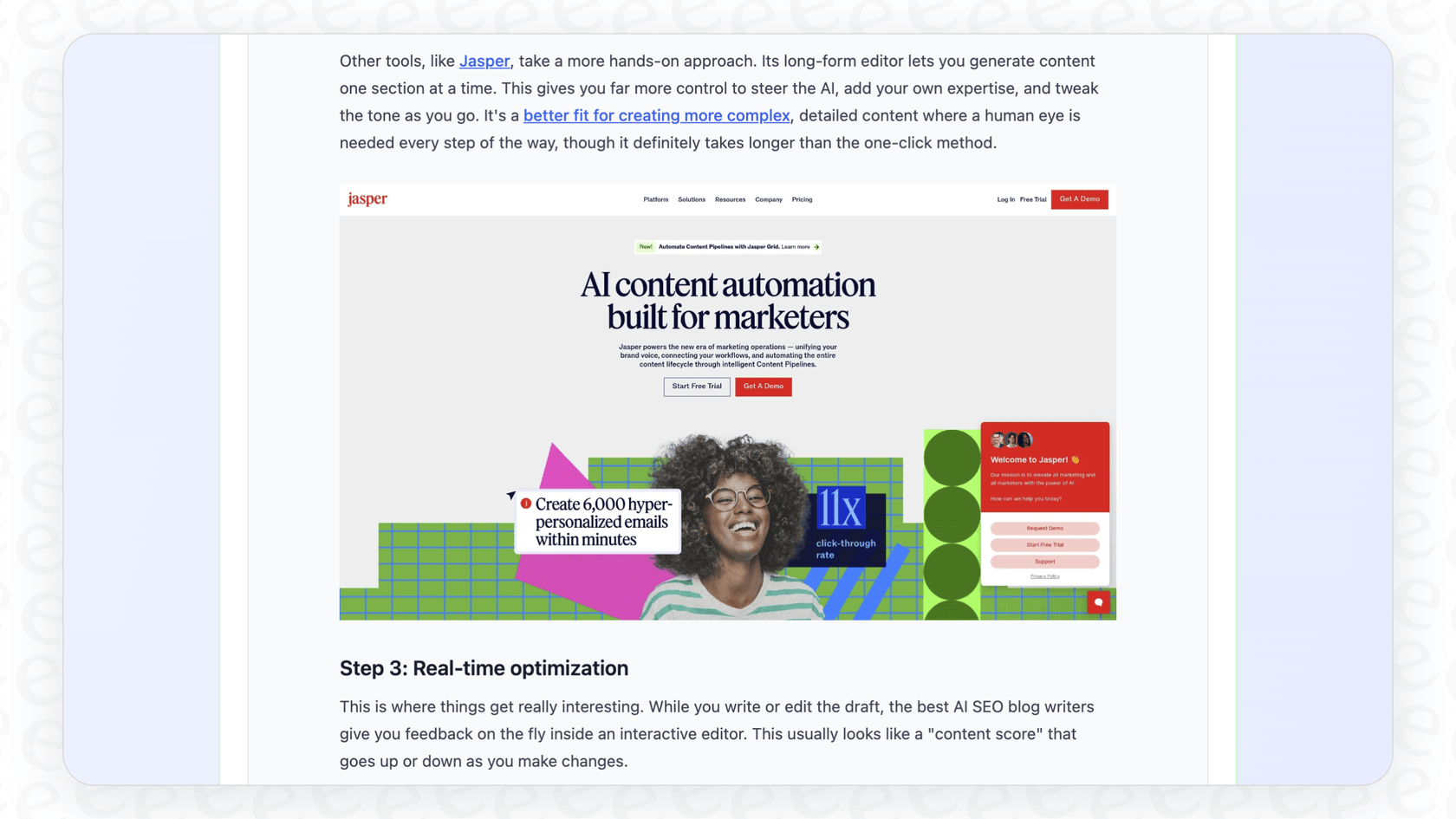
Here’s a look at the kinds of assets it creates for you automatically:
- AI-generated images and infographics to help you visually explain complex ideas and break up the text.
- Tables and charts to structure data and comparisons in a way that's easy to scan.
- Relevant YouTube video embeds to add more depth and engagement with expert commentary or tutorials.
- Authentic Reddit quotes to ground your article in real user feedback and provide that all-important social proof.
This is how you scale high-quality, engaging content that meets modern reader expectations. It’s the exact process we used to grow our own blog traffic from 70k to over 750,000 daily impressions in just three months. By automating the entire asset creation process, we could focus on the ideas, not the manual labor.
| Feature | Text-Focused AI Assistant (e.g., ChatGPT, Jasper) | eesel AI blog writer |
|---|---|---|
| Core Output | Plain text draft requiring manual assembly | Structured, publish-ready article |
| Visuals | None or basic AI images | AI-generated images & infographics |
| Data Formatting | Plain text | Automatic tables & charts |
| Video Content | None | Relevant YouTube video embeds |
| Social Proof | None | Real Reddit quote integration |
| Optimization | Basic SEO (with specific prompts) | Built-in SEO and AEO optimization |
Adapting to the new content landscape
The blog writing future is not about letting AI take over. It is about pairing your human expertise with smart tools that handle the tedious parts.
Navigating these changes can feel overwhelming, but understanding the new rules of engagement is the first step. For a deeper dive into how blogging is evolving and why it's still a powerful strategy in 2026, check out this insightful video:
This video from The Creative Impact discusses how blogging has evolved and why it's still a powerful strategy for the future.
The major shifts are already happening: a return to authentic, experience-driven content that passes the E-E-A-T test, a technical move from old-school SEO to AEO, and the growing demand for rich, multimedia experiences that keep readers engaged.
These changes are an opportunity for creators who are ready to adapt. By focusing on genuine quality and using the right tools to work smarter, you can build more trust and drive better traffic.
Start building the future of your blog today
The eesel AI blog writer was built from the ground up to tackle the challenges we've talked about. It's designed for this new era of content creation.
Instead of spending hours researching, writing, and creating assets, you can go from a single keyword to a complete, SEO- and AEO-optimized blog post, with all the images, tables, and social proof included, in just a few minutes.
See the quality for yourself. Generate your first complete blog post for free and discover how quickly you can scale content that actually ranks.
Frequently Asked Questions

Share this post
Article by
Stevia Putri
Stevia Putri is a marketing generalist at eesel AI, where she helps turn powerful AI tools into stories that resonate. She’s driven by curiosity, clarity, and the human side of technology.