Master blog writing for lead magnets: A complete guide

Kenneth Pangan

Katelin Teen
Last edited January 20, 2026
Expert Verified

Ever feel like your blog is just… there? You pour hours into writing great content, but it's not really doing anything for your business. We all want our blogs to work for us, turning readers into actual leads. A high-performing blog is one of the best tools for the job. In fact, companies that blog generate 67% more leads than those that don’t.
But here’s the tricky part. It’s one thing to get people to your site with a great headline, but it’s another thing to get them to give you their email address. The thing that turns a casual reader into a potential customer is a valuable, can't-say-no offer, also known as a lead magnet. The problem is, creating both a fantastic blog post and a compelling lead magnet for it is a huge amount of work.
This guide will walk you through the whole thing. We’ll cover the strategy behind using blogs to power your lead generation, talk about the headaches of the old-school approach, and show you how modern AI tools can completely change how you work. Platforms like the eesel AI blog writer can now automate the entire process, from generating a fully researched blog post to creating the assets you need for a killer lead magnet.
What is a lead magnet and why is it essential for your blog?
Let's break it down. A lead magnet is just a free, valuable resource you offer people in exchange for their contact info, usually an email address. Think of it as a fair trade. You give them something that solves a small, specific problem for them, and they give you a way to stay in touch.
This isn't about tricking anyone. It's about starting a relationship based on trust. By offering a "quick win," you're showing that you get their problems and can provide real value. It's the first step in turning a stranger into a fan.
The best part? You can create all sorts of lead magnets directly from your blog content. Some common types are:
- Ebooks or comprehensive guides: A deep dive that goes beyond your blog post.
- Checklists or cheat sheets: A simple, one-page summary of the key steps or takeaways.
- Actionable templates or swipe files: Resources your audience can use right away.
- Access to a webinar or video training: A more interactive way to share the blog's core ideas.

Your blog is the perfect spot to offer these. It brings in an audience that's already looking for answers (thanks, Google!), teaches them about the topic, and builds your credibility. By the time they finish reading your post, they already see you as a helpful expert. An offer for a related resource doesn't feel pushy; it feels like the logical next step. This is often called a "content upgrade," which is a lead magnet that’s super relevant to the specific post they're reading, making it an easy "yes".
The traditional approach to creating lead magnets and its challenges
So, how does this usually play out? For years, creating a blog post and a matching lead magnet has been a slow, manual process. If it sounds familiar, it's because most of us have been stuck doing it this way.
It generally looks something like this:
- Research: Spending hours digging through keyword tools and competitor blogs to find a topic that might actually rank.
- Outlining: Trying to map out a post that makes sense and covers all the important points.
- Writing and Editing: The long slog of getting words on the page and then polishing them until they're readable.
- Fact-Checking: Hunting down data, stats, and examples to make your content feel authoritative.
- Visuals: Pestering your designer (or fighting with Canva) to create custom graphics or a nicely formatted checklist for the lead magnet.
- SEO: Going back over everything to make sure you’ve checked all the on-page SEO boxes.
When you spell it all out, the problems become pretty obvious. This old-school way of doing things is full of headaches that stop most teams from making real progress.
- It takes forever: A single, high-quality blog post and lead magnet can easily take up a full week of someone's time. For a small team, that's a massive chunk of the schedule.
- It requires a lot of resources: You need a writer, an SEO specialist, and a graphic designer to do it well. If you're trying to be all three, burnout is a real risk.
- It's almost impossible to scale: Creating one great piece of content a month is tough. Trying to publish regularly to build momentum? That's a huge bottleneck that brings most content plans to a halt.
- It can end up being generic: When you're in a rush, it's tempting to skimp on research. The result is often shallow content that doesn't offer enough value to convince anyone to trade their email for it.
Using AI to streamline creating lead magnets
For a long time, that manual grind was the only option. But AI has completely changed the game. What used to be a multi-day, multi-person job can now be done in minutes, turning a major bottleneck into a smooth, scalable process.
The modern workflow with the eesel AI blog writer
Instead of a generic AI assistant that gives you a rough draft, you can now use a specialized tool like the eesel AI blog writer. It’s built to do one thing really well: generate complete, publish-ready blog posts from a single keyword.
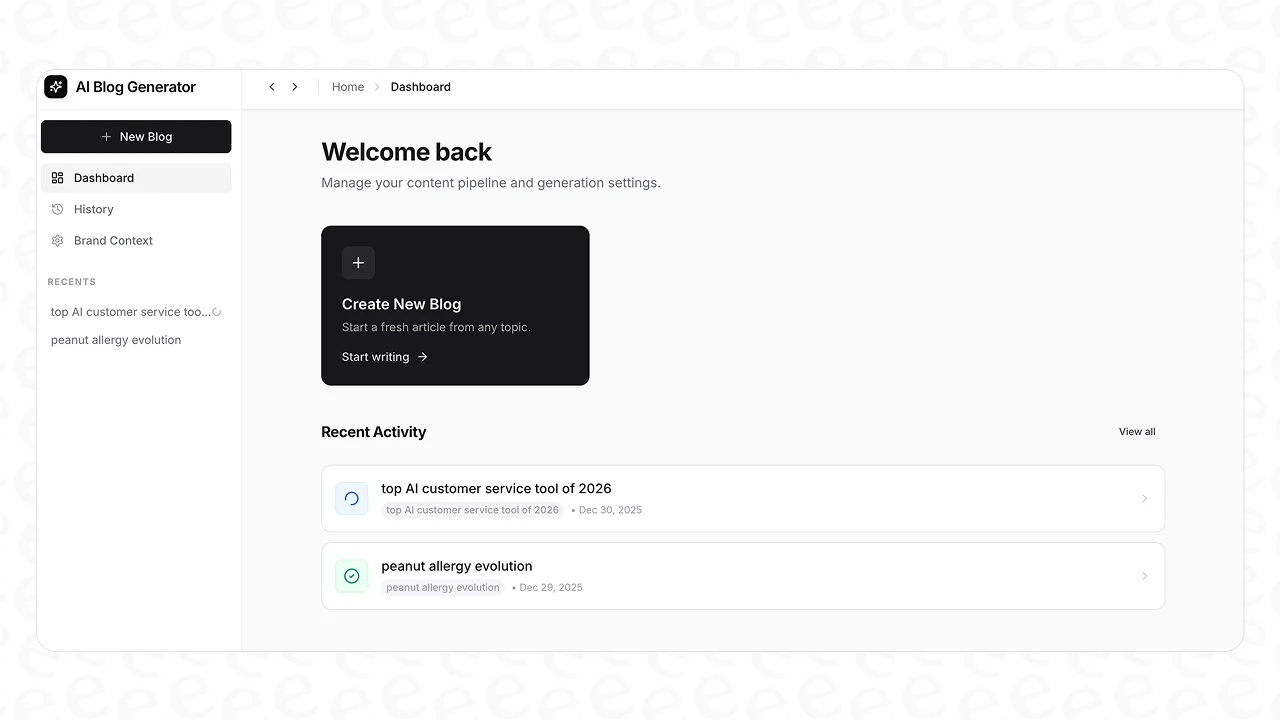
The process is about as simple as it gets. You give it a topic (like "blog writing for lead magnets") and your website URL. The AI then gets to work, researching your brand and the topic to generate a full article that's ready to publish.
What makes it so good for creating lead-magnet-ready content are a few key features:
- Context-Aware Research: The AI does more than just scratch the surface. It performs deep research based on what the content needs. For instance, it automatically pulls data for comparison posts, making sure the content is full of the specific, valuable info people are actually looking for.
- Automatic Asset Creation: This is where things get really interesting. The platform doesn't just give you a wall of text. It automatically generates tables, infographics, and AI images right inside the blog post. These assets are perfect for repurposing into a checklist, cheat sheet, or a visual guide to use as your lead magnet. The work is already done.
- Authentic Social Proof: To make the content feel more human and trustworthy, the tool finds and embeds quotes from Reddit threads. This adds a layer of credibility that generic AI content just can't replicate.
We don't just recommend this tool; we built our own growth on it. At eesel AI, we used our blog writer to grow our organic traffic in just three months by publishing over 1,000 optimized posts. It’s not just a theory; it’s a proven way to grow.
How eesel AI compares to general AI assistants
General AI assistants like ChatGPT and Jasper are also options for content creation. These tools function as versatile writing partners that can assist with various stages of the process.
- ChatGPT: This tool is effective for brainstorming ideas and generating initial text drafts. The output typically requires further refinement to align with a specific brand voice and format. Users manage the research, SEO, and asset creation components of the workflow separately.
- Jasper: As a broad AI marketing platform, Jasper can create various types of content, from ad copy to blog text. It generates text and AI images with user guidance. For search engine optimization, it offers functionality through an integration with SurferSEO.
Here’s a quick look at how the approaches compare, now in a more visual format:
| Feature | eesel AI blog writer | ChatGPT | Jasper |
|---|---|---|---|
| Typical Output | Complete blog post | Text draft | Text and AI images |
| Automatic Assets | Yes (images, tables, videos) | No | AI images only |
| SEO Optimization | Built-in | Manual process | Requires integration |
| Social Proof Integration | Yes (Reddit quotes) | No | No |
| Primary Workflow | Single-step generation | Multi-step prompting & editing | Guided content creation |
Best practices for creating lead magnets from blogs
Once you have a great blog post, turning it into a high-converting lead magnet is all about strategy. Here are a few best practices to keep in mind.
Focus on 'quick wins'
Nobody wants to download a 50-page ebook they'll never get around to reading. The best lead magnets are short, scannable, and deliver value right away. Think checklists, cheat sheets, or templates. As some content experts have noted, ebooks often go unread. Try to create something your audience can use and apply in 15 minutes or less.
Repurpose key assets from your blog
You don't need to start from scratch. The best lead magnets are direct extensions of your blog content. Here are a few ideas:
- Turn the steps from a "how-to" post into a printable checklist.
- Gather the best examples from your post into a handy swipe file.
- Summarize a data-heavy article into a one-page "cheat sheet."
Design a clear call-to-action
How you ask is just as important as what you're offering. Your call-to-action (CTA) needs to be super clear and focused on the benefit. Instead of a generic button that says "Download Now," try more persuasive language like "Get the 5-Step SEO Checklist."
And don't be shy about asking more than once. Place your CTAs in smart locations where engaged readers are likely to see them: at the beginning, in the middle, and at the end of your post. Make it as easy as possible for them to say yes.
For a more in-depth look at how to create lead magnets that convert, check out this video guide. It breaks down proven tips and examples you can apply directly to your own content.
A video from Visme explaining how to create effective lead magnets that work with your blog writing for lead magnets strategy.
Start building your lead generation engine
At the end of the day, high-value blog posts are the fuel for a powerful lead generation engine. But the traditional, manual process of creating both the content and the lead magnet is a huge bottleneck that holds most businesses back.
AI has completely changed this workflow, making it possible to scale your content marketing efforts without burning out. A specialized tool like the eesel AI blog writer automates the whole process. It doesn't just write a blog post; it does the research, finds social proof, and creates the visual assets you need to offer a compelling lead magnet at the same time.
Ready to stop spinning your wheels and start generating leads? It's time to see what a modern, AI-powered content workflow can do for you.
Ready to turn your keywords into high-converting blog posts and lead magnets? Generate your first blog free.
Frequently Asked Questions

Share this post
Article by
Kenneth Pangan
Writer and marketer for over ten years, Kenneth Pangan splits his time between history, politics, and art with plenty of interruptions from his dogs demanding attention.