A strategic guide to blog writing for audience growth

Stevia Putri

Katelin Teen
Last edited January 20, 2026
We’ve all been there. You pour hours, maybe even days, into crafting a blog post you’re proud of. You hit publish, share it once, and then nothing. With millions of new posts flooding the internet every day, just writing something good isn't enough anymore. You need a real strategy.
This isn't just another list of generic "blogging tips." It's a proper framework for blog writing for audience growth. We'll walk through how to figure out who you’re actually writing for, create content that helps them, and promote it so people actually see it.
What is strategic blog writing for audience growth?
Let's get one thing straight: strategic blog writing for audience growth isn't about throwing articles at the wall and hoping something sticks. It’s a deliberate process designed to attract, engage, and hold onto a specific audience. Think of it less like shouting into a void and more like building a relationship.
This system really boils down to four key parts:
- Audience understanding: You have to know who you're writing for, what their problems are, and what they're typing into Google.
- Value-driven content creation: Your posts need to solve problems, answer questions, or offer a perspective they can't get anywhere else.
- Strategic promotion and SEO: You need a plan to make sure your great content finds the right people when they need it.
- Engagement and retention: The goal is to turn first-time readers into a loyal community that trusts you and comes back for more.
A four-step workflow diagram illustrating the key pillars of strategic blog writing for audience growth.
These four pillars have to work together. If you have amazing content but no one sees it, it doesn't matter. If you have a great promotion plan but your content is thin, no one will stick around. A weak link in the chain can mess up the whole effort.
The foundational pillars for effective blog writing
Before you even start thinking about promotion or SEO, your content has to be solid. If what you're writing doesn't click with a specific group of people, no amount of marketing wizardry will save it. Let's look at how to build that foundation.
Identify your audience
You can't write for everyone. If you try, you’ll end up connecting with no one. The first step is to nail down your niche and sketch out a clear reader persona. Who is this person? What do they do for a living? What are their biggest headaches?
Once you have a clear picture of your ideal reader, you need to find out what they're struggling with. The best content solves real problems. A great way to start your research is to go where people are already asking questions:
- Reddit: Find subreddits in your niche and see what questions and complaints pop up over and over.
- Social media: Look at the comments on posts from industry leaders. What are people confused or frustrated about?
- Google's "People also ask" section: Type in a broad topic and see what related questions Google suggests. This is an absolute goldmine for content ideas.
I write on a wide range of subjects, too, and often struggle to define my ‘niche’ audience. Do you have any tips for someone in a similar position? I’m wondering: How do you refine a blog’s focus when multiple interests keep drawing you in? Is it better to pick one narrow topic and build deeply or keep the diversity and find the common thread across your interests? And how do you test which audience is responding - beyond just looking at page views - to find where one might be able to gain traction?

Create genuinely helpful content
The internet has many generic, forgettable articles. To stand out, your content must offer unique insights, actionable advice, or relatable stories. Ask yourself: What can I bring to the table that no one else can?
This is more important than ever with the rise of AI. While AI can generate text quickly, readers value content that has personality and makes a real connection. The key is to use tools that amplify your expertise, not replace it. An effective AI tool can help you create deeply researched content that sounds like a human wrote it, which is a goal for many content creators using AI writing tools.
My two cents is yes. I use Active Inspiration (A.I.) software to 'break me out' of the blank page freeze. The issue is when the content is 70% AI or more. AI should really be used as an Assistive Interface for writing great content, not producing mechanical bastardized word slop by running and rerunning paragraphs through GPT-3. So, yes get it, but only if you are going to use it correctly. Otherwise, it's a waste of your money and Google will make you regret it.
To keep your readers engaged, mix up your content formats. Don't just write standard articles. Try creating things like:
- In-depth tutorials and how-to guides
- Detailed case studies showing real results
- Comprehensive list posts (like this one!)
- Interviews with experts in your field
Why a consistent schedule is key
Consistency builds trust. When readers know they can expect a new post from you every Tuesday, they're more likely to make a habit of checking back. It sets an expectation and shows that you're a reliable source of information.
But here’s the catch: never sacrifice quality for quantity. It’s much better to publish one excellent, well-researched post per week than three mediocre ones. Your goal is to become a trusted resource, and that only happens when you consistently provide real value.
If you find it hard to keep up, try batching your content. Set aside one day to outline several posts, another to write them, and a third to edit and schedule everything. This helps you get into a rhythm and avoids the last-minute stress of a deadline.
SEO and promotion: Getting your content seen
So you've created an amazing piece of content. Now what? This is where a lot of bloggers stumble. Great content needs a great distribution plan. Without one, even the best article will just gather digital dust.
Optimize every post for search
On-page Search Engine Optimization (SEO) is your starting point. This means using your target keywords naturally in your title, headings, and throughout your post. It’s about sending clear signals to Google about what your content is about so it can show it to the right people.
Don't sweat the small stuff, but don't forget it either. Internal linking (linking to other relevant posts on your blog) helps readers find more of your content and keeps them on your site longer. And always use descriptive alt tags for your images. This is good for accessibility and helps with image search.
Promote your content across multiple channels
You should have a "write once, promote forever" mindset. Hitting publish is just the start. Your promotion plan should be as thought-out as your content plan.
Here are a few channels to focus on:
- Social media: Don't just drop a link and run. Customize your message for each platform. On LinkedIn, you could share a professional takeaway. On Twitter, you might pull out a punchy quote. Be where your audience is.
- Email newsletters: Your email list is the only audience you truly own. Unlike social media, you have a direct line to your subscribers. Encourage people to sign up and send your new posts straight to their inboxes.
- Online communities: Find relevant forums or groups where your ideal readers hang out. Don't just spam your link. Join conversations, offer help, and share your post only when it genuinely adds to the discussion.
Next, engaging in communities related to your niche is essential. Participating in forums, social media groups, or other exchange platforms not only helps you get noticed but also allows you to understand your potential audience’s expectations, guiding your content creation.
How networking can boost your reach
You don't have to do this alone. Collaborating with other creators in your niche is one of the quickest ways to get in front of a new, relevant audience.
Try guest posting on other blogs to tap into their readership. You can also mention other relevant blogs or influencers in your own posts (and then let them know about it). It’s a simple way to start building relationships that can lead to cross-promotion opportunities later on.
For a deeper dive into actionable strategies for growing your audience from scratch, this video offers some powerful tips that complement the framework we've discussed.
Scaling your blog writing for audience growth with the eesel AI blog writer
Let's pull it all together. You need to understand your audience, create valuable content, optimize it for SEO and AEO, and promote it everywhere. Consistently. It's a ton of work, and it’s the main reason most blogs never take off. There's only so much time in the day.
This scaling problem is exactly why we built the eesel AI blog writer. It’s not just about writing faster; it’s about making this entire strategic framework manageable. We know it works because we used this exact tool to achieve over 750,000 daily impressions in just three months by publishing more than 1,000 optimized posts.
Go from a single keyword to a publish-ready post
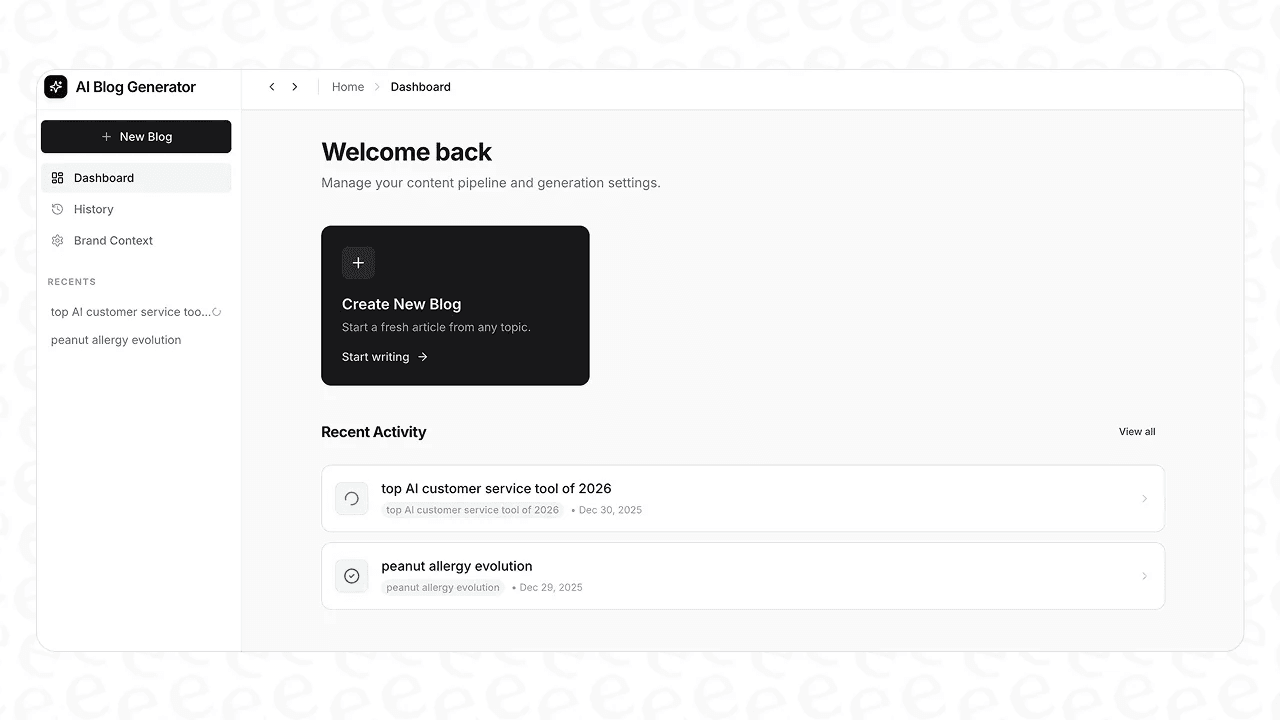
The eesel AI blog writer is designed to generate a complete, structured article that is ready to publish. It includes an introduction, conclusion, FAQs, and proper headings.
The real secret is its context-aware research. It figures out the search intent behind your keyword. If you’re writing a comparison post, it knows to look for pricing data and features. If it’s a product review, it finds the technical specs. This saves you hours of digging and makes sure the content is actually useful.
Automate research and asset creation in minutes
A great blog post is more than just words. Visuals make content more engaging and easier to understand. The eesel AI blog writer automatically includes AI-generated images, infographics, and tables right in the post.
Even better, it builds in social proof to create trust. It can pull in real Reddit quotes from relevant discussions and embed related YouTube videos, adding authentic voices to your content without you having to hunt for them.
Ensure SEO and AEO optimization from the start
Every post generated with eesel is built for modern search. It’s optimized for traditional search engines (SEO) and structured for AI Answer Engines (AEO).
The platform handles keyword placement, generates meta descriptions, and creates a logical heading structure automatically. It also adds internal and external links to credible sources, which helps boost your blog's authority and trustworthiness with search engines.
Common pitfalls to avoid
As you start putting this strategy into practice, keep an eye out for a few common mistakes that can slow you down.
- The "if you build it, they will come" myth: You can write the best article in the world, but without a plan to get it in front of people, no one will find it.
- Inconsistency: Publishing here and there makes it impossible to build momentum. Your audience won't know when to expect new content, and search engines tend to favor sites that are updated regularly.
- Forgetting the email list: Relying completely on search or social media for your traffic is a risky game. Algorithms can change overnight. An email list gives you a direct, reliable channel to reach your audience.
A systematic approach to audience growth
When it comes down to it, a successful blog writing for audience growth strategy isn't about finding one magic trick. It's a system that combines a deep understanding of your audience, the creation of genuinely helpful content, and a smart, consistent promotion plan.
The core loop is simple but powerful: understand your audience, create content that solves their problems, promote it strategically, and use the right tools to stay consistent and scale your efforts. When all these pieces work in sync, growth isn't just a possibility; it's pretty much inevitable.
The difference between a blog that's stuck and one that's growing is a repeatable system. You can start building yours by generating your first high-quality, SEO-optimized blog post for free with the eesel AI blog writer.

Frequently Asked Questions
Share this article

Article by
Stevia Putri
Stevia Putri is a marketing generalist at eesel AI, where she helps turn powerful AI tools into stories that resonate. She’s driven by curiosity, clarity, and the human side of technology.