
Writing a book is a huge undertaking. You have the idea, but then comes outlining, research, and the actual work of putting thousands of words on the page. AI writing tools claim they can help with this, from getting past writer's block to generating text. But with so many out there, which ones are genuinely useful for a book-length project, and more importantly, which ones can you try without pulling out your wallet?
This article gets straight to that question. I tested the most popular free and freemium AI tools for authors to see which ones hold up. While many tools can draft basic text, some platforms like the eesel AI blog writer are built to generate complete, publish-ready content from a single prompt, which is a big help for non-fiction authors who need structured, well-researched chapters.
What defines the best free AI book writers?
An AI book writer is a platform made to help with the long-form writing process. These tools offer more than simple text generation, providing features for outlining, character development, world-building, and creating prose that stays consistent across many chapters.
Unlike general AI chatbots, book writers are designed to understand narrative flow and the specific needs of storytelling. They can help you brainstorm ideas, expand on a scene, or rewrite a paragraph in a different tone. It's best to see these tools as creative assistants. They are there to support an author's vision and make the workflow smoother, not to replace the human element of storytelling.
Our criteria for choosing the best free AI book writers
To make a fair comparison, I looked at each tool using a consistent set of criteria relevant to any author. The idea was to find platforms that offer real value without an upfront payment.
Here are the core criteria I used for this review:
-
Generous Free Tier: The focus is on tools with a genuinely useful free version or trial. A platform that gives you enough credits to write a full chapter is more valuable than one that stops you after a few paragraphs.
-
Output Quality: This is about the coherence, style, and readability of the AI-generated text. The output should sound natural and not require heavy editing to be usable.
-
Long-Form Functionality: I gave priority to platforms with features specifically for managing chapters, characters, and plot. Tools with project management and organizational features ranked higher.
-
Ease of Use: The learning curve is important. An author should be able to start using the tool productively without watching hours of tutorials.
A quick comparison of free AI book writing tools
Here is a brief overview of the tools we'll be looking at. The table summarizes their key aspects to help you see how they compare at a glance.
| Tool | Best For | Free Tier Details | Key Feature |
|---|---|---|---|
| eesel AI blog writer | Complete non-fiction content | Free to generate your first blog | Automatic asset & media embeds |
| Sudowrite | Creative fiction & prose | 10,000 trial credits | AI assistant for fiction writers |
| Squibler | Structured book creation | 6,000 AI words per month | Guided templates & outline generation |
| Novelcrafter | Control & world-building | 21-day free trial; plans from $4/mo | The Codex for lore management |
| Raptor Write | Simple starting point | 100% free to use (requires API key) | Simplicity and model flexibility |
The 5 best free AI book writers in 2026
Each tool on this list is suited for a different type of writer or project. Your best choice will depend on whether you're writing fiction or non-fiction, how much structure you prefer, and your comfort with technology. Let's get into the details of each platform.
1. eesel AI blog writer
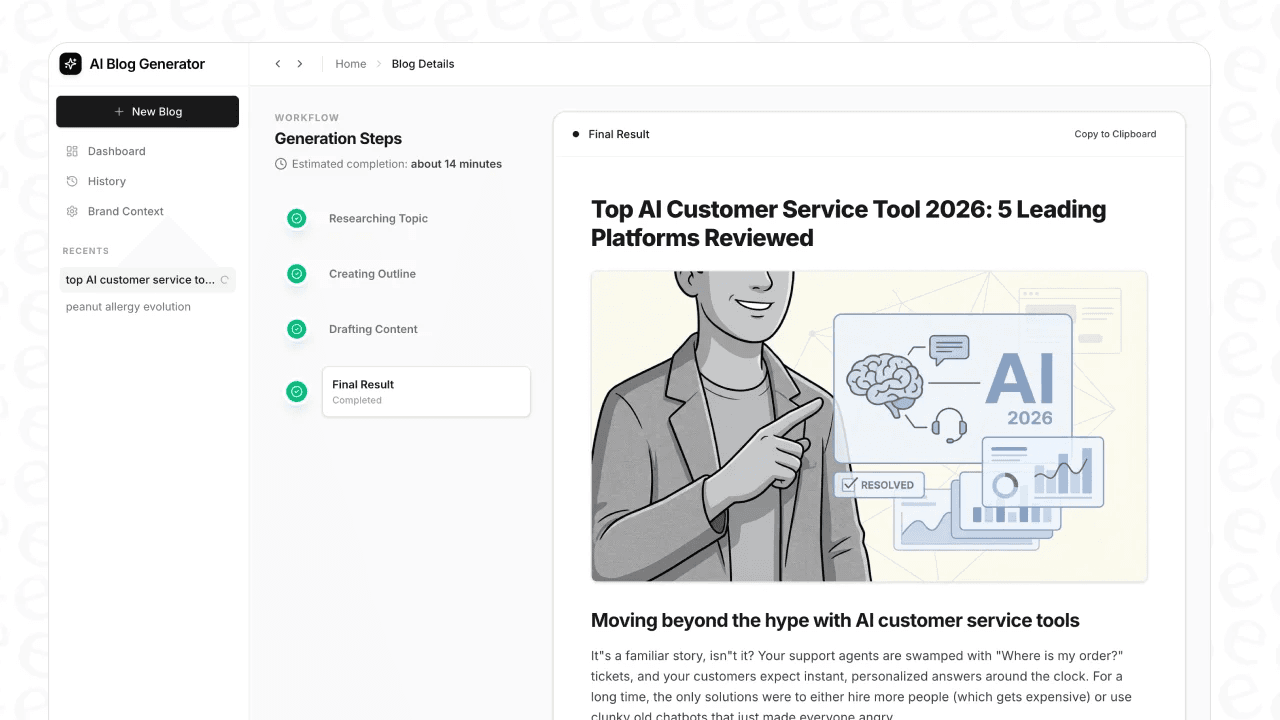
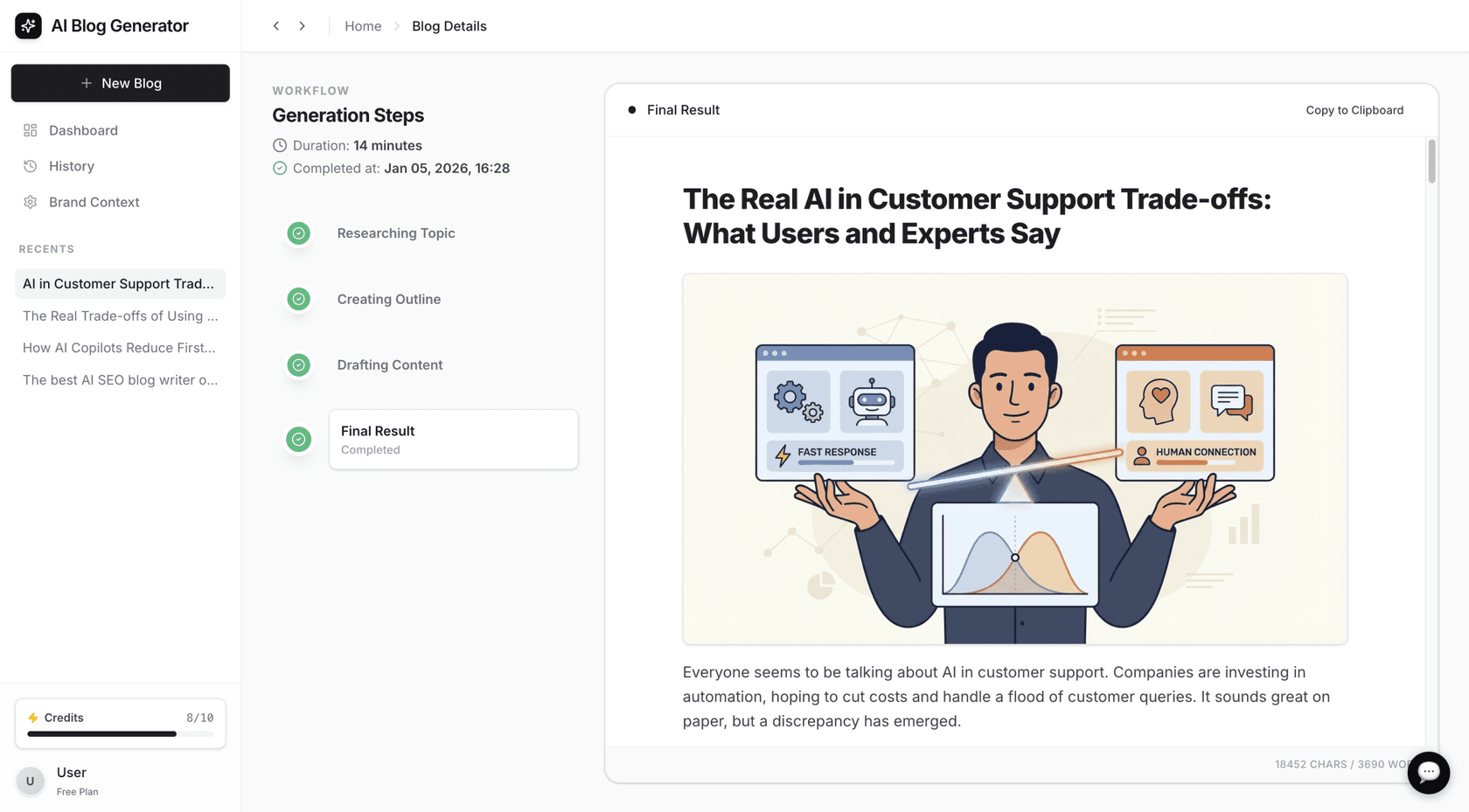
While it isn't marketed only as a "book writer," the eesel AI blog writer is an effective tool for authors, especially those working on non-fiction, technical guides, or books based on expertise. Its main strength is its ability to take a single topic and turn it into a fully researched and structured chapter, complete with supporting assets.
Pros: The biggest plus is its ability to produce content that's ready to publish. It doesn't just write text; it creates AI-generated images, tables, charts, and can even pull in relevant Reddit quotes. This saves a lot of time for non-fiction authors who need to present data and evidence. Its context-aware research and AEO (Answer Engine Optimization) features are also helpful for authors who want their work to be found online. You can generate your first blog for free to see the output quality for yourself.
Cons: The platform is optimized for SEO and factual content. Authors writing complex, character-driven fiction might find it more useful for outlining or research-heavy chapters than for generating nuanced prose.
Pricing: It's free to try. The paid plan is credit-based, starting at $99 for 50 blogs, which you can think of as 50 chapters.
2. Sudowrite
Sudowrite is widely seen as a top tool for fiction authors. Its feature set is built around storytelling, helping writers generate descriptive prose, expand scenes, rewrite sentences, and brainstorm plot twists. It uses a mix of over two dozen AI models, including its own in-house model, Muse, which is trained specifically for fiction.
Pros: Sudowrite is great at producing high-quality, human-like prose that understands pacing and scene structure. It offers a full suite of tools, including the "Story Bible" for organizing characters and lore, and a powerful "Rewrite" feature for revising your work.
I’ve tried them all, including AI-writing AIs, and this is my favorite. I take their finished chapter and make my changes, but it helps my boggled brain. For me, it’s like a ghostwriter.

Cons: The free trial is limited to 10,000 credits. While that's enough to get a good feel for the tool, you can burn through those credits quickly on a long-form project.
Pricing: The free trial comes with 10,000 credits. After that, paid plans start at $10/month for the Hobby & Student tier, which gives you 30,000 credits per month.
3. Squibler
Squibler is a solid choice for writers who like a structured and guided process. It offers many templates for different genres (from mystery novels to non-fiction guides) and includes an AI Smart Writer to help develop the story chapter by chapter. Its interface is designed to keep you organized with features for outline generation and progress tracking.
Pros: Squibler makes the book-writing journey less chaotic with a clear workflow. Its visual progress tools are good for motivation and keeping projects on track. A unique perk for Pro users on an annual plan is the ability to request a printed hard copy.
Cons: The free version's limit of 6,000 AI-generated words per month is pretty tight for anyone trying to finish a full-length book. This limit might push you toward a paid plan sooner than you'd like.
Pricing: Squibler has a limited free version. The Pro plan is $16/month when billed annually, which removes the word limit and unlocks all features.
4. Novelcrafter
Novelcrafter is built for planners and world-builders who want detailed control over their story. Its main feature is the "Codex," which is a private database for your project. You can store information about your characters, locations, and lore, and the AI can reference it to maintain consistency. It’s also flexible, letting users connect to various AI models with a "Bring Your Own Key" (BYOK) system.
The Codex feature lets you set up your own world specific RAG network and enables near perfect detail consistency. If, and it's a big IF, you're willing to personally make codex entries for everything about your world...then yes, you will have characters consistent across however much length you desire and even across books.
Pros: Novelcrafter gives you excellent control and organization for complex stories. Its flexibility in letting you choose your AI model (like those from OpenAI or Anthropic) means you can adjust the output to your needs and budget.
Cons: The platform has a steeper learning curve than some of the simpler tools here.
Also, its pricing model, which combines a monthly subscription with pay-as-you-go API costs, can be unpredictable for authors who use the AI features heavily.A few people here suggested I’d love NovelCrafter, but honestly? I signed up and just couldn’t get on with it. A big hurdle is that you *have* to use an API key from another platform. I don’t pay for GPT or OpenRouter, so I don’t have anything I can use without paying for the middle tier (unless I’ve missed something).
Pricing: A 21-day free trial is available. Paid plans start at $4/month for the Scribe tier, which does not include AI features. AI integration starts with the Hobbyist plan, and users must also pay for AI model usage separately through their API provider.
5. Raptor Write
Raptor Write is a genuinely free option for authors new to AI writing who want to experiment without a financial commitment. Developed by the Future Fiction Academy, it favors simplicity over a long list of features, making it an accessible entry point.
Pros: The biggest benefit is that it is 100% free to use with no word limits or credit systems. Users provide their own API key, but the platform itself is free. Its clean design helps writers focus on the text. It also provides access to some free AI models to get started.
Cons: A major downside is its reliance on browser storage. This means your work could be lost if you clear your browser cache, so frequent backups are a must. It also lacks the advanced organizational features of other book writers, though users have reported that basic folder functionality was recently added. Access to the tool requires enrolling in a free course.
Pricing: 100% free.
How to choose the right free AI book writer for your project
With these options in mind, picking the right tool depends on your needs as an author and the type of project you're working on. Here’s a quick guide to help you decide.
-
For Fiction Authors: If you're focused on creative prose, character arcs, and narrative, tools like Sudowrite are made for you. For those building intricate worlds, Novelcrafter offers great organizational control.
NovelCrafter is great for plotters, with lots of tools even Scrivener is lacking, and it's the cheapest option with the most flexible system (can bring your own API keys or even use a locally run model).
-
For Non-Fiction Authors: If you're writing a guide, a how-to book, or content that relies on research and data, you need a tool that handles these things well. The eesel AI blog writer is ideal for this, as it can generate well-researched, asset-rich chapters from a single topic. For a more traditional, template-based approach, Squibler is also a strong option.
-
For Beginners on a Budget: If you're just starting out and want to see how AI can help your writing without spending money, Raptor Write is a good place to start. Just be aware of its limitations, especially the need to back up your work regularly.
Beyond drafting: A smarter way to use free AI book writers
For non-fiction authors, writing the book is just one part of the job. The content also needs to be well-researched, visually interesting, and set up to find an audience. Just generating plain text isn't enough.
To see some of these tools in action and get a better feel for their user interfaces, watching a video walkthrough can be very helpful. The video below provides a great overview of several free AI writing tools that can assist authors.
This is where a tool like the eesel AI blog writer provides a different path. It doesn't just write; it builds a complete content asset from a single topic. This includes research, structure, AI-generated images, tables, and social proof from real online discussions. It treats each chapter as a valuable piece of content meant to be discovered and read.
This is the same method we used at eesel AI to grow our own blog from 700 to 750,000 daily impressions in just three months. By thinking of AI not just as a drafter but as a content production partner, you can create work that is both well-written and positioned for success.
Finding the right tool for your book
The best free AI book writer is the one that fits your genre, workflow, and goals. Fiction writers have different needs than non-fiction authors, who often get more from tools that handle research, structure, and asset creation automatically.
The world of AI writing tools is always changing, but the platforms on this list offer powerful and accessible starting points for any author in 2026. Use this guide to try one or two that seem like a good match for your project.
To see how AI can create a complete, publish-ready piece of content in minutes, try the eesel AI blog writer for free.
Frequently asked questions
Which free AI book writer is best for non-fiction in 2026?
For non-fiction, the eesel AI blog writer is a strong option. It generates well-researched chapters complete with assets like images and tables, which is particularly useful for guides and data-driven books.
Can I find a completely free AI book writer?
Yes, Raptor Write is a completely free tool, but it requires you to bring your own API key and lacks advanced features. Most other tools offer generous free trials or tiers, like Sudowrite's 10,000 trial credits or Squibler's 6,000 free words per month.
How do free AI book writers handle different genres?
Different tools specialize. Sudowrite is built for creative fiction with features for prose and scene expansion. For non-fiction, tools like the eesel AI blog writer are more effective as they focus on research, structure, and including factual assets.
What should I look for when choosing a free AI book writer?
Consider the generosity of the free tier, the quality of the text it generates, its features for long-form writing (like chapter management), and how easy it is to use. Your specific genre (fiction vs. non-fiction) is also a key factor.
Can a free AI book writer write an entire book?
No, these tools are best used as writing assistants. They can help with brainstorming, outlining, overcoming writer's block, and drafting sections, but the author's creativity, direction, and editing are still essential to produce a complete, coherent book.