Staying ahead: Your guide to the latest AI marketing tools news

Kenneth Pangan

Katelin Teen
Last edited January 6, 2026

The world of marketing is changing faster than ever, and AI is in the driver's seat. New tools and platforms are appearing frequently, changing how businesses create content and connect with customers.
Keeping up with the constant stream of AI marketing tools news can be a challenge. It can be difficult to sort through all the information to find the tools that will actually make a difference. This guide will cut through the noise to examine the major trends, show you how to track what matters for your business, and explore how these changes can improve your marketing strategy.
Understanding AI marketing and the importance of industry news
AI marketing is about using artificial intelligence to make smarter, automated, and data-driven decisions. The goal is to improve marketing campaigns, provide customers with more personalized experiences, and make the entire operation run more smoothly.
Staying on top of the news in this space is essential for your business. The right information allows you to stay competitive, boost efficiency, and avoid investing in outdated strategies.
Here’s why:
-
Stay ahead of the competition: Being an early adopter of a powerful new tool can provide a significant advantage. The ground is shifting. Gartner predicts that search engine volume will drop by 25% by 2026 due to AI chatbots and virtual agents. This will fundamentally change how customers find you, so staying informed is critical.
-
Boost your efficiency and ROI: The right AI tools can take over repetitive tasks that consume time, like writing first drafts, pulling reports, or sifting through data. This frees up your team to focus on the bigger picture and more strategic work, letting you get more done without increasing your budget.
-
Dodge outdated strategies: The marketing tactics that worked last year might be less effective tomorrow. Following the news helps you determine when it's time to pivot and invest in technology that gets results.
Key trends in AI marketing
That constant flood of AI marketing tools news is driven by a few major technological shifts that are changing what marketers can do. To stay ahead of the curve, these are the trends to watch.
The evolution of generative AI content tools
The conversation around generative AI has moved beyond simple text creation. Early tools were useful for producing first drafts, but the text often required significant human editing, fact-checking, and asset creation.
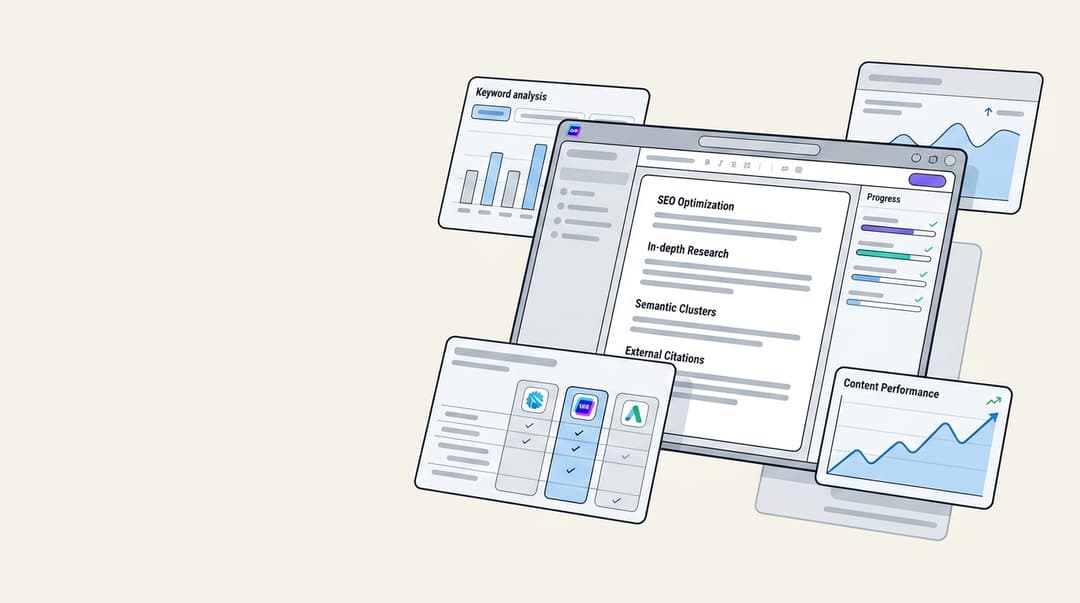
The latest development is the emergence of platforms that create more complete, publish-ready content. For instance, some tools, like the eesel AI blog writer, can generate a full, SEO-optimized blog post from a single keyword.
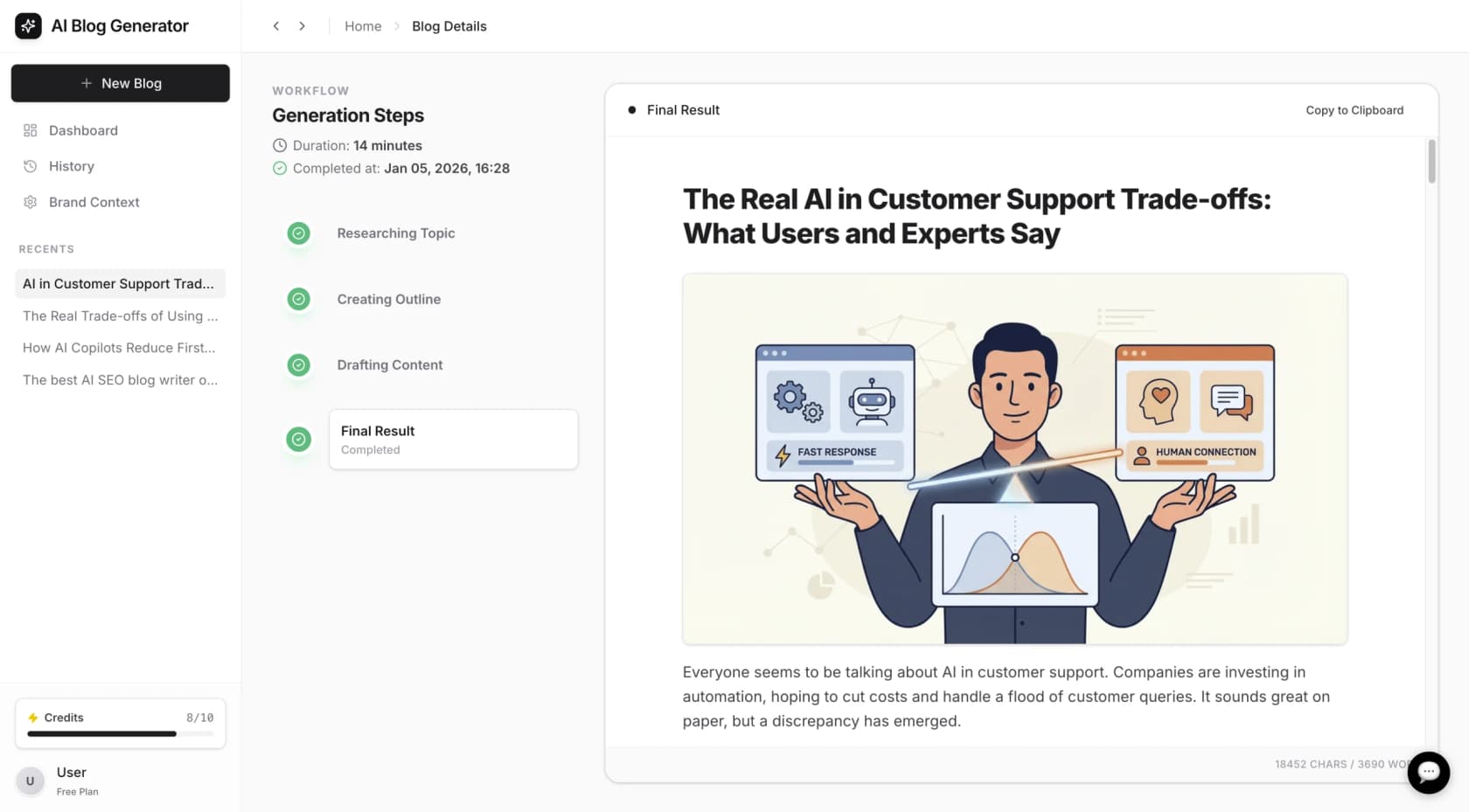
This new generation of tools handles multiple tasks, including:
-
Automatic assets: It creates and embeds AI-generated images, custom infographics, and data tables right into the content, saving hours of design work.
-
Rich media integration: The tool finds and adds relevant YouTube videos to increase engagement and keep people on your page longer.
-
Authentic social proof: The AI scans forums like Reddit to find and embed quotes from users, adding a layer of credibility and trust.
This is what I do. I outline, have it do a first draft, edit it for a good period, and then add the “me” to it.

Hyper-personalization through AI decisioning
We are moving past basic personalization (like emails that just use a first name). The new expectation is true hyper-personalization, powered by AI decisioning. As MarTech points out, this isn't about simple if-then rules; it's about using a constant feedback loop of customer behavior to determine the right message, channel, and timing for each person.
This trend is all about meeting customer expectations. An Adweek report found that 62% of consumers say their favorite brand makes them feel like an individual. Generic, one-size-fits-all marketing is no longer sufficient.
AI tools can now look at user behavior in real-time to change website experiences, suggest the right products, and customize email content instantly. The result is an interaction that feels genuinely relevant and helpful.
The democratization of predictive analytics
For a long time, predictive analytics seemed accessible only to large companies with dedicated data science teams. AI is changing that by making this powerful technology available to teams of all sizes.
Instead of just telling you what happened last month, new AI tools use your past data to predict what’s likely to happen next. This includes things like:
-
Lead scoring: Identifying which leads are most likely to buy so your sales team knows where to focus.
-
Churn prediction: Spotting customers who might be about to leave so you can intervene.
-
Demand forecasting: Estimating future demand for your products to help you manage inventory and marketing spend.
This lets marketers shift from being reactive to proactive. You can get ahead of problems and jump on opportunities much faster.
How to track and analyze AI marketing news
Keeping up with the news doesn't mean you have to read every article that gets published. A smarter approach will help you cut through the clutter and focus on what’s relevant to you and your goals.
Curating your news sources
Instead of scrolling through social feeds, select a few trustworthy industry publications that provide a mix of breaking news and deeper analysis. Here are a few options:
-
MarTech: Excellent for in-depth looks at marketing technology and strategy.
-
Adweek: Great for news on how AI is affecting advertising and major brands.
-
Gartner: A good source for high-level research and predictions on big market shifts.
A framework for evaluating new tools
When you read about a new tool, it’s easy to get excited. Before you proceed, run it through a quick evaluation to see if it’s a good fit. Ask yourself these four questions:
-
Problem-Solving: Does this tool solve a specific problem my team has right now? Or is it a piece of tech without a clear purpose for us?
-
Integration: How easily will this plug into our current tech stack? Will it work with our CRM, email platform, and other key tools?
-
Ease of Use: Is it simple enough for our team to learn quickly, or will it require extensive training?
-
Future-Proofing: Is this tool built for where the industry is going? With AI-powered search on the rise, your content needs to be ready for answer engines. Platforms like the eesel AI blog writer are designed for this new world, creating content structured to appear in Google AI Overviews and Perplexity.
The impact of AI marketing news on strategy
Staying in the loop isn't just about accumulating knowledge. The news you follow should directly influence your team's strategy, the skills you focus on, and even your team's organization.
Shifting from manual execution to strategic oversight
As AI handles more of the day-to-day tasks, like writing copy, running reports, and analyzing data, the marketer's job is changing. The focus is moving away from manual work and toward strategy, creative direction, and using AI-driven insights to make smarter decisions.
As one MarTech article puts it, the modern professional is becoming a "'Position-less' Marketer... anchored by irreplaceable human traits: strategy, judgment, and creativity."
Building new skills for the age of AI
To keep up, marketing teams need to get comfortable with AI. This doesn't mean everyone needs to become a data scientist, but a basic grasp of how these tools work and what they can do is now essential.
Some of the most in-demand skills right now include:
-
Prompt engineering to get the best output from generative AI tools.
-
Data analysis and the ability to understand what the AI is telling you.
-
A good understanding of the ethical side of using AI in marketing.
It's up to companies to invest in training and give their teams the resources they need to use these powerful new tools well.
Navigating ethics and trust in AI marketing
The news is full of important conversations about data privacy, algorithmic bias, and the need for transparency. How your company handles these issues is no longer a side note; it's a core part of your brand.
Using AI responsibly is becoming a significant differentiator. Research from Adweek shows that 49% of consumers think a brand's reputation is more important than its price.
Brands that are open about how they use AI and protect customer data will build stronger relationships with their audience. This means following privacy rules like GDPR and CCPA, which is a key part of eesel AI's privacy policy.
To see these trends in action, it's helpful to watch experts break down the latest developments. The video below offers a great overview of recent AI news and how it impacts digital marketing strategies.
Putting knowledge into practice
The world of AI marketing is moving incredibly fast, but you can handle it if you focus on the right trends, evaluate new tools with a clear head, and help your team adapt.
A practical way to understand what modern AI can do is to use the technology firsthand. This allows you to see what it can do for your own workflow.
Instead of spending hours writing a blog post, you can use a tool to generate a complete, publish-ready one in minutes. To see how far content generation has come, you can try a tool like the eesel AI blog writer.

Frequently asked questions
It's best to stick to a few credible industry publications rather than trying to read everything. Good starting points mentioned in this guide are MarTech for deep analysis, Adweek for advertising trends, and Gartner for high-level market research. Setting up Google Alerts for specific topics can also bring relevant news directly to you.
You don''t need to check daily. A good practice is to set aside a little time each week to catch up on the major headlines and announcements from your curated sources. This keeps you informed without causing information overload.
One of the biggest trends is the rise of generative AI tools that create complete, publish-ready assets. Instead of just generating text, these platforms can produce entire blog posts with images, infographics, and even social proof, dramatically speeding up the content creation process.
Use a simple evaluation framework. Ask yourself if the tool solves a real problem you have, if it integrates with your existing technology, how easy it is for your team to use, and if it's built for the future of marketing (like AI-powered search).
AI is changing the fundamental skills required for marketing. As AI automates more manual tasks, your team's value will shift toward strategy, creative oversight, and interpreting AI insights. Keeping everyone informed helps them adapt their skills and stay effective in their roles.
Absolutely. The news will keep you informed about new content formats and tools, like AI writers that optimize for answer engines (e.g., Google's AI Overviews). This knowledge helps you pivot your content strategy to meet audiences where they are and stay ahead of search trends.
Share this article

Article by
Kenneth Pangan
Writer and marketer for over ten years, Kenneth Pangan splits his time between history, politics, and art with plenty of interruptions from his dogs demanding attention.