A practical guide to using an AI blog writer with image generator

Stevia Putri
Last edited February 1, 2026
Creating good content that actually ranks is a constant grind. You’re not just writing, you’re also hunting for visuals that fit your message. Briefing designers or endlessly scrolling through stock photo sites chews up a lot of time. An AI blog writer with image generator can fix that by handling both the text and the visuals in one go, saving you hours of work.
The newest AI tools are built to solve this exact problem, streamlining the whole process from a single keyword to a post that’s ready to publish. Platforms like the eesel AI blog writer can produce a complete article, combining well-researched text with a full set of visuals in just a few minutes. This is the same tool we used at eesel AI to take our blog's traffic from 700 to 750,000 impressions per day in just three months.
What is an AI blog writer with an image generator?
An AI blog writer with an image generator is more than just a text machine. Think of it as a single platform that uses large language models (LLMs) to write articles and text-to-image models to create relevant visuals at the same time.
Key capabilities to look for in an AI blog writer with image generator
High-quality text and logical structure
First things first, the tool has to produce well-researched, structured content. A good AI writer should give you a draft with a clear intro, headings that make sense, and a useful conclusion. The idea is to get a first draft that’s genuinely informative and doesn't need a ton of editing, not just some generic filler. The text should feel like a person wrote it, with a natural flow and consistent tone.
Integrated and context-aware image creation
The image generator needs to understand what the text is about to create visuals that are relevant, not just pretty decorations. Some tools, like Junia AI, focus on making unique, royalty-free images that are tailored to your content. Others might let you choose between generating a new AI image or pulling from stock photo sites like Pexels. Stock photos are convenient, but they aren't unique to your brand. The best platforms let you customize the style, so you can create images that match your brand’s look and feel.
Built-in SEO and answer engine optimization (AEO)
These days, content needs to be optimized for two things: traditional search engines (SEO) and the new AI answer engines (AEO). With zero-click searches becoming more common, your content needs to be structured so it can be cited directly in AI-generated answers. A tool that's ahead of the curve will handle keyword integration, meta data, and format your content with direct answers and clear headings. This makes your articles easy for services like Google's AI Overviews, ChatGPT, and Perplexity to use, which can give you a real edge in search.
Rich media and data integration
Text and images are a great start, but the best tools go further. They can enrich posts by embedding relevant YouTube videos, finding insightful quotes from forums like Reddit, and creating data tables or charts. This makes the content feel more authoritative and engaging. It also tells search engines that your content is thorough and well-researched, which can help with your rankings.
Evaluating the best AI blog writer with image generator tools
Now that we know what to look for, let's check out some of the top tools out there. We'll start with the one we use to scale our own content and drive organic growth here at eesel AI.
The eesel AI blog writer: A complete content engine
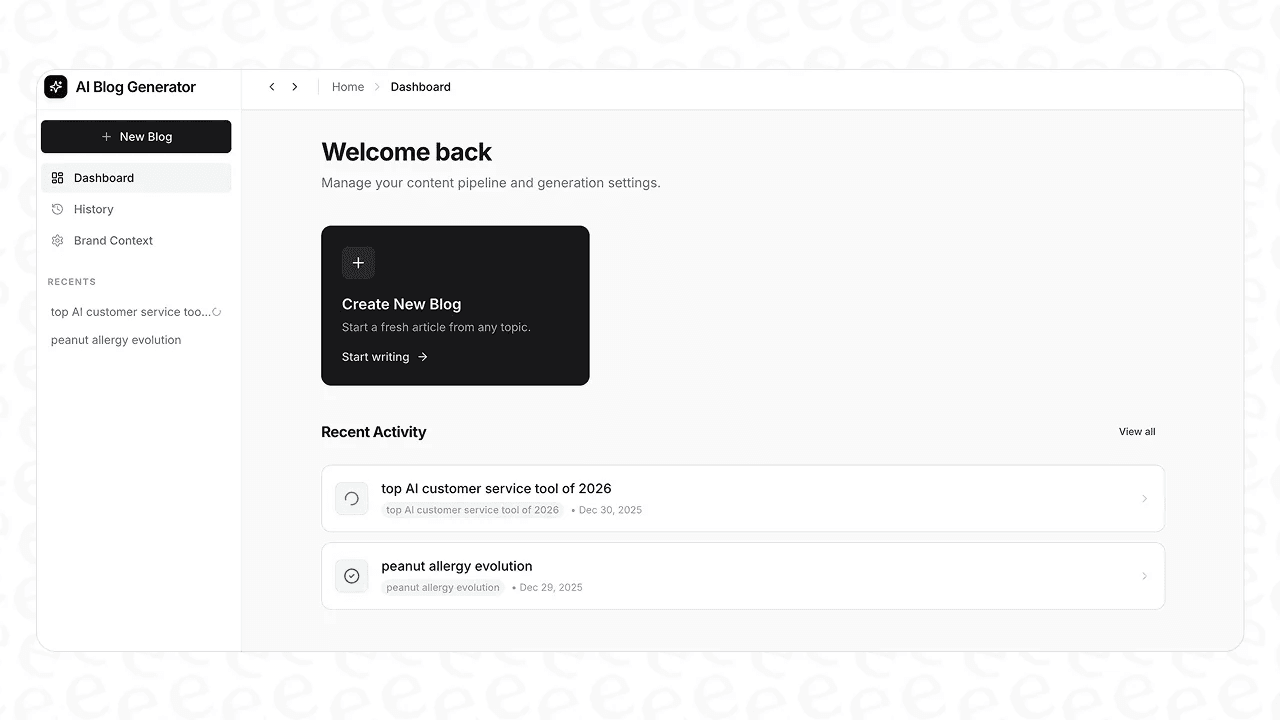
The eesel AI blog writer is built to produce a complete, publish-ready blog post from just a keyword. It’s not just a writer; it’s a full content engine designed to handle every step of the process.
- Complete asset generation: It doesn't just create a featured image. It generates a whole set of visuals, including in-post illustrations, infographics, and data tables, so your entire post is visually interesting.
- Rich media integration: To add a layer of authenticity, it automatically finds and embeds relevant YouTube videos and real quotes from Reddit discussions about your topic.
- Context-aware research: The AI does deeper research depending on the type of content you need. For a comparison post, it will automatically find pricing information. For a product review, it will look up technical specs. This saves you a ton of manual research time.
- AEO optimization: The tool is specifically built to structure content for AI answer engines. This helps future-proof your SEO and makes sure your content is ready for what's next in search.
Pricing: It's simple. You pay $99 for 50 blogs, and you can buy more credits when you need them. No confusing subscriptions.
It's also completely free to try, so you can see the quality for yourself without any commitment.
Other popular options on the market
Here are a few other tools that offer both text and image generation, based on what's publicly available.
| Feature | eesel AI blog writer | Junia AI | GravityWrite | RightBlogger |
|---|---|---|---|---|
| Primary Function | Complete blog post generation | AI writer with auto-publishing | All-in-one content & social suite | AI tool suite for bloggers |
| Image Generation | Full suite (featured, in-post, infographics) | Unique AI images, context-aware | 70+ unique AI image styles | AI-generated or stock photos |
| Rich Media | YouTube videos & Reddit quotes | Not specified | Not specified | Not specified |
| AEO Focus | Yes, built-in | Yes, content optimized for AI assistants | Not specified | Yes, has an "Answer Engine Optimizer" tool |
| Pricing Model | Per blog ($99 for 50 blogs) | Per month (starts at $19/mo for 5 articles) | Credit-based (starts at $8/mo annually) | Per month (starts at $17.99/mo annually) |
| Free Trial | Yes, generate a full post for free | Yes, free trial available | Yes, free plan available | Yes, free plan with limited words |
A practical workflow for using an AI blog writer with an image generator
To get the most out of these tools, you need a simple process. Following a clear workflow will help you get better results every time.
Step 1: Provide deep context upfront
The old saying "garbage in, garbage out" is especially true here. Don't just type in a keyword and cross your fingers. Give the tool your website URL, describe your brand voice, and tell it who you're writing for. Tools like the eesel AI blog writer use this information to create content that’s much more relevant and on-brand. The more you give the AI, the better the article will be.
Step 2: Generate and refine the outline
Before you generate the whole article, always look at the AI-generated outline. Most good tools let you edit, add, or remove sections. This quick five-minute check makes sure the final article is structured exactly how you want it and covers all the important points. It’s much easier to tweak the outline now than to rewrite big chunks of text later.
Step 3: Customize your visuals if needed
If your tool has the option, don't just settle for the first image it gives you. Play around with the settings to guide the visual style. You can often adjust prompts, pick different styles (like "minimalist flat illustration" or "photorealistic"), and make sure the final images align with your brand. This small step can make a huge difference in the final quality.
Step 4: Add the essential human touch
An AI-generated article is a great starting point, but it shouldn't be the final version. As the team at RightBlogger mentions, you should treat AI as an assistant that gives you a solid first draft in seconds.
A human always needs to review the content. Edit for tone, add personal stories or unique insights, and double-check any data or claims. This final step is what turns a good AI draft into a great article that people will trust and connect with.I'm finding AI to be a great tool - but not so great of a writer, especially for my blog posts. It generates ideas, builds outlines, and things like that - but it's still not quite trustworthy and does stupid things like making up links when it needs external links - it thinks something 'should' be there.. so it creates 'it.' Lol.

The ideal workflow is pretty straightforward:
- Start: Enter your keyword and provide brand context.
- Outline: Generate, review, and edit the article's outline.
- Generate: Create the full draft with text, images, and embedded media.
- Review Visuals: Check the generated images and customize them if you need to.
- Human Edit: Fact-check the content, add your own voice, and polish the final draft.
- Publish: Your complete, optimized post is ready to go.
An infographic showing a practical 6-step workflow for using an AI blog writer with image generator, from initial context to publishing.
Your AI blog writer with image generator: More than a shortcut
An AI blog writer with an image generator is more than just a way to write faster; it's a tool for scaling your content production and keeping it consistent. It allows content teams to produce high-quality, visually interesting, and SEO-optimized articles regularly without getting burned out. By taking care of drafting, research, and creating visuals, these tools let marketers and writers focus on what they do best: strategy, editing, and adding the unique insights that make content memorable.
For a closer look at how these tools work in practice, the video below demonstrates how a modern AI writer can create a full blog post, complete with custom images and proper formatting, from start to finish.
Generate your first complete blog post for free
The best way to see what a complete content engine can do is to try it yourself. The eesel AI blog writer is free to try. Just enter a keyword for your next blog post and watch it create a fully researched, structured, and visually rich article in a couple of minutes.

Frequently Asked Questions
Share this article

Article by
Stevia Putri
Stevia Putri is a marketing generalist at eesel AI, where she helps turn powerful AI tools into stories that resonate. She’s driven by curiosity, clarity, and the human side of technology.