AI agent vs intent based chatbot: What's the difference in 2026

Stevia Putri
Written by

Stevia Putri

Last edited March 23, 2026

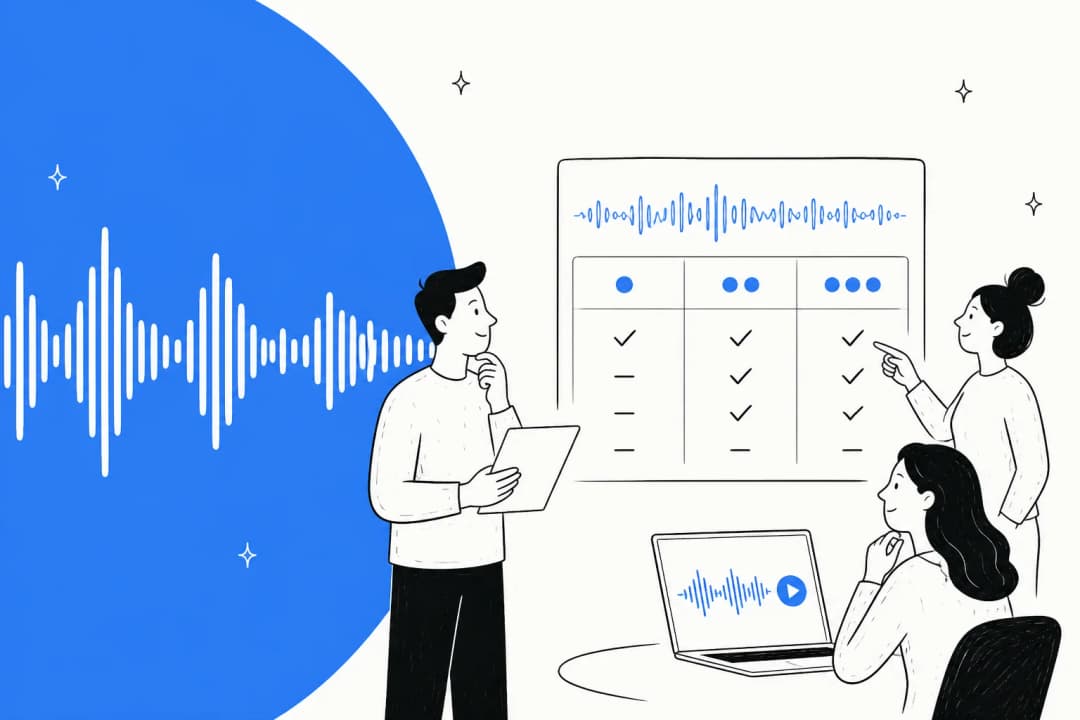
Banner image for AI agent vs intent based chatbot: What's the difference in 2026

If you've ever interacted with a customer service bot that seemed to get stuck in an endless loop of "I didn't understand that," you've experienced the limitations of intent-based chatbots. These systems have been the backbone of automated customer service for years, but they're increasingly being replaced by something more capable: AI agents.

The difference between these two technologies isn't just technical jargon. It affects how your customers experience support, how much your team can automate, and ultimately whether your AI investment delivers real results or just frustrates everyone involved.

Let's break down what actually separates AI agents from intent-based chatbots, where each technology fits best, and how to decide which approach makes sense for your team.

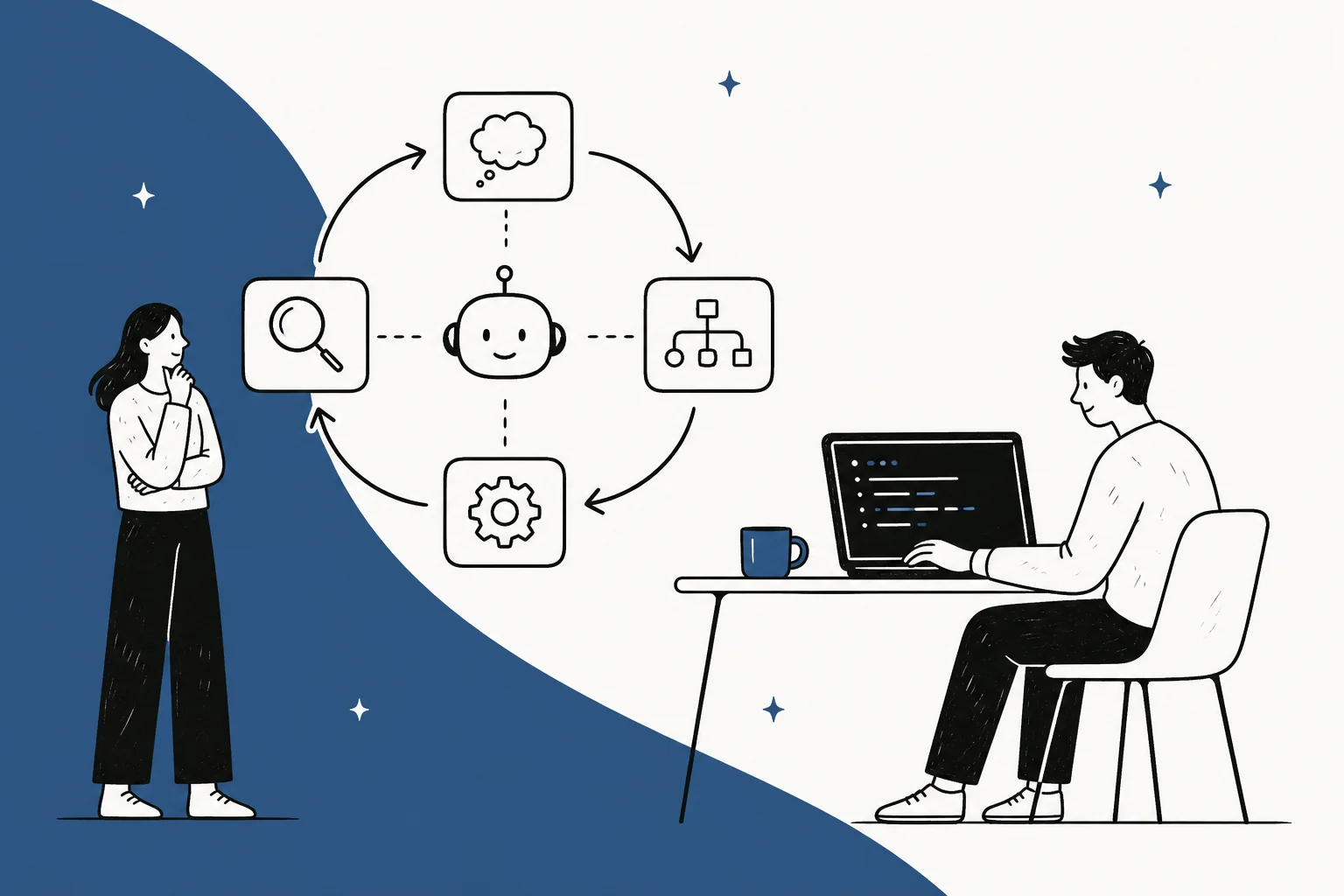
Timeline showing the evolution from rigid scripted chatbots to flexible AI systems that understand context

What is an intent-based chatbot?

Intent-based chatbots are computer programs that use predefined rules, decision trees, and scripted responses to interact with users. They've been around since the 1960s (ELIZA was the first), and they rely on natural language processing to match user inputs to predetermined intents.

Here's how they work: you train the bot to recognize specific phrases or keywords that map to particular actions. When a customer says "track my order," the bot recognizes the intent and follows a predefined script to collect an order number and return shipping information. If the customer phrases things differently than expected, the bot either asks them to rephrase or escalates to a human.

Chatbots and virtual assistants of this type are effective for straightforward, repetitive tasks. They can answer FAQs, collect basic information, and route simple queries to the right department. Because responses are scripted, you have tight control over brand voice and compliance messaging.

But the limitations become apparent quickly. Intent-based chatbots struggle with:

  • Context shifts during conversations
  • Questions phrased in unexpected ways
  • Multi-step processes that require reasoning
  • Personalization based on customer history

Think of it like a vending machine. It has a fixed inventory of responses, accepts specific inputs, and delivers exactly what was programmed. Simple and predictable, but completely unable to handle anything outside its narrow scope.

What is an AI agent?

An AI agent is a more advanced system powered by Large Language Models (LLMs) that can reason, plan, and take autonomous action. Unlike chatbots that follow scripts, AI agents understand context, adapt to changing situations, and can execute complex tasks across multiple systems.

The key difference is autonomy. Where a chatbot waits for specific inputs and responds with predefined answers, an AI agent can:

  • Understand nuanced requests even when phrased unexpectedly
  • Access and synthesize information from multiple sources (CRM, order systems, knowledge bases)
  • Execute multi-step workflows like processing refunds or updating account details
  • Learn from interactions and improve over time
  • Escalate intelligently based on context, not just keywords

Our AI agent approach frames this technology as a teammate you hire, not a tool you configure. Like any new team member, an AI agent learns your business from existing data (past tickets, help center articles, macros), starts with guidance and oversight, and levels up to work autonomously as it proves itself.

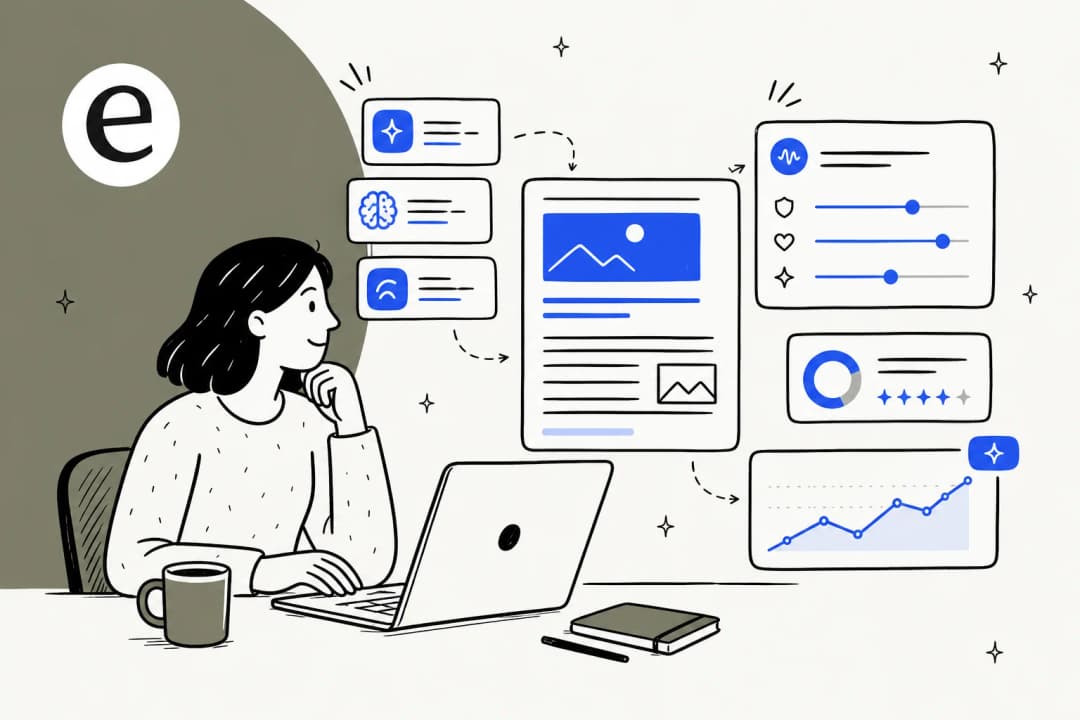
eesel AI dashboard for configuring the supervisor agent with no-code interface

The analogy here isn't a vending machine. It's more like hiring a personal chef who learns your preferences, adapts recipes based on what's in your pantry, and gets better at anticipating what you want over time.

Key differences: AI agents vs intent-based chatbots

Understanding the technical distinctions helps clarify when each approach makes sense. Here's a detailed comparison:

AspectIntent-Based ChatbotAI Agent
Core technologyRules, decision trees, keyword matchingLLMs, reasoning engines
UnderstandingPattern matching against trained utterancesContextual comprehension and inference
ResponsesPredefined scriptsDynamic generation based on context
LearningManual updates requiredContinuous improvement from interactions
IntegrationLimited to chat interfaceDeep connections to business systems
ProactivityReactive onlyCan initiate actions and follow-ups
Setup timeWeeks of training on utterancesMinutes (learns from existing data)
MaintenanceHigh (constant script updates)Low (self-improving)

Let's look at three differences that matter most in practice.

Handling edge cases. Intent-based chatbots break when conversations deviate from expected paths. A customer asking "My package hasn't arrived and I'm leaving town tomorrow" might stump a chatbot trained only on "Where is my order?" An AI agent understands the underlying concern (urgent delivery issue) and can check shipping status, explore expedited options, or escalate appropriately.

Multi-step workflows. Chatbots struggle with processes that require multiple actions and decisions. An AI agent can handle something like: "I want to return these shoes, but I need a different size in blue, not black" by processing the return, checking inventory, creating an exchange order, and updating the customer record, all in one continuous interaction.

Personalization. Chatbots give essentially the same response to everyone. AI agents can reference past purchases, previous support interactions, account status, and current context to tailor responses. A VIP customer with a history of high-value purchases might get different handling than a first-time buyer with the same question.

Workflow comparison showing AI agents handling complex requests that cause chatbots to fail

Agentic AI represents a fundamental shift from systems that respond to systems that act. The difference shows up in outcomes: while chatbots might deflect simple questions, AI agents can resolve complex issues end-to-end.

When to use an intent-based chatbot

Despite their limitations, intent-based chatbots still have a place. Consider them when:

  • Your use cases are simple, predictable, and unlikely to evolve
  • You need absolute control over every word the system says (highly regulated industries)
  • You're handling basic ID&V (identification and verification) with rigid requirements
  • Your budget is extremely limited and your needs are narrow
  • You need to collect specific documents or data in a fixed format

For example, a utility company collecting meter readings through a phone system might use an intent-based approach. The task is narrow, the inputs are predictable, and compliance requirements demand scripted responses. Research from Salesforce shows that rule-based systems remain effective for controlled environments with limited variability.

The key question is whether your needs will stay simple. If there's any chance you'll want to expand capabilities, handle more complex queries, or improve the customer experience over time, starting with a chatbot means you'll likely need to rebuild later.

When to upgrade to an AI agent

AI agents become the clear choice when you need:

Complex customer service. When issues require understanding context, accessing multiple systems, and making judgments about the right resolution path. Our customers see up to 81% autonomous resolution rates with mature AI agent deployments. According to IBM's Global AI Adoption Index, 42% of enterprises are now using AI to improve customer service, with many seeing significant improvements in resolution times.

Lead qualification and sales. Conversations that require adapting to buyer responses, accessing CRM data, and taking actions like booking meetings or sending personalized follow-ups. Unlike chatbots that just collect information, AI agents can actually move deals forward.

Multi-system workflows. Tasks that span your help desk, order management, billing system, and inventory. An AI agent can check an order status, process a refund, update the CRM, and notify the warehouse without human handoffs.

Scalable personalization. Delivering tailored experiences as you grow without proportional increases in support headcount. Salesforce research shows that 80% of customers value experience as much as products, making personalization a competitive necessity.

The business case is compelling. Industry analysts predict AI agents will autonomously resolve 80% of common customer service issues without human intervention by 2029. PwC research shows 66% of companies using AI report increased productivity, and over half note cost savings and improved customer experience. IBM's Global AI Adoption Index reports that customer service is one of the top areas where organizations are seeing measurable value from AI investments.

Industry statistics on operational efficiency and cost savings from AI agent adoption

We recommend a progressive approach: start with AI Copilot drafting responses for human review, then level up to full AI Agent autonomy as confidence grows. This lets you verify the AI understands your business before expanding its scope.

eesel AI Copilot sidebar in Zendesk showing a suggested reply generated from company knowledge

Customer support automation with AI agents typically pays back within two months for teams handling significant volume.

How to migrate from chatbots to AI agents

If you're currently using intent-based chatbots and considering the switch, here's a practical migration path:

1. Audit current performance. Analyze where your chatbot breaks down. What percentage of conversations require escalation? Which queries generate customer frustration? This identifies the highest-impact opportunities for AI agents.

2. Run simulations. Before going live, test AI agents on your historical conversations. See how they would have handled past tickets, measure resolution rates, and identify any gaps. This builds confidence and surfaces issues before customers experience them.

3. Start with guidance. Deploy in AI Copilot mode where the AI drafts responses that humans review and send. This lets you verify quality and train the system on your specific tone and policies.

4. Define escalation rules. Set clear boundaries in plain English: "Always escalate billing disputes over $500" or "For VIP customers, CC the account manager." Good guardrails let you expand autonomy safely.

5. Expand scope gradually. As the AI proves itself on specific ticket types, expand to more complex scenarios. The path from "new hire" to "top-performing agent" should be explicit and controlled.

Roadmap for transitioning to AI agents through gradual autonomy and testing

This mirrors how you'd onboard any new team member. You wouldn't throw someone into the deep end on day one. The same applies to AI agents. Our practical guide to AI automation covers this progression in detail.

Choosing the right AI solution for your team

The decision comes down to your current needs and future trajectory.

Choose intent-based chatbots if your queries are simple, predictable, and unlikely to evolve. They're a viable short-term solution for narrow use cases with tight budgets.

Choose AI agents if you need flexibility, personalization, and room to grow. They're the better long-term investment for teams that want to deliver excellent customer experiences at scale.

We designed eesel AI to bridge both worlds. You can start with AI Copilot for controlled assistance, then level up to full AI Agent autonomy. The platform learns from your existing data (tickets, docs, macros) in minutes rather than requiring weeks of training. You define behavior in plain English, not complex configuration. And you can run simulations on past tickets to verify quality before going live.

If you're evaluating options, check our pricing and integrations to see how we fit with your existing stack. Most teams are up and running the same day they sign up.

Frequently Asked Questions

Not really. Intent-based systems are fundamentally limited by their reliance on predefined rules. You can add more rules and train on more utterances, but you'll never achieve the contextual understanding and adaptability of an LLM-powered AI agent. The architectures are simply different.
Intent-based chatbots require extensive training, you need to anticipate every possible way users might phrase requests and map them to intents. AI agents learn from your existing tickets, help center articles, and macros without manual training. Most teams can deploy an AI agent in minutes by connecting their help desk.
Implementation costs are often similar, but AI agents typically deliver better ROI through higher resolution rates and lower ongoing maintenance. Chatbots create hidden costs through escalations, repeat contacts, and constant script updates. AI agents learn and adapt, reducing maintenance burden over time.
Good AI agents escalate intelligently based on rules you define. You might set policies like 'Always escalate billing disputes to the finance team' or 'For technical issues involving account security, involve a senior agent.' The key is that escalation is contextual and configurable, not a failure mode.
Yes, and many teams do. A hybrid approach might use simple chatbots for basic FAQs and ID&V, then hand off to AI agents for complex issues requiring reasoning and action. Some platforms offer composite AI that switches between approaches based on context. The goal is using the right tool for each job.
Look for these signals: high escalation rates to human agents, customer complaints about repetitive or unhelpful responses, inability to handle multi-part questions, and frustration with having to rephrase requests. If customers frequently ask to speak to a human, your chatbot is likely creating friction rather than solving it.

Share this article

Stevia Putri

Article by

Stevia Putri

Stevia Putri is a marketing generalist at eesel AI, where she helps turn powerful AI tools into stories that resonate. She’s driven by curiosity, clarity, and the human side of technology.

Ready to hire your AI teammate?

Set up in minutes. No credit card required.

Get started free