Ahrefs vs Rytr: Which tool is right for your content strategy?

Stevia Putri
Last edited January 26, 2026
Choosing between Ahrefs and Rytr involves comparing two very different tools: one is a comprehensive analytics platform, and the other is an AI writing assistant. Both are useful for specific tasks but serve different primary functions. Ahrefs is a powerful tool for SEO data, helping you determine what topics to target for search engine visibility. Rytr is an AI assistant designed for quickly generating short-form copy for ads or social media.
The decision is not about which tool is better overall, but which one aligns with your immediate needs. Do you need deep search analytics, or do you need to generate copy quickly?
However, neither tool is designed to cover the entire content creation process from start to finish. Ahrefs provides keyword data but doesn't write the article, while Rytr generates short text but isn't built for producing long-form, optimized blog posts. This can leave a gap between keyword research and a published article. This is where tools like the eesel AI blog writer can be useful, as they are built to convert SEO insights into complete blog posts.
What is Ahrefs? An overview
Ahrefs is a comprehensive toolkit for anyone who focuses on SEO. It's a massive platform focused on competitive analysis, keyword research, and in-depth technical site audits. Its strength lies in its data. With one of the most active web crawlers online, it has an incredibly detailed map of what's happening across the internet.
Ahrefs is a collection of tools that work together:
- Site Explorer: This tool allows you to analyze competitors. You can see which keywords they rank for, where their backlinks are coming from, and which of their pages pull in the most traffic.
- Keywords Explorer: This is a resource for new content ideas. It draws from a database of over 28.7 billion keywords and helps you figure out what people are actually searching for.
- Site Audit: This tool scans your website for more than 170+ technical SEO issues that might be dragging down your rankings, from broken links to slow pages.
- Rank Tracker: Lets you keep an eye on your keyword rankings over time in different locations.
- Brand Radar: A newer feature that helps you see mentions of your brand in AI search results, like Google's AI Overviews.
It is a popular toolkit for SEO professionals, digital marketing agencies, and in-house teams that need solid data to guide their strategy.
What is Rytr? An overview
Rytr is an AI-powered writing assistant that is designed for speed and ease of use. It's made to help you generate short-form content quickly. Think of it as a way to get past writer's block for your day-to-day marketing tasks.
It’s loaded with a bunch of useful features:
- It offers 40+ use cases and templates for just about anything, from writing an email to coming up with a YouTube video description.
- It supports over 30 languages and has more than 20 different writing tones, so you can go from "formal" to "funny" with one click.
- Its main job is to create content for social media posts, email replies, product descriptions, and ad copy.
It also offers a Chrome extension that lets you generate content right on the website you're using, whether that's Gmail, WordPress, or Twitter. It’s made for quick, on-the-spot content creation.
Feature comparison: Ahrefs vs Rytr
The tools operate in different areas: one focuses on data and strategy, while the other focuses on text generation.
Ahrefs' core SEO capabilities
Ahrefs provides the data to build an SEO strategy. It’s all about finding opportunities through data.
Here’s how you’d typically use its main features:
- Competitive Intelligence: With Site Explorer, you can pop in a competitor's URL and see their top-performing content. You can find their best-performing pages, see which keywords bring them the most traffic, and even check out their PPC campaigns to see what ads they're running. This can help inform content planning.
- Keyword Research: Keywords Explorer is where you figure out what to write about. You can find high-intent keywords your customers are searching for and get an idea of how tough it will be to rank for them using Ahrefs' Keyword Difficulty (KD) score. This helps you focus on topics with traffic potential.
- Technical SEO: The Site Audit tool automates website checkups. It crawls your site like Google does and points out technical issues like broken images, slow pages, or missing title tags that can impact search performance.
- AI Search Optimization: As AI plays a bigger role in search, Brand Radar helps you keep up. It tracks how your brand is mentioned in AI chatbots like Google AI Overviews and ChatGPT, giving you a look at your visibility in this new space.
Ahrefs does have an AI Content Helper, but it is designed as an optimization tool rather than a writing tool. It analyzes top-ranking content for a specific keyword and suggests topics you should cover, but it won't write the article for you.
Rytr's content generation features
Rytr is all about speeding up the writing process for short-form content. You choose one of its 40+ templates, give it a little context, and it generates a few options for you to use. It even has a plagiarism checker to make sure the copy is original.
It’s great for things like:
- Creating five different versions of an ad for a Facebook campaign.
- Writing an engaging caption for an Instagram post.
- Drafting a quick follow-up email to a potential customer.
While it excels at short-form content, it has limitations. Based on user reviews and general feedback, Rytr is not optimized for creating long-form, detailed content. If you try to write a whole blog post with it, the output may sometimes be repetitive and might not have the structure or depth required for SEO-focused blog posts.
I use rytr, but sometimes I need to try a couple of times to find a great outline

For users who need to produce complete, well-researched blog posts, a tool specifically designed for that purpose may be more suitable. For example, the eesel AI blog writer is designed for this use case. You give it a keyword, and it handles the process from research and writing to adding images and social proof, creating a publish-ready article.
Target audience: Ahrefs vs Rytr
The ideal tool depends on your professional role and goals. Who really benefits from each platform?
Who is Ahrefs for?
Ahrefs is built for people whose work is all about search engine performance.
- SEO Specialists: They use Ahrefs daily, using its deep data to find ranking opportunities, identify backlink targets, and run technical audits.
- Content Marketers: They use it to build high-impact content calendars, find gaps by analyzing what competitors are doing, and understand what it takes to get on the first page of Google.
- PPC Specialists: They can use it for detailed competitor ad analysis and to discover new keywords for their paid campaigns.
- Agencies & Enterprises: It’s essential for managing multiple client accounts or large-scale SEO strategies that need a full suite of tools.
Frase.io, AHREFS, being a trained editor.
Who is Rytr for?
Rytr is for anyone who needs to write a lot of short copy quickly and consistently.
- Social Media Managers: It's perfect for generating posts, captions, and brainstorming ideas for different platforms in a hurry.
- Email Marketers & Entrepreneurs: Great for drafting email campaigns, follow-ups, and newsletters without staring at a blank screen.
- E-commerce Store Owners: A huge help for creating unique product descriptions at scale, especially with a large inventory.
- Content Producers: It helps break through writer's block for short pieces and can be a good way to generate initial ideas or headlines.
Pricing: Ahrefs vs Rytr
The cost of these two tools reflects their different capabilities. Ahrefs is positioned as an enterprise-level platform, while Rytr is an affordable writing assistant.
Ahrefs pricing plans
Ahrefs is an enterprise-level platform, and it's priced accordingly. It's an investment for teams that are serious about SEO and content marketing. According to their official pricing page, the plans are:
- Starter: $29/month
- Lite: $129/month
- Standard: $249/month
- Advanced: $449/month
- Enterprise: $1,499/month
The more expensive plans give you access to more data, more projects, and more frequent updates, so it's a tool that can scale with a business but requires a dedicated budget.
Rytr pricing plans
Rytr's pricing makes it accessible for individuals or small teams who just need a writing assistant. Based on its pricing details, here’s the breakdown:
- Free: Gives you 10,000 characters per month to try it out.
- Unlimited: For just $9/month, you get unlimited character generation.
- Premium: At $29/month, you get everything in the Unlimited plan plus custom use cases and a dedicated account manager.
Its low cost makes it an easy tool to add to your workflow for frequent writing tasks without much financial risk.
An alternative for end-to-end blog creation: eesel AI blog writer
Ahrefs provides guidance on what to write, and Rytr assists with short-form content. A tool that connects these steps can streamline the workflow. That’s where the eesel AI blog writer comes in. It is designed to bridge the gap between SEO strategy and content publication.
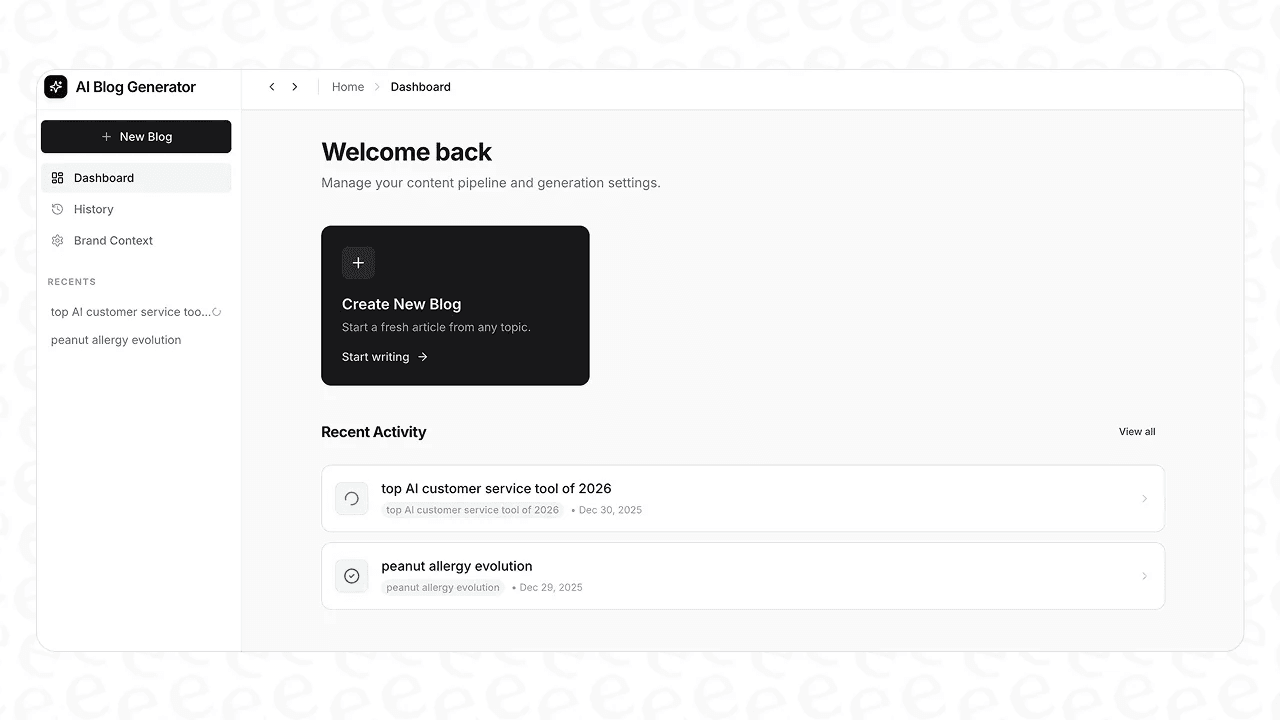
eesel AI is designed to manage the entire process of creating a complete, ready-to-publish blog post from a single keyword. You give it a topic, and it does the rest.
Here’s what sets it apart:
- Deep, Context-Aware Research: It digs deeper than surface-level information to generate well-researched content that sounds human and avoids a generic AI tone.
- Automatic Asset Generation: A blog post is more than just words. eesel AI automatically includes AI-generated images, tables, and infographics to break up the text and make it easier to read.
- Authentic Social Proof: It embeds relevant YouTube videos and pulls real quotes from Reddit discussions directly into the article to add context and social proof.
- Proven Results: This tool was used at eesel AI to grow organic traffic from 700 to 750,000 impressions a day in just three months by publishing optimized blogs at scale.
Best of all, it's completely free to try, so you can see if it helps scale your blog content.
Final comparison table: Ahrefs vs Rytr vs eesel AI
Here's a quick table to help you see where each tool really shines.
| Feature | Ahrefs | Rytr | eesel AI blog writer |
|---|---|---|---|
| Primary Use Case | SEO Analytics & Research | Short-Form AI Writing | End-to-End Blog Post Generation |
| Long-Form Content | No (Provides data for it) | Limited (Not its focus) | Excellent (Core feature) |
| Built-in SEO Tools | Comprehensive | Basic | Strong (SEO-optimized structure) |
| Asset Generation | No | No | Yes (Images, tables, video embeds) |
| Starting Price | $29/month | Free, then $9/month | Free to try |
| Best For | SEO Professionals, Agencies, & Data Analysts | Marketers needing quick copy | Teams scaling blog content |
For a broader view of how different AI-powered SEO tools can enhance your content strategy, check out this video which explores some of the top options available that make blogging easier.
Making the right choice
When it comes down to it, the right tool is the one that solves the problem you have today.
- Choose Ahrefs if your primary role involves building and managing an SEO strategy. It is an investment in marketing intelligence that provides data for strategic decisions.
- Choose Rytr if you need a fast, affordable assistant for short-form copy. It is a tactical tool well-suited for social media, ads, product descriptions, and emails.
If your goal is to consistently publish SEO-optimized blog posts, you may find that neither tool fully addresses that workflow independently. A tool that can convert SEO insights into content may be beneficial.
For a solution that connects strategy with execution, the eesel AI blog writer is available to try for free and generate your first publish-ready article in just a few minutes.

Frequently Asked Questions
Share this article

Article by
Stevia Putri
Stevia Putri is a marketing generalist at eesel AI, where she helps turn powerful AI tools into stories that resonate. She’s driven by curiosity, clarity, and the human side of technology.