

 Google Drive
 Shopify
 Zendesk
The company
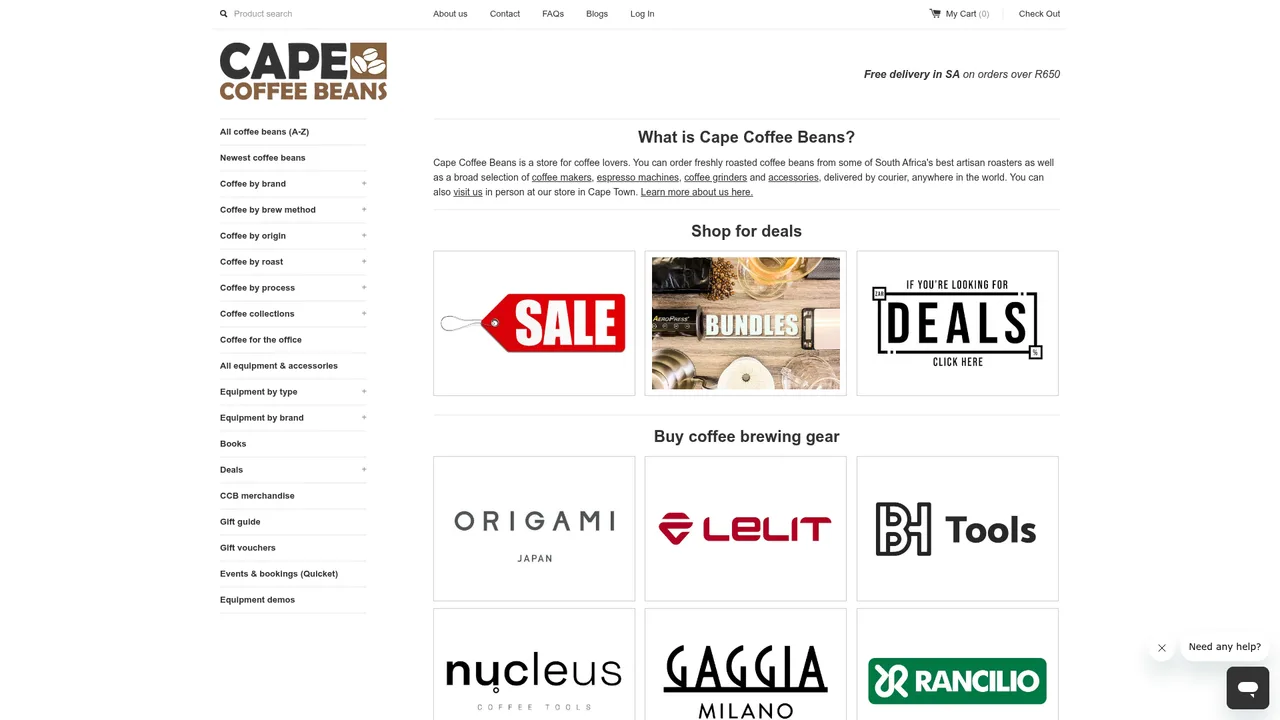
Cape Coffee Beans is a store for South African specialty coffee lovers. Phaedon founded it in 2013 to sell freshly roasted beans online. It grew into a retailer for everything around the cup: beans from several artisan roasters, coffee makers, grinders, espresso machines for the home and for businesses, and accessories, delivered across South Africa and internationally, plus a small shop in Claremont, Cape Town.
The store runs on Shopify, and customer service runs in Zendesk. With more than a thousand products that change all the time, the team's knowledge lives in past tickets, the product pages and a set of guideline documents in Google Drive.
The problem
A small team handling a busy queue drops things in predictable ways. A ticket lands without a group and nobody sees it. A pending ticket waits on a customer with no date to come back to it. A large equipment enquiry gets logged on the standard form instead of the lead form, so it does not get the follow-up it should. None of these are hard to check. They are just easy to forget, every day.
The other half is finding things. A customer names a model number or asks whether a part fits, and the answer is somewhere in thousands of past tickets, a supplier document or a product page. Phaedon wanted a way to ask for that inside the ticket and get an answer with the source attached.
How it runs
Cape Coffee Beans connected Zendesk, Shopify and Google Drive to eesel in April 2026. Two agents share the workspace. The main agent works the Zendesk queue and answers the team inside tickets. A second, called Oversight, watches a daily team form that syncs in from Google Sheets. Both write in British English, keep to South African time, and take their instructions from Phaedon only.
- Scheduled checks. Five Zendesk sweeps run on a timetable, most of them every morning Monday to Saturday: unassigned tickets, pending tickets without a re-open date, leads solved without an outcome, larger enquiries on the wrong form, and a daily read of the Technical Service group. Each one ends in a short email to Phaedon, or no email when there is nothing to report.
- Running logs. Two of the checks keep an append-only tracker document in eesel, one row per ticket found, so the team can see over weeks what keeps slipping.
- On demand in Zendesk. An @eesel in an internal note wakes the agent on that ticket. It searches the catalogue, past tickets and Drive files and replies as an internal note. It does not reply to the customer.
- Products and orders from Shopify. Product lookups come from the live catalogue, and order questions are looked up by order number, with the order linked.
- Sources first. Every claim in a note or email has to come from a document eesel found in that conversation, and it links it. If nothing confirms an answer, it says so.
- Knowledge that stays current. Weekly syncs re-read Zendesk tickets and macros and the Google Drive folders, and a weekday sync refreshes the team form. Drive files marked retired are ignored.
A month of work
Between 8 August and 8 September 2026 eesel ran about 160 scheduled checks for Cape Coffee Beans and was called into 23 Zendesk tickets by the team. Along the way it ran about 120 knowledge searches, looked up 19 products and 5 orders in Shopify, and left about 30 internal notes. Most of the work lands between 8am and midday South African time, which is when the checks are timed to run.
What is next
A weekly content gap report is written and waiting to be switched on. It reads the last seven days of tickets, finds questions a product page should have answered, and emails Phaedon a list grouped by product, ready to hand to a content writer.