Zendesk for fintech compliance: A complete guide for 2026

Stevia Putri
Last edited March 5, 2026
Financial technology companies operate in one of the most regulated industries on earth. Every customer interaction carries compliance risk, from handling payment card data to verifying identities for anti-money laundering (AML) checks. When your support platform stores sensitive financial information, it becomes part of your compliance infrastructure, not just a customer service tool.
This guide examines how Zendesk approaches fintech compliance, what security features matter most for financial services, and how it compares to alternatives like eesel AI for teams that need easier setup without sacrificing compliance standards.
Why compliance matters for fintech customer support
Fintech companies face a unique challenge: customers expect the speed and convenience of tech companies, but regulators demand the rigor of traditional banks. A single compliance failure can result in fines, license revocation, or permanent reputational damage.
The regulatory landscape includes several frameworks that directly impact customer support operations:
- PCI DSS (Payment Card Industry Data Security Standard) governs how you handle credit card data in tickets and conversations
- GDPR and similar privacy laws require careful data retention and deletion policies
- AML/KYC (Anti-Money Laundering/Know Your Customer) regulations mean support agents often need to verify identities or flag suspicious activity
- SOC 2 compliance demonstrates your security controls to enterprise customers and auditors
Beyond regulations, there's the trust factor. According to Zendesk's research, 77% of financial services leaders agree that customer service is a critical priority, yet only 25% of agents feel empowered to deliver excellent support. That gap creates risk. When agents lack proper tools or clear guidance, they're more likely to mishandle sensitive data or give incorrect compliance-related information.
The bottom line? Your customer support platform needs to actively help you stay compliant, not just stay out of the way.
How Zendesk approaches fintech compliance
Zendesk has built its reputation on enterprise-grade security and maintains an extensive compliance portfolio that matters for fintech companies. The platform is designed to handle sensitive data while providing the flexibility financial services teams need.
Security certifications and standards
Zendesk holds certifications that most fintech compliance officers will recognize:
| Certification | What it means for fintech |
|---|---|
| SOC 2 Type II | Independent audit of security controls, available under NDA |
| ISO 27001:2022 | Information security management certification |
| ISO 27018:2019 | Cloud privacy protection standards |
| ISO 27701:2019 | Privacy information management |
| PCI DSS | Credit card data handling compliance with automatic redaction features |
| HIPAA | Available with Business Associate Agreement for healthcare fintech |
| FedRAMP LI-SaaS | US government security authorization |
| ISO 42001 | AI management system certification for responsible AI governance |
Source: Zendesk Trust Center
These certifications aren't just badges. They mean Zendesk undergoes regular third-party audits, maintains documented security procedures, and can provide the compliance artifacts your auditors will request.
Data protection features
For fintech companies, data handling is where compliance rubber meets the road. Zendesk provides several layers of protection:
Encryption: All data is encrypted in transit (TLS 1.2+) and at rest (AES-256). This is table stakes for fintech, but Zendesk implements it consistently across all plans.
Data residency: You can choose to host data in the US, European Economic Area, Australia, or Japan. For EU fintechs subject to GDPR, this matters. The data location option requires Suite Professional or higher.
Access controls: Role-based permissions let you define exactly who can see what. You can restrict access by IP address, require two-factor authentication, and set session timeouts.
Data retention and deletion: Zendesk offers configurable retention policies and secure deletion procedures. For companies with strict data minimization requirements, this is essential.
AI and compliance
Zendesk's AI features come with compliance considerations. The company has achieved ISO 42001 certification for AI management, demonstrating governance over how AI models are developed and deployed.
Key AI compliance features include:
- Zero data retention with OpenAI: Zendesk uses zero-retention endpoints, meaning customer data isn't stored by OpenAI
- Multi-LLM architecture: Uses multiple models (OpenAI, Azure, Amazon Bedrock, Google Cloud) to avoid vendor lock-in
- No training on customer data: Generative AI features use pre-trained models; customer data isn't used to train third-party LLMs
- Retrieval Augmented Generation (RAG): AI responses are grounded in your knowledge base content, reducing hallucination risk
Source: Zendesk AI Trust
Key compliance features in Zendesk
Beyond certifications, specific product features help fintech teams maintain compliance day-to-day.
Advanced data privacy and protection
This add-on ($50/agent/month) includes capabilities that many fintechs will find essential:
- BYOK (Bring Your Own Key) encryption: You control the encryption keys for your data
- Data masking: Hide sensitive fields from agents who don't need to see them
- PII redaction: Automatically detect and remove personally identifiable information
- Access logs: Detailed audit trails of who accessed what data when
Automatic credit card redaction
Zendesk can automatically detect and redact credit card numbers from tickets and chats. When enabled, card numbers are partially masked and removed from logs and database entries. This helps with PCI DSS compliance without requiring agents to manually handle sensitive data.
Audit logs and monitoring
Enterprise plans include comprehensive audit logs covering:
- Account configuration changes
- User access and permission changes
- Ticket deletions
- Business rule modifications
- App installations and changes
These logs are available via the Admin Center and API, making it easier to demonstrate compliance during audits.
Approval workflows
Suite Enterprise includes built-in approval workflows. For fintechs, this means sensitive operations (like refunds over a certain amount, account changes, or escalations) can require manager approval before proceeding.
Zendesk pricing for fintech compliance
Understanding what compliance features cost is critical for budgeting. Here's the breakdown:
| Plan | Monthly price | Annual price | Compliance features included |
|---|---|---|---|
| Suite Team | $69/agent | $55/agent | Basic encryption, 2FA, standard data protection |
| Suite Professional | $149/agent | $115/agent | + Data location choice, HIPAA eligibility, advanced AI |
| Suite Enterprise | $219/agent | $169/agent | + Audit logs, sandbox, approval workflows, custom roles |
Add-ons for enhanced compliance:
| Add-on | Price | What it adds |
|---|---|---|
| Advanced data privacy and protection | $50/agent/month | BYOK, data masking, PII redaction, access logs |
| Advanced compliance | Contact sales | Enhanced HIPAA support, additional security controls |
Important notes for fintechs:
- HIPAA compliance requires both the Advanced Compliance add-on AND a signed Business Associate Agreement
- Data location choice requires Professional plan or higher
- Audit logs are Enterprise-only
- The Advanced Data Privacy add-on is essentially mandatory for fintechs handling sensitive financial data
Source: Zendesk Pricing
Limitations and gaps to consider
Zendesk is a powerful platform, but it's not perfect for every fintech use case. Here are the limitations to weigh:
Compliance features require higher tiers: Basic encryption and 2FA are available on all plans, but the compliance features fintechs typically need (data location, audit logs, advanced privacy controls) require Professional or Enterprise plans. For a team of 20 agents, you're looking at $2,300-$4,380 per month before add-ons.
Complex setup for advanced features: Configuring BYOK encryption, custom retention policies, and advanced redaction rules requires technical expertise. You'll likely need a Zendesk admin or consultant to set these up correctly.
Third-party tools for comprehensive DLP: While Zendesk has built-in redaction, many fintechs integrate dedicated Data Loss Prevention (DLP) tools like Nightfall AI for more sophisticated monitoring. This adds cost and complexity.
Learning curve: Zendesk's extensive feature set means significant training time for agents. In an industry with high turnover, this is a real cost.
Per-seat pricing model: As your team grows, costs scale linearly. For rapidly growing fintechs, this can become expensive quickly.
eesel AI: An alternative approach to fintech compliance
While Zendesk provides a comprehensive platform, some fintech teams need something that works differently. eesel AI takes an alternative approach that may fit certain use cases better.
The teammate model
Instead of positioning itself as software you configure, eesel AI acts as an AI teammate you hire and train. The distinction matters for compliance:
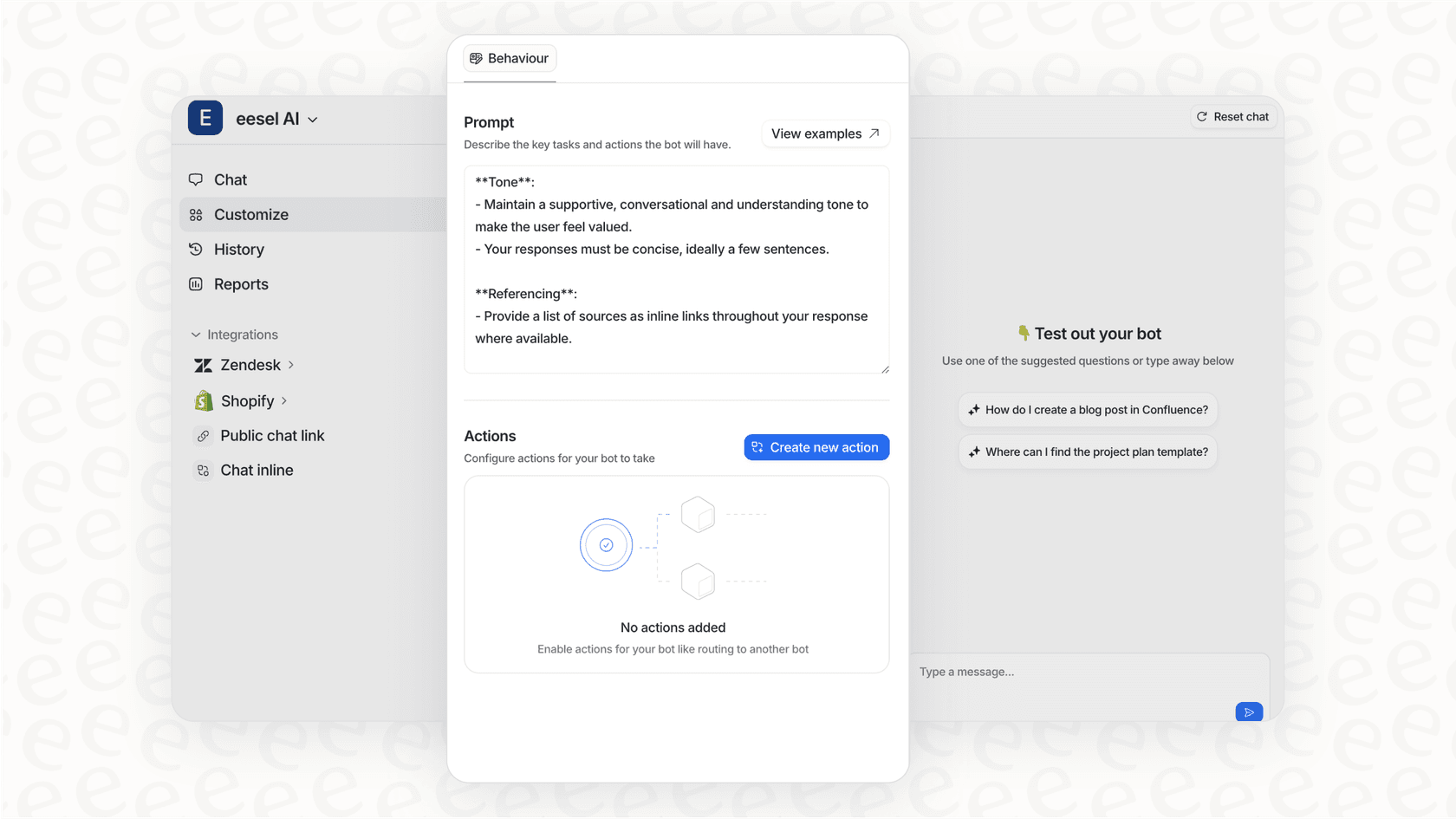
- Plain English controls: Define escalation rules, data handling procedures, and compliance requirements in natural language prompts rather than complex configuration
- Progressive rollout: Start with the AI drafting replies for human review, then expand to full autonomy as it proves itself
- Pre-go-live testing: Run simulations on thousands of past tickets before the AI ever touches a real customer
This approach reduces the risk of compliance errors during rollout because you're testing extensively before going live.
Security and compliance posture
eesel AI maintains security standards that meet most fintech requirements:
| Feature | Details |
|---|---|
| Data encryption | At rest and in transit |
| Data usage | Never used to train AI models (contractually guaranteed) |
| Data isolation | Your data is only accessible to your bots |
| Compliance programs | GDPR and CCPA |
| EU data residency | Available on Business plan |
| Subprocessor certification | SOC 2 Type II certified vector database |
| Enterprise options | Zero retention, self-hosted setups, custom controls |
Source: eesel AI Security
Pricing comparison
eesel AI uses a fundamentally different pricing model:
| Plan | Monthly price | Annual price | What's included |
|---|---|---|---|
| Team | $299 | $239/month | Up to 3 bots, 1,000 interactions, basic training |
| Business | $799 | $639/month | Unlimited bots, 3,000 interactions, AI agent, EU residency |
| Custom | Contact sales | Contact sales | Unlimited interactions, custom security, advanced controls |
Key difference: eesel AI charges per interaction, not per seat. For a fintech with 20 agents handling 2,000 tickets per month, the Business plan at $639/month (annual) could be significantly cheaper than Zendesk Enterprise at $3,380/month (plus add-ons).
Source: eesel AI Pricing
When eesel AI makes sense
eesel AI tends to work well for fintechs that:
- Want to start with AI quickly without extensive configuration
- Prefer testing extensively before going live
- Have fluctuating ticket volumes (pay-per-interaction vs per-seat)
- Need plain-language control over AI behavior
- Want to integrate AI with existing help desk tools rather than replace them
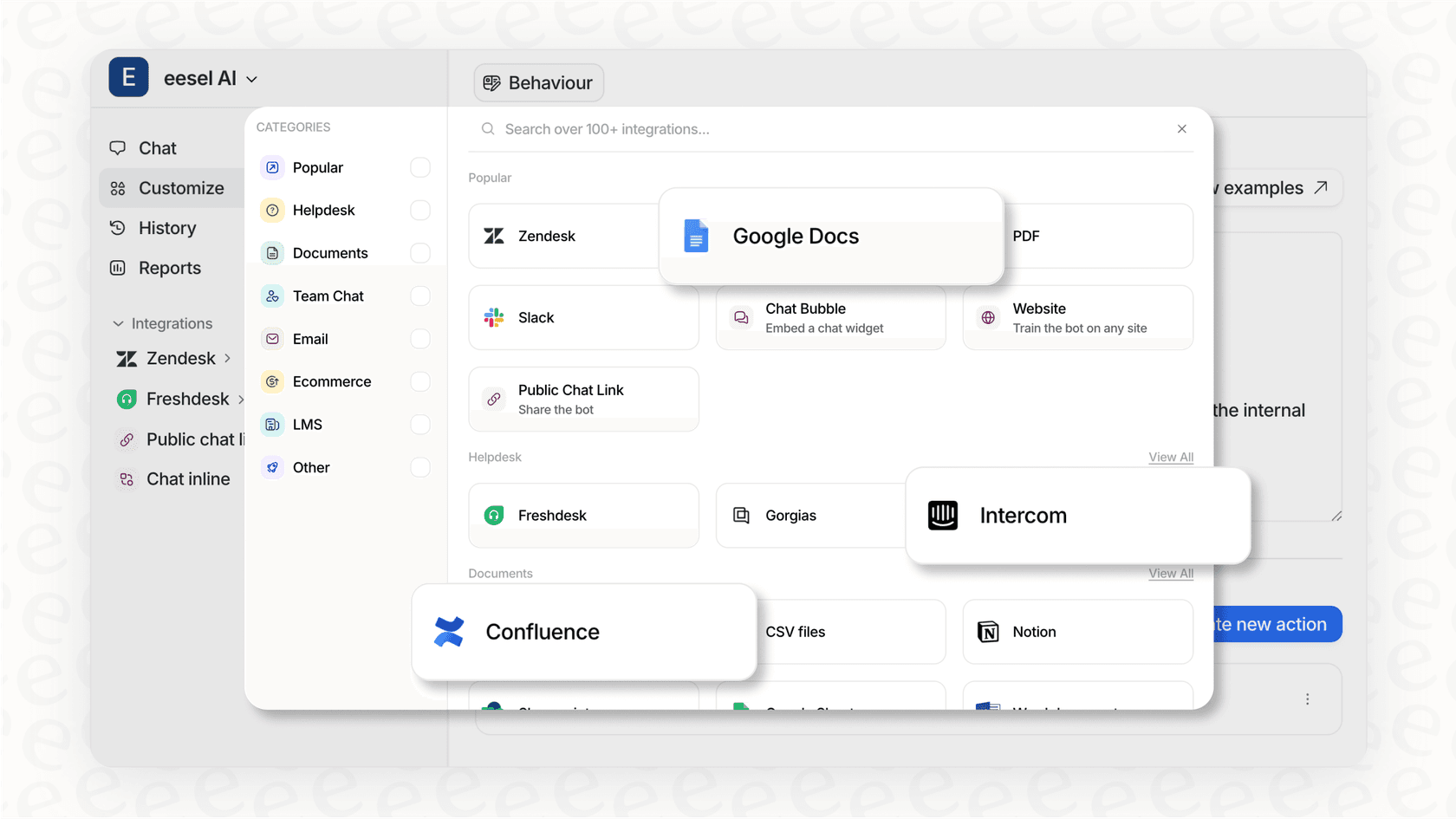
The platform integrates with Zendesk, Freshdesk, Gorgias, Jira, and other tools, so you can add AI capabilities without migrating your entire support operation.
Choosing the right compliance solution for your fintech
Both Zendesk and eesel AI can support fintech compliance, but they serve different needs.
Choose Zendesk if:
- You need a complete support platform replacement
- You have dedicated IT resources for configuration
- You require specific enterprise certifications (FedRAMP, specific ISO standards)
- You want an all-in-one solution with built-in help center, chat, and voice
- Your compliance requirements are complex and highly customized
Choose eesel AI if:
- You want to add AI to your existing help desk
- You prefer testing before full deployment
- You want simpler setup with plain-language controls
- Your team size fluctuates (pay-per-use vs per-seat)
- You need to demonstrate ROI quickly
The reality is that many fintechs use both: Zendesk as their core platform with eesel AI handling specific AI-powered workflows. The integration between the two means this isn't an either/or decision.
Getting started with compliant customer support
Compliance isn't a one-time setup. It's an ongoing process of monitoring, testing, and adjusting. Whichever platform you choose, follow these principles:
-
Document your compliance requirements before evaluating tools. Know which certifications you need and which data handling procedures are non-negotiable.
-
Test extensively before going live. Both platforms offer testing environments. Use them to verify that sensitive data is handled correctly.
-
Train your team on compliance procedures. The best technology fails if people don't use it correctly.
-
Review regularly. Regulations change. Your platform's features change. Schedule quarterly reviews of your compliance setup.
-
Get expert advice when needed. For complex fintech compliance, consider working with consultants who specialize in your regulatory environment.
If you're evaluating AI for your fintech support operation, try eesel AI free for 7 days. You can run simulations on your past tickets, test compliance configurations, and see how the AI handles your specific use cases before making any commitment.


Frequently Asked Questions
Share this article

Article by
Stevia Putri
Stevia Putri is a marketing generalist at eesel AI, where she helps turn powerful AI tools into stories that resonate. She’s driven by curiosity, clarity, and the human side of technology.