Returns are the necessary evil of ecommerce. You have worked hard to convert that visitor into a customer, and now they want to send the product back. It is tempting to view returns as a failure or a cost to minimize. But here is the thing: a smooth return experience can actually bring customers back. According to the National Retail Federation, 70% of customers will shop again with a company if their return experience was positive.
The challenge is managing those returns efficiently without drowning your support team in repetitive tickets. That is where Zendesk comes in. While it is not a dedicated returns management platform, it sits at the center of customer communication. When paired with the right integrations and automation, Zendesk can become the hub of a returns process that actually builds loyalty instead of destroying it.
Let's break down how to make that happen.
Understanding Zendesk's role in ecommerce returns
Zendesk excels at what it was built for: managing customer conversations across channels. For returns, that means tickets, chat, email, and phone calls all flow into one place where agents can respond. That is valuable because returns generate a lot of communication. Customers want to know how to start a return, where their refund is, whether you received their package, and why their exchange has not shipped yet.
But here is the reality check. Zendesk is built for communication, not operational returns handling. It does not have native RMA (Return Merchandise Authorization) workflows. It cannot connect directly to your warehouse or ERP system to check inventory. It cannot trigger refunds in your payment processor. And return information can easily get buried in long ticket threads, making it hard for agents to find what they need quickly.
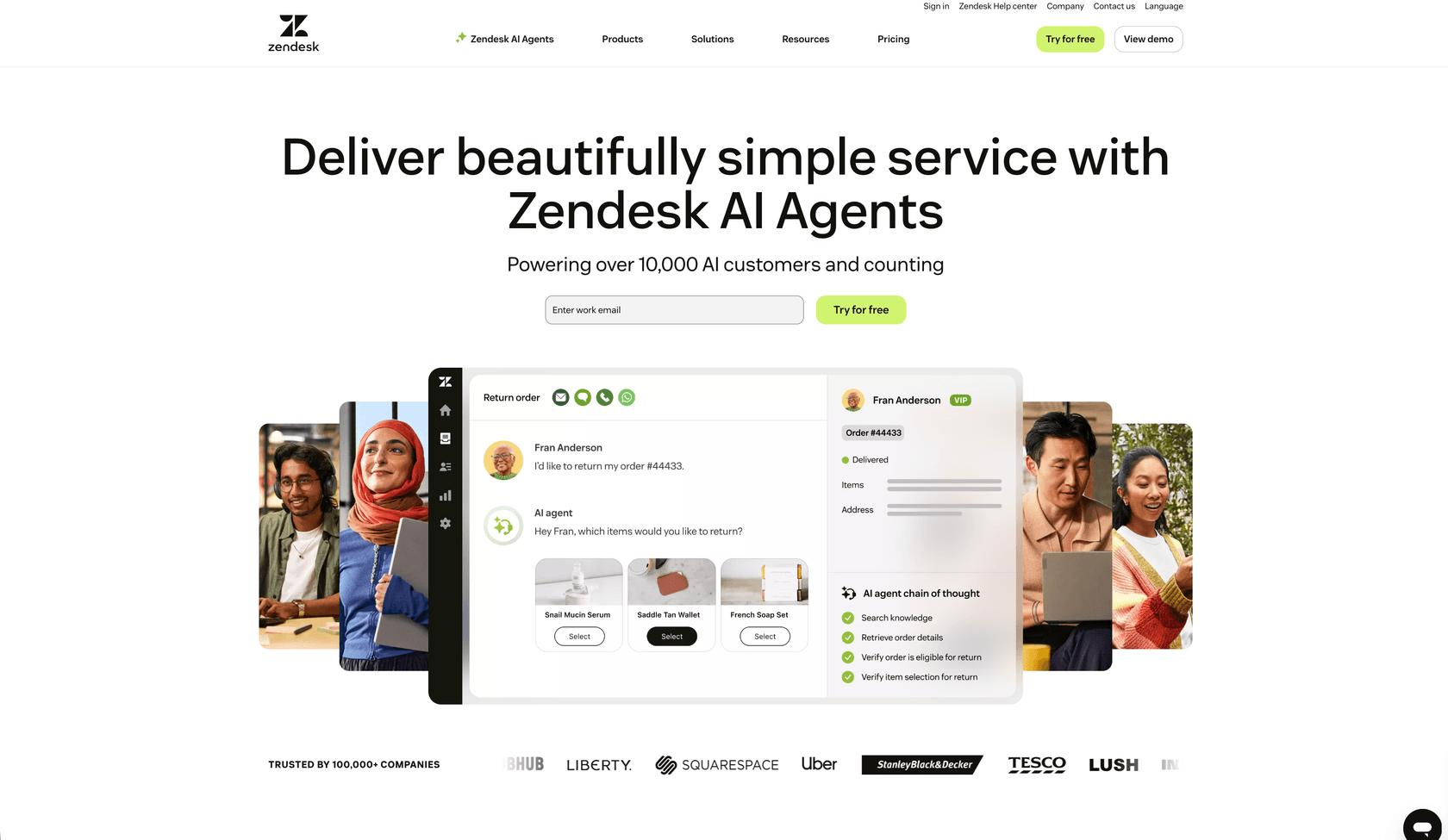
This creates a specific challenge for support teams. Returns are high volume (the average ecommerce return rate is 18.1%), repetitive (most questions follow the same patterns), and operationally complex (they involve multiple systems and teams). Your agents end up spending their days answering "Where is my refund?" instead of solving problems that actually require human judgment.
The opportunity is to use Zendesk as the communication layer while connecting it to specialized tools that handle the operational side. That combination is what turns returns from a cost center into a retention strategy.
Zendesk's native returns capabilities
Before you start adding integrations, it is worth understanding what Zendesk can do out of the box.
Shopify integration for returns
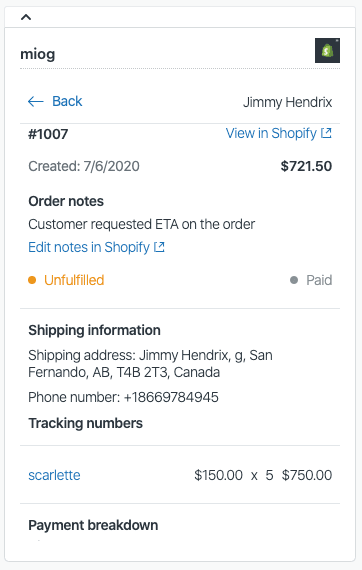
If you run on Shopify, the native Zendesk integration is your starting point. Once connected, agents can see full order information directly in the ticket sidebar. That includes order status, items purchased, shipping details, and payment method. More importantly, agents can process refunds and cancellations without leaving Zendesk.
When a refund or cancellation is processed, the integration automatically adds tags to the ticket: "shopify_refunded" or "shopify_cancelled." These tags become useful for reporting. In Zendesk Explore, you can build reports showing refund and cancellation trends, identify products with high return rates, and spot patterns by region or time period.
Native return workflows
For businesses using Zendesk Sell (formerly Zendesk Commerce), there is basic return workflow support. You can process returns against orders, mark items as damaged, adjust stock levels, and notify customers via email. Refunds can be triggered automatically for online payment methods, though manual payment methods require you to process the refund outside the system.
The limitation is clear: these workflows are fairly basic and disconnected from the rest of your operational stack. You cannot see warehouse inventory, generate return labels, or handle complex exchange scenarios. For small operations with low return volumes, this might be enough. For everyone else, you will need to look at integrations.
Top returns management integrations for Zendesk
The ecosystem of returns tools that integrate with Zendesk has matured significantly. Here are the leading options, each with a different focus.
Loop Returns
Loop Returns is built specifically for Shopify merchants who want to turn refunds into exchanges. Their platform provides a self-service returns portal where customers can initiate returns, choose between refund or exchange, and print return labels or download QR codes. The key differentiator is real-time inventory integration, so customers only see exchange options for items that are actually in stock.
The Zendesk integration pushes all return data into tickets. Agents see the return submission date, status, shipping information, items being returned, return reason, and whether the customer chose a refund, exchange, or store credit. That context eliminates the back-and-forth of asking customers for information they have already provided.
Loop operates on custom pricing, so you will need to contact sales for a quote. They also offer Loop Intelligence as an add-on for AI-powered fraud detection.
ReturnGO
ReturnGO focuses on automation. When a customer submits a return request, ReturnGO automatically creates a ticket in Zendesk with all relevant RMA information. As the return progresses, status updates sync back to the ticket. This eliminates manual data entry and reduces the chance of agents working with outdated information.
The integration is straightforward: connect your ReturnGO account to Zendesk, configure your workflows, and let the automation handle the routine updates. For teams drowning in return-related tickets, this can significantly reduce workload.
ReturnGO does not publicly list pricing, so you will need to request a custom quote based on your volume and requirements.
WeSupply Labs
WeSupply Labs takes a broader view of the post-purchase experience. Their platform covers order tracking, delivery notifications, and returns management in one system. The self-service returns portal lets customers initiate returns in three steps, choose drop-off or pickup options, and track their return shipment.
The Zendesk integration brings order and return data directly into tickets. Agents can see real-time order updates, return status, and customer communication history. WeSupply also supports in-store returns and pickups, making it a good fit for omnichannel retailers.
A notable case study is Evereve, a fashion retailer that integrated WeSupply with Zendesk, Magento, and their warehouse systems. They reported improved operational visibility, faster returns processing, cost savings, and increased customer loyalty.
Claimlane
Claimlane is purpose-built RMA software for ecommerce, retailers, and OEMs. Unlike the other tools that focus primarily on the customer-facing experience, Claimlane emphasizes operational workflows. It handles the entire return from initial form submission through final resolution, with structured workflows and automated rules that determine outcomes.
The Zendesk integration offers two modes. In the first, Claimlane creates tickets in Zendesk for customer communication while handling the operational workflow in the background. Status updates, notes, and tags sync back to Zendesk so agents have visibility. In the second mode, Claimlane runs the full workflow and only creates reference tickets in Zendesk to keep support informed. This reduces ticket volume for high-return operations.
Claimlane also connects to warehouse and ERP systems, which addresses one of the biggest gaps in Zendesk's native capabilities.
agnoStack
agnoStack takes a different approach. Instead of integrating with Zendesk, it operates as a commerce layer inside Zendesk. Agents get full order management capabilities without leaving the ticket interface.
| Plan | Monthly Price | Minimum Bill | Key Features |
|---|---|---|---|
| Starter | $5/agent | $10/month | Basic order history, customer lookup, order status |
| Professional | $19/agent | $95/month | Full order details, shipping status, payment status, order search |
| Premium | $24/agent | $120/month | Gift cards, AI features, multiple stores, refunds |
| Enterprise | $34/agent | $170/month | Full order modification, new order creation, advanced reporting |
The Enterprise plan includes features most returns tools do not offer: partial refunds, order modification, new order creation, and rapid re-ordering. For teams that want to handle everything in Zendesk rather than switching between systems, agnoStack is worth evaluating.
Returns management best practices
Tools help, but process matters too. Here are practices that consistently improve returns handling.
Make returns easy. Clearly signpost your returns policy on your website. Offer multiple return channels (mail, in-store, drop-off). Do not require customers to print labels (QR codes work better). The easier you make it, the more likely customers are to shop with you again.
Use self-service options. Every return that customers can handle themselves is a ticket your team does not have to touch. Self-service portals for initiating returns, checking status, and printing labels reduce volume significantly.
Leverage automation for status updates. Most "Where is my order?" and "Where is my refund?" questions can be answered automatically. Proactive notifications at key milestones (return received, refund processed) prevent tickets from being created in the first place.
Track return reasons. If 30% of returns for a specific product cite "does not match description," you have a product page problem, not a returns problem. Use returns data to identify and fix upstream issues.
Balance experience with fraud prevention. Liberal return policies drive sales, but they also attract abuse. Use fraud detection tools to flag suspicious patterns without making the experience worse for legitimate customers.
Automating returns support with AI
Even with great integrations, returns generate repetitive support work. Customers ask the same questions repeatedly. "How do I start a return?" "Did you receive my package?" "When will my refund arrive?" These questions have answers that live in your systems, but agents still have to look them up and type responses.
This is where AI changes the equation. An AI agent can handle returns inquiries autonomously by connecting to your order system, looking up return status, and drafting responses based on your policies. It works 24/7, gives consistent answers, and escalates only the cases that actually need human judgment.
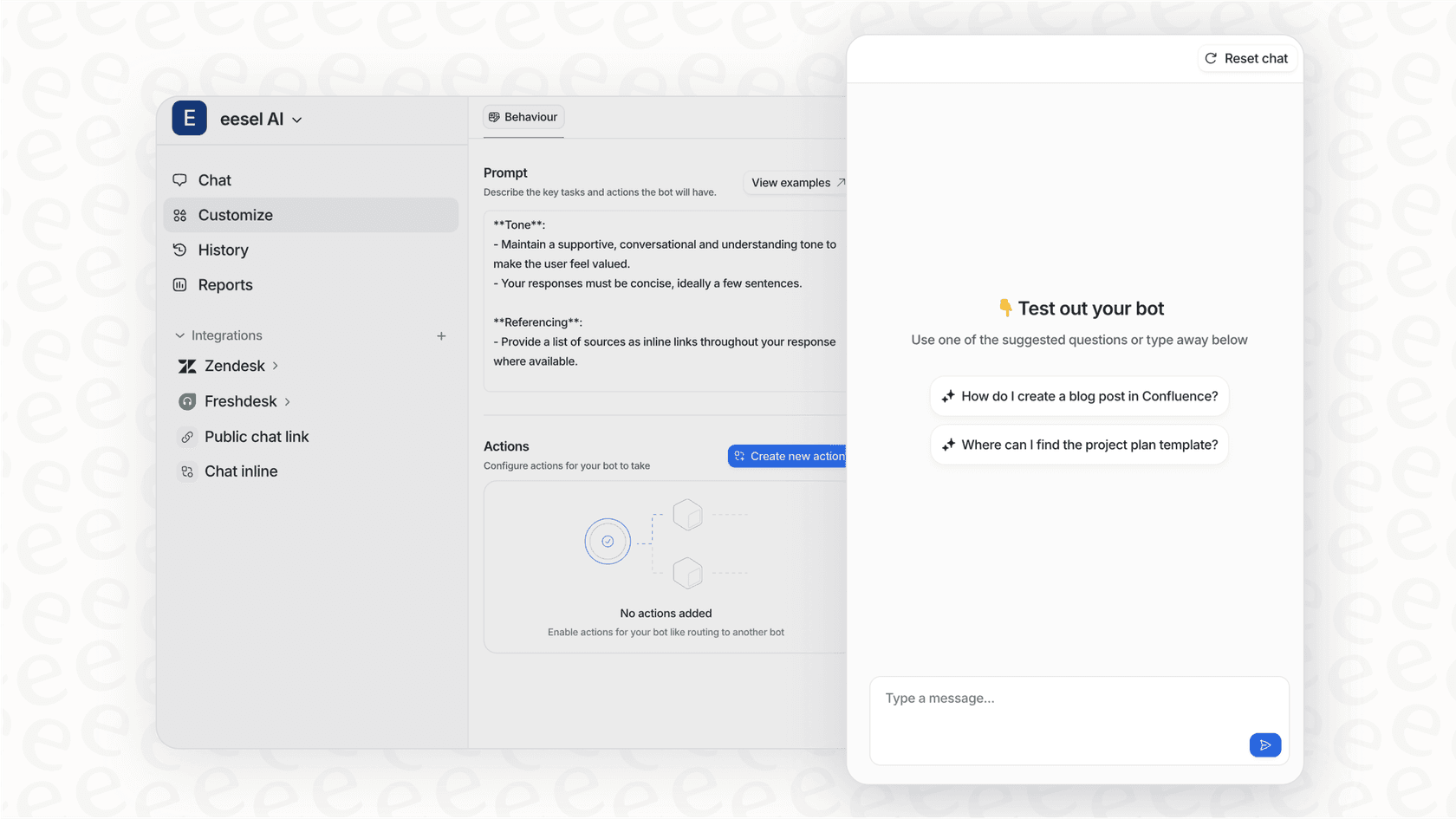
At eesel AI, we approach this as hiring an AI teammate for your support team. You do not configure workflows. You train the AI on your knowledge (help center, past tickets, return policies) and let it learn your voice. Start with the AI drafting replies for agent review. Once you are confident in its performance, let it respond directly to routine returns questions.
The integration with Zendesk is seamless. The AI works alongside your existing setup, pulling order data from Shopify or your returns platform and posting responses back to tickets. Agents stay in Zendesk. Customers get faster answers. Your team focuses on the complex issues that require empathy and judgment.
Choosing your returns approach
There is no one-size-fits-all answer. The right setup depends on your volume, complexity, channels, and budget.
Native Zendesk + Shopify is enough if: You have low return volume (under 50 per month), simple return policies, and a small team that can handle manual processes.
You need a dedicated returns platform if: You have high volume, complex exchange rules, multiple sales channels, or need warehouse integration. Choose based on your priorities: Loop for exchange-focused Shopify merchants, WeSupply for omnichannel, Claimlane for operational control.
AI automation adds the most value when: Your team spends significant time on repetitive returns questions, you want 24/7 coverage, or you are scaling and need to handle volume without proportional headcount growth.
The implementation approach we recommend: start with guidance, expand based on performance. Whether you are adding a returns platform or AI automation, begin with a limited scope. Let the system prove itself before expanding to full autonomy. That is how you build confidence and avoid surprises.
Streamline your returns process with smarter Zendesk ecommerce returns support
Zendesk is the communication hub. A returns management platform handles the operational complexity. AI automation takes care of the repetitive questions. Together, they create a returns experience that customers actually appreciate.
The goal is not to eliminate returns. That is impossible, and trying too hard just frustrates customers. The goal is to make returns so smooth that customers trust you enough to buy again. With the right tools integrated into Zendesk, you can turn returns from a cost center into a competitive advantage.
If your team is spending too much time on routine returns questions, invite eesel AI to handle them. We will learn your business, draft responses in your voice, and free your agents to focus on the conversations that matter.