How to reduce cart abandonment with Zendesk in 2026

Stevia Putri
Last edited March 3, 2026
Seven out of ten online shoppers will add items to their cart and leave without buying anything. That is the reality of e-commerce in 2026. Cart abandonment is not just a metric on a dashboard. It is lost revenue, frustrated customers, and missed opportunities to build lasting relationships.
The good news? Most abandonments are preventable with the right support strategy. Zendesk gives e-commerce teams the tools to engage customers at the exact moment they need help, whether that is through proactive chat, automated follow-ups, or AI-powered assistance. And for teams looking to take cart recovery further, we offer an AI-native approach that works alongside Zendesk to handle end-to-end support autonomously.
In this guide, we will break down why customers abandon carts, how Zendesk helps you recover them, and how to set up a system that turns abandoned carts into completed purchases.
How Zendesk helps prevent cart abandonment
Zendesk is built to help support teams engage customers across every channel. For cart abandonment specifically, it offers three core capabilities: real-time engagement, automated ticket creation, and omnichannel continuity.
Real-time engagement with Zendesk Chat
The most effective way to reduce abandonment is to prevent it before it happens. Zendesk Chat lets you set up proactive triggers that initiate conversations when customers show signs of hesitation.
You can configure chat to appear after a customer has been on the checkout page for 30-60 seconds. The message might say something like, "Have questions about shipping? We are here to help." This simple intervention addresses the top reason for abandonment: unanswered questions.
Zendesk's AI-powered chatbots can handle common inquiries instantly. Things like "What is your return policy?" or "How much is shipping to Canada?" get answered in seconds, not minutes. For more complex issues, the bot hands off to a human agent with full context of the conversation.
Automated ticket creation for abandoned carts
For Shopify stores, the Shopify Abandoned Cart app (built by Knots) creates Zendesk tickets automatically when customers abandon their carts. This turns a silent data point into an actionable support opportunity.
The app captures cart details, customer information, and abandonment time. Your agents can then follow up with personalized outreach. The app also supports customizable polling intervals, so you control how frequently it checks for new abandoned carts.
Omnichannel continuity
Customers might start browsing on mobile, add items on desktop, and want to complete the purchase via email. Zendesk connects these touchpoints so the conversation continues seamlessly across channels.
If a customer starts a chat on your website then switches to WhatsApp, your agents see the full history. No repeating themselves. No starting over. This continuity matters because cart recovery often happens hours or days after the initial abandonment.
Setting up Zendesk for cart recovery
Getting started with cart abandonment recovery in Zendesk involves three main components: proactive chat configuration, Shopify integration, and email automation.
Configure proactive chat triggers
Start by identifying where customers stall in your checkout process. Use Zendesk's trigger settings to initiate chat based on behavior:
- Time on page (e.g., 45 seconds on checkout)
- Exit intent (cursor moving toward the back button)
- Specific page visits (cart page without proceeding to checkout)
Write messages that offer help rather than push sales. "Need help finishing your order?" works better than "Complete your purchase now!" The goal is to remove friction, not add pressure.
Connect Shopify for abandoned cart tracking
Install the Shopify Abandoned Cart app from the Zendesk Marketplace. The app offers a 14-day free trial, after which you will need to contact Knots for pricing based on your volume.
Once installed, configure your polling interval. For high-traffic stores, checking every few minutes makes sense. For smaller operations, every hour might be sufficient. The app will create tickets with cart contents, customer email, and abandonment timestamp.
Set up automated email workflows
Email remains one of the most effective cart recovery channels. Abandoned cart emails achieve 39-45% open rates and 20-25% click rates on average. The key is timing and relevance.
Research shows that a three-email sequence performs best:
| Timing | Content Focus | |
|---|---|---|
| First | 1 hour after abandonment | Friendly reminder with cart contents |
| Second | 24 hours later | Address common objections, offer support |
| Third | 72 hours later | Incentive or urgency (if appropriate) |
Zendesk integrates with email platforms like Klaviyo and Mailchimp, or you can use Zendesk's native email capabilities. Include a direct link to chat or email support in every recovery email. Some customers click back because they need help, not just a reminder.
Advanced cart recovery tactics with eesel AI
While Zendesk provides the foundation for cart recovery, some teams need AI capabilities that go beyond traditional chatbots and ticket workflows. That is where we come in.
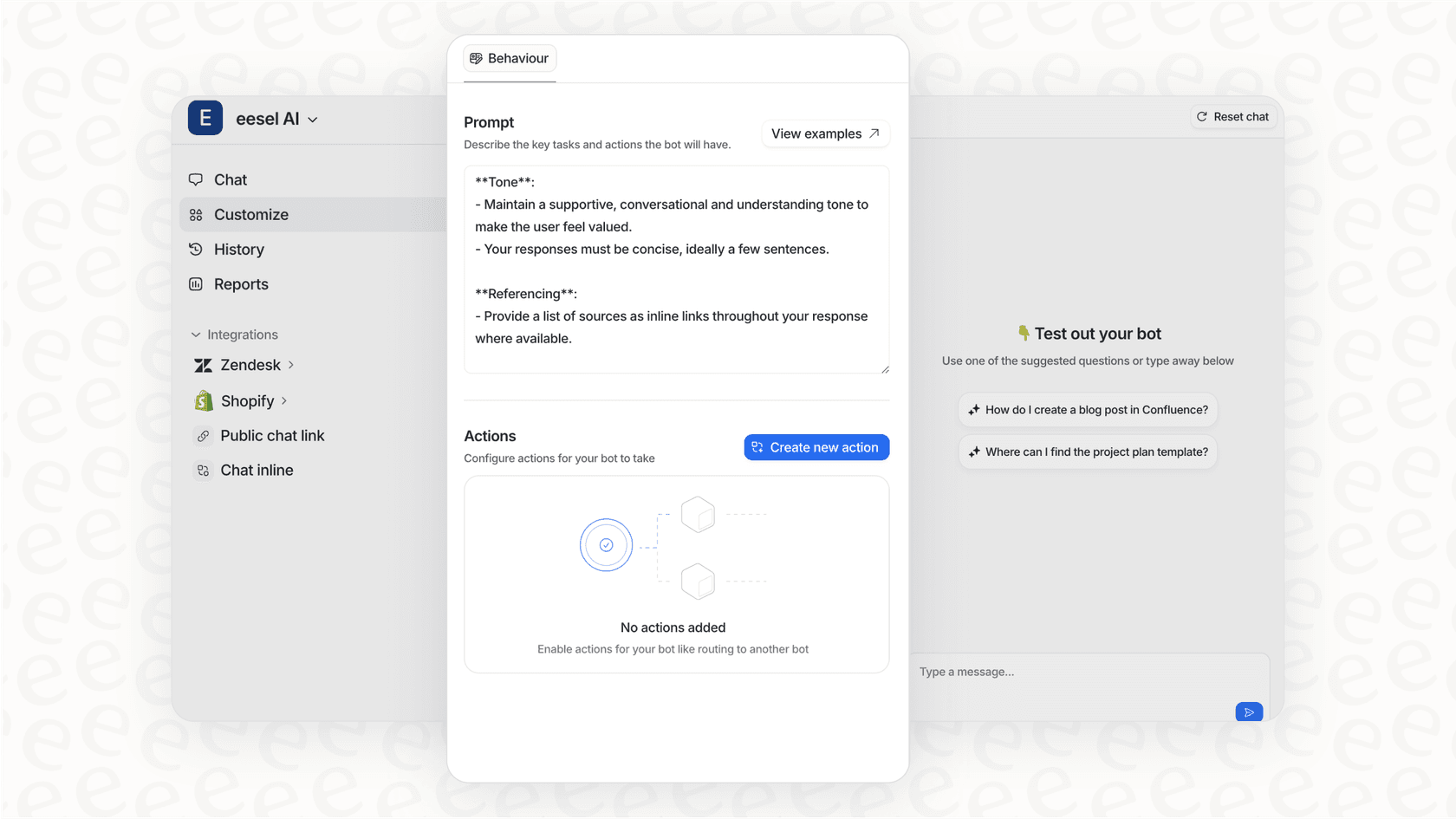
eesel AI is an AI teammate that works alongside Zendesk to handle customer support autonomously. Instead of configuring rules and workflows, you hire eesel like you would a new team member. It learns your business from past tickets, help center articles, and connected documentation. Then it starts handling conversations on its own.
Here is how eesel AI differs from traditional approaches:
It learns instantly. Connect eesel to your Zendesk account and it absorbs your support history, tone, and common issues. No manual training or documentation uploads required.
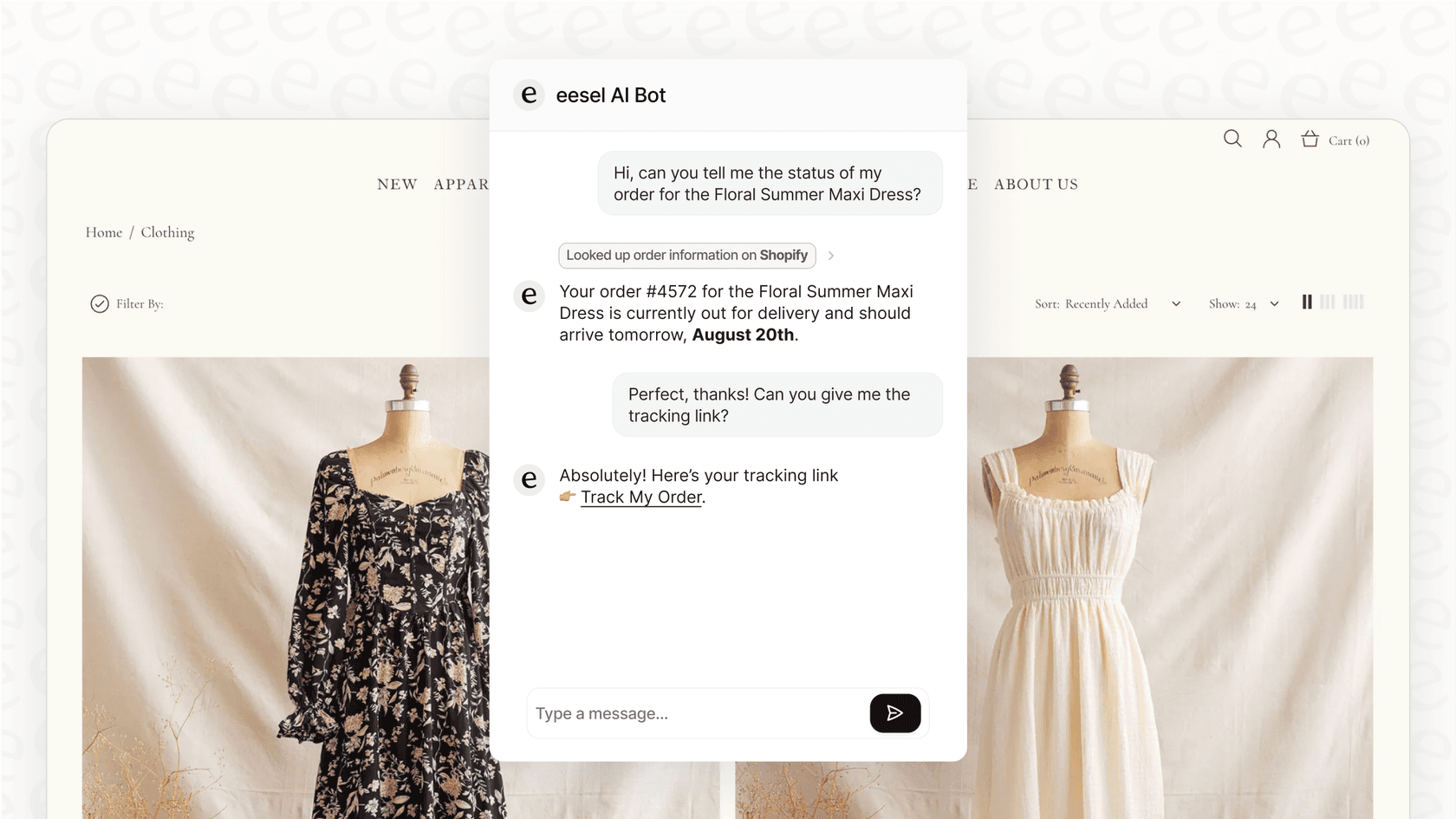
It handles end-to-end resolution. Unlike chatbots that answer simple questions then escalate, eesel can look up orders, process refunds, and resolve tickets completely. For cart abandonment, this means the AI can answer "Where is my order?" questions, help with checkout issues, and even recommend products to complete the purchase.
It works progressively. Start with eesel drafting replies for your agents to review. Once you are confident in its performance, let it respond directly to customers. Mature deployments achieve up to 81% autonomous resolution rates.
For e-commerce specifically, our AI Sales Rep integrates with Shopify to do more than just answer questions. It can:
- Look up order status and history in real-time
- Process refunds and cancellations
- Recommend products based on customer needs
- Add items to cart directly in the chat
- Handle returns and exchanges
You control escalation with plain-English instructions. "Always escalate billing disputes to a human" or "For VIP customers, CC the account manager." No complex decision trees or code required.
Our pricing works differently than per-seat models. We charge per interaction, not per agent. The Team plan starts at $299 per month for up to 3 bots and 1,000 interactions. Business plans at $799 per month add unlimited bots, 3,000 interactions, and advanced features like bulk simulation and EU data residency.
Measuring your Zendesk cart abandonment success
To know if your cart recovery efforts are working, track these key metrics:
| Metric | Baseline | Target |
|---|---|---|
| Cart abandonment rate | 70.19% (global average) | Reduce by 5-10% |
| Recovery rate | Varies by industry | 10-15% (20%+ for top performers) |
| Email open rate | 39-45% | Above 40% |
| Email click rate | 20-25% | Above 20% |
| Revenue per recipient | $5.81 average | Track improvement over time |
| Chat engagement rate | Varies | 5-15% of cart visitors |
Use Zendesk Explore to analyze where abandonment happens in your checkout flow. Look for patterns: Are customers dropping off at shipping calculation? At payment entry? This data helps you prioritize which proactive support tactics to implement first.
Run A/B tests to measure impact. Compare one week without proactive chat against one week with it enabled. Even a 4% improvement in abandonment rate means 4 additional sales per 100 carts created.
Start recovering more carts today
Cart abandonment is not a problem you solve once and forget. It requires ongoing attention to customer friction points and continuous optimization of your recovery workflows.
Zendesk gives you the infrastructure: proactive chat to prevent abandonment, ticket automation to track it, and omnichannel support to recover it. For teams ready to add AI capabilities, we offer an approach that learns your business and handles support end-to-end.
The $260 billion in recoverable sales is not a theoretical number. It represents real customers who wanted to buy but hit a roadblock. With the right tools, most of those roadblocks are removable.
Ready to see how AI can transform your cart recovery? Try eesel AI free or book a demo to see it in action on your Zendesk account.


Frequently Asked Questions
Share this article

Article by
Stevia Putri
Stevia Putri is a marketing generalist at eesel AI, where she helps turn powerful AI tools into stories that resonate. She’s driven by curiosity, clarity, and the human side of technology.