Zendesk B2B partners: Navigating the ecosystem for better customer service

Stevia Putri
Last edited March 5, 2026
B2B customer service differs from B2C. You're not just answering questions about a $50 product; you're managing complex relationships where your client's business depends on your solution working flawlessly. When something breaks, they need answers fast. That's why many companies turn to Zendesk and its extensive partner ecosystem to get their support operations running smoothly.
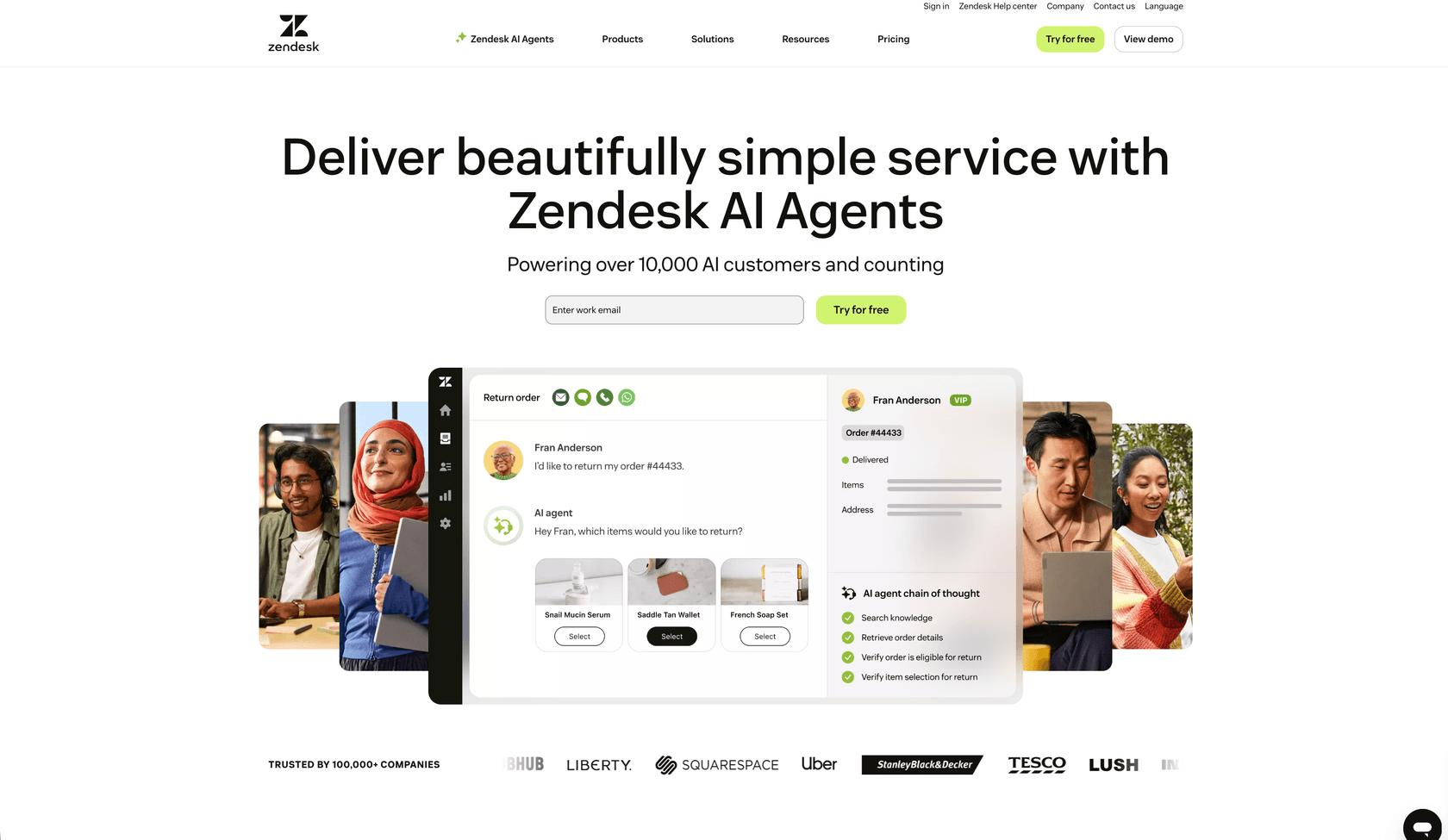
But here's the challenge: with over 1,329 partners globally and 331+ listed in the marketplace, finding the right partner feels overwhelming. Do you need an implementation specialist? A custom app developer? Or maybe just someone to train your team?
This guide breaks down the Zendesk B2B partner ecosystem, explains the different types of partners available, and helps you figure out whether a traditional implementation partner is what you need, or if a modern AI-native solution might be a better fit.
What is the Zendesk B2B partner ecosystem?
The Zendesk partner program is a network of certified companies that help businesses implement, customize, and extend Zendesk's customer service platform. Think of it as a directory of specialists who can handle everything from basic setup to complex custom integrations.
The numbers are substantial: Zendesk reports over 1,329 total partners worldwide, with 331+ actively listed in their partner marketplace. These partners generate over 33,000 app installs annually, and Zendesk claims that 90% of their users deploy in under 8 weeks, often with partner assistance.
Partners fall into several tiers based on their expertise and relationship with Zendesk:
- Premier Partners: The elite tier with extensive experience and proven track records
- Master Partners: High-level expertise with specialized certifications (like helphouse.io, the largest in Europe)
- Authorized Partners: Certified to handle implementations and consulting
- Technology Partners: ISVs and developers building apps and integrations for the Zendesk Marketplace
Geographically, the partner network spans the globe. Western Europe leads with 106 partners, followed by North America with 92. This matters because having a partner in your time zone who understands local business practices can make implementation significantly smoother.
Types of Zendesk B2B partners
Not all partners do the same thing. Understanding the different types helps you narrow down who to contact.
Solution providers
These are the strategy consultants. They help you figure out what you actually need before you start building. Premium Plus, a Zendesk Global Partner of the Year, falls into this category. They guide companies from license selection through implementation and ongoing optimization.
Solution providers help when you're not sure where to start or need help aligning Zendesk with broader business processes.
Implementation partners
This is the largest category, with 228 partners offering implementation services. These are the technical specialists who actually set up your Zendesk instance, configure workflows, migrate data, and train your team.
Notable examples include:
- 729 Solutions: A Premier partner in San Francisco with 4+ years of experience and over 120 successful projects. They were named Zendesk's AMER Partner of the Year.
- helphouse.io: The largest Master Partner in Europe, based in Denmark but serving clients across EMEA, the US, and Africa.
Implementation partners are essential if you have complex requirements, need custom integrations, or simply don't have the internal resources to handle setup.
Technology and ISV partners
With 181 app developers in the ecosystem, these partners extend Zendesk's functionality through apps and integrations. They build connections to other tools you use, like Salesforce, HubSpot, Slack, Shopify, and Jira.
The Zendesk Marketplace hosts these integrations. Partners like helphouse.io have built popular apps for Instagram, Shopify, HubSpot, and Google Drive connections.
Resellers and referral partners
138 partners focus on reselling Zendesk licenses. They can often provide bundled services or better pricing than going direct. Referral partners send leads to Zendesk and earn commissions, while Business Service Providers (BPOs) offer outsourced customer service operations using Zendesk.
Services breakdown
Here's how the partner ecosystem breaks down by service type:
| Service Type | Number of Partners | What They Do |
|---|---|---|
| Implementation | 228 | Deploy and configure Zendesk for your specific needs |
| Development Services | 179 | Build custom apps and integrations |
| Training | 173 | Onboard your team and provide ongoing education |
| Data Migration | 149 | Transfer data from your old support system |
| System Integration | 141 | Connect Zendesk with your existing tech stack |
| Reselling | 138 | Sell Zendesk licenses, often with bundled services |
| CX Consulting | 135 | Strategic advice on customer experience |
| Design/Guide Theming | 120 | Customize your help center appearance |
| Staffing/Outsourcing | 92 | Provide agents or BPO services |
| BPO | 72 | Full business process outsourcing |
How to choose the right Zendesk B2B partner
With so many options, how do you pick? Start by evaluating your needs honestly.
Assess your situation:
- How complex is your support operation? (Simple email ticketing vs. multi-channel enterprise setup)
- What's your timeline? (Need it live next week vs. next quarter)
- What's your budget? (Partners range from a few thousand to six-figure engagements)
- Do you have internal technical resources? (Can your team handle ongoing maintenance)
Key evaluation criteria:
- Certifications: Look for Premier or Master partner status
- Past projects: Ask for case studies in your industry
- Geographic fit: Time zone alignment matters for ongoing support
- Specialization: Some partners focus on specific industries or use cases
Red flags to watch for:
- Vague answers about timelines or deliverables
- No clear project methodology
- Reluctance to provide references
- Pushing unnecessary custom development when standard features would work
Questions to ask potential partners:
- How many Zendesk implementations have you completed in the past year?
- What's your typical project timeline for a company our size?
- Do you have experience with [specific integration you need]?
- What does ongoing support look like after launch?
- Can you provide references from similar clients?
The pricing reality:
Most partners don't publish pricing. You'll need to contact them for quotes. Implementation projects typically range from $5,000 for basic setups to $50,000+ for complex enterprise deployments. Factor this into your budget alongside Zendesk's own licensing costs, which start at $55 per agent per month for the Suite Team plan.
Top Zendesk B2B partners to consider
The "best" partner depends on your specific needs, but here are five worth evaluating based on their track records and specializations.
1. 729 Solutions
A Premier partner based in San Francisco, 729 Solutions has completed over 120 Zendesk projects in 4+ years. They were named Zendesk's AMER Partner of the Year, signaling consistent quality.
Their sweet spot is helping companies integrate Zendesk with other business tools. They specialize in connecting customer support with sales, HR, and accounting systems to create unified workflows. They also offer efficiency audits to spot optimization opportunities in existing Zendesk setups.
2. helphouse.io
As the largest Zendesk Master Partner in Europe, helphouse.io brings significant scale and expertise. Based in Denmark, they serve clients across EMEA, the US, and Africa.
Beyond implementation, they've built several popular apps for the Zendesk Marketplace, including integrations for Instagram, Shopify, HubSpot, and Google Drive. This dual expertise (implementation + development) helps if you need custom functionality.
3. Faye
Faye is a Premier partner based in Calabasas with a straightforward mission: make the best software even better. They've worked with hundreds of organizations on Zendesk optimization.
Their focus spans strategy, deployments, integrations, and ongoing technical support. While their website was unavailable during our research, their Premier status and Zendesk marketplace presence show a solid track record.
4. Premium Plus
Named Zendesk Global Partner of the Year, Premium Plus operates across multiple European locations including Amsterdam, Antwerp, London, and Copenhagen. With 10+ years of exclusive Zendesk focus, they bring deep platform expertise.
They position themselves as long-term CX allies rather than one-time implementers, offering guidance from license selection through ongoing optimization and AI integration.
5. Tollanis Solutions
A Veteran-Owned Small Business with BBB accreditation and NVBDC certification, Tollanis combines Zendesk expertise with a structured methodology they call Tollanis Connect™.
Their framework covers diagnosis, integration, development, transformation, and security. They emphasize personalized customer experiences at scale and offer comprehensive training programs to get teams productive quickly.
When to consider alternatives to Zendesk B2B partners
Traditional implementation partners serve a purpose, but they're not the only option. In some cases, they might not be the best option either.
The limitations of the partner model:
- Time: Even with a partner, Zendesk implementations take weeks. The platform claims 90% of users deploy in under 8 weeks, but complex B2B setups often take longer.
- Dependency: You're reliant on external consultants for changes and optimizations.
- Cost: Implementation fees plus ongoing support retainers add up quickly.
- Complexity: You might end up with over-engineered solutions when simpler approaches would work.
The shift toward AI-native support:
Modern AI support solutions offer a different approach. Instead of configuring a traditional ticketing system, you deploy an AI that learns your business and handles customer interactions autonomously.
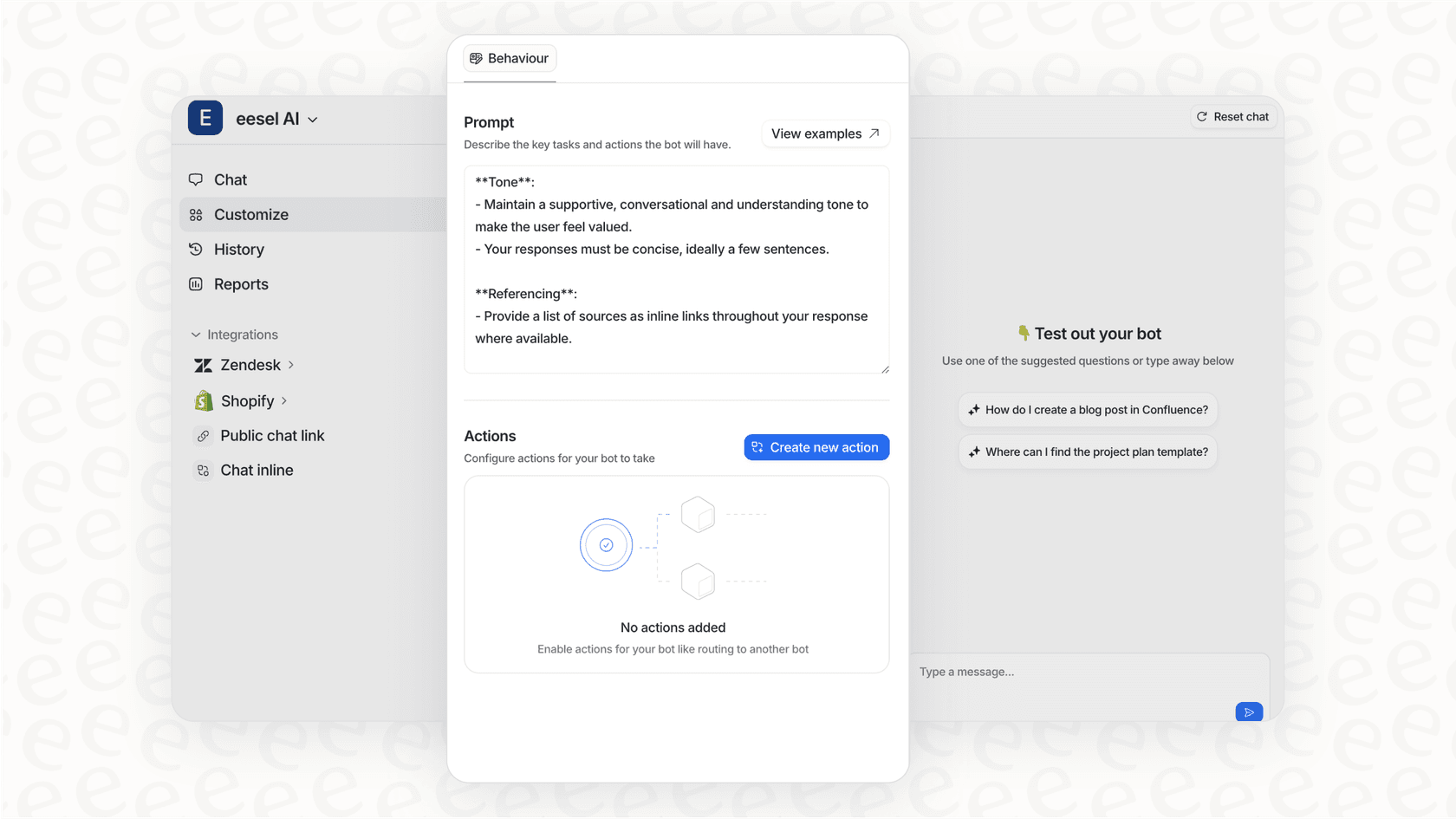
At eesel AI, we take this approach. Rather than spending weeks implementing Zendesk with a partner, you can connect our AI agent to your existing help desk in minutes. The AI learns from your past tickets, help center articles, and connected documentation. It drafts responses grounded in your knowledge rather than generic AI responses.
Key differences:
| Traditional Partner Model | AI-Native Approach |
|---|---|
| Weeks to deploy | Minutes to connect |
| Ticket routing and management | Autonomous resolution (up to 81% in mature deployments) |
| Ongoing consultant dependency | Continuous learning from corrections |
| Configuration-heavy | Natural language instructions |
| Per-agent licensing | Pay per interaction |
For companies already using Zendesk, our Zendesk AI integration works alongside your existing setup. You don't need to rip and replace. The AI can draft replies for your agents to review, or handle specific ticket types autonomously based on your comfort level.
The payback period for AI agents is typically under 2 months rather than the longer ROI timelines of traditional implementations.
Making the right choice for your B2B support
So which path should you take? It depends on your situation.
Choose a traditional Zendesk partner if:
- You need complex custom integrations with legacy systems
- You have specific compliance requirements requiring on-premise or highly customized setups
- You want hands-on training and change management support
- Your support operation is highly specialized with unique workflows
Consider an AI-native solution like eesel AI if:
- You want to get up and running quickly without lengthy implementations
- Your priority is reducing response times and resolution costs
- You prefer a solution that improves automatically over time
- You're comfortable with progressive rollout (starting with drafts, expanding to autonomous responses)
The middle ground:
Many companies use both. They work with a Zendesk partner for initial setup and complex customizations, then layer on AI capabilities to handle routine inquiries and augment their human agents.
The key is evaluating your priorities honestly. If speed and cost matter most, the traditional partner route might frustrate you. If you need heavy customization and have the budget and timeline to support it, a partner makes sense.
Whatever you choose, remember that B2B customer service is about building long-term relationships. The tool (or partner) you select should help your team focus on what matters: solving customer problems efficiently and maintaining the trust that keeps clients returning.
If you're curious about how an AI-native approach compares to traditional implementation, you can try eesel AI free and see how quickly it learns your business. No partner required.
Want to explore more AI support options? Check out our guide to the best AI help desk software or learn about AI for customer service.


Frequently Asked Questions
Share this article

Article by
Stevia Putri
Stevia Putri is a marketing generalist at eesel AI, where she helps turn powerful AI tools into stories that resonate. She’s driven by curiosity, clarity, and the human side of technology.