SEO.ai vs HyperWrite: Which AI writer is right for you?

Kenneth Pangan

Stanley Nicholas
Last edited January 18, 2026
Expert Verified

Keeping up with content demands is a grind, isn't it? Marketing teams are always under the gun to produce high-quality, SEO-optimized articles, and trying to do it all by hand is a recipe for burnout. It's no surprise that so many are looking to AI for some backup.
Two names you'll hear a lot are SEO.ai and HyperWrite. Both promise to help you write better and faster, but they go about it in completely different ways. It’s kind of like choosing between a specialized toolkit for one job and a Swiss Army knife you can use for anything.
This guide will dig into the differences between them, what they excel at, who they’re really for, and their specific limitations. We'll lay it all out so you can decide which one might fit into your workflow. And while these tools are solid for helping you write, we'll also talk about platforms like the eesel AI blog writer that aim to do more, generating entire publish-ready posts from just a keyword, complete with research and visuals.
What is SEO.ai?

SEO.ai is pretty much what the name suggests: an AI platform designed specifically for search engine optimization. It’s not just about helping you write; it’s about helping you write content that is designed to rank.
The whole platform is built to help you nail your on-page SEO. It looks at SERP data, checks out what your competitors are up to, and guides you toward creating content that search engines will favor. The main point is to remove the guesswork from writing for SEO.
The typical users are SEO pros, content marketers, and agencies. Basically, anyone who lives and dies by organic traffic and keyword rankings. The process is very structured. You give it a target keyword, it analyzes the competition, creates a content brief, and then you use its AI to write the article piece by piece, all while watching an SEO score.
What is HyperWrite?
HyperWrite, on the other hand, is more of a general-purpose AI writing assistant. It's less of a niche SEO tool and more of a flexible partner that helps with all kinds of daily writing.
Its standout feature is a useful browser extension that follows you across the web. Whether you're writing an email in Gmail, a post on LinkedIn, or working in Google Docs, HyperWrite is there to offer suggestions, rewrite sentences, summarize long texts, or help you push through writer's block.
Because of this, its user base is much wider. It’s used by professionals, students, and just about anyone who wants to write faster and better without being stuck in one app. The workflow is seamless and integrated. You don't go to HyperWrite; it comes to you, wherever you happen to be writing.
Feature breakdown: SEO.ai vs HyperWrite
While both tools use AI for writing, their core approaches and features are quite different. Here’s a look at how they compare in the most important areas.
Content generation focus
SEO.ai is all about creating structured, long-form content that follows SEO best practices. You give it a keyword, and it walks you through building an article meant to rank for that term. The output is designed to be SEO-friendly right away, but like many AI assistants, it often needs editing to match a specific brand voice.
HyperWrite is at its best when it's helping you improve or expand on something you're already writing. It’s great for fixing a clunky sentence, changing a paragraph's tone, or brainstorming ideas. While it can generate text from a prompt, its main strength isn't creating entire SEO articles from the ground up. It’s more of a co-pilot than an autopilot.
SEO and optimization tools
This is where the contrast is sharpest. SEO.ai's main draw is its built-in SEO toolkit. It offers keyword research, competitor analysis, content brief generation, and a real-time optimization score that updates as you type. It’s designed to keep SEO at the center of the entire writing process.
HyperWrite doesn't have a dedicated set of SEO tools because that's not its focus. You can use it to write content that you optimize for search later, but the platform itself won't provide the data, analysis, or specific guidance that SEO.ai does. You'd need separate tools for keyword research and SERP analysis.
User experience and workflow
The workflow in SEO.ai is very project-based and takes place within its own application. The process is straightforward: start a new article project, tie it to a keyword, build the structure, and then write. It’s a dedicated environment for a specific kind of task.
HyperWrite provides a much more integrated experience. Its real power is in its browser extension, which makes its features available on almost any website. It feels less like a separate tool and more like a writing companion that's always on call.
| Feature | SEO.ai | HyperWrite |
|---|---|---|
| Primary Use Case | SEO Content Creation | General Writing Assistant |
| Keyword Research Tools | Built-in | Not a core feature |
| SERP Analysis | Yes | No |
| Browser Extension | No | Yes |
| Workflow | Project-based, in-app | Integrated across the web |
| Best For | SEO Marketers & Agencies | Professionals & Students |
SEO.ai vs HyperWrite pricing comparison
Pricing for AI tools can shift, so it’s always smart to check their official websites for the latest info.
SEO.ai pricing: SEO.ai generally has a tiered subscription model. Plans are typically based on the number of articles you can generate per month, how many users you need, and access to more advanced SEO features.
HyperWrite pricing: HyperWrite pricing often uses a freemium model. You can get a free tier that gives you a feel for its features but with usage caps. Their paid plans unlock more words, access to better AI models, and other features for heavy users.
Understanding the scope of AI writing assistants
For all the help tools like SEO.ai and HyperWrite offer, it's important to understand the scope of these tools and the manual work that may still be involved.
First off, there's the manual labor. Even with AI, it's not a one-click solution. As plenty of people have mentioned in discussions about AI writers, the process usually involves generating an outline, writing each section individually, and then spending a good chunk of time editing, fact-checking, and polishing it up. The keyword here is "assistance", as they are designed to augment the writing process, not fully automate it.

Additionally, content creation involves more than just text. These tools focus on generating copy, meaning users are still responsible for sourcing or creating visuals like images, infographics, and charts to complement the article.
Lastly, they can't add social proof or authority. These tools won't go out and find insightful quotes from Reddit or embed useful YouTube videos that give your content more weight. That kind of real-world context is what builds trust with readers.
An alternative to consider: eesel AI
While SEO.ai and HyperWrite are useful writing assistants, the eesel AI blog writer takes a different approach. Instead of functioning as a writing assistant, it's an autonomous content platform designed to generate a complete article from a keyword. It works by transforming a single keyword into a complete, publish-ready blog post.
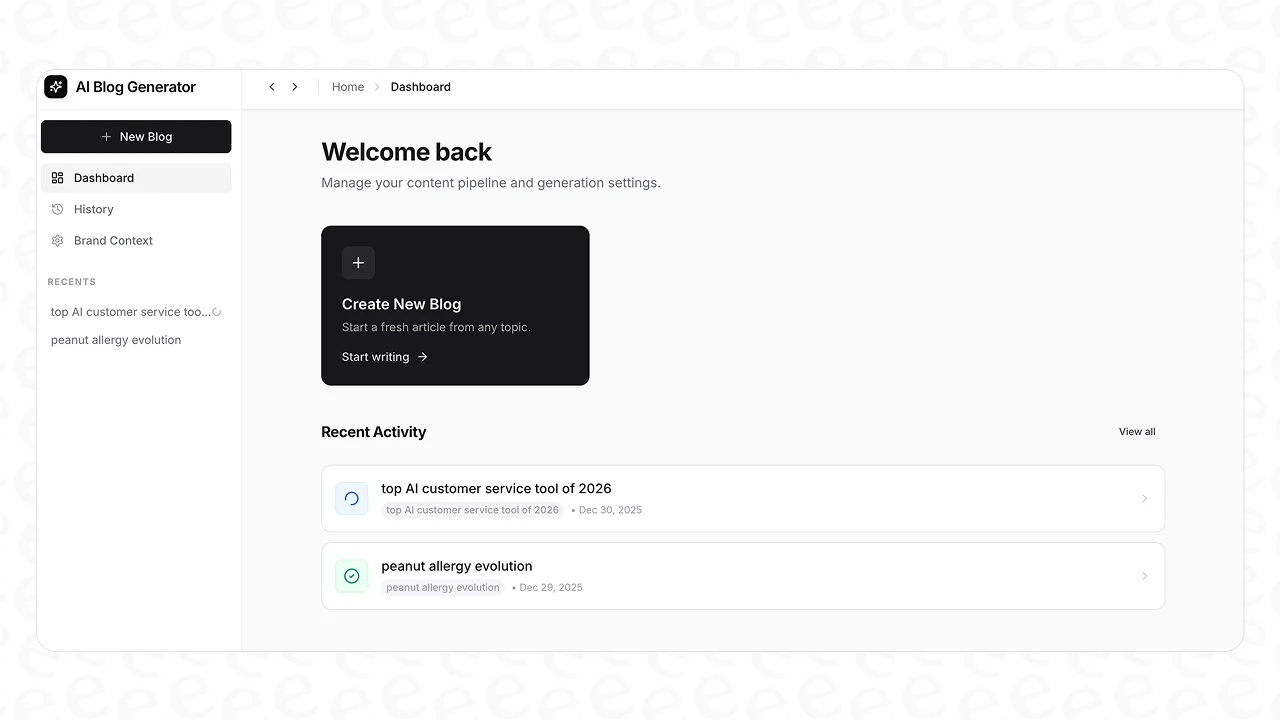
Here’s how it stands apart:
- Automatic asset creation: eesel AI automatically generates and includes relevant images, infographics, and tables directly in the article.
- Built-in social proof: It finds and embeds relevant Reddit quotes and YouTube videos. This adds a layer of authenticity and depth that helps you connect with your audience.
- Context-aware research: It performs in-depth research specific to the type of blog you're writing to ensure the content is useful. It’s also optimized for AI Answer Engines (AEO) like Google's AI Overviews.
- Proven results: We used this tool to grow the eesel AI blog from 700 to 750,000 daily impressions in just three months by publishing over 1,000 fully optimized posts.
An infographic chart demonstrating eesel AI's growth, relevant to the SEO.ai vs HyperWrite discussion, showing a rise from 700 to 750,000 daily impressions in three months.
To see how different AI writers stack up in practice, it can be helpful to see them in action. This video review breaks down several popular tools, giving you a broader perspective on the current AI writing landscape.
This video review breaks down nine popular AI writing tools, offering a broader look at the current landscape.
Making the right choice
So, which tool is the right one for you? It really depends on what you need to get done.
- Choose SEO.ai if... you're an SEO professional who wants a data-rich tool to guide your writing. You're fine with doing the writing yourself but want strong SEO guardrails to keep you on the right path.
- Choose HyperWrite if... you're looking for a versatile AI partner for all your day-to-day writing. You need help with everything from emails to social media and want an assistant that’s available everywhere you work.
- Choose eesel AI if... your main objective is to scale up content production without growing your team. You want to go from a keyword to a complete, asset-rich, and SEO-optimized blog post with minimal manual effort.
If your goal is to scale content production from a keyword to a finished article, you can generate your first blog for free with the eesel AI blog writer to see how it works.
Frequently Asked Questions

Share this post
Article by
Kenneth Pangan
Writer and marketer for over ten years, Kenneth Pangan splits his time between history, politics, and art with plenty of interruptions from his dogs demanding attention.