SEO for doctors: The modern playbook for growing your practice online

Stevia Putri
Last edited January 27, 2026
When someone has a health question, they do not pull a medical textbook off the shelf. They go straight to Google. Patients today are searching for everything from "best pediatrician near me" to "what causes knee pain when running." And with a recent study showing that nearly 60% of U.S. searches, people are making decisions based on the search results page alone.
Considering there are over a billion daily health questions, showing up on that first page is not just about luck. It’s the result of a smart strategy called Search Engine Optimization, or SEO.
What is medical SEO? (And why is it different for doctors)
Medical SEO is the process of tuning up your practice’s website and online presence to rank higher on search engines when potential patients are looking for your services. It is about being the first name they see when they need you.
The catch is that Google holds medical content to a much higher standard than other topics, like a blog about pizza spots. Health and wellness topics fall under Google's "Your Money or Your Life" (YMYL) category. This is content that can directly affect someone's health, happiness, or finances, so Google looks at it very closely.
The core components of an SEO strategy for doctors
Local SEO: Winning the "near me" search
For most medical practices, the main goal is to attract patients from the local area. This makes sense, especially when you consider that 46% of all Google searches are for local information. Here’s how you can win the local game:
- Google Business Profile (GBP): This is your digital storefront and the absolute cornerstone of local SEO. A complete and optimized profile is non-negotiable. This means having your correct Name, Address, and Phone number (NAP), along with your services, hours, and plenty of photos. And yes, practitioners can have their own profiles even if they are part of a larger clinic, which is a great way to build your personal brand.
- The Google "Local Pack": The map with three businesses listed at the top of the search results is the Local Pack. Getting your practice in there gives you a ton of visibility.
- Citations and Reviews: Consistency is everything. Make sure your practice’s NAP information is the same across all online directories like Yelp, Healthgrades, and Vitals. Just as important are patient reviews. Data shows that 72% of patients pick doctors with 4-star reviews or higher. Aim for a rating between 4.5 and 4.9 with at least 100 reviews to build the most trust.
I worked for big clinics in CA and other states for an agency, we optimized their GMB, listed in local directories and citations, guest posts and quality backlinks (Webmd, healthline etc.)

Technical SEO: Building a healthy website foundation
Think of technical SEO as the foundation of your house. If it is not solid, everything else you build on top will be shaky. It is all about making it simple for Google to find, crawl, and understand your website.
- Mobile-First Design: This is a big one. With over 60% of Google searches now coming from mobile devices, your website has to look and work great on a smartphone. If it does not, you are basically invisible to most potential patients.
- Page Speed: Nobody has time for a slow website, especially a patient who needs information fast. A slow-loading site does not just annoy visitors; it hurts your rankings.
Pro tip
Every second counts. Healthcare marketing data shows that a website taking 5-6 seconds to load sees a 34% drop in conversions compared to one that loads in under 4 seconds.
- Security (HTTPS): That little lock icon in the browser bar really matters. A secure website (https://) is a confirmed Google ranking factor and, more importantly, a signal of trust for patients who might be sharing sensitive information.
On-page SEO: Optimizing your content
On-page SEO is all about optimizing the actual stuff on your website: the words, the titles, and the structure. It is about speaking the language of both your patients and the search engines.
- Keyword Research: You need to know what your patients are searching for. It is the difference between a broad keyword like "cardiologist" and a high-intent, specific phrase like "best heart doctor for arrhythmia in Dallas." The second one is much more likely to bring in a patient who is ready to book an appointment.
- Content Structure: A well-organized page is easier for everyone to understand. Use clear headings (H1 for the main title, H2s for main sections, H3s for subsections), descriptive title tags, and clear meta descriptions. This helps users and Google quickly figure out what your page is about.
- Schema Markup: This sounds technical, but it is pretty simple. Schema is a bit of code you add to your site to help Google understand your information better. Using something like "MedicalClinic" schema can help you get "rich snippets" in search results, like star ratings or direct appointment links, which makes your listing stand out.
For on-page SEO optimization - You can implement structured data schema markup, so you can increase the chance of caching a rich snippet spot and it helps search engines better understand your site’s content.
Content marketing: Building trust and attracting patients
If technical and local SEO are the foundation and frame of your online presence, then content is the heart. It is one of the best ways to demonstrate your E-E-A-T, build a real connection with prospective patients, and keep your SEO rankings climbing over time.
Create content that answers patient questions
Great content marketing for doctors is not about a hard sell. It is about education and empowerment. Instead of just listing your services, you should be creating blog posts, guides, and FAQ pages that address the real questions and concerns your patients have.
Think about topics like:In my experience with healthcare sites, authority trumps everything. A few quick tips. Using qualified medical professionals for writing or hire ghost writers who specialize in medical writing. Fact check, fact check, fact check. Your editor should specialize in healthcare. Citing, quoting, and interviewing qualified medical professionals in articles. Backing up all claims with citations to legitimate, peer-reviewed medical research.
- For Pediatrics: "When to Worry About a Child's Fever" or "Navigating Food Allergies in Toddlers."
- For Orthopedics: "5 Exercises to Prevent Knee Pain" or "What to Expect After ACL Surgery."
The main motivation for most doctors who blog is to "share medical knowledge with the public." Your content should do just that. Use simple, jargon-free language to explain complex topics and show that you are committed to patient education.
The challenges of content creation for medical practices
If creating content is so effective, why does not every practice do it? The reality is, it is not easy. A study published by the National Center for Biotechnology Information found that the top two reasons physicians often do not pursue answers to clinical questions (and by extension, create content) are:
- A sheer lack of time due to packed patient schedules.
- Doubt that a definitive, useful answer exists or is easy to pull together.
These are completely valid challenges, and they are also why many practices miss out on the growth that a strong content strategy can provide.
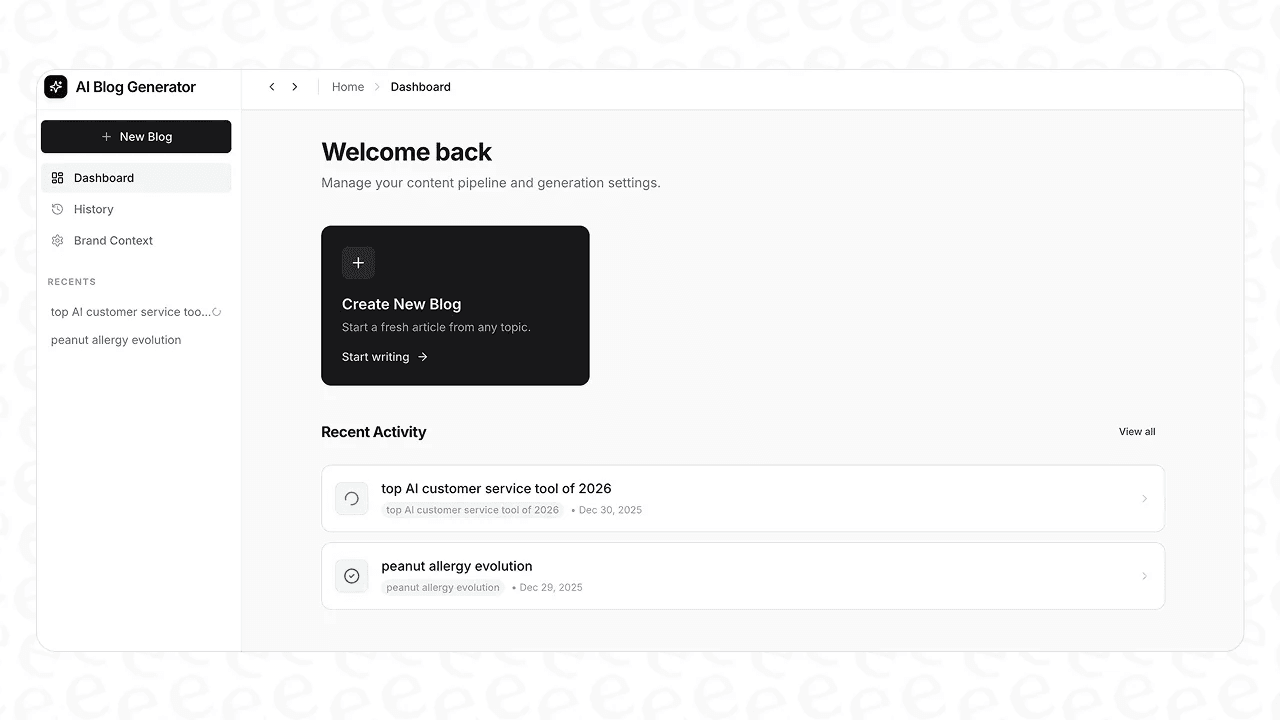
How the eesel AI blog writer can help scale content
- Deep Research with Citations: It does not just write generic fluff. The tool creates helpful articles that include external links to credible sources, helping you meet Google's strict E-E-A-T standards.
- Automatic Assets: It can generate images, tables, and infographics to break down complex medical topics, making them easier for patients to understand.
- Human-Like Tone: The content it produces sounds natural and conversational, not robotic. It helps you build trust and connect with patients in a professional yet approachable voice.
- Efficiency: This is a major benefit. It takes the hours you would spend researching, writing, and formatting a blog post and condenses it into minutes. It directly addresses the "lack of time" problem that holds many busy physicians back.
Measuring success and the cost of SEO
How do you know if your SEO efforts are paying off, and what should you expect to invest?
Key metrics to track performance
SEO is measurable, so you do not have to guess if it is working. Here are the key performance indicators (KPIs) you should be keeping an eye on:
- Organic Traffic: How many people are finding your website through a Google search? This number should be steadily increasing over time.
- Keyword Rankings: Where does your practice show up when someone searches for your target terms, like "orthopedic surgeon in Boston"? The goal is to get on page one.
- Conversions: This is the bottom line. Are more people calling your office, filling out appointment request forms, or contacting you through your website? You can track exactly how many of these leads come from your organic search traffic.
How much does SEO for doctors cost?
There is no single price tag for SEO, as it depends on how competitive your market is. For a single-location clinic, professional SEO services from an agency can range anywhere from $500 to over $5,000 per month. You can hire an agency, bring on a freelancer, or try to manage it yourself, and each approach has its own pros and cons.
An alternative for your content strategy
For the content creation part of SEO, an AI-powered tool can offer a different approach. Instead of a monthly retainer for a small number of articles, some tools offer a credit-based system. For comparison, the eesel AI blog writer's plan lets you generate 50 blog posts for $99. This allows a team to produce a high volume of content, which can be a cost-effective way to manage the content portion of an SEO strategy.
To see these strategies in action, it can be helpful to learn from experts who have been in the trenches. The video below offers 15 actionable tips that have been tested and refined over a decade of helping medical practices grow their online presence.
Effective SEO for doctors is not about trying to trick Google with keywords. It is about building a trustworthy, helpful, and highly visible online presence through a smart mix of local, technical, and content-focused strategies.
Showing up on the first page of Google is how modern practices build credibility and attract a steady stream of new patients who are actively looking for care. You have worked hard to build an exceptional practice. Now, it is time to make sure patients can find it online.
Ready to see how simple it is to create content that ranks? Generate your first blog post for free and start attracting the patients who need your expertise.

Frequently Asked Questions
Share this article

Article by
Stevia Putri
Stevia Putri is a marketing generalist at eesel AI, where she helps turn powerful AI tools into stories that resonate. She’s driven by curiosity, clarity, and the human side of technology.
