Semrush vs Grammarly: Which tool is right for you?

Amogh Sarda

Katelin Teen
Last edited January 26, 2026
Picking the right tools for your content workflow can feel like choosing between a master strategist and a brilliant editor. You've got Semrush, an analytics tool that gives you the blueprint for what to write. Then you have Grammarly, an AI writing assistant that makes sure every word you put down is just right.
They’re both at the top of their game, but this is where it gets a little fuzzy. Semrush has features to help you optimize your writing for search engines, and Grammarly helps you write clean copy that both search engines and actual humans love. This overlap makes a lot of people wonder if they can just grab one and be done with it.
In this guide, we're going to clear things up. We'll break down what each tool is really for, compare their features, and help you figure out which one actually fits your needs. And for anyone looking to skip the manual shuffle between strategy and writing, we'll talk about an AI-powered tool like the eesel AI blog writer that handles both SEO research and quality writing from a single keyword.
What is Semrush? The all-in-one marketing strategist
Think of Semrush as your company's marketing brain. It’s a huge digital marketing platform with tools for everything from SEO and content marketing to advertising and social media. Its main purpose isn't to write for you, but to arm you with the data you need to make smart decisions.
At its heart, Semrush is an analysis tool. It helps you dig deep into keyword research, see what your competitors are ranking for, check your website for technical problems, and find backlink opportunities. It’s all powered by a massive database with billions of keywords and trillions of backlinks, giving you a clear view of the entire market.
Ultimately, Semrush is a strategic tool built for SEO pros, marketing teams, and agencies. It helps you plan, run, and track your campaigns with real data, making sure your content is aimed at the right targets from the very beginning.
What is Grammarly? The AI-powered writing partner
If Semrush is the strategist, Grammarly is your personal writing coach. It's an AI-powered writing assistant that over 40 million people and 50,000 organizations trust to improve their writing.
Its goal is straightforward: make your text better. It does much more than basic spell-checking. It catches tricky grammar mistakes, fixes punctuation, and offers suggestions to make your writing clearer, more stylish, and better toned. Whether you want to sound more confident, formal, or friendly, Grammarly helps you get there.
One of its best features is that it’s available pretty much everywhere. With browser extensions and desktop apps, and mobile keyboards, it fits right into your workflow, whether you're drafting an email, a Google Doc, or a social media post. It’s a hands-on tool for writers, students, customer support agents, and basically anyone who needs to communicate clearly.
Comparing core features in the Semrush vs Grammarly debate
So, how do these two really compare? Let's get into the details. Semrush is all about the big-picture strategy before you write, while Grammarly is focused on perfecting the words as you write them.
Semrush: The strategist’s toolkit for planning and optimization
Semrush's real strength is in its pre-writing toolkit. It helps you figure out what to write about long before you type a single word.
Its SEO and content planning tools, like the Keyword Magic Tool, let you find valuable keywords, check out the competition, and spot content gaps you can fill. It’s all about finding opportunities to rank. The Site Audit tool is another key feature, crawling your website to find technical issues like broken links or slow page speeds that could be hurting your rankings. This is something Grammarly doesn't touch at all.
It's one of the top tools so it has more funded to do things correctly. It can also give you an audit to let you know where your site is failing technically.

This is where Semrush dips its toes into the writing world. The SEO Writing Assistant (SWA) looks at your text and scores it against the top-ranking pages for your target keyword. It checks four main areas: Readability, SEO, Originality, and Tone of Voice. It's a great tool to run after you've written a draft to make sure it's optimized, but it isn't meant to be your main writing or grammar checker. It also has some light AI features like 'Rephrase' and 'Compose' to help you tweak sentences.
Grammarly: The writer’s assistant for polish and clarity
Grammarly works right inside your document, focusing completely on making your writing as good as it can be.
If your writing is bad (like mine) then using Grammarly will improve your content and will probably make people trust it more.
Advanced writing mechanics are its specialty. It catches everything from misplaced commas to complicated grammatical errors and provides clear explanations so you can learn as you go. But where Grammarly Pro really stands out is with clarity, tone, and style. It doesn't just fix mistakes; it can rewrite entire sentences to be more concise and impactful. Its tone detector helps you make sure your message comes across exactly as you want it to.
The built-in plagiarism checker is a huge help for writers and students. It scans your content against billions of web pages to make sure it's original and can even help you generate citations. However, Grammarly does not have SEO intelligence. While it helps perfect your writing, it cannot perform keyword research, analyze search intent, or tell you how your content compares to competitors from an SEO perspective.
A head-to-head feature comparison table
Here’s a simple breakdown of who does what:
| Feature | Semrush | Grammarly |
|---|---|---|
| Primary Goal | Improve search visibility & marketing strategy | Improve writing quality, clarity, & correctness |
| Keyword Research | Yes (Extensive, core feature) | No |
| Competitor SEO Analysis | Yes (Core feature) | No |
| Advanced Grammar Check | Basic (within SWA) | Yes (Advanced, core feature) |
| Tone of Voice Analysis | Yes (within SWA) | Yes (Advanced, core feature) |
| Plagiarism Check | Yes (within SWA) | Yes (Premium feature, scans billions of pages) |
| AI Content Generation | Limited (Rephrasing & composing short text) | Limited (Generates text with prompts) |
| Ideal User | SEO Specialists, Digital Marketers, Agencies | Writers, Students, Professionals, Customer Support |
Unpacking the pricing for Semrush vs Grammarly
Your budget plays a big role, and these two tools are priced for completely different situations. Semrush is a serious investment for a marketing team, while Grammarly is an affordable tool for individuals and teams focused on writing quality.
Semrush pricing plans
Semrush bundles its features into broad plans like Semrush One, which combines its SEO and other marketing tools.
- Starter: $199/month ($165.17/mo if billed annually). A decent starting point for freelancers and small businesses new to SEO.
- Pro+: $299/month ($248.17/mo if billed annually). Made for growing businesses that need more data.
- Advanced: $549/month ($455.67/mo if billed annually). Built for large agencies and enterprises that need API access and a ton of capacity.
Just remember that features like the SEO Writing Assistant are included in these plans and count toward your overall usage limits.
Grammarly pricing plans
Grammarly has a much more approachable price tag, including a very useful free plan.
- Free: $0/month. This plan is great and covers basic grammar, spelling, punctuation, tone detection, and gives you 100 AI prompts per month.
- Pro: Starts at $12/member/month when billed annually, or $30/month if you pay monthly. This unlocks all the best stuff, like full-sentence rewrites, advanced tone adjustments, plagiarism detection, and 2,000 AI prompts.
- Enterprise: You'll have to talk to their sales team for a custom quote. This adds features like a dedicated style guide, better security, and unlimited AI prompts for your whole company.
An alternative: Combining SEO and writing
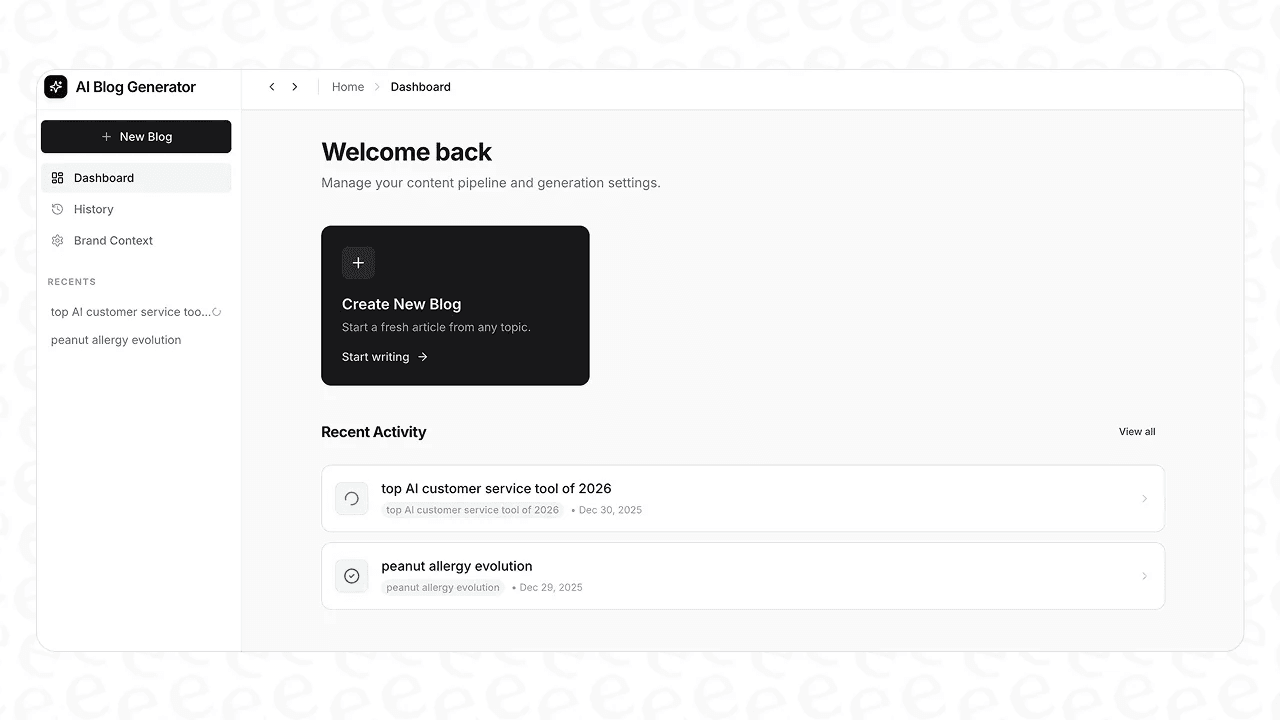
What if you could connect those two steps?
That’s where an AI blog generator can help. The eesel AI blog writer was built to solve this exact problem. It takes a single keyword or topic and turns it into a complete, publish-ready blog post that is both well-written and SEO-optimized from the start.
Here’s what makes it different:
- From keyword to complete post: It handles the whole process: SEO research, content writing, formatting, and finding visuals.
- Automatic rich media: While other tools give you a block of text, eesel AI automatically finds and embeds relevant YouTube videos, infographics, charts, and tables to make your content more engaging.
- Authentic social proof: To add a human element and build trust, it can pull real quotes and discussions from Reddit and weave them into the content for genuine insights.
- Optimized for AI search (AEO): The content isn't just optimized for traditional Google search. It's structured to rank in AI Answer Engines like Google AI Overviews and Perplexity, which is becoming more and more important.
This isn't just a hypothetical tool. It's the exact AI content platform we used to grow our own site's impressions from 700 to 750,000 per day in just three months by publishing over 1,000 optimized blogs.
For a visual breakdown of how these tools can work together in a real workflow, the following video offers a practical guide on leveraging both Semrush's strategic insights and Grammarly's writing polish to enhance your content.
The final verdict: Semrush vs Grammarly, which should you choose?
There's no single right answer here, as it all depends on your job and what you're trying to do.
- Choose Semrush if: You're an SEO professional, a digital marketer, or part of an agency. Your main job is analyzing data, researching competitors, and building a high-level content strategy. You need the deep insights Semrush provides to create a winning marketing plan.
- Choose Grammarly if: You're a writer, editor, student, or anyone who works with words all day. Your top priority is producing clear, correct, and tonally perfect text, no matter where it's being published.
- Consider both if: You work on a larger content team with different roles. The SEOs can use Semrush to create detailed content briefs, and the writers can use those briefs to create drafts, which they then polish with Grammarly.
- Choose the eesel AI blog writer if: You need to produce more content without letting quality slide. You want a single, efficient tool that connects SEO strategy and content writing, turning a keyword into a finished article in minutes. Best of all, it's completely free to try, so you can see the results for yourself.

Frequently Asked Questions
Share this article

Article by
Amogh Sarda
CEO of eesel AI. Amogh Sarda is obsessed with making the ultimate AI for customer service teams. He lives in Sydney, Australia and has previously worked at Atlassian and Intercom. Outside of work he’s usually surfing or on stage doing improv.