Rytr vs Bramework: Which AI writer is right for you?

Stevia Putri

Katelin Teen
Last edited January 22, 2026
Expert Verified

Keeping up with the demand for new content is a challenge for many marketers, bloggers, and agency owners. AI writers have emerged as a significant help, making the content creation process faster.
You may have heard of Rytr and Bramework, but they are built for different purposes. Rytr is a tool for creating quick, short copy, like ads or social media posts. Bramework is a dedicated toolkit for writing long, SEO-friendly blog posts.
This article breaks down Rytr vs Bramework to help you understand which tool makes more sense for your needs. We will also look at how tools like the eesel AI blog writer approach content creation by automating the process from research to a finished post.
What is Rytr?
Rytr is an AI writing assistant focused on speed and variety, which is why it is popular for short-form content. With over 8 million writers using it, it has found a broad audience. It’s designed for marketers, copywriters, and social media managers who need to create copy for ads, emails, or social posts efficiently.
Simplicity is a key aspect of Rytr. The interface is clean, offering over 40 use cases (from "Call to Action" to "Song Lyrics") and more than 20 tones of voice. The process is straightforward: pick a use case, add a few keywords, and Rytr provides several options in seconds. It is useful for brainstorming or overcoming writer's block. The affordable price also makes it a low-risk way to try AI writing.
What is Bramework?

Bramework occupies a different segment of the market. It is not a generalist AI writer; it is a full blogging suite for its 6,000+ bloggers and agencies who need to create long-form, SEO-optimized content. The company is focused on this one area and states that their tool is not for social media posts, ads, or general website copy.
Its main feature is the guided, end-to-end workflow for blogging. It walks users through the entire process, from keyword research to a fully structured article. You get a Keyword Analyzer that uses SEMrush data, an AI outline generator, and a "Blog Booster" tool to help find and refresh old content. It also connects directly with WordPress and Google Search Console, which can make publishing smoother. If blogging for organic traffic is a primary goal, Bramework is designed as a specialized tool for that purpose.
Feature comparison: Rytr vs Bramework
Now that we have the big picture, let's dig into the specifics of what makes these two platforms different. Their features highlight their distinct approaches to content creation. This visual comparison breaks down the key differences between them.
Content focus and use cases
Rytr: This tool is all about providing numerous options. It offers over 40 templates for short-form copy. Whether you need a call-to-action, Google Ad copy, a marketing email, or a tagline, Rytr has a template for it. It does have a "Blog Section Writing" feature, but it is primarily for generating small text segments or single paragraphs, not a complete article. It can be thought of as a multi-purpose tool for quick copy tasks. It also has a built-in AI image generator, which is an added feature for creating simple visuals.
Bramework: Bramework is focused entirely on blogging. Its entire feature set is built to help you create long-form content that is designed to rank. From its keyword research tool to its "First Draft PRO" feature that generates researched articles up to 5,000 words, everything is tailored to the blogging process. It is not meant for other kinds of marketing copy, so if you need an all-in-one tool, this may not be the right fit. However, if blogging is your main focus, that specialization is its strength.
SEO and content optimization
Rytr: Rytr's SEO capabilities are limited to templates for meta descriptions or keywords. It does not include built-in SEO analysis tools. Users will not get SERP analysis, competitor data, or on-page optimization tips. To optimize content, you will need to use other tools.
Bramework: This is an area where Bramework provides more functionality. It includes a full "SEO Command Center" to help guide your content strategy. This includes a keyword analyzer with competition data, SERP analysis to help build a better outline, and real-time ranking tracking. As you write, Bramework gives you optimization suggestions to help you target your keyword effectively.
Workflow and integrations
Rytr: The workflow in Rytr is quick and simple. It’s ideal for one-off tasks where you need a bit of inspiration or a fast draft. You log in, choose a template, type your prompt, and get your text. It’s effective for getting past writer’s block. While this simplicity allows for quick task completion, it lacks native integrations with platforms like WordPress or HubSpot, so you will be copying and pasting content.
Bramework: Bramework uses a more structured, step-by-step approach that guides you from research to the final post. This guided workflow is helpful for ensuring important SEO steps are not missed. It integrates directly with WordPress, allowing you to publish content right from the platform.
Pricing plans: Rytr vs Bramework
The way these tools are priced is as different as their features. Rytr's pricing is simple and affordable, while Bramework uses a more layered system tied to its specialized tools. Here’s a visual breakdown of their pricing structures.
Rytr pricing
Rytr's model is based on the number of characters you generate per month. It's easy to understand and one of the more budget-friendly options.
- Free Plan: $0/month for up to 10,000 characters per month. A great way to try it out.
- Saver Plan: $9/month for 100,000 characters per month.
- Unlimited Plan: $29/month for unlimited characters, a dedicated account manager, and priority support.
Bramework pricing
Bramework's pricing is more involved. It provides a monthly AI word limit and a separate credit system for its "First Draft PRO" feature (one credit equals one long-form post). It is also worth mentioning they do not have a free plan.
- Flex Plan: A pay-as-you-go option to buy credits and words when you need them.
- Grow Plan: $29/month for 100,000 AI words and 4 "First Draft PRO" credits.
- Pro Plan: $129/month for unlimited AI words and 16 "First Draft PRO" credits.
Here's a quick table to compare the main paid plans:
| Feature | Rytr (Unlimited Plan) | Bramework (Grow Plan) |
|---|---|---|
| Monthly Price | $29 | $29 |
| Primary Focus | Short-form copy (40+ use cases) | Long-form blog posts |
| Generation Limit | Unlimited characters | 100,000 words + 4 "First Draft PRO" credits |
| SEO Tools | Basic (Keyword templates) | Advanced (Keyword analyzer, SERP analysis) |
| Integrations | None | WordPress, Google Analytics & Search Console |
| Free Plan | Yes (10k characters/mo) | No |
An alternative for content automation: eesel AI blog writer
While Rytr focuses on short-form copy and Bramework on assisted long-form writing, an alternative approach is to automate the entire content creation workflow. The eesel AI blog writer is designed to automate the process from a single keyword to a complete article.
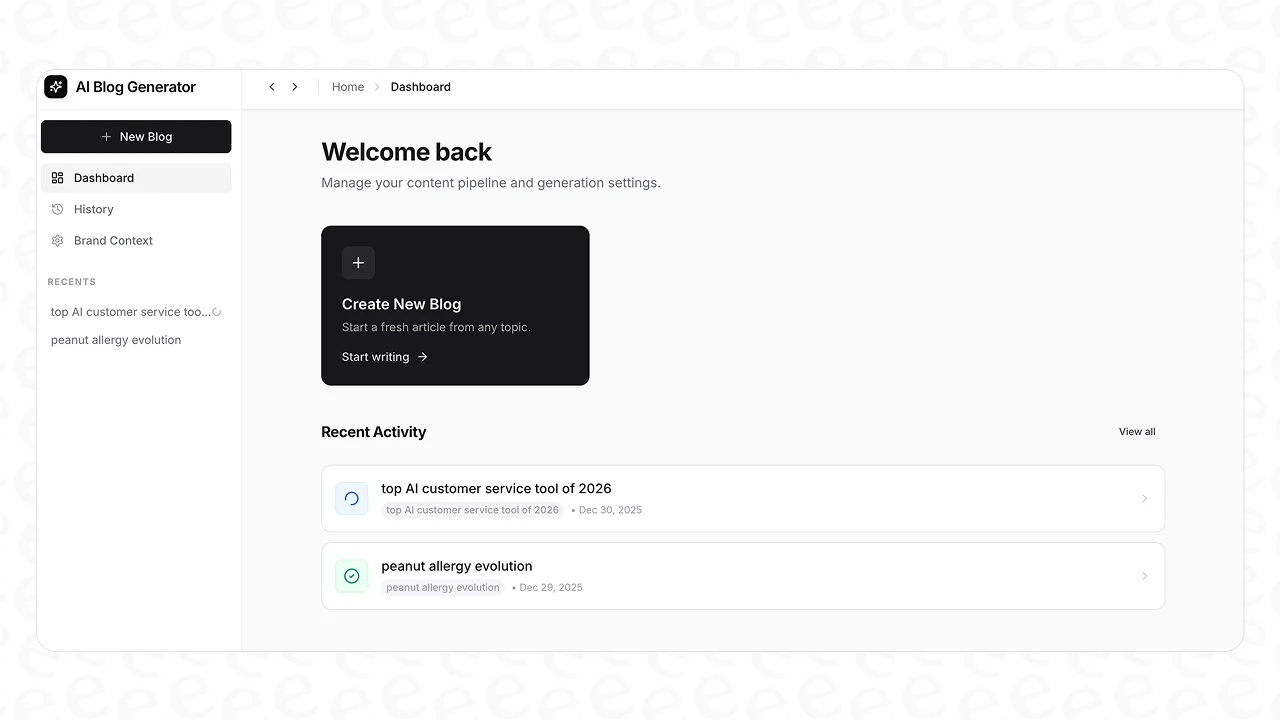
eesel AI is built to produce well-researched, long-form content designed to rank in search engines. It also automatically includes a full set of assets, so the final article comes with AI-generated images, infographics, and data tables. The goal is to provide a publish-ready draft that requires minimal editing.
Here’s what makes it different:
- Automatic Assets: Every article comes with AI-generated images, infographics, and data tables already embedded.
- Context-Aware Research: The AI understands the blog type. For a comparison post, it can find pricing data. For a product review, it looks up technical specs.
- Authentic Social Proof: To add credibility, it pulls in relevant quotes from Reddit threads and embeds useful YouTube videos.
- AEO Optimization: The content is structured for Answer Engine Optimization, so it is ready for search formats like Google AI Overviews and Perplexity.
A workflow diagram explaining the content automation process of the eesel AI blog writer, an alternative to Rytr vs Bramework.
We used the eesel AI blog writer to grow from 700 to 750,000 daily impressions in just three months. If you want to see what a fully automated content system can do, it is completely free to try.
Rytr vs Bramework: Which tool is right for you?
So, which AI writer is the right choice? It really depends on what you need to do.
Choose Rytr if: You need to create a variety of short-form copy quickly and affordably. If you're regularly writing social media posts, ads, product descriptions, and emails, Rytr is a great brainstorming partner to help get ideas flowing.

Choose Bramework if: Your primary goal is to write SEO-driven, long-form blog posts. If you want a structured process with built-in keyword research, SERP analysis, and optimization tips, Bramework is the specialized tool for you. It's for the serious blogger who wants an AI partner.
Choose eesel AI blog writer if: You want to scale your content production and reduce manual work. It's a strong option for generating complete, media-rich, and SEO-optimized blog posts that are nearly publish-ready. It's for teams that want to automate the entire workflow, not just the writing.
For a more detailed visual walkthrough of how these tools compare in action, this video provides a side-by-side demonstration of their blog post generation capabilities.
A video review comparing the AI writing features in this Rytr vs Bramework analysis.
The "best" AI writer is the one that fits your strategy. Rytr is for variety, Bramework is for in-depth blogging, and eesel AI is for automation.
For teams focused on growing their blog and getting organic traffic efficiently, automating the content process with a tool like the eesel AI blog writer can offer a significant advantage.
Frequently Asked Questions

Share this post
Article by
Stevia Putri
Stevia Putri is a marketing generalist at eesel AI, where she helps turn powerful AI tools into stories that resonate. She’s driven by curiosity, clarity, and the human side of technology.