A practical guide to quality blog writing in 2026

Stevia Putri
Last edited January 20, 2026
The internet is a crowded place. Millions of blog posts are published every day, and many consist of generic, low-quality AI content. This type of content doesn't connect with readers and is unlikely to rank on search engines. To stand out, you have to create genuinely helpful, reliable, people-first content. It's not just a nice idea; it's the only way to succeed. Quality is what makes the difference.
This post isn't about abstract theories. It’s a straightforward, practical framework for quality blog writing, covering everything from planning to promotion. While any writer can use these principles, modern tools can help you get it done without all the manual work. For example, at eesel, we used our own eesel AI blog writer to grow from 700 to over 750,000 daily impressions in just three months by automating our quality-focused process.
Let's look at what it takes to write a blog post that actually works.
What defines quality blog writing today?
Quality content is more than just good grammar and spelling. At its heart, it’s about solving a reader's problem or answering their question better than anyone else online. Google uses its E-E-A-T framework to measure this, and it's pretty much the standard for what "quality" means now.
Here’s a simple breakdown:
- Experience: Does the content feel like it was written by someone who has actually done the thing they're writing about? This was a big recent update to the guidelines, aimed squarely at generic AI articles.
- Expertise: Does the author know what they're talking about? You have to show you have the right knowledge or skills.
- Authoritativeness: Is your site or brand seen as a go-to source on the topic? You build this up over time by consistently publishing good stuff.
- Trustworthiness: Is the information accurate and reliable? Trust is everything. If people don't trust your content, the rest doesn't matter.
On top of E-E-A-T, you need to understand search intent. This is just figuring out what someone is trying to do when they search on Google. Are they looking for information ("what is a content gap analysis"), comparing options ("Ahrefs vs SEMrush"), or looking to buy something ("buy seo software")? If your content doesn't line up with their goal, it's not going to rank.
And in a world full of AI-generated summaries, being original is a huge advantage. Unique data, personal stories, and an authentic voice are the things that show real "Experience" and make your content stick.
The three pillars of a quality blog writing strategy
Thinking about E-E-A-T and search intent can feel like a lot. To make it more practical, we can break the process down into three pillars. Each one builds on the last, giving you a solid approach for every post you write.
Pillar 1: Data-driven planning and research
Good content doesn't start with writing; it starts with data.
First, you need to really understand your audience. Personas can be a start, but you need to dig into actual data. What questions does your support team hear all the time? Which pages get the most visits in your Google Analytics? These are clear signs of what your audience is interested in.
Next up is keyword research. Don't just see keywords as things to cram into your article for SEO. They're a form of market research. Tools like Ahrefs or SEMrush can show you what topics people are searching for and the exact words they use. This helps you find terms with decent search volume and, more importantly, understand the intent behind them.
Lastly, do a content gap analysis. This is a quick way to find topics with a lot of potential. A content gap analysis shows you what keywords your competitors rank for that you don't. It gives you a data-backed list of chances to create something better or more helpful than what's currently available.
Pillar 2: Content creation and structure
Once you have your topic, it's time to write the post.
Start with an outline based on data. Check out the top-ranking articles for your keyword. How are they structured? Are they how-to guides, lists, or something else? The top results are a good clue about what readers and Google are looking for. Also, look at the "People Also Ask" box on Google and work those questions into your subheadings.
Next, write a headline that makes people want to click. A good headline isn't clickbait. It's clear, specific, and makes people curious. It should make a promise that your article keeps.
Then, grab the reader with a strong intro. You only have a few seconds to show them they've come to the right place. A simple formula that works is PAS: Problem, Agitate, Solve. You state the reader's problem, explain why it's a pain, and then promise a solution (which is your blog post).
The main body of your post should be easy to read and optimized for AEO (Answer Engine Optimization). This just means making your content easy for both people and AI to digest.
- Use short paragraphs with clear H2 and H3 subheadings. Nobody likes reading a giant wall of text.
- Use bullet points and numbered lists so people can skim and find information quickly.
- Add visuals like images, charts, or screenshots to explain your points and break up the text.
- Write clear, short answers to common questions. This makes it easier for tools like Google's AI Overviews to feature your content, which is a big deal for getting seen.
Pillar 3: Optimization and distribution
Publishing your post isn't the end of the job. To get the most from your effort, you need to optimize it and get it in front of people.
Start with the basics of on-page SEO. This part is a bit technical, but it's not complicated. Place your main keyword naturally in your title, URL, meta description, and at least one subheading. For images, use descriptive alt text so search engines and screen readers understand what they are.
Next, use links to build trust. This is an easy way to improve your E-E-A-T score.
- Internal links: Link to other relevant articles on your own website. This keeps readers on your site longer and shows search engines that you cover a topic in depth.
- External links: Link out to credible studies, reports, or other authoritative sources to support your points. This directly helps with the "Trustworthiness" part of E-E-A-T.
You should also plan to keep your content fresh. Things change, and your posts can get old. Go back and update your most important articles every so often to make sure they're still accurate. This helps prevent "content decay" and keeps them ranking well.
Finally, promote your work. Share your new post in your newsletter, on social media, and in relevant online groups. That first push of traffic can help get things moving and show search engines that people find your content useful.
How to use AI for quality blog writing at scale
Following this three-pillar framework is how you create content that gets noticed. But it's also a lot of work. That's why many people use AI. A common challenge with many AI writers is that they can produce shallow, repetitive text that lacks a sense of real experience. Many users on forums point out that this is because most AI writers just re-spin existing content.
An 'AI' writers will simply take a search query you specify. Download the text of the top 10 results. Text mine the results and find common words. Use the most popular semantic linking profile. Write the first iteration of text and then paraphrase. The reason that so many 'AI' services have sprung up recently is because there is a library you can use in Python to build your own 'Jarvis.' Tutorial is on YouTube. It's not hard to creat a user interface, sell credits, and then allow people to plug in their requests. There is one major flaw with all 'AI' writers however. The semantic linking profile that it uses is the same across most 'AI' articles.

The trick isn't to ask an AI to write a 2,000-word article in one go. A better way is to use a multi-step process that follows the framework we just discussed: outlining, writing section by section, and then refining.
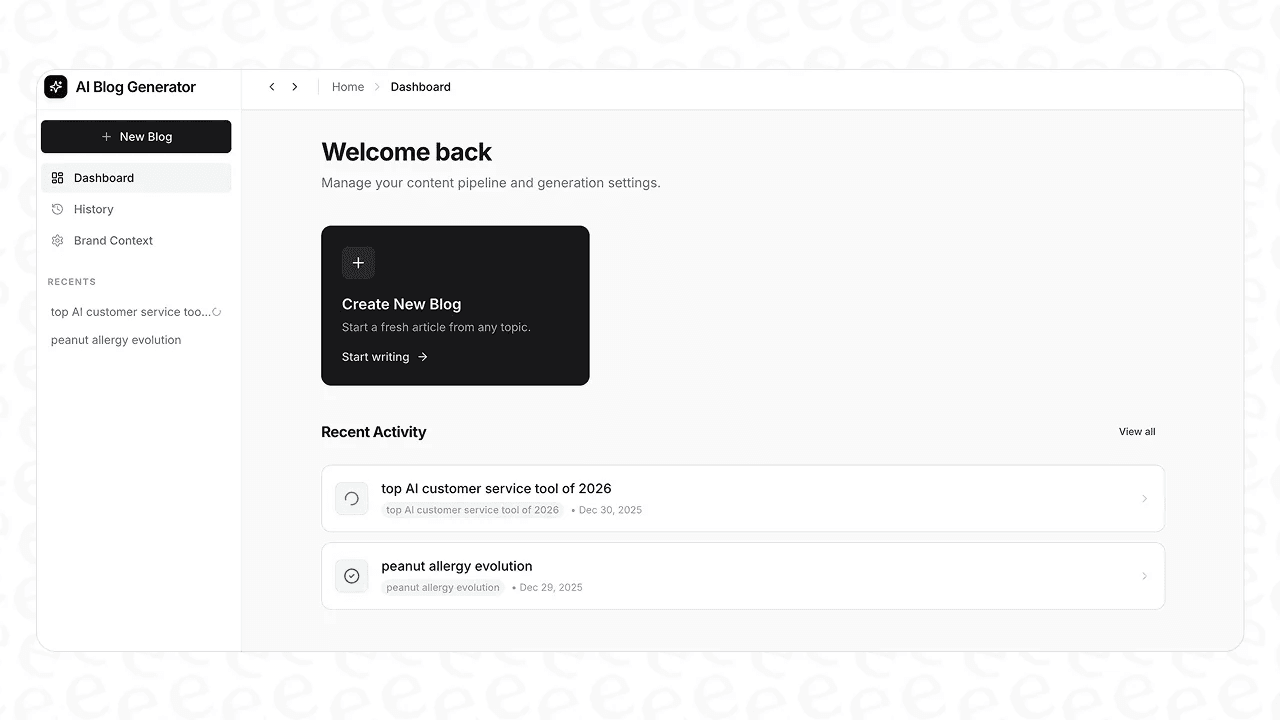
It lines up perfectly with the three pillars:
- Deep Research & Citations: The tool analyzes search results to create a data-driven outline that fits the search intent. It also adds internal and external links to cite sources, which takes care of the main tasks in Pillar 1.
- Automatic Assets & Social Proof: It can generate AI images and infographics to make your content look good. It also finds and embeds relevant YouTube videos and real Reddit quotes, adding the visuals and "Experience" signals you need for Pillar 2.
- Built-in SEO & AEO: The final article has a clean structure with optimized headings, short paragraphs, and clear answers formatted for AI overviews. It handles the technical parts of Pillar 3 automatically.
We used this tool to take our own blog from 700 to 750,000 daily impressions in three months by publishing over 1,000 optimized posts. It shows that you can produce a lot of content without giving up on the things that make writing good.
While a framework provides the 'what,' seeing the 'how' can make the process click. For a detailed walkthrough of putting these principles into practice, from topic selection to final proofreading, check out this step-by-step guide.
The importance of quality blog writing
Writing a quality blog post isn't some secret art form. It's a process based on three pillars: a data-driven strategy, creating content for your reader, and smart optimization.
In a world full of AI-generated noise, the content that does best is always the most human. If you focus on providing real value and showing experience, expertise, authority, and trust, you can create content that ranks well and builds an audience. The best way to improve is to start using this framework.
Ready to scale your content without giving up on quality? Generate your first post for free with the eesel AI blog writer and see how an automated, quality-first process can change how you work.

Frequently Asked Questions
Share this article

Article by
Stevia Putri
Stevia Putri is a marketing generalist at eesel AI, where she helps turn powerful AI tools into stories that resonate. She’s driven by curiosity, clarity, and the human side of technology.