Neuroflash vs Writesonic: An in-depth AI writer comparison

Katelin Teen
Katelin Teen
Last edited January 26, 2026
Picking the right AI writing assistant can feel like you're stuck in a maze. Every tool out there promises to make you a productivity wizard and spit out incredible content, but they all have their own quirks. It's hard to tell which one will actually click with your team's workflow.
Two of the big players you'll bump into are Neuroflash and Writesonic. Both are beefy platforms meant to make content creation easier, but they're designed to tackle different problems. One is a pro at nailing brand voice and staying on the right side of European data laws, while the other is obsessed with dominating the new frontier of AI-powered search.
In this guide, we'll get into what each tool is best at, comparing their features, pricing, and who they're really for. By the end, you should have a much clearer picture of which one fits your goals. And if it turns out neither is the perfect match, we’ll also talk about another option for teams who just want to scale their blog content using specialized tools that manage the whole process from keyword to a publish-ready article, like the eesel AI blog writer.
What is Neuroflash?
Its main promise is to help you create content that's on-brand and effective, without all the usual headaches. It does more than just generate words; it tries to get a real feel for your brand's unique voice and even guess how well your copy will do.
Here's a quick rundown of its key parts:
- Content Generator: This is your do-it-all writing assistant. It’s loaded with over 100 text templates, an AI editor for polishing your work, real-time SEO analysis, and a plagiarism checker.
- ChatFlash: Think of this as their take on ChatGPT. It's an AI chatbot that can use different models like GPT, Gemini, and Claude. You can also feed it your own brand knowledge to get more on-point answers.
- Image Generator: A useful tool for whipping up unique, copyright-free images to go with your articles.
- Brand Hub: This is where Neuroflash really stands out. It's a central spot to define and save your brand voice, style guides, and company info. This ensures every piece of content the AI creates sounds like it came from you.
- PerformanceFlash: This is a pretty cool feature that predicts the performance and emotional vibe of short copy (like ads or headlines) before you even publish it.
What is Writesonic?
The platform is all about helping brands track and improve their visibility in the answers you get from places like ChatGPT, Gemini, and Perplexity. It’s designed for the future of search, where being cited by an AI is just as critical as ranking on Google.
Here’s what it offers:
- AI Visibility Tracking: This tool monitors brand mentions, sentiment, and citations across more than 10 different AI platforms. It shows you where you're appearing and what the AI is saying about you.
- AI Visibility Actions: It doesn't just throw data at you; it gives you a checklist. It finds "citation gaps" (where a competitor gets a shout-out but you don't) and gives you specific, actionable advice to close them.
- Content Engine: This is their heavy-duty article writer. It can produce fact-checked, SEO-optimized articles up to 5,000 words. It takes care of research, writing, and even adds internal links automatically, all to help you rank on Google and get cited by other AIs.
- SEO Tools: To complete the package, it has tools for site audits and AI-driven suggestions for technical SEO fixes.
Key feature comparison: Neuroflash vs Writesonic
Content generation features
Neuroflash starts strong with a library of over 100 text templates. Whether you need a social media update, an email newsletter, or a product description, they've got you covered. They also have a neat "Audiences" feature that lets you generate content specifically for different customer profiles you set up.
Writesonic channels its energy into its AI Article Writer 6.0. This tool is a monster for long-form content. It’s made to produce deeply researched, factual articles by checking out top-ranking competitors and gathering info from all over the web. The final piece is optimized right away for both traditional search engines and for getting cited by AI, which is its main claim to fame.
SEO vs GEO: A key difference
Neuroflash has a real-time SEO analysis tool built right into its editor. It’s simple and easy to use, offering suggestions to help you optimize your content for Google as you type. It’s a solid feature for anyone focused on classic SEO.
Writesonic, however, makes Generative Engine Optimization (GEO) its defining feature. This is where it pulls way ahead if you're thinking about the future. The platform actively tracks your brand's visibility on major AI platforms like ChatGPT and Google's AI Overviews. It can show you where competitors are getting mentioned and you aren't, and its "AI Visibility Actions" give you clear steps to close those gaps and get your brand into the AI conversation.
Brand voice and customization
Neuroflash puts brand voice front and center with its "Brand Hub." You can upload documents, set specific style rules, and define a consistent brand voice. Once that's done, you can apply it to any text generation, making sure everything from a blog post to a tweet sounds just like your company. It’s all about consistency.
Missing one tool here: I’ve been using Neuroflash for blog ideation, mostly cause it actually lets you control the flow and style sentence by sentence. Sometimes Jasper and Writesonic feel a bit too “default” for me, like, all the outputs got the same voice. You run into that? I do like Scalenut’s Cruise Mode though for bulk content.

Writesonic also has a brand voice feature that helps you adjust the tone of your content. It works well for getting the general vibe right, but the platform is more focused on factual accuracy and sticking to SEO and GEO best practices. Neuroflash's PerformanceFlash takes brand voice to another level by analyzing the psychological impact, which is a much deeper form of customization.
Unique differentiators
Neuroflash's PerformanceFlash is a huge asset for anyone writing copy that needs to get results. This feature predicts the emotional impact and performance of short texts like headlines or ad copy. It helps you test your ideas before they go live, giving you data to back up your choice of one headline over another.
Writesonic's AI visibility data is its secret sauce. The platform runs on a proprietary dataset of over 120 million AI conversations. This means it isn't just guessing what people might ask an AI based on keyword data; it can show you what users are actually asking. This kind of insight is gold for creating content that directly answers the questions people are turning to AI for.
Pricing comparison: Neuroflash vs Writesonic
Value really comes down to what you're trying to do. Let's look at the pricing for both platforms so you can see how they compare.
Neuroflash pricing plans
Neuroflash's plans are based on word count, feature access, and the number of users. Remember that the pricing is in Euros (€), so the conversion rate will impact the final cost.
| Plan | Price (Monthly) | Key Features |
|---|---|---|
| Free | €0 | Basic features, limited word count |
| Basic | Starts at €29 | More words, access to more text types |
| Power | Starts at €79 | Increased limits, Brand Hub, PerformanceFlash |
| Premium | Starts at €199 | Highest limits, team features, full suite access |
| Source: Pricing information is subject to change. Please check the official neuroflash website for the most current details. |
Writesonic pricing plans
Writesonic's plans are built around article limits and access to its advanced GEO features. It's worth noting that the key AI search tracking tools are only included in the Professional plan and up.
| Plan | Price (Billed Annually) | Key Features |
|---|---|---|
| Lite | $39/month | For individuals, 15 articles/month, SEO tools |
| Standard | $79/month | For small teams, 30 articles/month, unlimited AI agent generations |
| Professional | $199/month | For growing brands, 100 articles/month, unlocks GEO and AI search tracking |
| Enterprise | Custom | For large organizations with bespoke needs |
| Source: Writesonic's official pricing page, accessed 2026. |
Value comparison
The verdict here is pretty straightforward: value depends on what you need. If you're a team in the EU that requires strict GDPR compliance and cares deeply about a consistent brand voice, Neuroflash offers great value. Its predictive analytics can also save you a ton of time and money on A/B testing.
If your team is all-in on SEO and wants to get ahead in the new world of AI search, Writesonic provides amazing value. The insights from its GEO tools could give you a major leg up on the competition.
Use cases and limitations
So, who are these tools really for? And what are their weak spots?
Who should use Neuroflash?
- Ideal user: Marketing teams at European companies who can't mess around with GDPR. Copywriters who are obsessed with brand consistency and getting the emotional tone perfect. Businesses that want to use data to predict how their copy will land before it's even published.
- Limitations: While its SEO tools are decent, its real strength is in creating brand-aligned text. It lacks the advanced AI search visibility and optimization features that are the heart of Writesonic's platform.
Who should use Writesonic?
- Ideal user: SEO specialists, content marketing agencies, and any business that wants to rank not just on Google, but in AI answer engines too. It's perfect for teams that want to be early adopters of Generative Engine Optimization and stay ahead of the curve.
- Limitations: The platform is jam-packed with features, which might feel like a lot for newcomers. Also, its most powerful and unique GEO tools are locked behind the pricier plans, which could be a hurdle for smaller teams.
A different approach: The eesel AI blog writer for end-to-end content
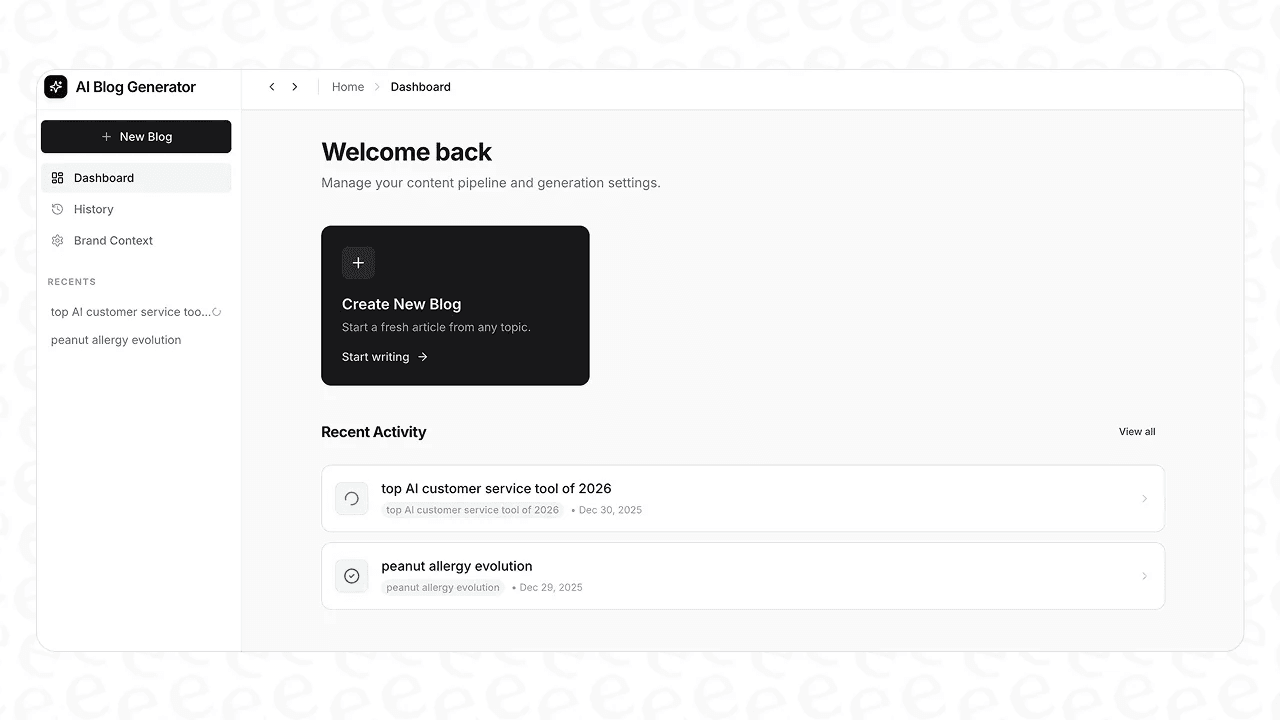
Here’s what sets it apart from a general AI writer:
- It generates complete posts, not just drafts: It doesn't just hand you a block of text. It produces a fully structured article with an introduction, proper headings, a conclusion, and even an FAQ section.
- It includes automatic assets: This is a huge time-saver. It automatically creates and inserts relevant images, tables, charts, and infographics right into the post. No more scrolling through stock photo sites or messing with design software.
- It adds authentic social proof: To make the content more trustworthy and human, it has a unique feature that finds and embeds real, relevant quotes from Reddit threads and clips from YouTube videos.
- It delivers proven results: We use it ourselves, and it’s the engine that powered our own growth. It took us from 700 impressions per day to 750,000 impressions per day in just 3 months.
For teams focused purely on growing organic traffic through their blog, a specialized tool like the eesel AI blog writer offers a much more direct and efficient way to get from an idea to a published post.
Final verdict on Neuroflash vs Writesonic: Making the right choice
Let's wrap this up. Both Neuroflash and Writesonic are top-notch tools, but they're built for different purposes.
- Choose Neuroflash if: Your number one priority is maintaining a strong, consistent brand voice across all your content. You operate in the EU and need guaranteed GDPR compliance, and you want to use predictive analytics to perfect your copy.
- Choose Writesonic if: Your strategy is built around SEO and you want to be a leader in Generative Engine Optimization (GEO). You need to track your brand's visibility in AI search results and get actionable advice to improve it.
- Consider the eesel AI blog writer if: Your main goal is to scale your blog efficiently. You want to go from a keyword to a complete, SEO-optimized, and media-rich article that's ready to publish with minimal fuss.
Watching a head-to-head comparison can often make the differences between platforms clearer. The video below offers a visual walkthrough of how tools like Neuroflash and Writesonic perform in real-world scenarios, helping you see their interfaces and workflows in action.
From draft to done: Automate your content workflow
AI writers are great for getting that first draft done quickly. But as any content marketer will tell you, the road from raw text to a published post is full of tedious tasks: formatting, finding visuals, adding quotes, and making sure it all looks right.
The next step in AI content tools is all about solving this entire workflow. Instead of just generating text, what if you could generate a complete, publish-ready article?
Generate your first blog post for free with the eesel AI blog writer and see what a truly automated workflow feels like.

Frequently Asked Questions
Share this article

Article by
Katelin Teen
Katelin is an operations specialist at eesel where she uses her psychology training and education experience to optimize B2B SaaS processes. Outside of work, she unwinds with story-driven games, writing, and keeping up with latest tech innovations.