What is negative SEO? A complete guide to protecting your site

Stevia Putri
Last edited January 27, 2026
It’s that sinking feeling you get when you check your analytics and see your rankings have completely tanked. One day you’re riding high, the next your organic traffic graph looks like it took a nosedive. Your mind probably jumps to a Google update or some technical glitch. But what if it’s something more intentional?
Welcome to the murky side of search engine optimization: negative SEO. It's the practice of using shady, black-hat techniques to deliberately sabotage a competitor's search rankings. Think of it as the SEO version of slashing someone’s tires because you can't build a faster car.
This guide will walk you through everything you need to know. We’ll cover what negative SEO is, the different ways it shows up, how to spot an attack, and most importantly, how to build a solid defense for your website.
What is negative SEO?
The goal is pretty straightforward: if they can’t outrank you honestly, they’ll try to drag you down with them. This can be anything from pointing thousands of junky links at your domain to hacking your site and injecting malicious code.
What Google says about negative SEO
Before you start to panic, let's get some perspective from the source. For years, Google has been pretty clear about its position: their algorithms have become incredibly good at spotting and just ignoring most negative SEO attempts.
John Mueller, a Search Advocate at Google, has said over and over that true negative SEO is "really, really, really rare." He’s on record saying that for the average website, it's "not something I would worry about."
He also had some strong words for companies selling negative SEO services or expensive link disavow packages, saying they are often "just making stuff up, and cashing in" on the fears of website owners.
So, what's the bottom line? While it's not a daily threat for most sites, it’s still smart to know the tactics, especially if you're in a cutthroat industry. Knowing what to look for is the first step in building a proper defense.
Common types of negative SEO attacks
Malicious link building
This is the classic, most common form of negative SEO. The attacker aims hundreds or thousands of low-quality, spammy links at your website from link farms, private blog networks (PBNs), or sketchy domains. The idea is to make it look like you're trying to game the system in a way that violates Google's official link spam policies.
One of my sites was just hit with a big negative SEO attack over the last few months. Tens of thousands of gambling, porn, etc .ru backlinks from thousands of domains. Rankings declined rapidly, even for '{domainname}' (minus the .com). We're currently working on disavowing all of them.

Luckily, this is also the tactic Google is best at ignoring. The Penguin algorithm, which is now part of Google’s core algorithm, was built to devalue spammy links rather than penalize the site they point to. Most of the time, Google just sees these links and pays them no mind.
Content scraping and duplication
This one is a little more sneaky. An attacker copies your original content and republishes it across dozens or even hundreds of other websites. This is called scraping.
The danger here is that if Google’s crawlers find and index the scraped version before your original post, it can get confused about who the real author is. This can water down your site's authority and split the SEO value that your content should be getting. You can use a tool like Copyscape to check if your content has been copied elsewhere.
Hacking and malware injection
This is easily the most direct and damaging type of attack. If someone gets access to your website's backend, they can cause a lot of chaos. Hackers can delete pages, change your content, inject malware, or add spammy links to shady sites directly from your own domain.
They might also set up sneaky redirects, where someone who clicks your link in the search results gets sent to a completely different, often malicious, website. This is a massive red flag for Google and can get your site removed from search results fast.
Review bombing and smear campaigns
Negative SEO isn't just technical; it can also be an attack on your brand's reputation. Review bombing is when someone floods your Google Business Profile, Yelp page, or other review sites with a bunch of fake, one-star reviews. The goal is to wreck your overall rating, destroy customer trust, and hurt your local SEO.
This can also blow up into wider smear campaigns, where lies about your brand are spread across social media, forums, and blogs to tarnish your reputation.
Fake link removal requests
This is a clever social engineering trick. An attacker pretends to be you or someone from your company and emails the owners of sites that link to you. They’ll ask to have your valuable, hard-earned backlinks taken down, often with a fake excuse like "we're moving our site." If they're convincing enough, they can trick people into removing links that are actually helping your SEO.
We seem have recently had a major black hat negative SEO hack from a competitor including thousands of spammy backlinks per day, site hacks and tons of attempts. Plus a load of other black hat attacks on our social media pages i.e over 100 abuse reports to Facebook in 24 hours (our content is about as un-abusive as something can be) which got the domain blacklisted until we sorted it out with them.
Forcing heavy server load
The goal here is to slow your website down or crash it entirely. A bad user experience can definitely hurt your rankings. Attackers usually do this in two ways:
- Heavy Crawling: They use bots to crawl your site aggressively, flooding your server with requests and slowing it down for real visitors.
- Image Hotlinking: They put images hosted on your server directly on their own high-traffic site. Every time someone visits their page, it uses your server's bandwidth to load the image. This can slow your site to a crawl and drive up your hosting bill.
How to spot a negative SEO attack
noindex tag added by mistake), a manual penalty for something you did, or even just a slow season for your industry.
Once you've checked those off the list, here are the red flags that might point to an attack.
A sudden, unexplained drop in rankings and traffic
This is the main symptom, but remember, correlation doesn't equal causation. A sharp, vertical drop in both traffic and keyword rankings that doesn't line up with a known algorithm update or any changes you made is definitely suspicious. Keep a close eye on your data in Google Search Console and your analytics platform.
An unusual influx of spammy backlinks
Your backlink profile should grow at a fairly natural pace. A sudden, huge spike in links, especially from low-quality sites, is a major red flag. Use a tool like Semrush's Backlink Audit tool or just check the Links report in Google Search Console.
Look for things like:
- A ton of links from irrelevant domains (e.g., a casino site linking to your software blog).
- Links from sites in foreign languages for countries you don't serve.
- Anchor text packed with commercial keywords or adult terms you'd never associate with. Many backlink tools even provide a "Toxicity Score" to help you spot the worst offenders.
Negative reviews or suspicious brand mentions
A couple of bad reviews are normal. A coordinated attack of dozens of one-star reviews in a single day is not. Set up Google Alerts for your brand name and key employees to keep an eye on what’s being said about you online. Check your Google Business Profile and other review sites regularly.
Your content appearing on other websites
If you see a drop in rankings for a specific page, pop its URL into a plagiarism checker like Copyscape. If you find your article copied word-for-word on dozens of other sites, you might be a victim of content scraping.
Security warnings or poor site performance
Google Search Console is your best friend here. If Google finds malware, sneaky redirects, or other security problems on your site, they'll email you and flag it in your account. You should also monitor your site speed. If your pages suddenly start loading at a snail's pace for no apparent reason, it could be a sign of a server load attack.
How to defend against negative SEO and recover
Alright, so you think you've spotted an attack. Now what? The good news is that recovery is definitely possible, and the best defense is a proactive one.
Proactively build a strong SEO foundation with eesel AI blog writer
This is, hands down, the most effective long-term defense. It lines up perfectly with Google's advice: just focus on building a great site. A website with a strong backlink profile and a ton of high-quality content is much more resistant to attacks. Think of it as building a "content moat" around your brand. A few spammy links are like pebbles thrown at a castle wall; they won't do any real damage.
The biggest challenge, of course, is that creating great content consistently and at scale takes a massive amount of time.
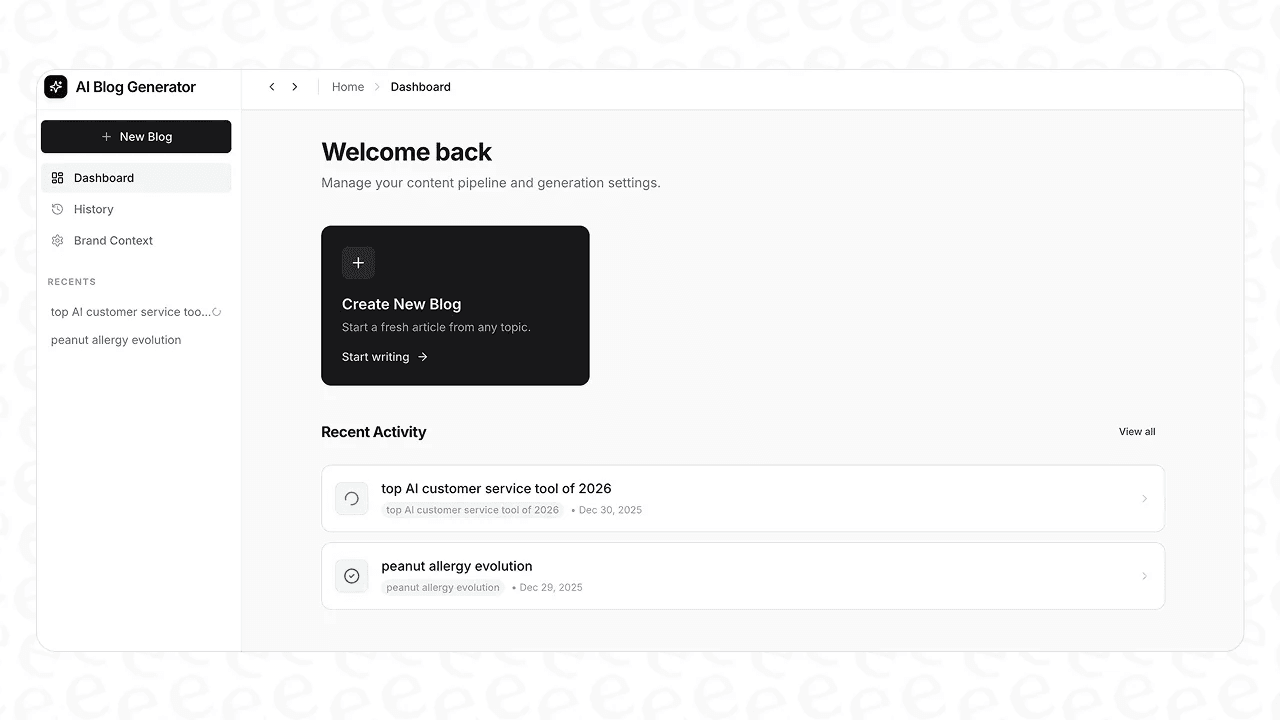
That's where the eesel AI blog writer can make a real difference. It's a tool designed to solve this exact problem. You can give it a single keyword, and it generates a complete, publish-ready, and SEO-optimized blog post. It doesn't just spit out a wall of text; it gives you a fully structured article with AI-generated images, charts, relevant YouTube videos, and even quotes from Reddit to add some real-world flavor.
By using it to scale up your content creation, you can save a ton of time and build your site's authority much faster, making it a much tougher target for any negative SEO attacks.
Regularly monitor your backlink profile and disavow carefully
If you do find a bunch of spammy links pointing to your site, the first step is to take a deep breath and remember that Google is probably already ignoring them.
The second step is to learn about Google's Disavow Tool, but use it with extreme caution. This is an advanced feature that can seriously hurt your SEO if you use it wrong. Google’s own original announcement of the tool makes it clear that it's mostly for cleaning up messes you made yourself (like "unnatural links you have built") or for dealing with a manual action penalty. It was never meant for reacting to random link spam. Only think about using it if you see a clear connection between a wave of spammy links and a drop in rankings, and even then, be very careful.
Beef up your website security
This one is non-negotiable. Basic digital security can prevent the most damaging attacks.
- Use HTTPS: An SSL/TLS certificate is a must for security and is a known ranking factor.
- Keep everything updated: Regularly update your CMS (like WordPress), themes, and plugins to patch any security holes.
- Use strong credentials: Use strong, unique passwords for all user accounts and turn on two-factor authentication (2FA) whenever you can.
- Consider a WAF: A web application firewall (WAF) can help block malicious traffic before it even gets to your server.
Protect your content and reputation
Finally, take steps to protect your assets.
- For scraped content: You can file a DMCA takedown request with Google. This asks Google to remove the stolen copy from its search results, making sure your original version gets the credit it deserves.
- For review bombing: Flag the fake reviews directly on the platform (Google, Yelp, etc.) for violating their rules. Respond professionally to all reviews, real and fake, to show you’re paying attention.
- For image hotlinking: You can add a small piece of code to your server's
.htaccessfile that stops other websites from displaying your images, which protects your bandwidth.
For a deeper dive into how to defend your site, check out this Whiteboard Friday from Moz. They break down why even if your rankings aren't affected, negative SEO can still cause real problems for your business and how to stay protected.
Final thoughts on preparing for negative SEO
Negative SEO can sound terrifying, but for most website owners, the risk is very low. Google has spent years building systems to make these attacks pretty much useless.
Your best defense isn't chasing down spammy links after the fact. It's a proactive strategy focused on building a strong, high-quality website that can shrug off any cheap shots. A solid content strategy isn't just for growth; it’s the best shield you have against malicious attacks.
Start building your content defense today. Try the eesel AI blog writer for free and see how quickly you can scale your SEO efforts.

Frequently Asked Questions
Share this article

Article by
Stevia Putri
Stevia Putri is a marketing generalist at eesel AI, where she helps turn powerful AI tools into stories that resonate. She’s driven by curiosity, clarity, and the human side of technology.