Myth-busting blog writing: 3 outdated beliefs that are holding you back

Stevia Putri

Stanley Nicholas
Last edited January 20, 2026
Expert Verified

We’ve all been there. Staring at a blinking cursor, feeling the pressure of a dozen different "blogging rules" that just kill your creativity. "You have to be a world-renowned expert." "You need to post every single day." "If it's not over 2,000 words, don't even bother." It’s enough to make anyone want to just give up.
Blogging is a seriously powerful marketing tool, no question. It's why around 80% of businesses use it as a key part of their strategy. But so much of the advice out there feels like it’s from a different era, and trying to follow it can be completely paralyzing.
So, let's cut through the noise. This post is all about myth-busting blog writing. We're going to tackle the most common outdated beliefs and give you a practical, modern way to create content that actually works in 2026. Because with the right mindset (and a little help from technology), you can focus on what really matters: delivering value. Modern tools like the eesel AI blog writer are built to do the heavy lifting, so you can get back to the more creative parts of the job.
What is myth-busting blog writing?
Myth-busting blog writing isn't some new secret hack. It's really just a shift in how you think. It’s about spotting and ditching the old, rigid "rules" that get in the way of connecting with your audience. Instead of thinking, "I can't start a blog because I'm not an expert," you start asking, "How can I provide value with what I know right now?" Take a look at the key differences in this infographic.
This approach is all about focusing on things that actually make a difference today: being authentic instead of just authoritative, creating value for your audience instead of hitting arbitrary word counts, and being consistent in a way that doesn't lead to burnout.
Think of it as catching up to the current digital world. Ten years ago, the game was about stuffing keywords and churning out as much content as possible. Today, success is about understanding your audience's problems, connecting with them like a real person, and using smart workflows to do it consistently. It’s about being smarter with your effort, not just working harder.
Myth 1: You have to be a world-class expert or 100% original
This is probably the biggest myth of them all. The pressure to be a recognized authority or to come up with some idea that nobody has ever had before stops so many talented people from ever hitting "publish." But here’s the thing: your audience isn't looking for a Nobel laureate. They're looking for someone who can help them solve a problem.
The pressure to be a leading expert
Let’s be honest, you don't need a PhD to write a helpful blog post. Most of the time, you just need to be a step or two ahead of your reader. Your value isn't in having all the answers; it's in sharing the answers you've found so far.

One of the most powerful forms of content is simply documenting your learning journey. People connect with progress and a bit of vulnerability. A post titled "5 SEO Mistakes I Made (and How You Can Avoid Them)" is often way more engaging than a dry, academic paper. Readers appreciate the honesty and can see themselves in your story, which builds a much stronger connection than just listing off facts.
The originality trap
Right behind the expert myth is the originality trap: the fear that "everything has already been said." And you know what? It probably has, in some way. But it hasn't been said by you.
Real value today doesn't always come from inventing something brand new. It comes from your unique perspective, your personal story, or your fresh take on an old topic. Your specific mix of experiences, insights, and voice is what makes your content original. You can take a common topic, add a new case study, share a personal story, or pull in updated data, and suddenly you’ve created something new and valuable for your audience. That’s more than enough.
How AI tools help
This is where modern AI tools can really change things up. Instead of being a crutch that spits out generic text, they can be powerful research assistants that help you find unique angles you might have missed.
For example, the eesel AI blog writer is built to enrich your content, not just write it. When you give it a topic, it doesn't just generate paragraphs. It automatically searches the web to find and embed things like authentic quotes from Reddit discussions and relevant YouTube videos. This instantly adds social proof and real-world context to your post. Suddenly, your article isn't just your opinion; it's a curated piece that reflects what real people are actually saying. This is how you add a unique perspective, even if you’re not the world's top authority on the subject.
Myth 2: You must write every day and every post must be perfect
The "hustle culture" of online content created this idea that if you're not publishing something new every single day, you're falling behind. This pressure not only leads to burnout but also pushes people to publish rushed, low-quality work just to keep up. The truth is, consistency is way more important than frequency, and perfectionism is the enemy of getting things done.
The quantity vs. quality debate
Let's put the "post daily" myth to bed. It's an outdated strategy from a time when algorithms just wanted more volume. Today, both search engines and people value quality much more. In fact, there's a growing trend of bloggers publishing less often so they can spend more time creating truly great content.
Sustainable consistency is what wins in the long run. What does that look like? For a new blog, a steady rhythm of 6-8 well-researched posts per month can be very effective. If you're in a more technical niche, even 2-4 deep-dive articles a month can be plenty to establish your expertise. The goal is to find a pace you can stick with, not to sprint for a month and then burn out.
Perfectionism is the enemy of done
We've all done it: endlessly tweaking a draft, changing a comma, rewording a sentence, all to create a "flawless" post. But waiting for perfection is just a fancy way to procrastinate. An 80% complete post that is live and helping people is so much more valuable than a 100% perfect draft sitting in your Google Docs.
A better mindset is to publish confidently and iterate later. Your blog posts aren't set in stone. You can always go back and update them with new information, better examples, or insights from reader feedback. This isn't just okay; it's what successful bloggers do. In fact, over 70% of bloggers regularly update old posts to keep them fresh.
Streamline your workflow with AI
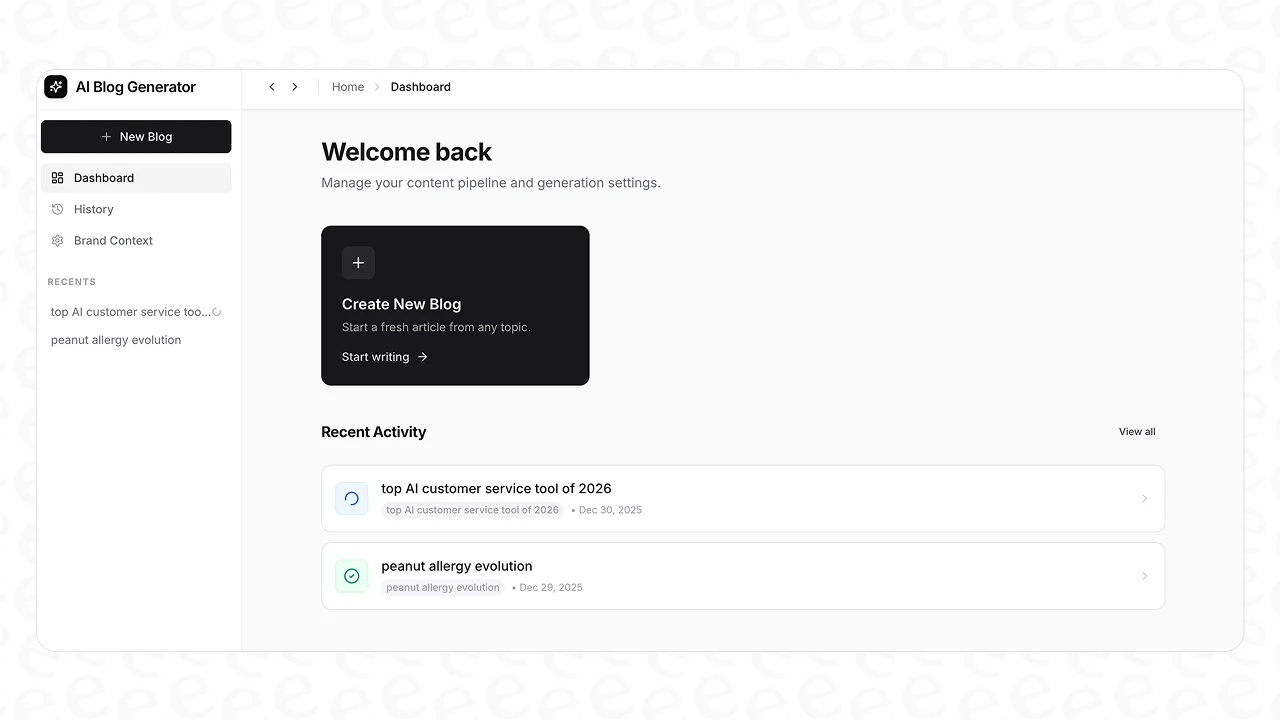
This is where you can get hours of your time back and avoid the perfectionism trap. Instead of fighting with a blank page, you can automate the most time-consuming parts of writing. The eesel AI blog writer takes a single keyword and generates a complete, publish-ready first draft in minutes.
And when we say "complete," we mean it. You get a fully structured post with an introduction, headings, a conclusion, and FAQs. It's already SEO-optimized and even includes assets like tables and AI-generated images. This takes away the pressure of creating something "perfect" from scratch. Your job shifts from being a writer to being an editor and strategist, refining a solid draft to add your final touch and unique insight.
Myth 3: Long-form is dead (or king) and blogging is irrelevant
With the rise of short-form video on platforms like TikTok and Instagram, it's easy to see why some people are questioning if blogging is still relevant. At the same time, you'll see SEO gurus insisting that only 3,000-word "ultimate guides" can rank. The conflicting advice is confusing, but the data is pretty clear: blogging is far from dead, but the strategy has changed.
The word count obsession
Is long-form content dead? No. Is it the only thing that works? Definitely not. The truth is, there's no magic word count. The ideal length for a blog post is however long it takes to completely answer the searcher's question.
The data backs this up. The average word count for a top-ranking blog post can be all over the place depending on the industry and the search query. A detailed marketing post might need 2,500-3,000 words to cover everything, while a focused tech tutorial could be perfect at 800 words. Obsessing over a number is a waste of time. Instead, obsess over providing value and answering the user's question completely.
Is blogging really a dying trend?
Let's settle this with some numbers. Businesses that keep a consistent blog see 55% more website visitors than those that don't. For B2B companies, the difference is even bigger, with blogs generating 67% more leads on average.
We’ve seen this ourselves at eesel AI. Using our own AI blog writer, we took our content strategy from 700 impressions per day to over 750,000 impressions per day in just three months. Blogging isn't dead; ineffective, old-school blogging is. When you do it right, it’s still one of the best ways to drive organic growth.
Adapting for modern readers
While people are still reading blogs, how they read has changed. They skim. They scan. They want quick answers. This means your content has to be easy to scan, with short paragraphs, clear headings, bullet points, and visuals to break up the text.
But there's another big shift happening: the rise of AI-powered answer engines like Google's AI Overviews and tools like ChatGPT. This has created a whole new field called AEO (Answer Engine Optimization). Your content doesn't just need to be optimized for a list of links; it needs to be structured so that AI can pull from it to give direct answers. This means using clear, conversational language and providing concise answers to the questions your audience is asking.
This is exactly what the eesel AI blog writer is built for. It automatically creates well-structured, scannable content that's optimized for both human readers and the AI answer engines that are becoming the new search results page.
For a deeper dive into common writing myths and how to overcome them, check out this helpful video from PaperVideo. It covers some of the most persistent misconceptions that can hold writers back.
This video from PaperVideo discusses 6 common content writing myths you shouldn't believe, offering more insight into myth-busting blog writing.
Your next steps in myth-busting blog writing
So, let's recap. You don't need to be a world-class expert to provide value. You don't have to chain yourself to your desk and publish daily to get results. And blogging is definitely not dead, it’s just different.
The most successful bloggers in 2026 are the ones who focus on being authentic, delivering real value, and using the right tools to work smarter. They've let go of the outdated myths that hold so many people back. Often, the biggest thing stopping you from getting started isn't a lack of skill; it’s the imaginary rules we think we have to follow.
The best way to start busting these myths is to see for yourself how easy it can be. Instead of staring at a blank page, what if you could go from an idea to a fully-formed, SEO-optimized draft in the time it takes to drink your morning coffee?
Ready to start myth-busting blog writing? Try the eesel AI blog writer for free and see how fast you can go from a single keyword to a high-quality, publish-ready post.
Frequently Asked Questions

Share this post
Article by
Stevia Putri
Stevia Putri is a marketing generalist at eesel AI, where she helps turn powerful AI tools into stories that resonate. She’s driven by curiosity, clarity, and the human side of technology.