How to find blog ideas that actually drive traffic

Kenneth Pangan

Katelin Teen
Last edited January 20, 2026
Expert Verified

We’ve all been there: staring at a blinking cursor on a blank page, feeling the pressure to come up with a brilliant blog topic. It’s not just about filling a slot on your content calendar. It's about finding an idea that people are searching for, one that can climb the ranks on Google and bring in some real traffic.
The truth is, the quality of your idea is just as important as the quality of your writing. A great topic that connects with what your audience needs is the bedrock of any successful content strategy. The trick isn't waiting for a lightning bolt of inspiration, but having a system for generating ideas you know will work.
Luckily, you don’t have to do it all by hand. Modern tools can take a good idea and turn it into a publish-ready post in minutes. For instance, we used the eesel AI blog writer to scale our own blog from 700 to 750,000 daily impressions in just three months.
Why finding the right blog idea is half the battle
Spending a little extra time on brainstorming saves you a ton of wasted effort later on. When you nail the topic, everything else just falls into place. A great blog idea directly answers the exact question someone typed into Google. That’s a huge factor in whether you rank on page one or get lost on page ten.
It’s also about building what SEO folks call "topical authority." Think of it like this: if you consistently write about different parts of the same subject, search engines start to see you as an expert. This makes it easier for all of your related articles to rank higher. A steady stream of relevant blog topics shows that you know your stuff.
Plus, when your content is super relevant, people stick around longer to read it. This improves engagement metrics like time on page and lowers your bounce rate, which tells Google that your site provides real value. It's the difference between an idea that's just "cool" and an idea that actually serves a business goal, like attracting the right customers or building trust with your audience.
Look inward: Finding blog ideas within your company
Believe it or not, some of the best content ideas are already hiding within your own company. This is probably the most overlooked source, but it’s a goldmine because these topics are already validated by the people who matter most: your customers and your team.
Repurpose old posts
Your existing content is a fantastic place to start. Just pop into Google Search Console and see which posts are already bringing in traffic. These are your proven winners.
Got a popular listicle? Pick one of the items from that list and write a deep-dive post all about it. If you have a high-level guide that’s doing well, you can break it down into smaller, more specific spin-off articles. And don't forget to check the comments on your old posts. Readers often ask follow-up questions that make for perfect new blog topics.
Document your process
Every time you or your team solves a tricky problem, you’ve got a potential blog post. Did you figure out a tough bug, create a new workflow that saves hours, or find a clever way to handle a common customer issue? Write it down.
This kind of content is gold for a few reasons. It’s super relatable, it shows off your team’s expertise, and it provides genuine value to others who might be facing the same challenge. It’s authentic, helpful, and builds a lot of credibility.
Learn from customer questions
Your sales and support teams are on the front lines, talking to customers every single day. They know exactly what questions people are asking, what they're confused about, and what they need help with.
Set up a quick chat with them and ask for the top 5-10 questions they hear all the time. Each one of those is a blog post waiting to happen. You already know there's an audience for them, and creating content that answers these questions directly can save your team a ton of time while helping potential customers find you.
Look outward: Finding ideas from competitors and communities
Once you’ve squeezed all the ideas out of your internal sources, it’s time to see what’s happening in the wider conversation around your niche. This is how you find out what your audience is passionate about, struggling with, and actively looking for answers to.
Mine online communities
Platforms like Reddit and Quora are a direct window into the minds of your target audience. People go there to ask for help, share frustrations, and get advice. It’s a totally unfiltered source of content ideas.

Search for subreddits or Quora topics related to your industry. Look for posts with lots of comments and upvotes, and pay attention to phrases like "how do I," "what's the best way to," or "I'm struggling with." Every one of those is a pain point you can solve with a blog post.
Analyze competitors
Take a look at what your competitors are doing. The goal here isn't to copy them, but to get inspired and find gaps you can fill. Use an SEO tool (or just browse their blogs) to see which of their articles are getting the most shares, comments, and traffic.
This tells you what topics are hitting the mark in your space. Now, look for the "content gaps." What have they covered, but only on a surface level? You can create a more in-depth, comprehensive piece. What related topics have they missed entirely? That’s your chance to step in and own that conversation.
Use Google for free idea generation
This is one of the simplest and most effective free methods out there. Type a keyword related to your topic into Google and scroll down to the "People Also Ask" box. These are real questions that people are searching for.
You can also just start typing a query into the search bar and see what Google autocomplete suggests. These suggestions are based on huge amounts of search data, so they're a reliable indicator of what's on people's minds. Answering these questions directly in your content is a simple way to match what people are looking for.
Using technology for idea generation
Tapping into internal knowledge and external communities will give you a solid list of ideas. But if you want to scale your content creation and get from idea to published post without all the friction, technology is your best friend.
Streamline the process with the eesel AI blog writer
This approach is designed to streamline the workflow from a single keyword to a complete, publish-ready blog post. A common workflow for creating AI content involves multiple steps: brainstorming on Reddit, outlining, generating text section by section, finding images, and then putting it all together. The eesel AI blog writer aims to automate this entire process.
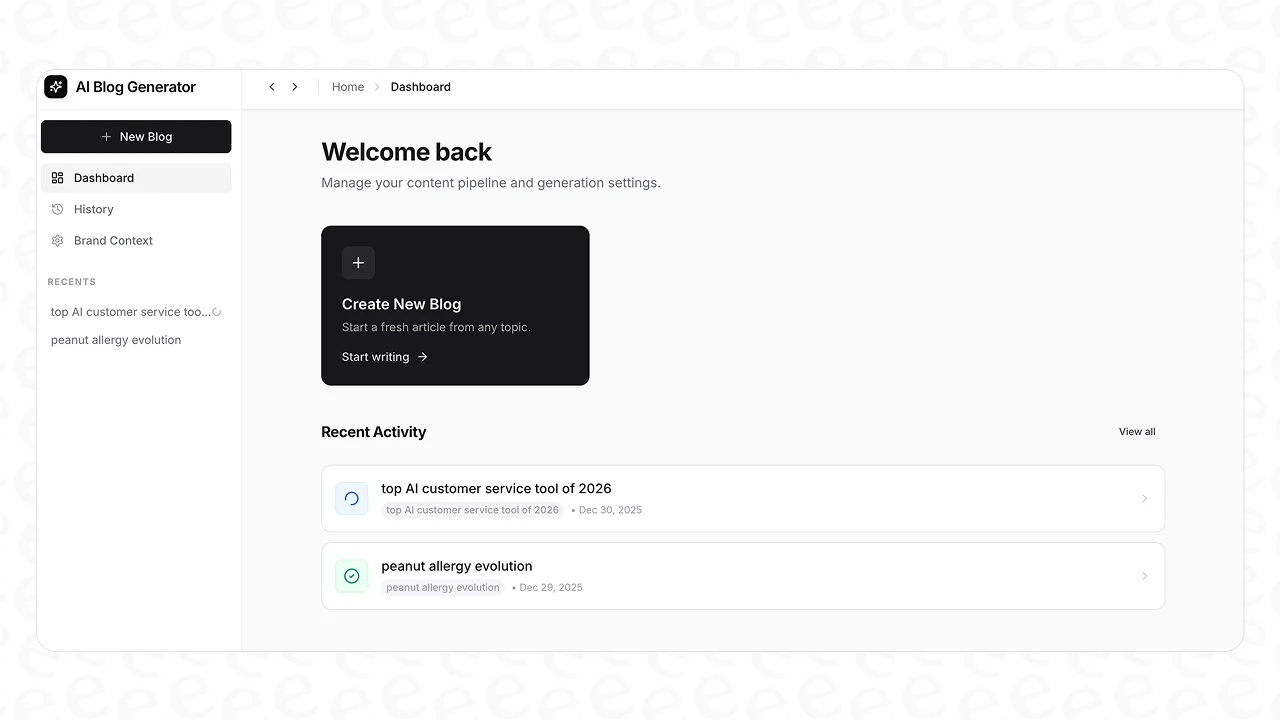
Here’s how it helps:
- Context-aware research: If you’re writing a comparison post, it automatically looks for pricing data. For a product review, it finds technical specs. It understands the type of content you need and does the research for you.
- Automatic assets: It doesn't just give you a wall of text. It generates AI images, infographics, and tables, and even embeds relevant YouTube videos to make your content more engaging.
- Authentic social proof: To add a human touch and credibility, it finds and integrates real quotes from Reddit and other forums. This brings a real-world perspective directly into your article.
Instead of spending hours prompting, editing, and formatting, you get a complete article that’s ready to go. It's completely free to try, so you can see the quality for yourself and generate your first post in minutes.
Use keyword research tools
Tools like AnswerThePublic and Google Trends are fantastic for validating ideas and exploring new angles.
AnswerThePublic is great for finding long-tail keywords. You give it a starting keyword, and it generates a huge visualization of questions people are asking around that topic (who, what, where, why, etc.). It’s perfect for finding those conversational queries that are often easier to rank for.
Meanwhile, Google Trends helps you spot topics that are gaining traction. You can see if search interest for a keyword is growing over time. If you catch a trend early, you can create content that rides that wave of interest. These tools are excellent for the idea phase, but remember, they only give you the topic—you still have to create the content.
How to use general AI like ChatGPT
ChatGPT is useful for quick brainstorming sessions or creating a rough outline. When using it for blog content, it's helpful to understand its specific use cases.
The tool can sometimes produce generic-sounding text that may require significant editing to align with a specific brand voice. For content focused on SEO, users should be aware of a few points:
- Its knowledge has a cutoff date, which can lead to factual inaccuracies for very recent topics.
- The output may require additional editing to add the depth and nuance needed to align with Google's E-E-A-T (Experience, Expertise, Authoritativeness, and Trustworthiness) guidelines.
- It generates text only, so users will need to source or create visuals like images, infographics, and charts separately. This is different from integrated tools like the eesel AI blog writer, which bundle asset creation into the workflow.
For a deeper dive into content ideation, this video offers a practical strategy for uncovering topics that have a proven track record of attracting millions of views, helping you move from theory to execution.
A video guide on how to find blog ideas using a strategy that has generated millions of views.
Creating a sustainable content pipeline
Finding great blog ideas doesn’t have to feel like a chore. With a structured process, you can build a content pipeline that never runs dry. Start by looking inward at the knowledge already inside your company, then look outward to communities and competitors to understand what your audience really wants.
Finally, use technology to refine your ideas and scale your production. A systematic approach is the secret to a consistent and effective content strategy that builds authority and drives a steady stream of organic traffic. You’ve got this!
Start generating traffic-driving blogs today
Finding the right idea is the first big step, but turning that idea into high-quality, optimized content is what actually gets results. The eesel AI blog writer is the perfect tool to bridge that gap, taking a validated topic and transforming it into a complete post in minutes.
Enter a keyword and generate your first complete, SEO-optimized blog post for free to see the difference.
Frequently Asked Questions

Share this post
Article by
Kenneth Pangan
Writer and marketer for over ten years, Kenneth Pangan splits his time between history, politics, and art with plenty of interruptions from his dogs demanding attention.