GrowthBar vs Semrush: Which SEO tool is right for you?

Stevia Putri

Katelin Teen
Last edited January 21, 2026
Choosing an SEO tool can feel like a significant decision. You're not just picking software; you're establishing a workflow that will guide your marketing strategy. When it comes down to GrowthBar vs Semrush, the choice is between two different approaches to SEO and content.
On one hand, you have GrowthBar, an AI-powered tool designed to help bloggers and marketers create content quickly. On the other, there's Semrush, a comprehensive, all-in-one digital marketing suite for SEO professionals and large teams who need deep data on nearly everything.
So, how do you pick? This article provides a straightforward comparison of their features, usability, and pricing. By the end, you'll have a much clearer idea of which one fits your team. And if your main goal is simply content creation, we'll also discuss how dedicated tools like the eesel AI blog writer can help turn your research into publish-ready articles.
What is GrowthBar?

GrowthBar is an SEO tool built for content marketers, bloggers, and anyone who wants to use AI to research and write content faster. It's designed to streamline your process, taking you from a keyword idea to a finished draft without numerous extra steps.
At its core, GrowthBar is about speed and simplicity. It runs on ChatGPT-4 and is used by over 6,000 customers who need to publish content efficiently. Its "2-Minute Blog Builder" is a major feature, capable of generating a 1,500-word draft from an outline. Its Chrome extension, with a 5-star rating, lets you perform quick keyword research and view competitor data directly from the Google search results page.
They've also introduced Custom AI Models, which helps you train the AI to write in your brand's specific style. If you're a solo operator or part of a small team where publishing content is the top priority, GrowthBar is a relevant option.
What is Semrush?
Semrush is a different type of platform. It's an enterprise-level digital marketing platform used by over 10 million marketing professionals, including teams at 35% of Fortune 500 companies. It's less of a single tool and more of a complete toolkit for analyzing market data.
The concept behind Semrush is to provide a complete picture of your digital presence. It consists of eight toolkits covering SEO, AI Visibility, Content, Local SEO, and more. All of this is powered by a large database with over 43 trillion backlinks and 27 billion keywords.
This provides access to advanced features for technical site audits, deep competitor traffic analysis, and research into rivals' ad campaigns. Semrush is built for seasoned marketers, agencies, and large companies that need detailed, granular data to manage complex campaigns across multiple channels.
A detailed comparison of GrowthBar vs Semrush
Let's get into the specifics. The best way to understand the difference between these two is to compare them side-by-side on features that matter in day-to-day work.
Core features: Content, keywords, and audits
Keyword Research
- Semrush: If you are a data-oriented person, you'll find Semrush's capabilities extensive. Its massive keyword database allows for incredibly deep research. You can use advanced filters, check keyword difficulty, see CPC data, and even look at historical trends back to 2012 for its US database. It’s built to uncover every possible opportunity.
- GrowthBar: GrowthBar keeps things simpler. It provides over 7 billion keyword suggestions, difficulty scores, and metrics like estimated revenue potential. It’s designed to give you quick, actionable insights so you can choose a keyword and start writing.
Content Creation & Optimization
- GrowthBar: This is a primary area of focus for GrowthBar. Its main feature is AI content generation. Using ChatGPT-4, it can create a full blog post draft from just a keyword. It also analyzes the top search results to help you build an SEO-friendly outline and includes other AI writing tools to help you refine it.
- Semrush: Semrush is focused on content optimization, not generation. Its SEO Content Template tool is useful for creating a detailed brief by analyzing the top 10 ranking pages for your keyword. After that, the SEO Writing Assistant gives you real-time feedback to improve a draft's SEO score, readability, and tone. The main difference is that it helps you improve what you've already written; it doesn't write it for you.
Competitor Analysis
- Semrush: This is another area where Semrush provides depth. It offers comprehensive competitive intelligence, letting you analyze almost any website's traffic, top organic keywords, backlink profile, and even their ad strategies on search and social media.
- GrowthBar: GrowthBar offers a more convenient, on-the-fly method. Its Chrome extension is useful for quick checks, showing you a competitor's domain authority, top keywords, and estimated traffic right on the Google search results page.
Technical SEO & Site Audits
- Semrush: A key feature of Semrush is its Site Audit tool, which is incredibly thorough, checking for over 140 technical and on-page SEO problems. It gives you a prioritized to-do list to help maintain your website's health.
- GrowthBar: GrowthBar does not have a dedicated site audit tool. While it can help you optimize the content of an article, it lacks the deep technical crawling capabilities that Semrush provides.
User experience and learning curve
- GrowthBar: The interface is clean and simple, and made for people who are not necessarily SEO experts. The learning curve is minimal; you can sign up and start generating content almost immediately. It's built for speed and ease.
- Semrush: With so many tools and data points, Semrush has a steeper learning curve that can feel overwhelming for newcomers. To help with this, they offer many free courses and certifications through the Semrush Academy.
Pricing and value for money
Here is where the difference is most apparent. The two platforms target different budgets.
- GrowthBar: The Standard plan starts at $29/month when paid annually and includes a 7-day money-back guarantee. It’s an affordable and accessible tool for individuals and small teams focused on creating content.
- Semrush: The Semrush One "Starter" plan, which includes the core SEO and AI Visibility toolkits, starts at a much higher $165.17/month when billed annually. It's a premium investment that provides value by bundling what would otherwise be several different tools into one platform.
Here's a quick breakdown:
| Feature | GrowthBar | Semrush |
|---|---|---|
| Starting Price (Annual) | ~$29/month | ~$165/month |
| Primary Focus | AI Content Generation | All-in-One SEO & Marketing Analytics |
| Ideal User | Bloggers, Content Creators, SMBs | SEO Professionals, Agencies, Enterprises |
| AI Draft Generation | Yes, full drafts | No, provides optimization briefs |
| Technical Site Audit | No | Yes, comprehensive (140+ checks) |
| Learning Curve | Low | High |
The eesel AI blog writer: An alternative for pure content generation
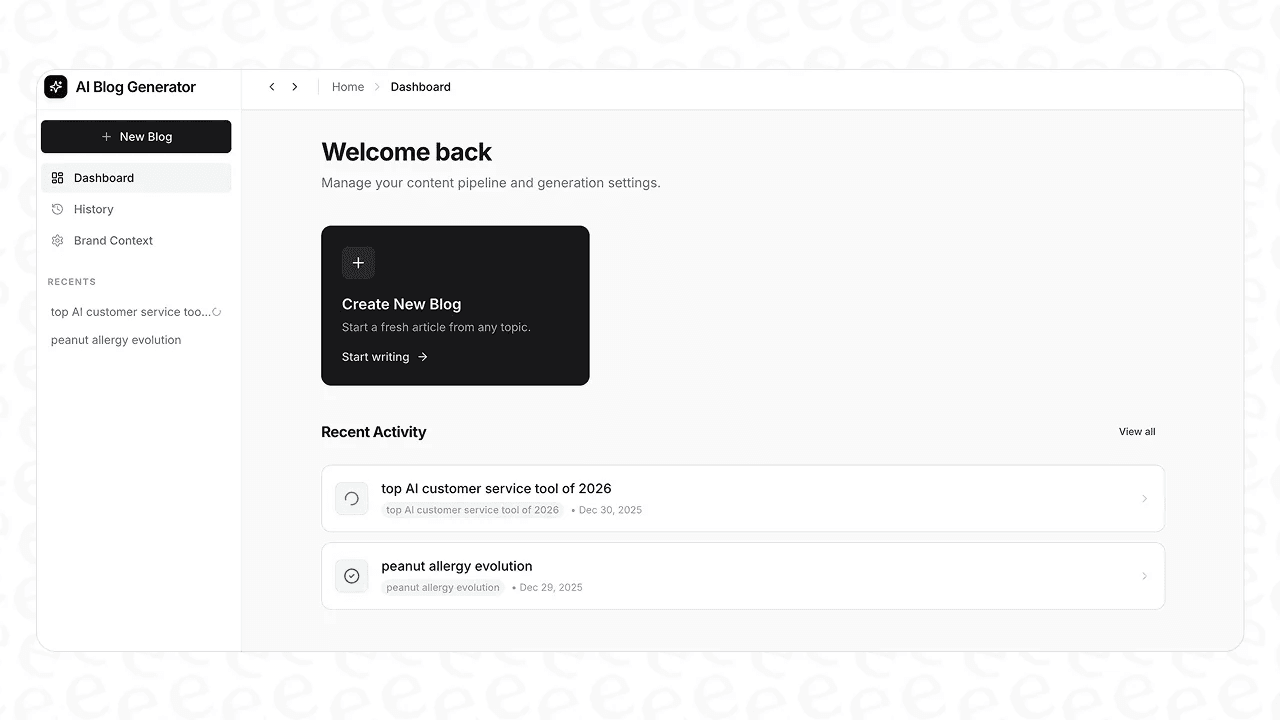
The main difference is that GrowthBar provides a draft, and Semrush provides a detailed brief. The eesel AI blog writer is designed to produce a complete, SEO-optimized article from a single keyword, and it comes with assets for publication.
Here’s what sets it apart:
- Includes all assets: It doesn't just write text. It automatically generates AI images, infographics, and data tables to make content more engaging.
- Adds social proof: To build authority and a human touch, it finds and embeds relevant YouTube videos and real quotes from Reddit discussions directly into the article.
- Optimized for AEO: The content is structured not just for search engines but also for AI Answer Engines like Google's AI Overviews. This is becoming a critical factor for visibility in 2026.
This tool was developed for our own use, and it helped us grow our blog from 700 to 750,000 daily impressions in three months. The tool is available to try for free, allowing users to evaluate its output.
Final verdict on GrowthBar vs Semrush: Which tool is right for you?
So, after all that, which one should you choose? It really boils down to your role, your goals, and your budget.
Choose GrowthBar if...
- You're a blogger, freelance writer, or part of a small content team.
- Your main goal is to write content faster with an easy-to-use AI writer.
- You have a smaller budget (around $29/month) and want a simple, clean interface.
- You don't need deep technical SEO audits or a massive suite of marketing tools.
Choose Semrush if...
- You're an SEO professional, work at a digital marketing agency, or are part of an enterprise-level company.
- You need an all-in-one platform for in-depth data across SEO, PPC, social media, and market research.
- You have the budget for a premium tool (around $165/month) and are willing to put in the time to learn it.
- Technical SEO audits, advanced competitor intelligence, and detailed reporting are crucial for your strategy.
SEMRush is what I pay for in my agency (10 person team) because it's better for content. As an SEO, I preferred Ahrefs, but their content tools just weren't as good. I've test 20 others and they all sucked in comparison... SEMrush is the best 'all-in-one'.

Making your final choice
The choice between GrowthBar and Semrush is clear. GrowthBar is a content-first AI tool for creators who need to move quickly. Semrush is a data-first analytics suite for marketing professionals who need to see the entire landscape.
The best tool for you depends on your specific goals, your team's size, your daily workflow, and your budget.
But if your biggest hurdle isn't just analyzing keywords but actually producing high-quality, SEO-optimized blog content at scale, then a dedicated generation tool is likely a direct solution.
For those focused on content generation, you can generate a complete, publish-ready blog post with the eesel AI blog writer, which is free to try.

Frequently Asked Questions
Share this article

Article by
Stevia Putri
Stevia Putri is a marketing generalist at eesel AI, where she helps turn powerful AI tools into stories that resonate. She’s driven by curiosity, clarity, and the human side of technology.