Grammarly vs Semrush: Which tool is right for your content workflow?

Stevia Putri

Katelin Teen
Last edited January 18, 2026
Putting together a content toolkit that works (and doesn't break the bank) can be a real headache. You need something for research, another for writing, one for editing, one for SEO... and suddenly you're paying for half a dozen tools just to publish one article. Two names you'll hear over and over are Grammarly and Semrush. They’re both giants in the space, but they’re built to solve totally different problems.
<quote text="* Google Docs
- Microsoft Word
- Notepad (for raw thinking)
- Hemingway (for sentence structuring - otherwise use SEMRush Google Docs Extension)
- Grammarly
- SEMRush Google Docs Extension
- UberSuggestion Google Extension
- Keywords Everywhere Google Extension" sourceIcon="https://www.iconpacks.net/icons/2/free-reddit-logo-icon-2436-thumb.png" sourceName="Reddit" sourceLink="https://www.reddit.com/r/content_marketing/comments/i9tsl0/comment/g1k5ket/">
So, how do you pick one? The short answer is, you might not have to. This post will break down what each tool does, who it's for, and how they compare. We'll show you where they fit into your workflow and help you decide if you need one, the other, or both. We'll also touch on how integrated platforms like the eesel AI blog writer are starting to connect the dots between SEO research and polished writing, making the whole process a lot smoother.
What is Grammarly?
Simply put, Grammarly is an AI-powered writing assistant that makes your writing better. Think of it as an editor looking over your shoulder, except it’s available 24/7 and works inside almost every app you use. Its main gig is catching grammar, spelling, and punctuation errors, but the paid versions do a lot more.
Grammarly offers suggestions to improve clarity, helping make your sentences less clunky and easier to follow. It also has a tone detector that gives you a heads-up on how your writing might come across (confident, friendly, formal), which is a huge help for keeping your brand voice on point. Plus, its built-in plagiarism checker scans your text against billions of web pages to make sure your work is original.
It’s the tool you turn to for polishing the final product. Whether you're editing a blog post, writing a professional email, or just sending a quick social media update, Grammarly is there to make sure you sound clear and professional.
What is Semrush?
Semrush is a different beast entirely. It’s an all-in-one digital marketing and SEO platform. It couldn't care less about your commas; its job is to get your website seen by more people. You can think of it as the command center for your entire online strategy.
It's all about giving you the data you need to make smart marketing moves. This includes some incredibly deep tools for keyword research, where you can find out what your audience is searching for and how difficult it will be to rank for those terms. It also lets you perform a detailed analysis of your competitors' strategies, showing you what keywords they rank for, where their backlinks come from, and how their content performs.
For content folks, features like the SEO Writing Assistant are especially handy. After you've done your research, this tool gives you real-time feedback on your draft, suggesting ways to optimize it based on what's already ranking at the top of Google for your target keyword.
Comparing core features
While Grammarly and Semrush aren't direct competitors, looking at their features side-by-side makes it obvious how they play different roles in a content workflow. One is about the quality of your words, and the other is about the strategy behind them.
Grammarly's core features
Grammarly is all about the craft of writing. Its strengths are in perfecting the final piece of text.
- Writing and editing: This is its main purpose. It provides top-notch checks for grammar, spelling, and punctuation that go way beyond what a standard word processor can do.
- Style and tone: It doesn't just fix mistakes; it suggests ways to make your writing stronger. It helps you improve clarity, be more concise, and tweak your tone for your audience.
- Plagiarism detection: This is a must-have for anyone publishing content. It gives you confidence that your work is original and properly cited.
- Integrations: Grammarly works almost everywhere. With browser extensions, desktop apps, and mobile keyboards, it fits right into your workflow, whether you're in Google Docs, WordPress, or your email.
Semrush's core features
Semrush is focused on the science of getting your content to rank and bring in traffic. Its features are built around data and market insights.
- SEO research: Its keyword and domain analysis tools are the industry standard. You can find thousands of keyword opportunities, analyze backlink profiles, and run technical SEO audits on your site.
- Content marketing: It has a whole set of tools to help you create content that actually ranks. The Topic Research tool helps you brainstorm ideas, SEO Content Templates give you a blueprint based on top competitors, and the SEO Writing Assistant offers real-time optimization tips.
- Competitor analysis: This is where Semrush is a true powerhouse. You can basically reverse-engineer your competitors' success by seeing their top pages, keywords, and ad strategies.
- Rank tracking: Once your content is live, Semrush lets you monitor your site's search engine rankings for your target keywords, so you can see what's working and what isn't.
Here’s a simple breakdown of how they compare:
| Feature | Grammarly | Semrush |
|---|---|---|
| Primary Goal | Improve writing quality | Improve online visibility and SEO performance |
| Keyword Research | No | Yes, extensive tools |
| Grammar & Spelling | Yes, core feature | Basic checks in SEO Writing Assistant |
| Plagiarism Checker | Yes | No |
| Competitor Analysis | No | Yes, core feature |
| SEO Recommendations | No | Yes, extensive tools |
| Best For | Writers, editors, students, professionals | SEO specialists, marketers, business owners |
How each tool fits into your workflow
A good content workflow typically has three stages: planning, creation, and optimization. Grammarly and Semrush are dominant in their respective stages, but neither can handle the whole process alone.
Semrush for pre-writing and post-publishing
Semrush is your go-to before you write a single word and after your content is published.
- Planning phase: This is where you use Semrush to find valuable keywords, see what your competitors are up to, and come up with topic ideas that have a real shot at ranking. You can build a solid, data-driven content brief to guide your writer.
I strongly recommend you plan numerous articles out at once so you have strong interlinking without much editing in the end.
- Post-publishing phase: Once the article is out there, Semrush steps back in. You use it to track your keyword rankings, look for new backlinks, and measure the overall SEO performance of your content to show its value.

Its main limitation is that while the SEO Writing Assistant is helpful, the platform’s real strength isn’t in the writing itself. It’s in the strategic work that happens before and after the writing.
Grammarly for the writing and editing phase
Grammarly takes the spotlight once the first draft is ready.
- Creation phase: This is when you run your text through Grammarly to catch typos, fix awkward sentences, and polish the tone. It’s the final quality check that makes sure your article is professional, readable, and free of cringey mistakes.
The limitation here is equally clear: Grammarly knows nothing about SEO. It can help you write a perfect sentence, but it can't tell you if that sentence includes your target keyword or if your article matches what people are actually searching for.
Bridging the gap with an integrated AI content platform
This workflow involves moving between multiple applications. Research is done in Semrush, writing in Google Docs, and editing in Grammarly. This separation of tools can be inefficient.
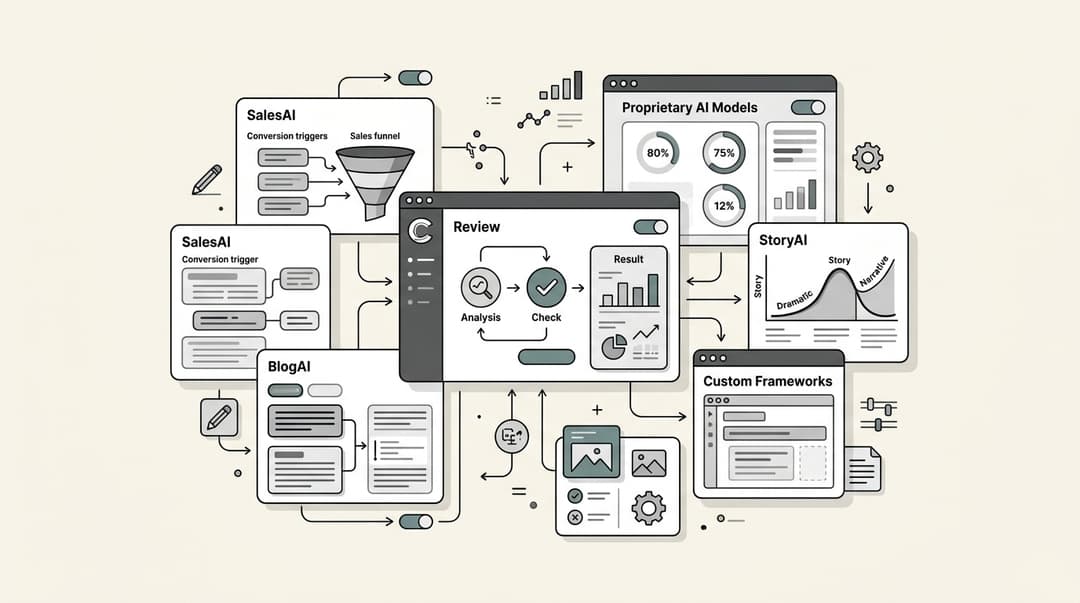
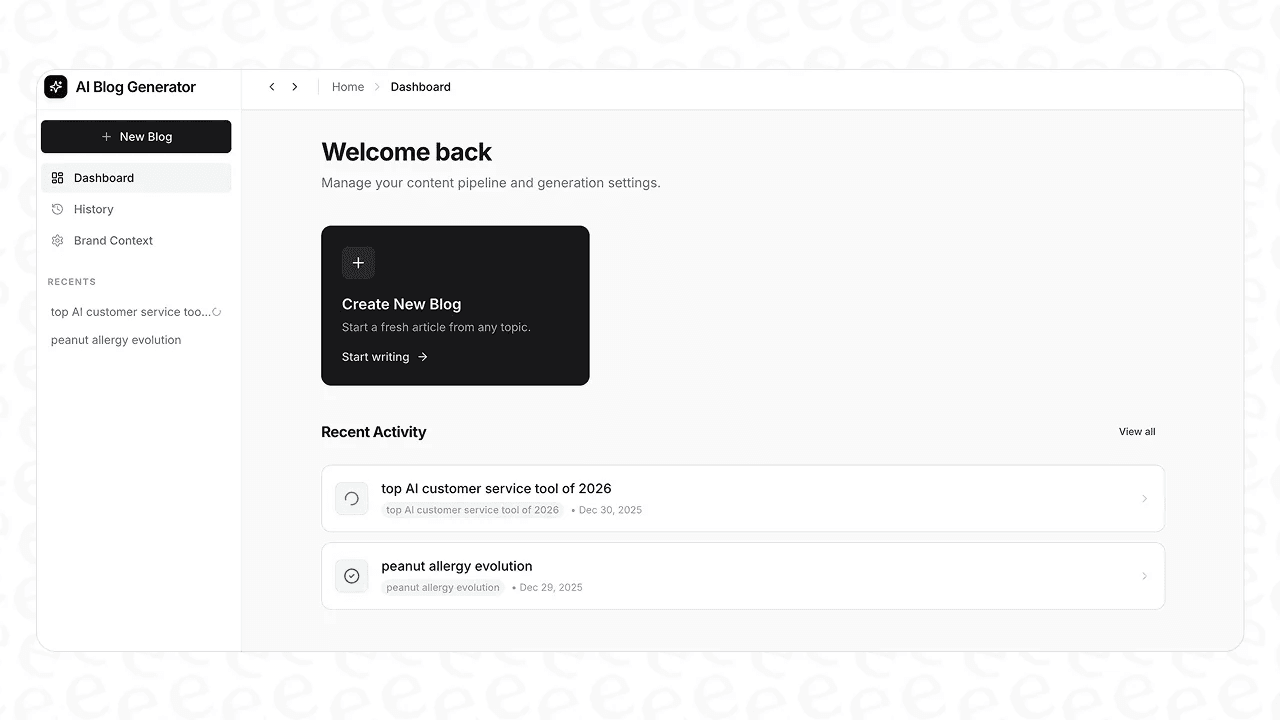
This is where a single solution like the eesel AI blog writer comes into play. It’s designed to close the gap between the strategic and creative parts of making content. Instead of using separate tools for each step, you can handle the entire process in one place.
You start with a keyword (the Semrush part), and it generates a complete, SEO-optimized draft (the writing and editing parts). But it also automatically includes assets like AI-generated images, tables, charts, and even relevant quotes from Reddit to add more depth. It handles research, writing, and optimization.
Pricing breakdown
Your budget is always a major factor. Grammarly and Semrush are priced for completely different needs, and their costs show it.
Grammarly pricing plans
Grammarly is pretty easy to get into, with a solid free plan and affordable premium options.
- Free: Gives you the basics, like checks for grammar, spelling, and punctuation. It’s perfect for everyday use.
- Premium: Unlocks all the advanced features. This includes suggestions for clarity, tone adjustments, a plagiarism detector, and more. It usually costs around $12 per month if you pay annually.
- Business: Has everything in Premium, plus team features like centralized billing, style guides for brand consistency, and analytics. This plan typically starts at $15 per user per month.
Semrush pricing plans
Semrush is a serious investment, which makes sense for a professional-grade SEO and marketing platform.
- Pro: This is the entry-level plan for freelancers and startups. It gives you access to the core tools but with limits on projects and reports. It starts at around $129.95 per month.
- Guru: Made for small to medium-sized businesses and marketing agencies, this plan offers more features, higher limits, and access to historical data and content marketing tools. It usually costs around $249.95 per month.
- Business: This is the top-tier plan for large agencies and enterprises that need everything with the highest possible limits. It costs about $499.95 per month.
Which tool offers better value?
This isn't an easy comparison, because "value" completely depends on what you're trying to do. If your main goal is to improve your writing quality, Grammarly offers amazing value for a low price. If your goal is to run a full SEO strategy and drive organic traffic, Semrush is a necessary expense.
But it's worth thinking about the total cost of a typical tool stack. You might pay for Semrush for research, an AI writer for drafting, and Grammarly for editing. Those costs can pile up fast.
This is where a bundled solution can offer a lot more value. The eesel AI blog writer's pricing model of $99 for 50 blogs presents an alternative. It combines the most important functions of SEO research, quality writing, optimization, and asset creation into a single, predictable plan, which could save you hundreds of dollars a month.
Grammarly or Semrush: Which one do you need?
For most content teams, this isn't an "either/or" decision. Grammarly and Semrush are complementary tools that handle different, but equally important, parts of the content creation process. You can’t really pick one and ignore the other.
Think of it this way: Grammarly is for perfecting your words. Semrush is for perfecting your strategy.
You need a solid strategy to make sure your content reaches the right people, and you need well-written words to make an impact when it does. The decision depends on whether a workflow using specialized, separate tools is preferable to an integrated platform for creating content at scale in 2026.
For a deeper dive into how these tools can be used together, check out this video which explains how to boost your SEO strategy by combining the strengths of both platforms.
An integrated approach to content creation with eesel AI
Instead of managing multiple subscriptions and applications, an integrated platform can bring the entire content workflow into one place. With the eesel AI blog writer, you can go from a single keyword to a fully researched, well-written, and SEO-optimized article in minutes. It also includes details that add value to a post, like images, internal links, and social proof from real forum discussions.
This is the exact tool we used to scale our own blog from 700 to 750,000 daily impressions in just three months by publishing over 1,000 optimized posts. It streamlines the process, allowing teams to focus more on strategy and less on the manual steps of content creation.
There's no reason not to see the quality for yourself. Try it out and generate your first blog post for free.

Frequently Asked Questions
Share this article

Article by
Stevia Putri
Stevia Putri is a marketing generalist at eesel AI, where she helps turn powerful AI tools into stories that resonate. She’s driven by curiosity, clarity, and the human side of technology.