GEO vs SEO: Navigating the new era of search

Kenneth Pangan

Katelin Teen
Last edited January 27, 2026
Expert Verified

Let's be honest, the way we find information online has been completely turned on its head. It’s not a slow change anymore; it’s a massive shift. A recent Bain & Company study revealed that 80% of us are now using AI summaries for at least 40% of our searches. We're not just scanning a list of blue links anymore. We want direct answers, and we want them fast.
This is where the big conversation around GEO vs SEO is heating up. We’re moving from the familiar world of Search Engine Optimization (SEO) to the new frontier of Generative Engine Optimization (GEO). My goal here is to cut through the noise, explain what really separates the two, and show you why you don't have to pick a side. In fact, you shouldn't. A winning content strategy in 2026 needs to play both fields.
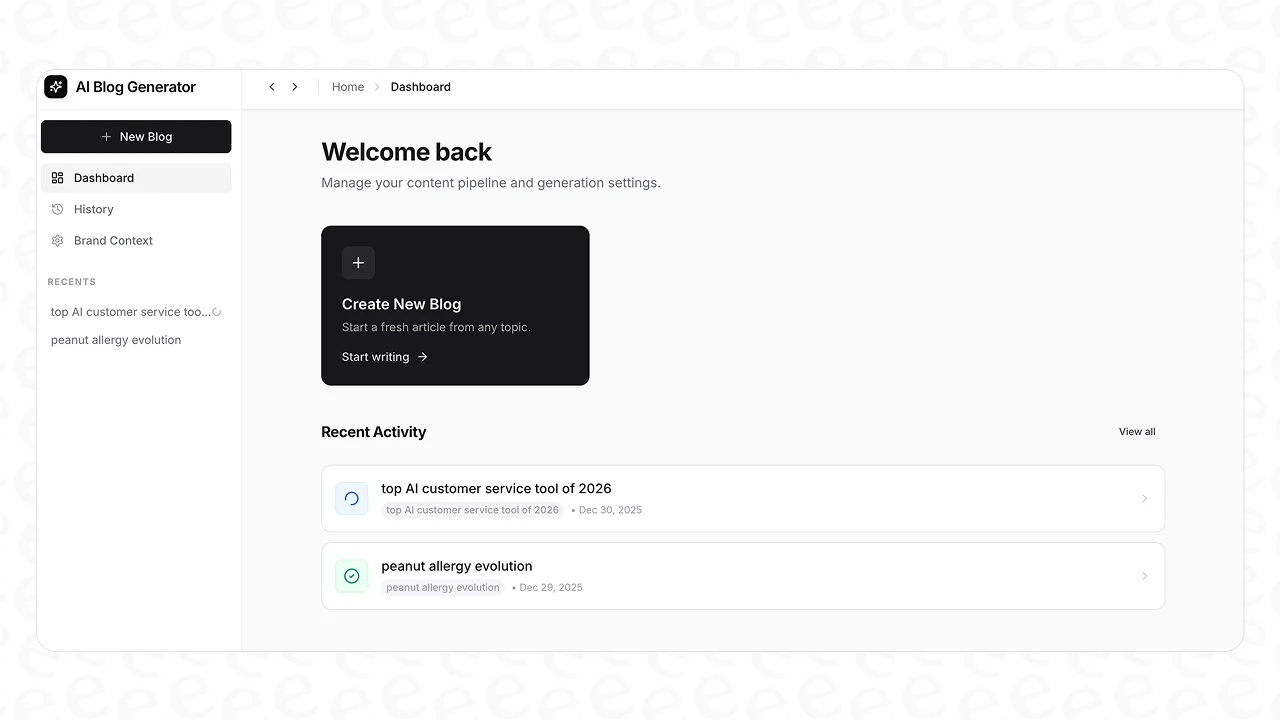
It's a new challenge, no doubt, but it also brings new tools. We built the eesel AI blog writer for this exact moment: to help create content that performs just as well in an AI-generated answer as it does at the top of a Google search page.
GEO vs SEO: What's the difference?
At first glance, SEO and GEO seem to be chasing the same goal: getting your content seen. But the "where" and "how" are worlds apart. Think of it this way: SEO is like winning a race to get the top spot on a podium where everyone can see you. GEO is about being quoted directly by the announcer as the expert. Both give you visibility, but the path to get there is completely different.
What is SEO?
SEO is the original playbook. It’s the entire process of tweaking your website and content to rank as high as possible on search engines like Google and Bing. For years, the name of the game has been figuring out what these search engines value.
This usually means focusing on things like:
- Keywords: Finding the terms people are actually typing into the search bar.
- Backlinks: Getting other reputable sites to link back to yours, giving you a vote of confidence.
- Technical Health: Making sure your site is fast, mobile-friendly, and easy for Google's bots to crawl.
- User Experience: Creating a site that people find easy and enjoyable to use.
Success in SEO is measured by metrics we all know: organic traffic, keyword rankings, and click-through rates (CTR). The main goal is to get someone to click your link on the search results page and land on your site.
What is GEO?
GEO is the new player, born from the explosion of AI. It’s the practice of optimizing your content to be the primary source for AI "answer engines" like ChatGPT, Perplexity, and Google's AI Overviews. Instead of trying to rank in a list, you’re aiming to become part of the answer itself.
The mechanics here are different. GEO is all about:
- Conversational Language: Writing content that answers questions directly and naturally.
- Structured Data: Organizing your content with clear headings, lists, and FAQs that an AI can easily digest.
- Contextual Relevance: Going deep on a topic to demonstrate a true understanding of it.
- E-E-A-T: Proving your Experience, Expertise, Authoritativeness, and Trustworthiness.
With GEO, the success metrics change. You're looking at how many times your brand is cited in AI answers, direct brand mentions, and your overall "mention share" in AI-generated responses.
Key differences between GEO and SEO
When you dig a little deeper, the differences between these two really stand out. Understanding these distinctions is crucial for building a content strategy that can thrive no matter where people are looking for answers.
Target platforms and result types
This is the most obvious difference. SEO is built for traditional search engines. You type in a query and get a SERP (Search Engine Results Page), which is just a ranked list of links. The whole point is to convince a user to click your link instead of the nine others on the page.
GEO, however, targets AI answer engines. These platforms don't give you a list of options; they give you a single, synthesized answer. They pull information from multiple sources and stitch it together into a cohesive summary. This often leads to "zero-click satisfaction," where the user gets what they need without ever visiting a website. This isn't just a hypothetical, either. Gartner predicts a 25% drop in traffic by 2026 because of this very shift.
Content focus and structure
With SEO, content has always been built around a primary keyword. We've obsessed over keyword density, meta tags, and alt text to signal to Google what our page is about. The structure is important, but it's often secondary to the keyword.
GEO requires a different mindset. The content needs to be structured for pure clarity and comprehension, not just for a keyword. It favors a conversational tone and direct answers. Think about how you’d explain something to a friend. That’s how you should write for GEO. This means using clear headings that ask questions, providing short and sweet answers, and using FAQs. These are all things that Retrieval-Augmented Generation (RAG) systems, the tech behind many answer engines, absolutely love because it makes information easy to grab and repurpose.
Here’s a simple breakdown:
| Feature | SEO (Search Engine Optimization) | GEO (Generative Engine Optimization) |
|---|---|---|
| Primary Goal | Rank high in a list of links to earn clicks. | Be cited directly in a single, AI-generated answer. |
| Target Platform | Traditional engines (Google, Bing). | AI answer engines (ChatGPT, Perplexity, Google AI Overviews). |
| Result Format | A ranked list of links (SERP). | A synthesized summary or conversational response. |
| Key Signals | Backlinks, keywords, domain authority. | Content clarity, E-E-A-T, structured data, contextual relevance. |
| Success Metric | Organic traffic, rankings, click-through rate. | Brand mentions, citations, share of voice in AI answers. |
Traffic generation and metrics
How you get traffic is also a whole different ballgame. SEO is a direct traffic driver. You rank, people click, they land on your website. The path is straightforward and easy to track with tools like Google Analytics.
GEO plays a longer, more subtle game. Being cited in an AI answer generates huge brand visibility and authority, but it often doesn't lead to a direct click. A user might see your name, trust your brand more because an AI cited you, and then search for you directly later on. The measurement shifts from clicks and sessions to things like brand impressions, citations, and referral traffic from source links within an AI answer. It’s less about immediate traffic and more about building long-term authority and brand recall.
Why SEO fundamentals still matter
Okay, with all this talk about a new era, you might be tempted to throw your SEO playbook out the window. Not so fast. The truth is, GEO isn't replacing SEO. It's building right on top of it. A strong SEO foundation is basically a prerequisite for GEO success, because both strategies are designed to reward quality, authority, and a great user experience.
Here’s why your SEO efforts are more important than ever:
- Content Quality and E-E-A-T: This is the big one. Both Google's traditional algorithm and new AI models are designed to surface high-quality, expert-driven content. AI models are trained on the web, and they learn to trust sources that are already seen as authoritative. If your content is well-researched, shows real expertise, and ranks well in traditional search, it sends a powerful signal to AI engines that you're a trustworthy source worth quoting.
- User Intent: At the end of the day, both disciplines are obsessed with the same thing: giving people what they want. Whether someone is typing into a search bar or a chat prompt, they have a question that needs an answer. Content that does this well, thoroughly, and clearly is going to win, full stop. A well-optimized SEO article that nails user intent is already halfway to being great GEO content.
- Technical Health: A website that is slow, buggy, or not mobile-friendly is a headache for users and search crawlers. The same goes for the bots that AI engines use to pull information. A technically sound website makes it easy for everyone to find and understand your content, giving you an edge in both arenas.
- Structured Data: This is the technical bridge connecting SEO and GEO. Schema markup and other forms of structured data have been used in SEO for years to help Google understand content for things like rich snippets. This same structure is invaluable for AI models, as it gives them a clear, organized blueprint of your information, making it much easier for them to pull accurate data for their answers.
Creating a unified GEO and SEO strategy
So, the big question isn't "GEO vs SEO?" but "How do I do both without doubling my workload?" The answer is to create a unified content workflow with a tool that was built for this new, hybrid world of search.
This is exactly why we developed the eesel AI blog writer. It's designed to take you from a single keyword to a complete, publish-ready blog post that’s already optimized for both traditional search engines and AI answer engines.
Structure content for direct answers
To get picked up by an AI, your content needs to be incredibly clear. That means concise paragraphs that get straight to the point, clear headings, and dedicated FAQ sections that answer common follow-up questions. This is a core part of Answer Engine Optimization (AEO). The eesel AI blog writer handles this automatically. It generates content that's logically structured with headings, lists, and FAQs, making it incredibly simple for an AI to find and pull a specific snippet to use in an answer.
Integrate social proof
AI models don't just scan corporate websites; they look at forums like Reddit and Quora to understand what real people are saying. This adds a layer of authenticity to their answers. We built this insight directly into our tool. The eesel AI blog writer can also find and embed relevant Reddit quotes directly into your blog posts. This adds that crucial layer of social proof and real-world context that both human readers and AI models value.

Automate AEO
AEO is the practical side of GEO. It’s the specific tactics you use to get your content featured in direct answers. This involves deep research, citing sources, and structuring content in a way that's easy for machines to digest. The eesel AI blog writer is optimized for AEO from the start. Its context-aware research goes beyond shallow, generic filler to create content that is genuinely deep and citable. We know it works because we use it ourselves. This is the exact tool that took our own blog from 700 to 750,000 impressions per day in just three months.
Stop thinking GEO vs SEO, start thinking 'search everywhere'
The debate over GEO vs SEO is asking the wrong question. One isn't replacing the other. Instead, they are becoming two sides of the same coin, both essential for a modern search strategy. Success in 2026 and beyond will depend on your ability to create content that meets users wherever they are searching—whether that’s a traditional list of links or a direct answer from an AI.
An integrated strategy isn't a "nice-to-have" anymore; it's a necessity for staying visible. You need a content engine that understands the nuances of both SEO and GEO and can produce content that consistently performs in both arenas.
For a deeper dive into the practical differences and how they affect content creators, this video offers a clear and concise breakdown:
A video from Nathan Gotch breaking down the key differences in the GEO vs SEO debate for modern content strategy.
The search landscape is changing faster than ever. To keep up, you need the right tools.
Try the eesel AI blog writer and generate your first post optimized for the new era of search.
Frequently Asked Questions

Share this post
Article by
Kenneth Pangan
Writer and marketer for over ten years, Kenneth Pangan splits his time between history, politics, and art with plenty of interruptions from his dogs demanding attention.