Generative AI vs intent based chatbot: Key differences in 2026
Stevia Putri
Last edited March 24, 2026
The chatbot landscape has evolved dramatically over the past decade. What started as rigid, button-based systems that could barely handle a simple password reset has transformed into sophisticated AI that can hold natural, context-aware conversations. But with this evolution comes confusion. If you're evaluating AI solutions for customer support, you've probably encountered two main approaches: intent-based chatbots and generative AI chatbots.
Understanding the difference between these technologies isn't just academic. It directly impacts your automation rates, customer satisfaction scores, and operational costs. Choose the wrong approach, and you might end up with a bot that frustrates customers instead of helping them. Choose wisely, and you can resolve 60-80% of inquiries without human intervention.
Let's break down how each technology works, when to use them, and why the smartest implementations are increasingly combining both approaches. We'll also look at how eesel AI bridges these technologies as an AI teammate that learns your business and levels up from guided assistance to autonomous resolution.
What is an intent-based chatbot?
An intent-based chatbot uses Natural Language Understanding (NLU) to classify what a user is trying to accomplish, then retrieves a pre-written response from a structured database. Think of it as a sophisticated matching system: the bot analyzes the user's message, determines which predefined category (intent) it fits into, and serves up the corresponding answer.
Here's how the process actually works. When a customer types "I need to reset my password," the bot's NLU engine identifies the intent as password_reset. It might also extract entities like the user's account type or email domain. Then it pulls the appropriate response from its knowledge base: "I can help you reset your password. Please click this link to receive a reset email."
The key characteristics of intent-based systems include deterministic responses (the same input always produces the same output), explicit training requirements for each intent, and operation strictly within predefined scenarios. These bots excel at simple, predictable tasks like order tracking, appointment scheduling, and FAQ responses. They're particularly valuable in highly regulated industries where exact wording matters for compliance.
However, intent-based chatbots have clear limitations. When customers phrase questions in unexpected ways or ask about topics outside the training data, these bots typically fail or fall back to generic "I don't understand" responses. Every new scenario requires manual training and script updates, which creates ongoing maintenance overhead.
What is a generative AI chatbot?
A generative AI chatbot takes a fundamentally different approach. Instead of retrieving pre-written responses, it generates novel, context-aware answers using Large Language Models (LLMs) like GPT-4 or Claude. These models have been trained on vast amounts of text data and can produce human-like responses tailored to the specific conversation.
The technology behind generative AI relies on transformer architectures with attention mechanisms. When a customer asks a question, the model doesn't look up a predefined answer. It analyzes the query, considers the conversation history, and generates a unique response by predicting what words should come next based on patterns learned during training.
This approach offers significant advantages. Generative AI can handle questions it has never seen before, maintain context across multiple conversation turns, and adapt its tone based on the situation. If a customer expresses frustration, the bot can respond with empathy. If they need technical details, it can shift to a more precise mode.
Generative AI shines in situations with complex, varied inquiries where maintaining natural conversation flow matters. It's excellent for content creation, summarization tasks, and handling edge cases that weren't explicitly programmed. However, this flexibility comes with trade-offs. Generative AI can "hallucinate" (confidently present false information), requires more computational resources (increasing per-query costs), and needs careful guardrails to ensure responses stay on-brand and accurate.

Generative AI vs intent based chatbot: A head-to-head comparison
Let's look at how these technologies stack up across the dimensions that matter for business decisions.
| Feature | Intent-Based Chatbot | Generative AI Chatbot |
|---|---|---|
| Response mechanism | Retrieves pre-written responses | Generates novel responses dynamically |
| Language understanding | Intent classification and keyword matching | Deep semantic comprehension |
| Novel queries | Fails or shows fallback message | Reasons through new situations |
| Context memory | Limited, often loses conversation thread | Full conversation history awareness |
| Setup requirements | Extensive intent training and flow design | Knowledge base + minimal configuration |
| Maintenance | Constant updates for new intents/scenarios | Update knowledge base only |
| Automation rate | 20-40% typical | 60-80% achievable |
| Cost per query | Lower (simple computation) | Higher (LLM inference) |
| Hallucination risk | None (deterministic) | Possible without proper guardrails |
| Response time | Faster (database lookup) | Slightly slower (generation required) |
When should you choose intent-based? Go this route when you need 100% predictable responses, operate in highly regulated environments requiring exact wording, have tight budget constraints, or handle simple, repetitive queries at high volume. Traditional chatbots work fine for password resets, order status lookups, and basic routing.
When does generative AI make sense? Choose this approach when your support queries are varied and complex, you want high automation rates above 60%, natural conversation experience is a priority, or you need to actually resolve issues rather than just deflect them. Generative AI excels at handling nuanced customer complaints, providing detailed product explanations, and adapting to unexpected questions.
The evolution: Why this isn't an either/or choice
Here's the short version: the most effective modern implementations aren't choosing between these approaches. They're combining them.
Chatbot technology has evolved through three distinct generations. Rule-based systems (2010-2016) used simple if/then logic and achieved 10-15% automation. Intent-based NLP chatbots (2016-2022) introduced machine learning for intent classification, pushing automation to 25-40%. Today's generative AI systems (2023-present) can achieve 60-80% automation by actually understanding and responding to context.
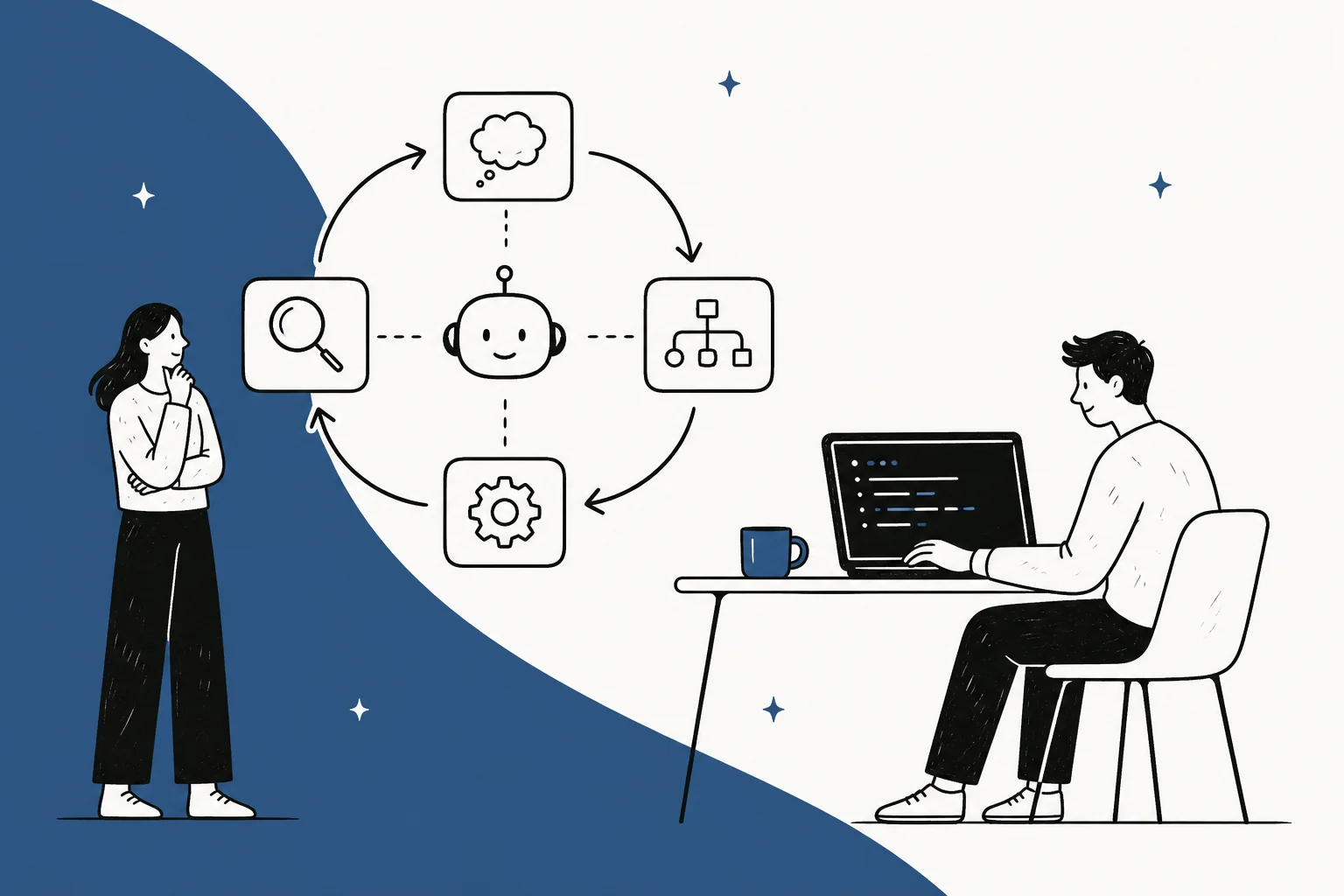
But the real innovation happening now is hybrid architecture. Modern systems use intent detection for routing and action triggers (the reliable part) while employing generative AI for natural response creation (the flexible part). Knowledge base grounding through Retrieval-Augmented Generation (RAG) ensures responses stay factual by grounding the AI's outputs in verified company documentation.
This hybrid approach delivers the best of both worlds. You get the reliability and predictability of intent-based systems where you need them, combined with the natural conversation capabilities of generative AI. The bot can handle complex queries while still following exact protocols for sensitive actions like processing refunds or handling compliance-related requests.
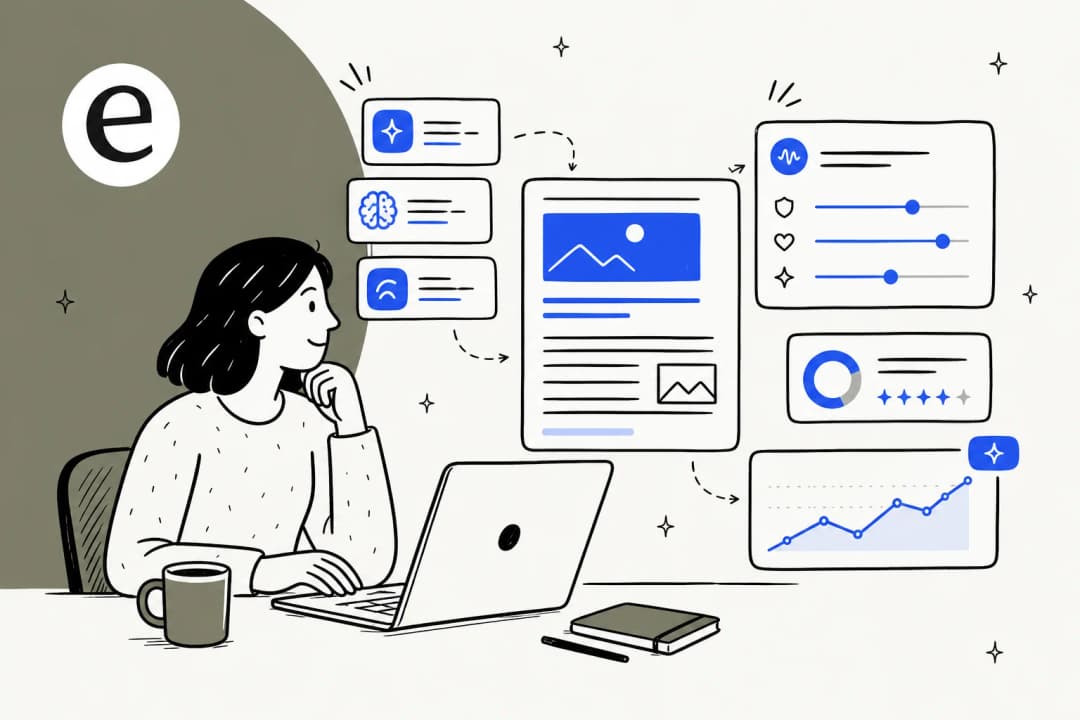
This is where eesel AI fits in. Rather than forcing you to choose between approaches, we function as an AI teammate that combines intent detection with generative responses. You connect eesel to your help desk, and it learns from your past tickets, help center articles, and macros. It starts by drafting replies for your team to review, then levels up to autonomous responses as it proves itself. You control the scope in plain English: "Always escalate billing disputes to a human" or "For VIP customers, CC the account manager."
Choosing the right approach for your business
Making the right choice depends on several factors specific to your situation.
Query complexity and variety matter enormously. If 80% of your tickets are the same five questions, an intent-based system might suffice. If every conversation is different, generative AI becomes essential.
Your target automation rate should guide your decision. Intent-based systems typically cap out around 40% automation. If you need to resolve the majority of inquiries without human involvement, generative AI or hybrid approaches are necessary.
Compliance requirements can dictate your approach. Industries like healthcare and finance often need exact wording for certain responses, making intent-based systems attractive for those specific scenarios while using generative AI for general inquiries.
Budget considerations include both upfront costs and per-query expenses. Intent-based systems are cheaper to run but require more maintenance labor. Generative AI has higher inference costs but lower ongoing training overhead.
Technical resources available on your team also factor in. Intent-based systems require ongoing intent training and flow management. Generative AI needs careful prompt engineering and guardrail setup.
Here's a practical framework:
- Choose intent-based when: You have simple FAQs, strict compliance requirements, tight budgets, and predictable query patterns
- Choose generative AI when: You have complex support needs, high CSAT priorities, varied queries, and want to resolve rather than deflect
- Choose hybrid when: You want high automation with controlled reliability, need to handle both routine and complex scenarios, and value natural conversation within guardrails
Implementation considerations extend beyond the technology choice itself. Data requirements differ significantly. Intent-based systems need carefully labeled training examples for each intent. Generative AI needs comprehensive knowledge bases and example conversations. Integration needs vary too. Both approaches need to connect to your existing help desk, CRM, and potentially order management systems.
This is why our approach at eesel AI emphasizes starting with guidance and leveling up based on performance. You don't have to make a final architecture decision on day one. Begin with eesel drafting replies for review, expand to handling specific ticket types, and eventually let it manage full frontline support. You see how it performs on your actual tickets before it ever touches a real customer conversation.

Getting started with AI-powered customer support
The key takeaway? This isn't about picking sides in a generative AI vs intent based chatbot debate. The future is hybrid, combining the reliability of intent detection with the flexibility of generative responses.
Intent-based chatbots aren't dead. They've evolved and found their place in hybrid architectures where they handle the structured, deterministic parts of conversations. Generative AI isn't a magic solution that replaces everything that came before. It needs guardrails, grounding, and careful implementation to deliver on its promise.
What matters is matching the right technology to your specific use cases. Most organizations benefit from a system that can handle routine queries predictably while still managing complex, nuanced conversations naturally.
If you're evaluating AI for your support team, consider an approach that lets you start carefully and expand based on results. Our teammate model at eesel AI means you don't configure a tool. You hire an AI teammate that learns your business in minutes, starts with the oversight you choose, and levels up based on actual performance. You can simulate on thousands of past tickets before going live, define escalation rules in plain English, and continuously improve through corrections and feedback.
The question isn't which technology wins. It's how you combine them to deliver better customer experiences at scale. Ready to see how an AI teammate could work for your support operation? Try eesel free or book a demo to see it in action on your own tickets.
Frequently Asked Questions
Share this article

Article by
Stevia Putri
Stevia Putri is a marketing generalist at eesel AI, where she helps turn powerful AI tools into stories that resonate. She’s driven by curiosity, clarity, and the human side of technology.