

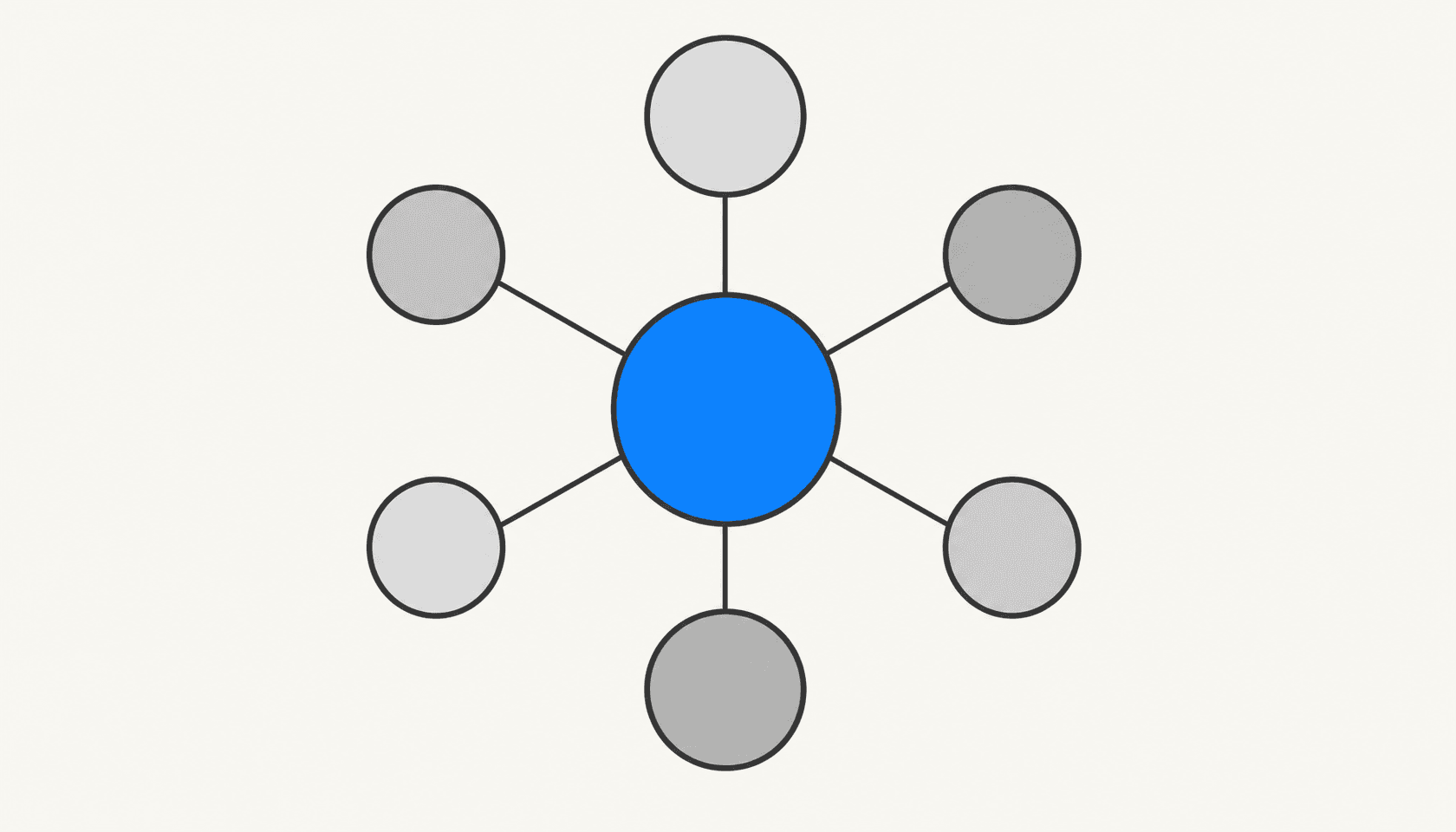
Topic clusters are one of the cleaner ideas in modern SEO. Instead of 40 disconnected blog posts each chasing a different keyword, you build a pillar page on a broad topic and a ring of shorter articles around it - each one covering a subtopic and linking back to the center. Search engines read that structure as topical authority. Your site doesn't just rank for one term; it ranks across an entire subject.
If you're new to the concept, the eesel guide to building content clusters and pillar pages covers the fundamentals well. For teams thinking about the broader framework, how to build search-driven content strategies is a practical starting point.
The problem is finding the clusters. Doing it by hand means scanning SERPs, grouping related queries, and guessing at which subtopics are worth covering. AI tools short-circuit that process - put in a seed keyword, get back a structured map of pillar and cluster topics in seconds.
There are now quite a few of them, and several offer meaningful free access. This post covers six that are actually worth your time, based on what their free tier gets you, where their keyword data comes from, and what kind of team each one fits.
What to look for in a topic cluster generator
Before the list, a few things worth checking for any tool you're considering:
Where does the data come from? Tools that scrape live SERPs produce clusters that reflect actual search behavior. Tools that rely purely on language models produce clusters that are plausible but not grounded in what Google is actually rewarding.
Can you save and export? A cluster you can't export is basically useless for planning. Some free tools are genuinely no-frills - generate, copy, done. Others save projects and produce CSVs with volume data attached.
Does the free tier have a meaningful limit? "Free" sometimes means one cluster before a paywall. It's worth knowing upfront whether you're getting a genuine taste or just a teaser.
1. SEO.ai free topic cluster tool

SEO.ai's topic cluster tool is the most friction-free option on this list. No account, no credit card, no daily cap. Paste a seed keyword, click generate, and the tool returns a structured cluster map in a few seconds.
Under the hood, it uses GPT-4 to classify search intent and group keyword variations that share similar SERP results. The output is color-coded into primary, secondary, and tertiary subclusters, which makes it easy to skim even on larger topics. Results can be copied directly or exported as a CSV.
The main limitation is that nothing is saved. Close the tab and the clusters are gone. There's also no volume data on the free tool - you see the cluster structure but not how much traffic each subtopic might attract. If you're in the ideation phase and just need to map out a content area before committing to research, that's fine. If you need to prioritize which clusters to tackle first based on opportunity, you'll want a tool with keyword data attached.
SEO.ai's paid plans start at $49/month and unlock long-form AI writing alongside clustering, but that's entirely optional if you only want the cluster output.
Free tier: Unlimited queries, no login, CSV export available. No saved projects, no keyword volume.
Best for: Fast ideation, validating a content strategy sketch, and anyone who needs clusters without creating another account.
2. Frase topic research and clustering
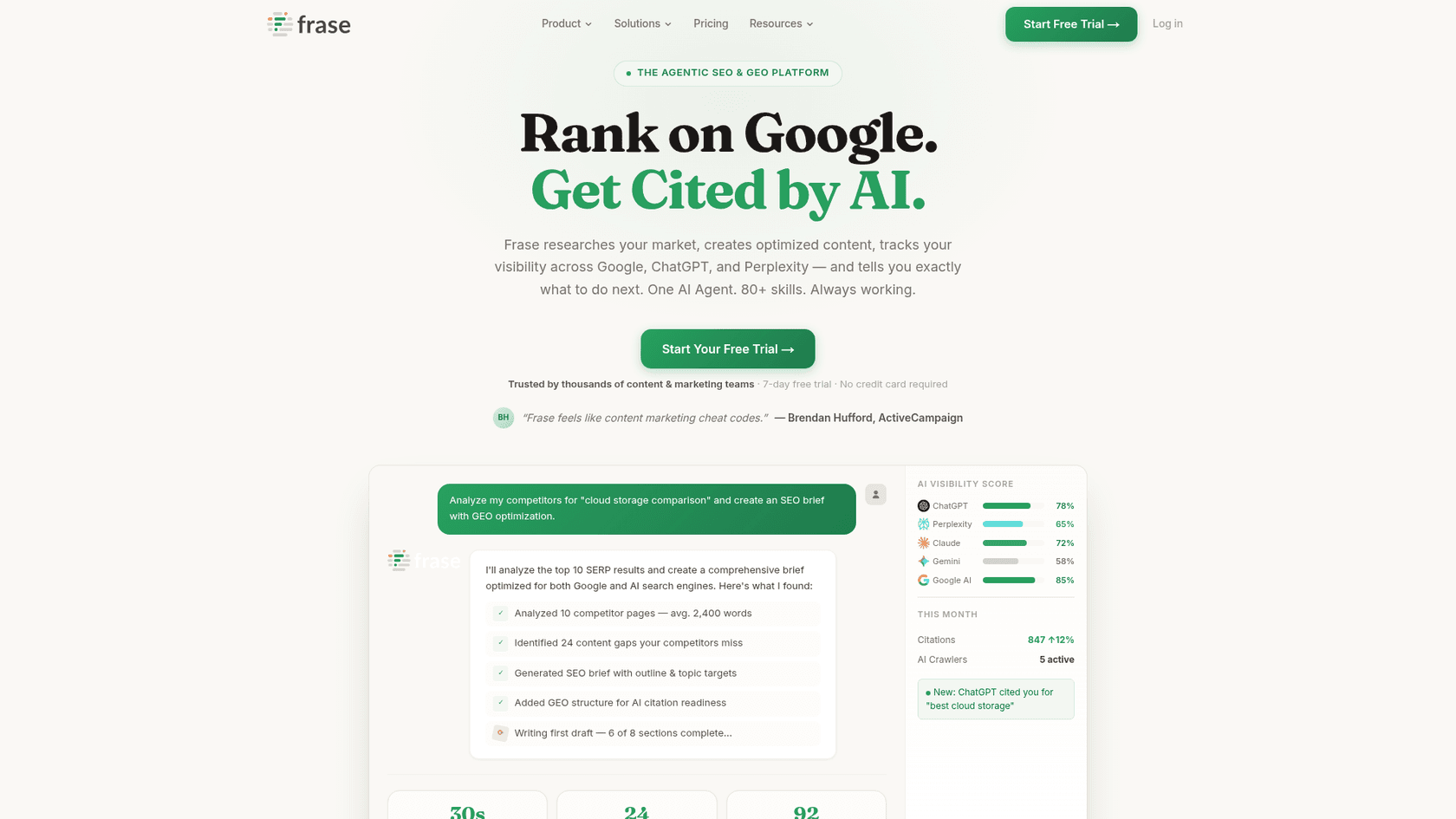
Frase approaches topic clustering differently. Instead of generating clusters from a language model alone, it crawls the actual SERP for your keyword and extracts header structures from the top 20 ranking pages. The resulting map shows which subtopics appear in 80% or more of top results - the near-mandatory angles - alongside optional subtopics where you might differentiate.
For example, search "email marketing tools" in Frase and it shows that 15 of the top 20 pages include headers on automation, integrations, and reporting, but only 5 mention ROI measurement. That distinction is genuinely useful for writing a pillar page that beats what's already ranking.
The clustering sits inside Frase's broader research suite. You also get competitor content scoring, "People Also Ask" questions pulled from Google, and an AI agent with 80+ writing skills. The platform recently repositioned as an "Agentic SEO & GEO Platform" under its parent company Copyrytr, adding Generative Engine Optimization features for brands that want citations from ChatGPT and Perplexity.
One honest note: community feedback on G2 and Capterra consistently describes a 20-60 minute editing pass needed before AI drafts are ready. The research tools are the standout strength; the writing output is more of a starting point.
The Starter plan at $49/month includes 10 articles, 50 audit pages, and a 7-day free trial with no credit card required.
Pricing:
Free tier: 7-day trial, full access, no credit card. Annual billing saves 20%.
Best for: Teams that want SERP-grounded cluster research rather than AI-guessed topics, and who will use the content brief workflow alongside the clustering.
3. Surfer SEO Topical Map
Surfer SEO's Topical Map is the most visually polished tool on this list. Topics are displayed in a hexagonal map structure that shows your current content coverage, gaps, and competitor territory at a glance. Connect Google Search Console and the tool overlays your existing content on the map, so you can see which clusters you're already building versus where you have nothing.
The "Discover" tab finds relevant topic ideas your audience searches for. The "Visualize" tab maps competitor coverage. The "Fill Gaps" panel generates article briefs directly from gap topics - so the workflow goes from cluster discovery to brief generation in one tool. The content editor sits downstream, pre-loaded with NLP keywords and word-count targets based on the cluster's competitive landscape.
Surfer puts the Topical Map in its Pro plan at $182/month and above (annual billing). The lower Discovery plan at $49/month and Standard at $99/month don't include it. The map auto-refreshes every 14 days. Surfer serves over 150,000 customers across 159 countries, and agencies like Brainy Bees use it specifically for topical cluster work at scale.
"50 SaaS content plans a month? Used to take long hours... Now, Surfer's Topical Map helps me finally catch some Zzz's by doing quite a chunk of research for me"
Pricing:
| Plan | Price (annual) | Topical Map | Brand workspaces | Team seats |
|---|---|---|---|---|
| Discovery | $49/mo | No | 1 | 1 |
| Standard | $99/mo | No | 1 | 3 |
| Pro | $182/mo | Yes | 5 | 5 |
| Peace of Mind | $299/mo | Yes | Unlimited | 10 |
Free tier: No permanent free tier for Topical Map. Free trial available on registration at app.surferseo.com/register.
Best for: Agencies managing multiple sites that want a visual content map with integrated writing workflow. The gap between what you have and what competitors have is clearer here than in any other tool on this list.
4. NeuronWriter
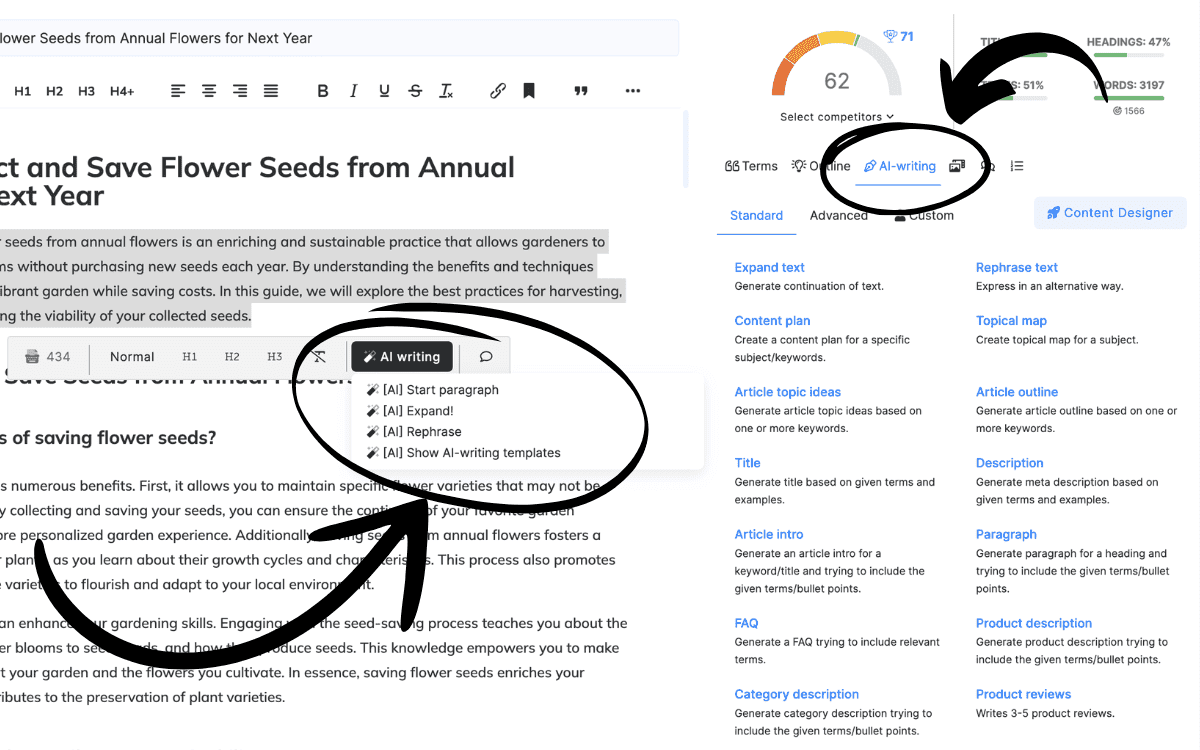
NeuronWriter does two things well: it analyzes the semantic structure of your competitors' top-ranking content, and it translates that analysis into an actionable cluster map. The SERP analysis reads title tags, H1s, and entity data from top-ranking pages, then groups semantically related terms by shared entity - so "Tesla Model 3," "EV charging," and "battery warranty" roll up under "Electric Cars" rather than sitting as three disconnected clusters.
The Bronze plan at $19/month (billed annually) gives you 2 projects, 25 SERP analyses per month, and 15,000 AI credits. That's a genuinely useful amount for a solo writer or small team. NeuronWriter holds a 4.9/5 rating on AppSumo with 799 reviews, and user feedback consistently positions it as a high-quality alternative to Surfer SEO at a fraction of the cost - the company's own comparison claims potential savings of up to $2,424 per year versus Surfer.
One caveat worth knowing: the AI-generated drafts require editing. The NLP analysis and scoring are the tool's strength; the generative writing layer is more of a starting framework than a finished product. Gold plan and above users can bring their own OpenAI or Anthropic key for unlimited generation.
Pricing:
| Plan | Price (annual) | Projects | Analyses/mo | AI credits/mo |
|---|---|---|---|---|
| Bronze | $19/mo | 2 | 25 | 15,000 |
| Silver | $37/mo | 5 | 50 | 30,000 |
| Gold | $57/mo | 10 | 75 | 45,000 |
| Platinum | $77/mo | 25 | 100 | 60,000 |
| Diamond | $97/mo | 50 | 150 | 75,000 |
Free tier: No free tier. Free trial available. Annual billing required for the prices above.
Best for: Bloggers and small agencies who need entity-level SERP analysis without paying Surfer or Clearscope prices. The Bronze plan is the best dollar-for-value entry point on this list for anyone who actually needs keyword data.
5. Scalenut

Scalenut combines classic keyword data with natural language processing to build clusters around a seed term. The browser-based tool asks for a keyword, crawls the top-ranking pages, and groups semantically related phrases into an interactive mind-map. It taps Google's Knowledge Graph alongside its own NLP layer to surface synonyms and related entities - so "EV charging" and "electric car charging" get folded into the same cluster rather than splitting your content unnecessarily.
The Starter plan at $45/month includes 5 articles and 10 clusters per month. A 7-day free trial gives full access. The Plus plan at $89/month steps up to 30 articles and 60 clusters, plus an advanced content audit and on-page optimization tools. Scalenut's Cruise Mode feature generates full article drafts from a cluster in one click - useful for teams that want to go from research to draft without switching tools.
The cluster output includes "People Also Ask" integration and a real-time content grade scored against the top 20 competitors. That competitive grading is what makes Scalenut's clusters feel more actionable than a plain keyword list.
Pricing:
| Plan | Price | Articles/mo | Clusters/mo | Trial |
|---|---|---|---|---|
| Starter | $59/mo | 5 | 5 | 7 days free |
| Plus | $89/mo | 30 | 30 | 7 days free |
| Professional | $199/mo | 75 | 75 | 7 days free |
Free tier: 7-day full trial, no credit card required. Starter plan includes 10 clusters/month ongoing.
Best for: Content teams that want clustering and drafting in one tool. The Cruise Mode workflow from cluster to draft is the key differentiator for teams with writers who want a fast research-to-brief handoff.
6. Answer Socrates keyword clustering

Answer Socrates takes a different angle: it's primarily a question-research tool that added keyword clustering as a natural extension. You upload a keyword list or CSV export from another tool (Ahrefs, Semrush, Google Search Console all work), and it groups the keywords into clusters using machine learning in roughly 10 seconds. Each cluster comes with search volume, CPC, and competition data attached.
The credit model is generous at the entry level. Creating a free account unlocks a batch of cluster credits you can use immediately. The Socrates Lite plan at $15/month gives you 3,000 cluster credits per month alongside 100 keyword searches. The Seneca plan at $29/month steps up to 12,000 credits and 500 keyword searches. Unlimited CSV downloads come with every paid tier.
The workflow is slightly different from the other tools here: Answer Socrates is best used after you've already gathered a keyword list from another source. It's a grouping engine rather than a topic discovery engine. If you're starting from scratch with just a seed keyword, SEO.ai or Frase are more direct. If you're working with an existing keyword export and want to cluster it fast, Answer Socrates handles the job well without the overhead of a full SEO platform subscription.
Pricing:
| Plan | Price | Cluster credits/mo | Keyword searches/mo |
|---|---|---|---|
| Socrates Lite | $15/mo | 3,000 | 100 |
| Seneca | $29/mo | 12,000 | 500 |
| Aurelius | $49/mo | 40,000 | Unlimited |
Free tier: Free account tier available with starter cluster credits included. No credit card required to register.
Best for: Teams with existing keyword lists from Ahrefs, Semrush, or Search Console who want fast grouping with volume data. Also a strong fit for anyone who uses the Answer Socrates question-research tool already.
Side-by-side comparison
| Tool | Free tier | Cluster depth | Keyword data source | Signup required | Best for |
|---|---|---|---|---|---|
| SEO.ai | Unlimited, no account | AI intent + SERP grouping | GPT-4 + SERP intent | No | Zero-friction ideation |
| Frase | 7-day trial | SERP header analysis | Live SERP crawl | Yes | SERP-grounded research |
| Surfer Topical Map | Free trial (Pro plan) | Visual hexagonal map + GSC integration | Live SERP + GSC | Yes | Agency multi-site strategy |
| NeuronWriter | Free trial, $19/mo Bronze | Entity-level NLP + SERP | Google Knowledge Graph + SERP | Yes | Best value with keyword data |
| Scalenut | 7-day trial, 10 clusters/mo Starter | NLP + Knowledge Graph | Google Knowledge Graph + NLP | Yes | Research-to-draft workflow |
| Answer Socrates | Free account + starter credits | Fast CSV-based grouping | Volume, CPC, competition data | Yes | Grouping existing keyword lists |
How topic clusters fit a broader content strategy
Generating a cluster is the research step. What happens next matters more.
Once you have a cluster map, the standard move is to turn each cluster item into a content brief - a title, target keyword, and outline. If you're doing this manually across 20+ clusters, it gets tedious fast. Tools like eesel AI's content strategy generator can take a cluster list and automate the brief-building step, keeping research connected to actual production.
The other thing worth thinking about: cluster quality beats cluster quantity. A new site publishing three well-developed clusters with interconnected internal links will outperform a site with eight thin ones. The internal linking structure - pillar page linking to each cluster article, each cluster article linking back to the pillar - is what signals topical authority to search engines. That structure doesn't build itself; it needs to be planned before you start writing, not patched in afterward.
For a practical workflow walkthrough, the guide to keyword clustering strategy and how to cluster keywords automatically cover the steps from cluster output to editorial calendar in detail.
If you're also thinking about AI SEO content strategy at the broader level - how clustering fits keyword mapping, pillar page architecture, and search-driven planning - those pieces are worth reading alongside whichever tool you choose. And if you're looking at keyword mapping as the next step after clustering, that guide explains how to assign keywords to specific pages and avoid overlap across your content plan. For teams producing the content once clusters are mapped, AI for SEO covers the full workflow from research to optimization at scale.