A practical guide to engaging blog writing that people actually want to read

Stevia Putri
Last edited January 19, 2026
The internet is overflowing with content, a lot of which feels generic, as if it was created just to take up space. The rise of AI-generated content has presented a challenge: while the technology is powerful, it can sometimes produce text that, while grammatically correct, lacks a personal, engaging quality. People discuss this on forums like Reddit, seeking tools that can produce content with more personality.
What is engaging blog writing?
What is meant by "engaging blog writing"? It is more than just stringing together grammatically correct sentences. Engaging content builds a connection. It grabs a reader's attention, holds it, and ideally, inspires them to take action, whether that's leaving a comment, sharing the post, or trying out a product.
- Relatability: The content feels like it was written for a specific reader. It addresses their problems, uses familiar language, and understands their perspective.
- Authority: The content is trustworthy. It is backed by research, data, and real-world experience, showing the writer has expertise on the subject.
- Clarity: The message is crystal clear. It is easy to understand, avoids confusing jargon, and gets to the point.
- Scannability: The format is designed for how people read online, which often involves skimming. Large blocks of text can be difficult for online readers to scan.
Getting these four pillars right isn't just about reader satisfaction. It is an important factor for search engine rankings. Google's helpful content guidelines are all about rewarding content that provides a positive user experience. Engagement is how you turn casual visitors into a loyal audience and a strong signal to search engines that your content is worth showing to more people.
Foundational pre-writing strategies
Great writing doesn't start with a blank page. The real work happens before you type the first word. A solid strategic groundwork is what separates content that hits the mark from content that falls flat.
I've been writing blog posts for the last few years. Over time, I've come up with a good system that actually has a soul and not just pieced together purely for SEO that no one would enjoy reading... Read through 10-20 already written blog posts + additional research outside of the SERPs to deeply understand the topic. Pull out bullet points of the interesting bits... List out my angle so I can remind myself that I’m not just re-iterating stuff from other posts but have a different eye.

Understanding your audience
It's essential to understand your target audience beyond basic demographics. You need to understand their perspective. What are their biggest frustrations? What questions are they actively searching for answers to? What are they trying to achieve?
Go beyond basic demographics and look into their psychographics. Spend time where they do. Browse forums like Reddit, read the comments on competitor blogs, and check out the "People also ask" section in Google search results. This is how you find the real, human intent behind a search query, which lets you create content that truly connects with them.
Finding your unique angle through deep research
Once you know your audience, you need to figure out what you can offer that is different. Looking at the SERPs (Search Engine Result Pages) should not just be about finding keywords. It is about spotting content gaps.
Check out the top-ranking articles for your topic and ask yourself:
- What are they all missing?
- Is there an angle they haven't covered?
- Can I provide a more practical, hands-on perspective?
- Do I have a personal story or a unique piece of data that adds a fresh take?
This is how you provide real value. It is not about being better; it is about being different. This is also how you show the "Experience" factor that Google values in its E-E-A-T guidelines. You're demonstrating that a real person with real insights is behind the content.
Creating a solid outline
Creating an outline is a crucial step. It is the best way to make sure your post has a logical, interesting flow. An outline is your roadmap. It keeps you from rambling, ensures you cover all your key points, and organizes your thoughts into a structure that is easy for the reader to follow.
Think of it this way: a vague idea leads to a messy article. A structured plan leads to a clear, valuable piece of content.
| Before Outline (Vague Idea) | After Outline (Structured Plan) |
|---|---|
| "Monetize a blog" | H2: Introduction: Why blog monetization is achievable H2: 5 proven methods to monetize your blog H2: Common monetization mistakes to avoid H2: Tools to get you started H2: Conclusion: Your next steps |
The core elements of engaging blog writing
With your strategy set, it is time to write. These are the practical, hands-on techniques that will bring your content to life and make it enjoyable to read.
Hooking your readers
You have about three seconds to convince someone to stick around. Your intro is everything. Try to avoid generic definitions and lead-ins. You need a hook that grabs them right away.
Here are three simple but effective techniques:
- Start with a relatable story: "I used to spend hours staring at a blinking cursor, wondering how to start my next blog post..."
- Pose a thought-provoking question: "What if everything you thought you knew about SEO was wrong?"
- Share a surprising statistic: "Did you know that over 90% of online content gets zero traffic from Google?"
Any of these will work much better than a dry, academic opening.
Weaving stories into your writing
Facts tell, but stories sell. Humans are wired for stories. They make abstract ideas concrete, relatable, and memorable. Instead of just giving advice, show it in action.
Use personal experiences, customer success stories, or hypothetical scenarios to illustrate your points. This builds trust and authenticity. Another effective technique is to use real quotes or discussions from social media. It adds a layer of social proof and shows that you are tapped into the real-world conversations happening around your topic.
Developing a human-like writing voice
One of the most effective tips is to write like you talk. Avoid corporate jargon and overly formal language. Imagine you're explaining something to a friend over coffee.
Here's how to do it:
- Use contractions (like you're, it's, and we'll).
- Ask your reader direct questions.
- Keep your sentences and paragraphs short.
- Read your writing out loud. If it sounds clunky or unnatural, rewrite it.
This is a significant differentiator between content people enjoy and the formulaic style sometimes associated with AI-generated text that lacks personality.
When it comes to the actual prose, or the writing itself, I use essentially no AI. I don’t like how AI writes. You can push and tweak endlessly and get it... kind of close? But even after a bunch of adjustments it still isn’t there. I'm a beta reader at times, and the amount of 100% generated 'books' people are trying to publish with just copying and pasting AI is kinda crazy.
Making your content easy to scan
Most people do not read online content word-for-word. They skim. Your job is to make your content as easy to skim as possible so they can quickly find what they need. A large, unbroken block of text can deter readers.
Here are some formatting tips to make your content easy on the eyes:
- Short paragraphs: Stick to 2-3 sentences max. This creates white space and makes the text feel less intimidating.
- Clear headings: Use descriptive H2s and H3s to break up your content and signal what each section is about.
- Lists: Use bullet points and numbered lists to present information in a clear, digestible format.
- Bold text: Use bolding to highlight key takeaways and draw the reader's eye to important points.
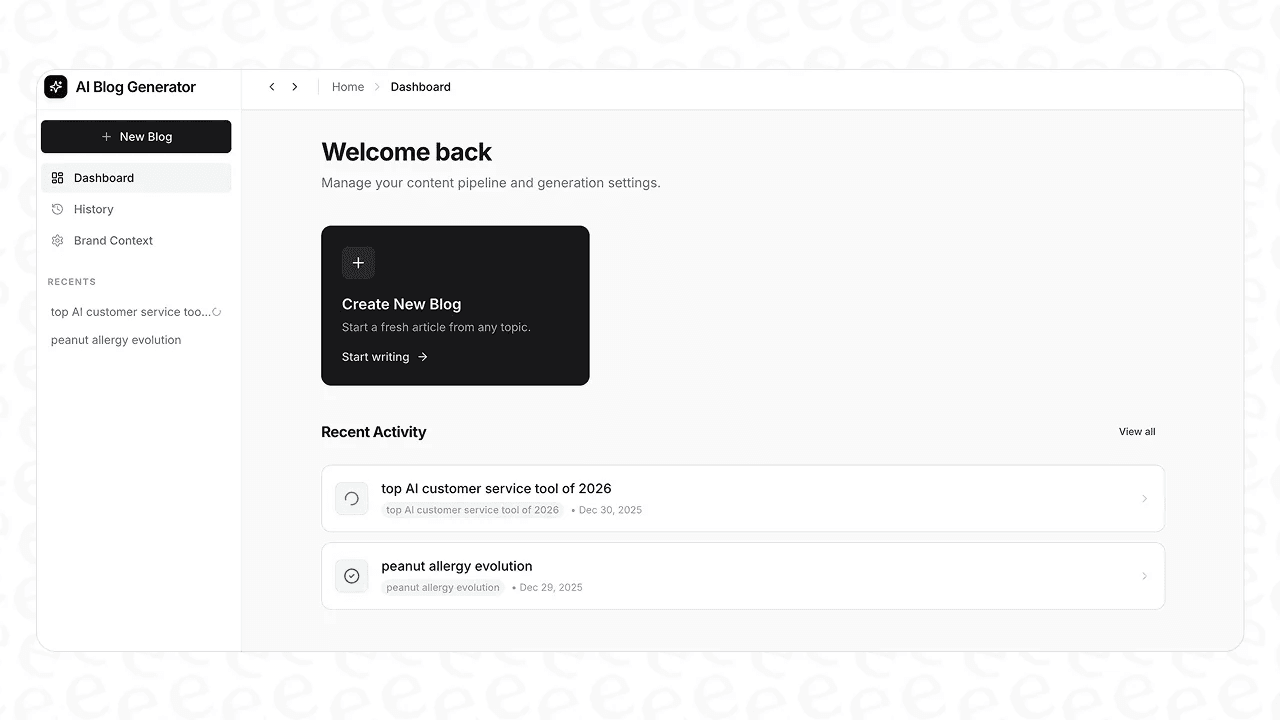
How to scale engaging blog writing with the eesel AI blog writer
We have covered the principles of engaging blog writing. But applying all of this consistently, especially when you need to produce a lot of content, can be challenging. This is where the right technology can make a world of difference.
Here’s how it tackles the main challenges of creating engaging content:
- Deep Research with Citations: It performs deep research on a topic and automatically includes internal and external links. This builds authority right into the draft.
- Genuinely Human Tone: We have spent over a year refining our models to produce a natural, conversational tone that people actually want to read. It is designed to produce a natural, conversational tone that people find readable.
- Complete Asset Generation: Engagement is not just about words. The platform automatically creates and embeds visuals like AI-generated images, custom infographics, and data tables, which improves scannability and makes complex information easier to understand.
- Authentic Social Proof: To make content more relatable and trustworthy, it can find and embed real quotes from Reddit threads and relevant YouTube videos, adding authentic, third-party voices directly into your post.
- Answer Engine Optimization (AEO): The content is not just structured for traditional SEO. It is also optimized to be a primary source for AI answer engines like Google AI Overviews and Perplexity, making sure your content is visible in the next generation of search.
It is about using AI to support your strategy, not replace it, letting you scale up your output without sacrificing quality.
Seeing these principles in action can provide further clarity. For a step-by-step guide on how to apply these techniques, the following video offers practical tips and a visual walkthrough of crafting a blog post that captivates readers from start to finish.
Your next steps to more engaging blog writing
At the end of the day, engaging blog writing is a mix of smart strategy, human-centric writing techniques, and the right technology to pull it all together efficiently. It is about focusing on connection and value above all else. That is what separates memorable content that builds an audience from content that does not resonate with your audience.
You can scale your content efforts efficiently without compromising the human touch that makes content effective.
Ready to create blog posts that your audience will love? Generate your first article free with the eesel AI blog writer and see how you can go from a single keyword to a complete, engaging post in minutes.

Frequently Asked Questions
Share this article

Article by
Stevia Putri
Stevia Putri is a marketing generalist at eesel AI, where she helps turn powerful AI tools into stories that resonate. She’s driven by curiosity, clarity, and the human side of technology.