Can you really do SEO yourself? A complete guide

Stevia Putri

Katelin Teen
Last edited January 27, 2026
If you're running a small business or flying solo as an entrepreneur, you've probably wrestled with this question: should I shell out for an expensive agency or try to do SEO yourself? It's a tough call. Saving a bunch of money sounds great, but then you're on the hook for learning a skill that feels like it changes its rules every other Tuesday.
SEO is definitely a long-term play, and Google's constant algorithm updates don't make it any less daunting. But here's the good news: it's not the impossible climb it once was. New tools, particularly AI content platforms, are making it much more realistic to handle your SEO in-house and actually get somewhere.
So, can you pull it off? For sure. But it pays to know what you're signing up for.
What does it mean to do SEO yourself?
Before we get too far, let's clarify what "doing SEO" really involves. Search Engine Optimization (SEO) is basically everything you do to get your website noticed by people looking for your stuff on Google.
Google follows a three-step process to make sense of the internet: crawling, indexing, and serving results. Your goal is to make your site easy for Google to work with at each step. This usually falls into three main buckets:
- On-Page SEO: This is all about tweaking your individual web pages. It includes things like picking the right keywords, writing quality content that people actually find useful, and creating clear title tags and meta descriptions. It’s how you signal to both search engines and people what your page is about.
- Off-Page SEO: This involves building your site's authority around the web. The biggest part of this is getting backlinks, which are links pointing to your site from other websites. You can think of them as little votes of confidence.
- Technical SEO: This is the behind-the-scenes work that helps search engines crawl and index your site smoothly. It covers things like your site's loading speed, its mobile-friendliness, and its security (using HTTPS).
A good DIY SEO plan has to balance all three. You can't just nail one and hope for the best; it's about making progress on all fronts.
The pros and cons of doing SEO yourself
Going the DIY route has some major upsides, but it also comes with some real headaches. It's not a decision to make on a whim, so let's break it down.
Advantages of doing SEO yourself
- Full control and brand alignment: No one knows your business better than you. When you manage your own SEO, you can be sure that every piece of content and every keyword choice perfectly matches your brand's voice and what your customers need. You don't have to worry about things getting lost in translation with an agency.
- You save a lot of money: This is the big one for most people. SEO agencies can charge thousands a month on retainer. For a small business, that's a serious expense. Doing it yourself converts that cost into an investment of your time.
- You'll learn a ton: Learning SEO is a powerful skill. You'll get a much deeper understanding of your customers, what they're searching for, and how they act online. That knowledge is incredibly valuable and can help other parts of your business, too.
Challenges you'll face
- It takes a huge amount of time: Let's be honest: SEO isn't something you can just knock out in 30 minutes. It requires dedicated hours for research, writing, outreach, and checking your results. Some experts figure you need at least 15 expert hours per month just to see a difference. That's a real commitment.
I've dumped my web and SEO agency to do it myself. Had way, way better results. However it was insanely time consuming. I'd not recommand it if you don't have enough time, resources and above everything else, discipline to keep the flow going.
- There's a steep learning curve and a lot of bad advice out there: The internet is flooded with SEO advice, and a good chunk of it is either wrong or outdated. Following bad tips, like stuffing your pages with keywords or buying spammy backlinks, can get you penalized by Google. That can wreck your rankings and cause more harm than good.
- It's easy to misjudge your own skills: It's common to fall into a couple of mental traps. The Dunning-Kruger effect is a big one, where a little knowledge makes you feel overconfident. One marketer famously admitted they thought they were an "8 out of 10" in SEO expertise after only six months, only to realize later how much more there was to learn. As another user on a Reddit forum pointed out, this kind of bias can make it tough to spot flaws in your own strategy, whether it's picking the wrong keywords or writing content that doesn't connect.

The essential toolkit for DIY SEO
While the work is tough, you don't have to go at it empty-handed. The right tools can make the whole process a lot more manageable, and many of the best ones have free versions to get you started.
| Tool | Primary Use | Why It's Essential for DIY SEO | Cost |
|---|---|---|---|
| Google Search Console | Monitor site performance, indexing status, and keyword rankings. | This is your direct line to Google. It shows you exactly how the search engine sees your site. | Free |
| Google Analytics | Track website traffic, user behavior, and conversion sources. | Gives you the data to see if your SEO work is actually bringing people to your site and keeping them there. | Free |
| AnswerThePublic | Find questions people are asking around your keywords for content ideas. | Helps you create content that solves real problems for users, going beyond just basic keywords. | Freemium |
For checking your site's performance, Google Search Console is a must-have. It's where you can look at the Index Coverage report to see if Google is struggling to read any of your pages and find the exact search terms people are using to find you.
For coming up with content ideas, a tool like AnswerThePublic is a goldmine. Instead of guessing what people want to know, you can see the actual questions they're typing into search bars. This is your key to creating content that's genuinely helpful.
And for creating that content, we need to talk about AI. Writing is easily the most time-intensive part of SEO. You can definitely write everything yourself, but AI content platforms have become a vital part of a modern DIY toolkit. They help you produce more without sacrificing quality.
How to scale high-quality content
So, how do you pump out a steady stream of good, optimized content without it becoming your entire life? That's the big question for anyone handling their own SEO, and it's where AI makes a difference. The point isn't just to write more quickly. It's to create better stuff: content that's well-researched, properly structured, and actually matches what people are looking for.
Using the eesel AI blog writer
This is where a tool like the eesel AI blog writer can be a huge help. It’s designed as a full content platform built to produce articles that are ready to rank from the start.
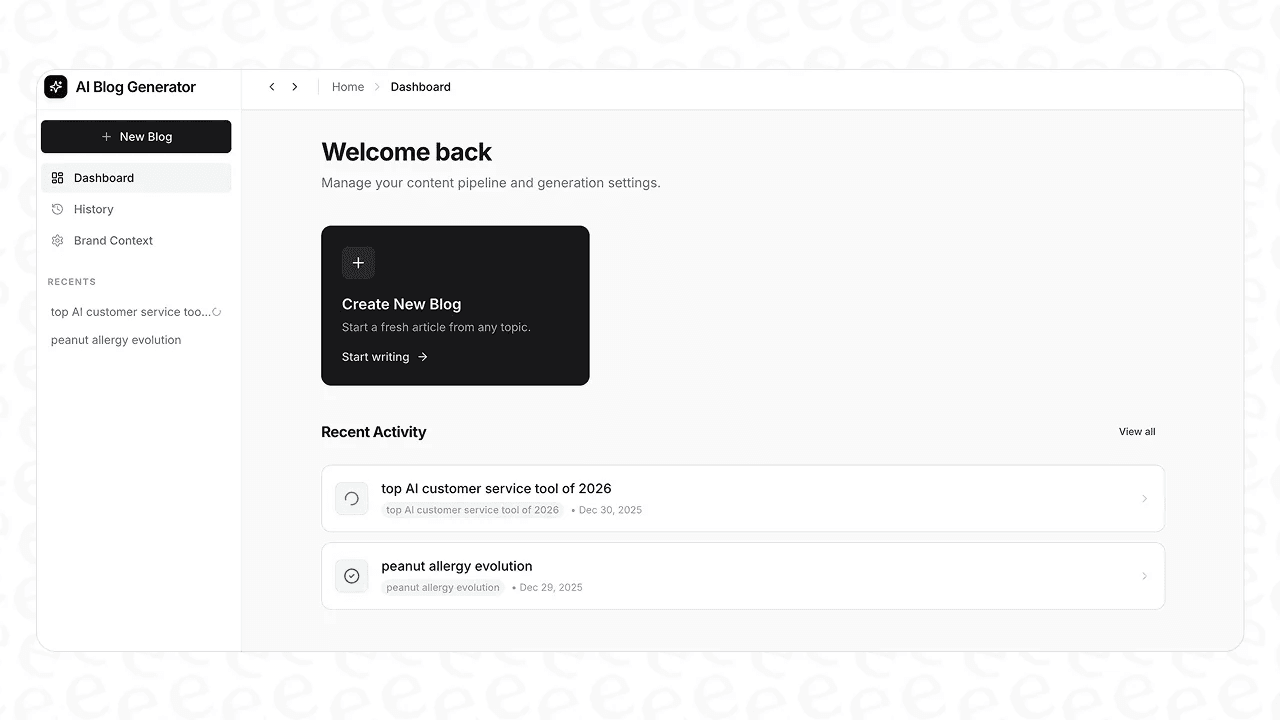
You give it a keyword and your website URL, and it creates a complete, SEO-optimized article. Here’s how it helps with the biggest DIY SEO headaches:
- It delivers more than a simple draft: Instead of a wall of text, you get a fully structured article with an intro, headings, a conclusion, and even an FAQ section. It also includes automatic assets like AI-generated images and infographics, which saves you the time you'd spend hunting for or creating visuals.
- It adds authority and a human touch: To avoid that generic, robotic feel, the tool finds and includes real quotes from Reddit forums and relevant YouTube videos. This adds genuine human perspectives and social proof to your articles.
- It has SEO and AEO built-in: Every article is optimized for your keyword from the beginning. It's also structured for AI Answer Engines (like Google's AI Overviews), which is important for keeping up with the future of search.
- It maintains your brand voice: By looking at your existing website, it learns your tone and style. The content it generates actually sounds like it came from you and can naturally mention your products or services without being overly promotional.
We're not just recommending it because we can; we built our own growth on this tool. We used it to take our site from 700 to 750,000 daily impressions in just three months by publishing over 1,000 optimized blogs. It's the engine behind our entire content strategy.
When to hire a professional instead of doing SEO yourself
Even with the best tools, sometimes calling in an expert is the smart play. A DIY approach isn't a perfect fit for every situation, and it's good to know when it's time to ask for help.
Someone who’s been doing SEO for years (I’m in year 16) has seen trends come and go, knows what’s real and what to filter out, and has a broader view of what it takes to succeed online... There’s really nothing that can replace time and experience in any job, and SEO is the same.
Think about getting professional help if:
- You've been at it for more than six months and have seen no real improvement in your traffic or rankings.
- You're in a highly competitive industry where all your competitors are investing heavily in professional SEO.
- You've run into a technical problem you can't fix, like a massive traffic drop after a site migration or ongoing issues with your Core Web Vitals.
- You just don't have the time anymore. If SEO is pulling you away from the core tasks of running your business, it might be time to hand it off.
Watching experts break down their process can be a great way to solidify your own understanding. For a practical walkthrough of the core steps involved in a DIY SEO campaign, the video below offers a great starting point.
DIY SEO is possible, but it doesn't mean doing it all alone
So, back to the original question: can you do SEO yourself? Yes, absolutely. It's a totally valid approach that gives you full control and helps the budget.
But it's also a huge time sink that demands constant learning. The clever way to do it isn't about grinding out every single task by hand. It's about using smart tools to do the heavy lifting for you. By using an AI platform like the eesel AI blog writer for your content, you can get back to focusing on strategy, promotion, and, you know, running your business. That’s how you turn DIY from just possible into actually successful.
Ready to see how AI can streamline your content workflow? Generate your first blog post for free.

Frequently Asked Questions
Share this article

Article by
Stevia Putri
Stevia Putri is a marketing generalist at eesel AI, where she helps turn powerful AI tools into stories that resonate. She’s driven by curiosity, clarity, and the human side of technology.