Customer support outsourcing vs AI: how to choose in 2026

Stevia Putri

Katelin Teen
Last edited May 15, 2026
Every growing support team hits the same point: ticket volume is climbing, the team is stretched, and someone asks whether to hire a BPO or try one of these AI agents everyone keeps mentioning. Both options promise to take work off your plate. Neither is obviously right for every company.
This post works through the actual tradeoffs -- cost data, quality patterns, ticket routing, and the decision signals that separate situations where outsourcing makes sense from ones where AI is the better call. The conclusion, for most teams, is a hybrid, but the path to get there varies.
What customer support outsourcing actually involves
Customer support outsourcing -- usually called BPO, for business process outsourcing -- means contracting a third-party provider to staff and manage your support operation. The provider handles recruitment, training, QA, workforce scheduling, and the tooling stack. You get a team that shows up trained on your product and starts handling tickets.
Three delivery models exist, each with a different cost profile:
| Model | Typical rate | Monthly cost (per agent) | Common locations |
|---|---|---|---|
| Onshore | $25-$45/hr | $4,000-$7,200 | US, Canada, UK, Australia |
| Nearshore | $8-$18/hr | $1,900-$2,900 | Colombia, Mexico, Jamaica, Trinidad |
| Offshore | $6-$15/hr | $960-$2,200 | Philippines, India, South Africa |
Source: CallForce Global 2026 rate guide, text.com 2026 pricing breakdown
The advertised hourly rate is only 45-55% of your true cost. The rest comes from technology ($50-$200/agent/month), QA overhead (typically 5-10% of the contract), management layers, setup fees ($500-$25,000 one-time), and -- for 24/7 coverage -- after-hours premiums of 25-50% above base rate.
Ramp-up is also slower than most buyers expect. Influx's documented onboarding playbook shows a realistic four-to-six-week timeline from agent selection to full handover: agent selection, two weeks of structured training, a channel-by-channel soft launch, and then a stabilization period where CSAT typically dips before recovering. For their case study, CSAT dropped to 73 during transition before climbing back to 83 against a target of 85.
What an AI support agent actually does
An AI support agent connects to your existing helpdesk (Zendesk, Freshdesk, Gorgias, and others) and your knowledge sources (help center articles, past tickets, Google Docs, Confluence, Shopify catalogs), then handles incoming tickets autonomously when it's confident enough, or drafts responses for human review when it isn't.
The key mechanics that matter in practice:
- Knowledge ingestion, not rule-writing. The agent reads your existing documentation and past resolved tickets, not a decision tree you had to map out. You don't program it; you teach it.
- Confidence-based routing. High-confidence responses get sent. Low-confidence ones queue as drafts. This prevents wrong answers from reaching customers without a human seeing them first.
- Graduated autonomy. Most teams start with the AI drafting everything and humans approving, then gradually unlock autonomous sending for specific ticket categories as accuracy is proven.
- Simulation before going live. Tools like eesel AI let you run the agent against 50-200 real past tickets before touching production, so coverage gaps surface before customers do.
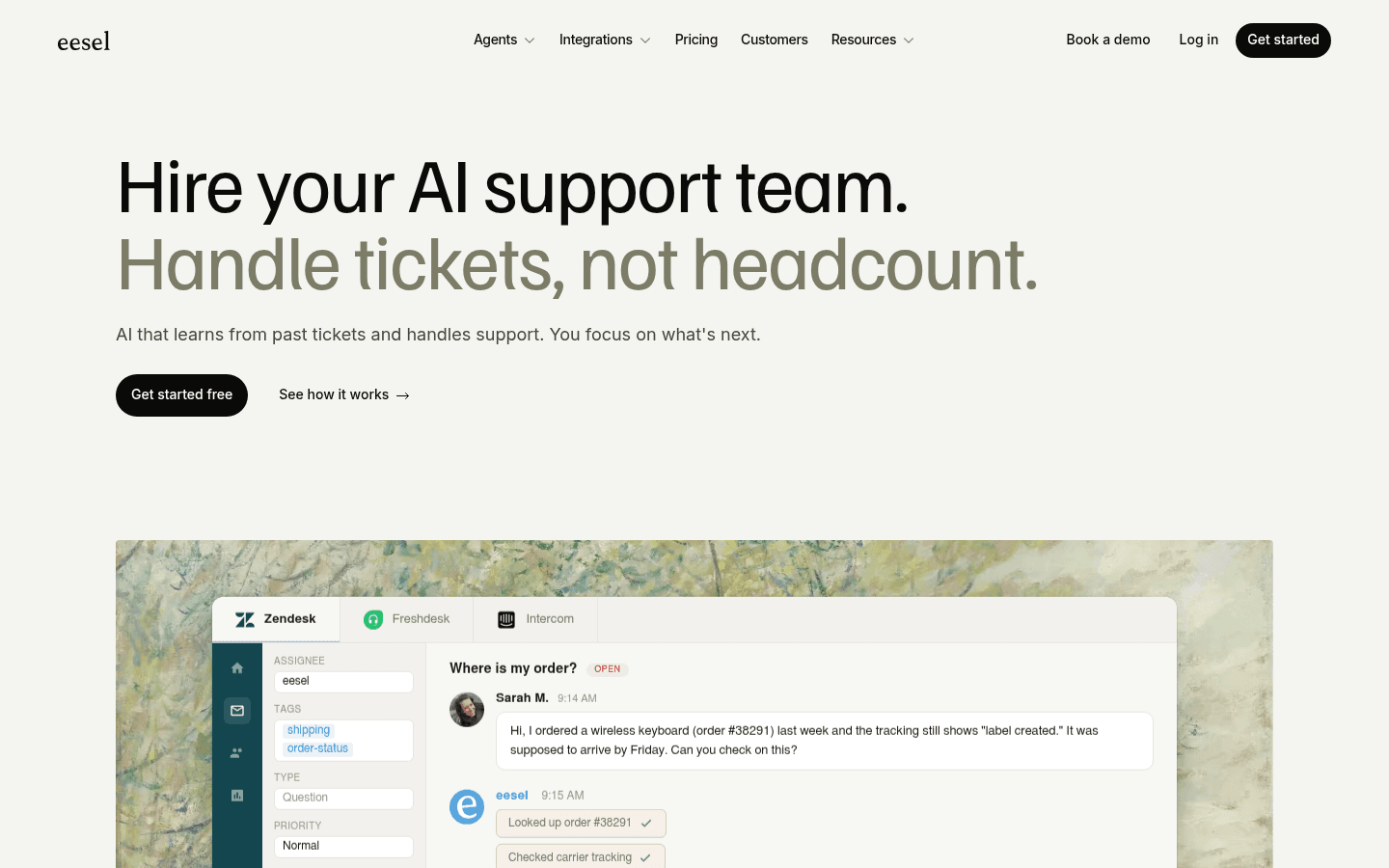
Deployment is measured in days, not weeks. Wesley Wang, CTO at Ecosa, describes what teams typically find after connecting their existing tools: "By linking our Zendesk and Google Docs, customers get instant responses and tough questions are automatically triaged."
The real cost comparison
The sticker price of outsourcing -- $10/hr offshore -- looks cheaper than most AI tools until you run the numbers fully loaded.
| Cost component | Traditional BPO (5 offshore agents) | AI agent (eesel) |
|---|---|---|
| Base monthly cost | $7,000-$10,000 | $400 (at 1,000 tickets @ $0.40/ticket) |
| Technology / seat licenses | $250-$1,000 | Included |
| QA overhead | $350-$1,000 | None (AI monitors 100% of interactions) |
| Management / supervision | $1,050-$2,500 | None |
| Setup (one-time) | $2,000-$10,000 | $0 (free trial includes $50 in usage) |
| Total monthly (fully loaded) | $10,000-$15,000 | $400-$600 |
Source: AI-Genesis 2026 cost model, eesel.ai pricing page
The gap compounds over time. BPO costs increase 5-10% annually as wages in popular offshore markets rise -- the Philippines is already seeing annual BPO voice attrition of 45-60%, which drives continuous rehiring and retraining cost. AI pricing stays flat per interaction or decreases as models improve. Research from AI-Genesis models a $400,000-$700,000 cumulative difference over five years for teams handling 2,000+ monthly tickets.
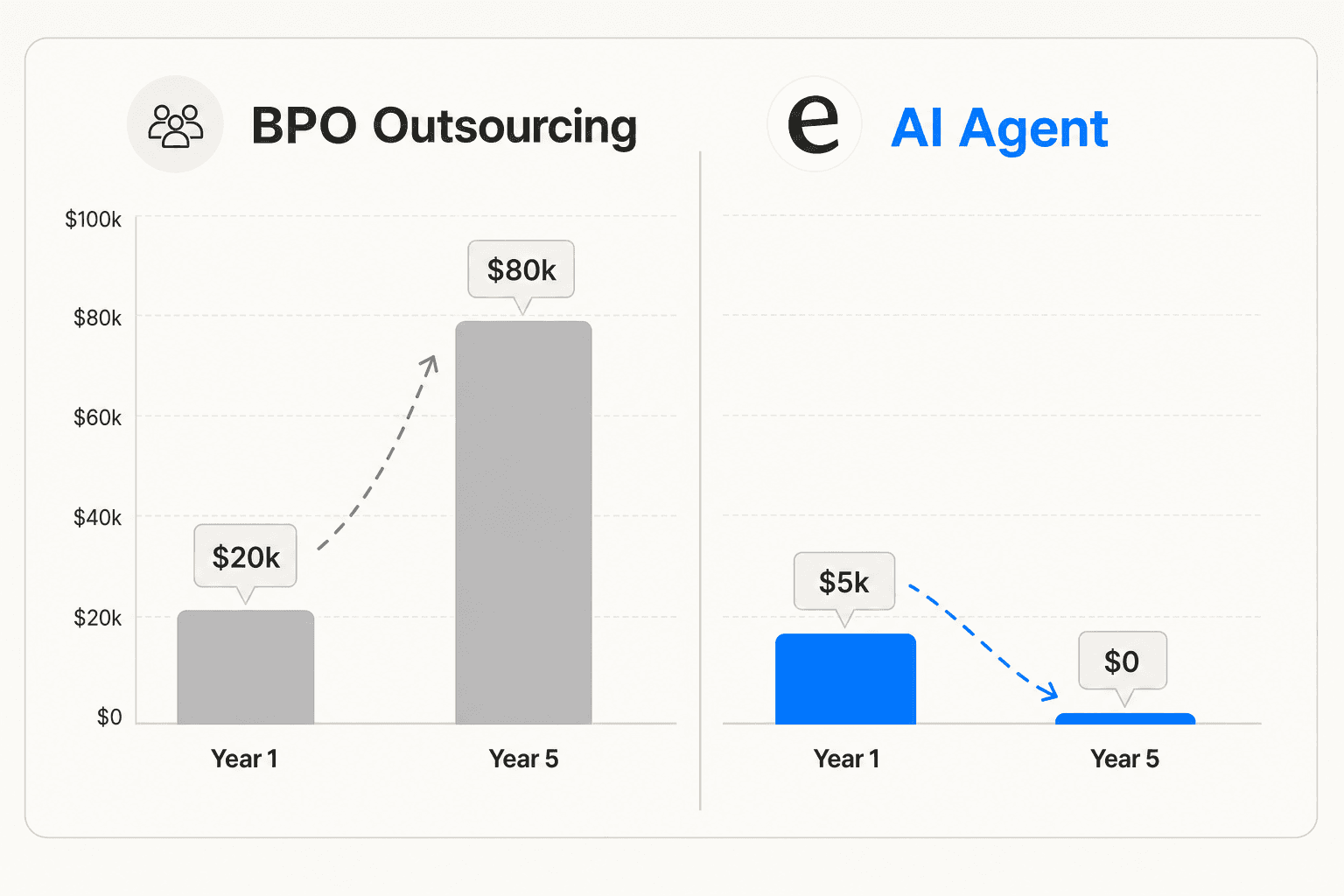
One nuance from Gartner's March 2026 research: enterprise-grade AI deployments with custom infrastructure, security compliance, and orchestration layers can push per-resolution costs above $3 by 2030 -- potentially exceeding cheap offshore rates. For smaller teams using managed AI tools, that infrastructure cost is abstracted away. The calculation is simpler: ticket volume times cost per ticket.
Where outsourcing still wins
Outsourcing isn't going away. Gartner predicts agentic AI will autonomously resolve 80% of common support issues by 2029 -- which means 20% will still need a human, and some categories stay firmly in that bucket:
- Complex, multi-step disputes where the agent needs to make a judgment call rather than follow a pattern.
- Emotionally sensitive situations -- bereavement cases, serious complaints, distressed customers whose tone signals they need a person, not a script.
- High-value relationship accounts where a named account manager creates loyalty that AI can't replicate.
- Regulated industries where a human must take legal accountability for an interaction (financial advice, insurance claims, HIPAA-adjacent healthcare support).
- Highly bespoke products where your support tickets are genuinely novel each time and your knowledge base doesn't capture the answer.
A well-run BPO operation -- dedicated agents, low turnover, tight QA loops -- can deliver consistent quality in these categories. Hugo's Africa-based model, for example, claims 4% agent turnover against an industry average exceeding 30%, which means teams that actually know your product rather than learning it again every few months.
Where AI wins
For the categories that make up the bulk of most support queues, AI now outperforms offshore outsourcing on nearly every dimension that matters:
- Speed. AI responds in under 30 seconds, 24/7. BPO agents take 2-15 minutes during staffed hours.
- Consistency. AI delivers the same quality response at 3am on a holiday as at 10am on a Tuesday. Human performance varies by agent, shift, and how that particular agent feels that day.
- QA coverage. Traditional BPO quality assurance reviews 2-5% of interactions -- the rest are unmonitored. AI monitors 100%.
- Scalability. A BPO operation needs 6+ weeks to add agents. AI handles a 10x volume spike overnight with no lead time and no added cost.
- Multilingual support. eesel handles 80+ languages and responds in the customer's language automatically. Building a multilingual BPO team means hiring language-specific agents at premium rates.
- Zero turnover. When an offshore agent leaves -- and 30-45% do every year -- you pay to recruit and retrain their replacement. An AI agent doesn't leave.
McKinsey's 2025 research found companies deploying AI in customer service saw CSAT scores improve by 10-15% compared to human-only operations. Salesforce's AgentForce platform cut the company's customer service costs by $100 million. Decagon's AI agents achieved 80%+ resolution rates for Duolingo from day one.
What operators actually say about the tradeoffs
The most useful perspective on this decision doesn't come from analysts. It comes from the operators who've tried both and lived with the result.
A recurring pattern in BPO contracts is what one r/business commenter (105 upvotes) describes:
"It's a bait and switch. They sign a 3 year contract and the first 6-9 months the key is to give the client the A Team. Customer is happy with the service and over time the B Team and the C Team are brought into the process while the A Team is redirected to a new customer. As long as the CSAT score remains acceptable cost optimizations continue. Wash. Rinse. Repeat."
-- r/business
On the AI side, the failure mode is the opposite: deploying an AI that just returns text from a knowledge base without being able to do anything.
"Integration -- that's what you should focus on. If your bot is going to spitting out text from a knowledge base then it's worthless. It must do things. Ours taps into the order database and actually provides status updates or verifies an account. If your bot can't check your backend, don't lay off your humans quite yet."
When AI is set up properly -- connected to actual systems, not just a FAQ page -- it tends to outperform offshore teams on the Tier 1 work that consumes most support capacity:
"Before you go overseas, have you considered an AI bot first? We did the same transition and honestly the AI handled 80% of tier 1 stuff better than outsourced agents who didn't really understand our product. The key is training it properly on your SOPs and documentation. Way cheaper than $650/mo per agent and works 24/7."
What to route to AI vs. humans
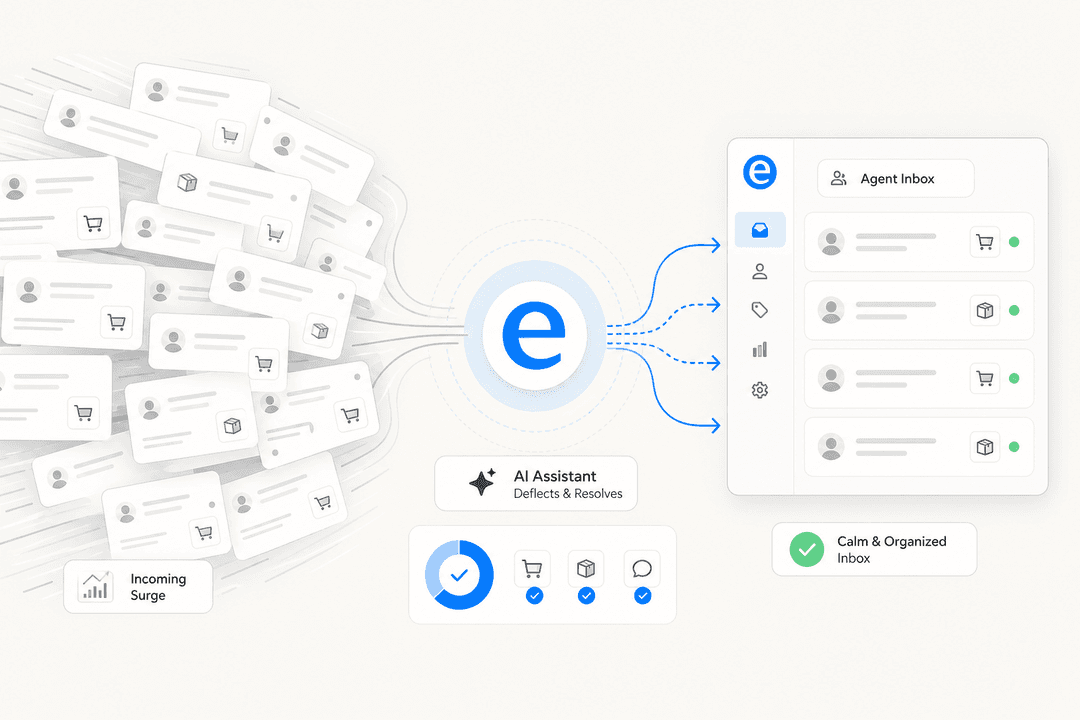
The practical routing question isn't "AI or outsourcing" -- it's "which ticket types belong in each bucket." Most support queues break down roughly 70/30, with the majority being well-documented, repeatable requests that AI handles better than any offshore team.
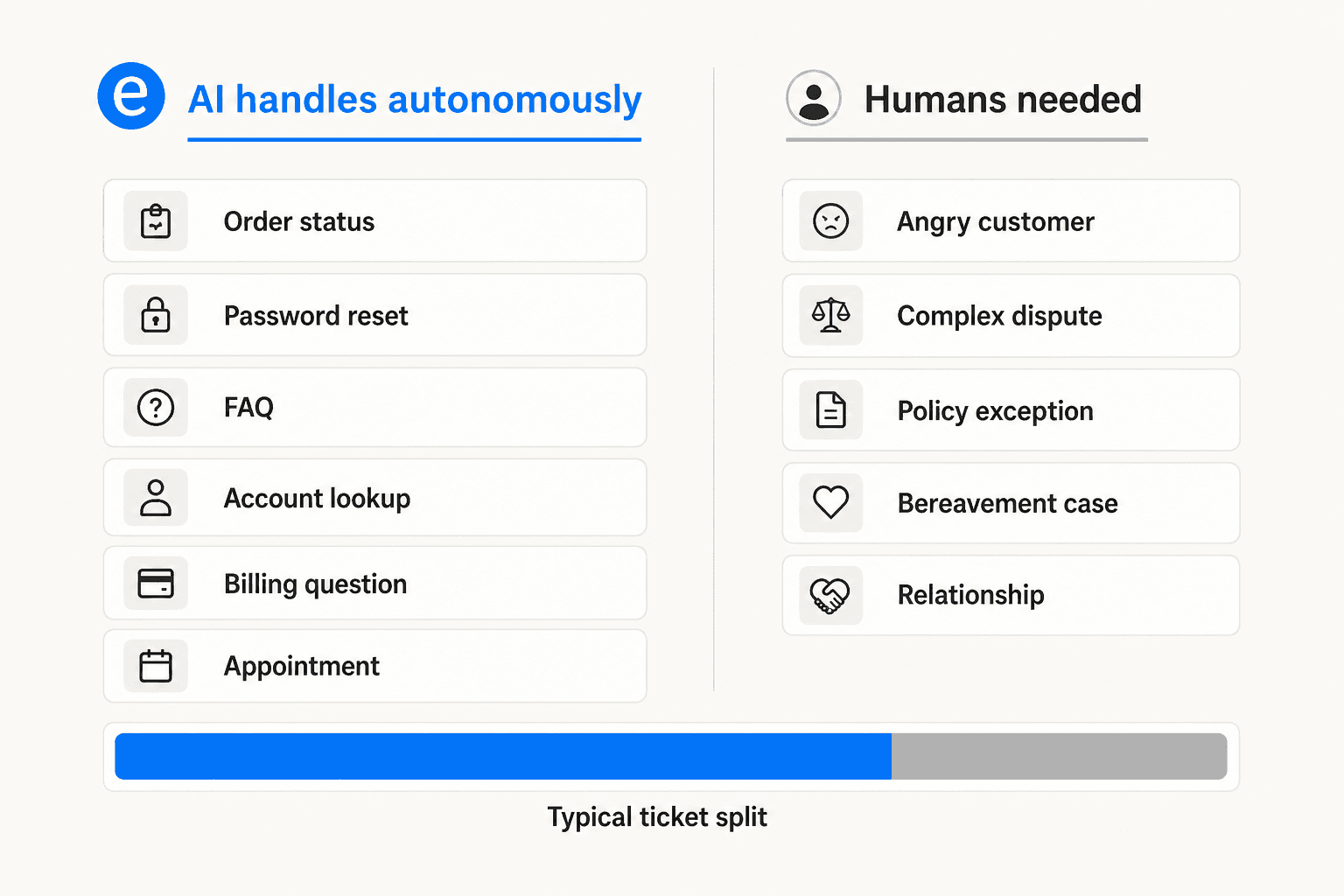
AI handles autonomously:
- Order tracking and status updates (WISMO)
- Password resets and account access issues
- Product information and FAQ
- Basic troubleshooting (restart, clear cache, check settings)
- Appointment scheduling and rescheduling
- Payment status and billing inquiries
Needs human handling:
- Distressed or angry customers requiring de-escalation
- Complex disputes requiring policy interpretation
- Cases requiring access to multiple backend systems simultaneously
- High-stakes decisions (large refunds, account closures, legal matters)
- Anything where the customer has explicitly asked for a person
A confidence-scoring system handles the edge cases. eesel's confidence-based routing sends high-confidence responses and queues low-confidence ones for human review before they reach customers -- so the AI self-selects out of situations it isn't prepared for.
When outsourcing is still the right call
There are specific situations where a BPO operation makes more sense than AI, and it's worth being honest about them:
You have genuinely unmapped ticket types. If your product is complex and custom, with tickets that are novel every time, an AI trained on existing documentation won't cover enough. You need humans who can adapt in real-time.
You're very early stage. A founder handling 50 tickets a week gets something valuable from doing it themselves -- direct customer feedback that shapes the product. AI or BPO both remove that signal. Until you're drowning, the cost of either isn't justified.
Your business is in a highly regulated vertical. Healthcare, financial advice, and legal matters sometimes require a licensed human to be accountable for what was said. Check before deploying AI in these areas.
You need a managed service with no internal ops. A full-service BPO includes QA, scheduling, and management. A pure AI setup requires someone internally to monitor it, review escalations, and keep knowledge sources current. If you have no one for that, a BPO may be easier to start with.
When AI makes more sense
The conditions under which AI outperforms outsourcing:
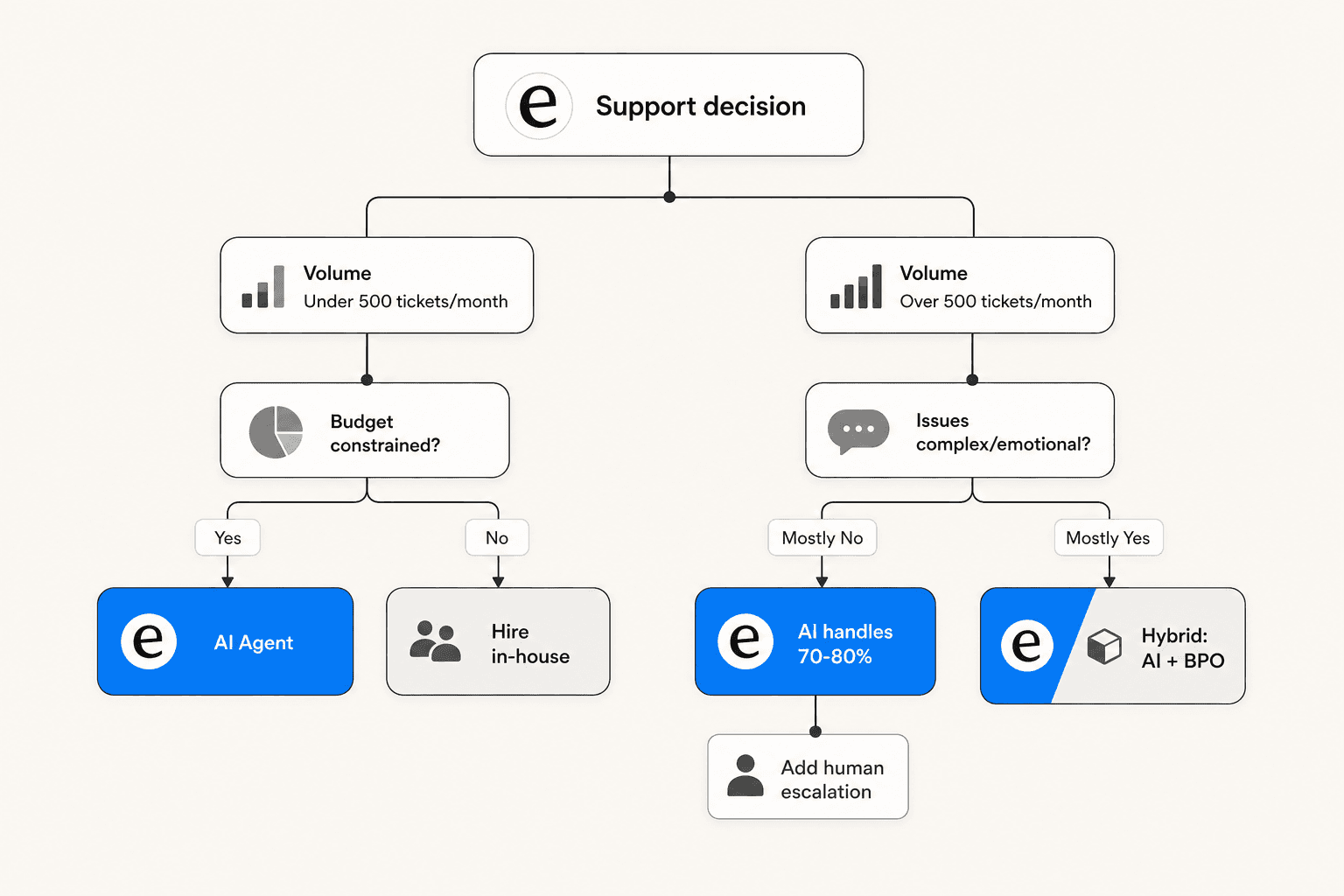
Ticket volume is above 500/month. Below that threshold, the setup cost and learning curve of an AI agent may not pay back quickly. Above it, the economics shift sharply.
Your support questions are well-documented. If your FAQ, past tickets, and help center articles already cover 70%+ of what customers ask, an AI agent can get productive fast. eesel's simulation mode shows you the coverage percentage before you go live so you know what you're working with.
You need 24/7 coverage without night-shift costs. Outsourcing 24/7 support requires paying for off-hours coverage, which carries a 25-50% premium. AI coverage is flat-rate across all hours.
Multilingual support matters. Building a multilingual BPO team means hiring speakers for each language at premium rates. AI handles 80+ languages natively.
You want predictable costs. BPO costs are variable -- volume spikes, overtime, turnover-driven retraining. AI costs scale predictably with ticket volume.
Making the switch from BPO to AI
The lowest-risk path isn't to shut down your BPO and flip to AI overnight. It's to run them in parallel for 2-4 weeks while measuring how the AI performs on your actual ticket mix.
AI-Genesis's transition framework describes a four-phase migration:
- Deploy AI alongside your BPO and measure AI accuracy and resolution rates on the same ticket categories for 2-4 weeks.
- Gradually shift volume starting with the simplest categories -- order tracking, FAQ, account lookups -- where AI accuracy is highest.
- Reduce BPO headcount in phases as the AI proves itself on each category. Most BPO contracts allow monthly headcount adjustments.
- Keep a lean human escalation path for the tickets AI routes to humans. This can remain outsourced or move in-house; the key is that the AI routes confidently, not that you eliminate humans entirely.
AdaptiveX's timeline data shows most teams reach break-even between months 5 and 6, with AI handling 70-85% of contacts by that point and quality metrics at or above pre-transition levels.
The hybrid endpoint
The industry consensus, from CMSWire's March 2026 analysis to the Reddit threads where operators share what actually worked, is that neither pure AI nor pure BPO is the destination. The hybrid is:
"I wouldn't advise you to replace the whole team but you can easily trim the bottom 30%. We've used AI for 'where is my order' and password resets. It absorbs the volume spikes so our BPO agents can work on actual refunds and angry customers."
AI handling the predictable volume, a lean human team handling the judgment calls. The split ratio shifts over time as your knowledge base matures and the AI gets trained on more edge cases. Most teams reach 70-80% AI coverage within six months; some -- like Smava, running 100,000+ tickets/month through eesel on Zendesk -- get to full automation on entire language-specific queues.
Try eesel AI
eesel AI is a support agent that connects to your existing Zendesk, Freshdesk, Gorgias, or other helpdesk and starts handling tickets on day one. It learns from your past tickets and documentation -- no data migration, no new helpdesk, no training program you have to build from scratch.
The pricing model is usage-based: $0.40 per resolved support ticket, which makes the cost predictable and directly tied to the work done. There's no monthly platform fee to start, and the free trial includes $50 in usage with every feature unlocked.
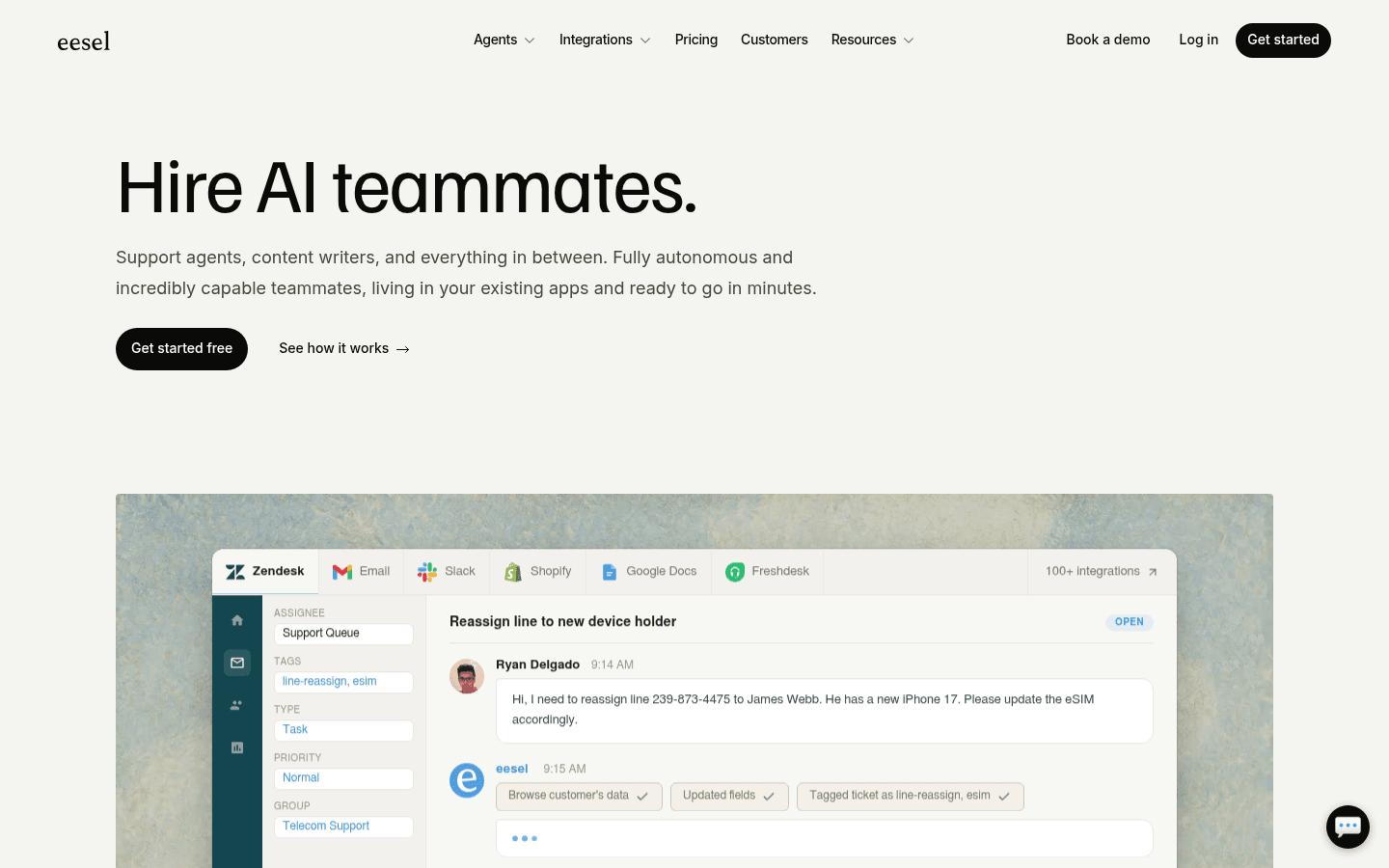
Teams switching from outsourcing typically run eesel in parallel with their existing BPO for 30 days, measure coverage on their specific ticket mix, and then reduce headcount in the categories where AI accuracy holds. Gridwise resolved 73% of tier-1 Zendesk requests in their first month. Design.com handles 50,000+ tickets/month through Freshdesk with eesel running the first-response layer.
If you're evaluating the switch from BPO or looking to add AI coverage before volume forces a harder decision, eesel's free trial is a reasonable starting point -- it includes simulation mode, so you can see your coverage percentage before any customer sees the AI in action.

Frequently Asked Questions
Share this article

Article by
Stevia Putri
Stevia Putri is a marketing generalist at eesel AI, where she helps turn powerful AI tools into stories that resonate. She’s driven by curiosity, clarity, and the human side of technology.