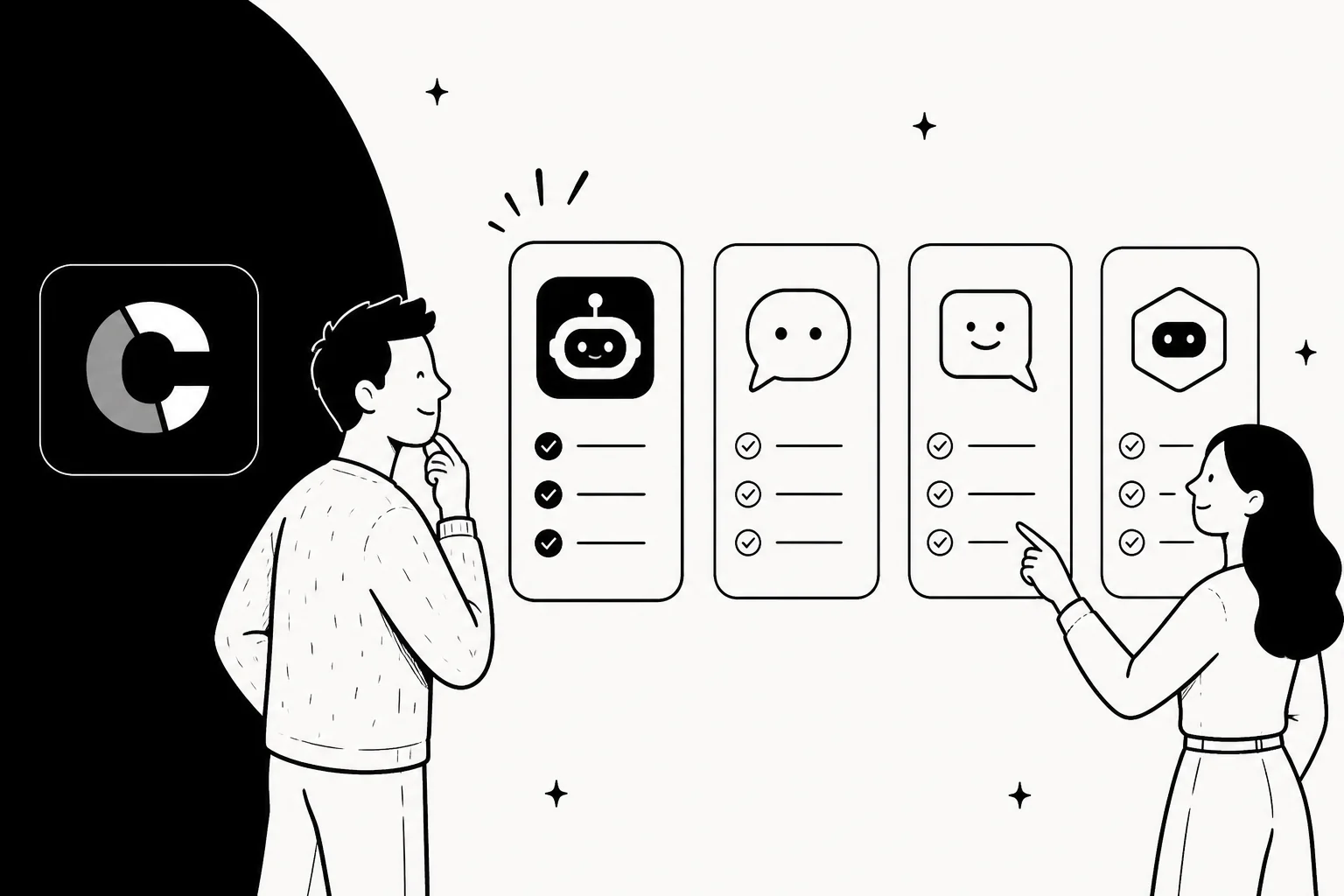
ChatGPT vs MarketMuse: Which AI content tool is for you?

Stevia Putri
Written by

Stevia Putri

Reviewed by

Katelin Teen

Last edited January 26, 2026

Expert Verified

Image alt text

Content creation requires a balance between writing articles that resonate with readers and ensuring they are discoverable by search engines. In the field of AI, ChatGPT and MarketMuse offer distinct approaches to this challenge.

You can think of it like this: ChatGPT acts as a versatile writer, capable of quickly drafting content on various topics. In contrast, MarketMuse functions as a strategist, analyzing data to inform a content plan. The former focuses on execution speed, while the latter prioritizes in-depth planning. This raises the question of which tool is more suitable for a given workflow, or if an alternative approach exists. Newer tools aim to merge these functions, with solutions like the eesel AI blog writer designed to blend strategy with execution.

An infographic comparing the roles of different AI tools in the ChatGPT vs MarketMuse debate, showing ChatGPT as the writer and MarketMuse as the strategist.

How ChatGPT fits into content creation

You’ve almost certainly heard of ChatGPT. It's the large language model (LLM) from OpenAI that pretty much everyone is talking about. Its main job is to understand what you ask and generate human-like text in response. For content teams, it's been a huge help for brainstorming ideas, writing first drafts, summarizing long articles, and even creating code snippets. It can feel like having a junior writer available 24/7.

But if your goal is to create SEO content that consistently ranks, just using ChatGPT comes with some well-known issues.

  • It needs a lot of editing. Directly publishing content from ChatGPT is not recommended. Users on platforms like Reddit have reported negative impacts on site impressions after publishing unedited AI text. It is best used as a starting point.
  • It doesn't have real SEO intelligence. ChatGPT cannot perform live search analysis, assess keyword difficulty, or understand a website's topical authority. Its suggestions are based on its training data, not on current search engine performance data.
  • The output can be a bit generic. Without detailed and creative prompting, the generated content may lack a distinct brand voice and can appear repetitive.
  • It can make things up. The model may generate factually incorrect information or cite non-existent sources. OpenAI acknowledges that "ChatGPT can make mistakes," so fact-checking all claims before publication is essential.
    Reddit
    You’re definitely not alone with running into the spammy AI issue. Most so-called AI SEO tools are just spinning out low-effort content that Google picks up on pretty quickly.

How MarketMuse fits into content strategy

On the other side, you have MarketMuse. This isn't a content writer at all; it's an AI-powered content intelligence platform. Its whole purpose is to help you figure out what to write about to build topical authority and systematically climb the ranks over your competitors. It uses its patented AI technology to take a deep dive into your content strategy.

Its key functions include:

  • Topical authority analysis: It goes through your entire website to find content gaps and shows you where to focus your energy to become a recognized expert on a given topic.
  • Detailed content briefs: Instead of a draft, it provides an incredibly detailed blueprint for your writers. This includes related topics to cover, questions to answer, and even suggestions for internal and external links.
  • Personalized difficulty score: A notable feature is its ability to calculate difficulty scores specific to your website, not just a generic score that applies to everyone.
  • Competitive analysis: It provides visual heatmaps to identify content gaps in comparison to competitors, highlighting areas for improvement.

The primary limitation is that MarketMuse is a planning tool and does not generate content. It provides a detailed strategy for what to write but does not perform the writing itself. The creation process remains with the content team. The deprecation of its previous ChatGPT integration has been deprecated, which reinforces its focus as a pure planning tool.

The case for an all-in-one tool

The separate functions of a writing tool and a planning tool have led to the development of integrated platforms. An all-in-one tool like the eesel AI blog writer is an example of a solution that combines strategic analysis with content generation.

These tools are designed to streamline the entire content workflow. For example, the eesel AI blog writer was used internally to increase a blog's daily impressions from 700 to over 750,000 in three months.

A screenshot of the eesel AI blog writer dashboard, an alternative tool in the ChatGPT vs MarketMuse comparison.

Key features of such integrated tools often include:

  • Deep research with live context: It doesn't just pull from old training data. The AI performs deep, real-time research and even finds social proof by embedding relevant quotes from Reddit and videos from YouTube.
  • Automatic asset creation: It doesn't just give you a wall of text. It generates a complete, publish-ready blog post with AI-generated images, infographics, and tables already included.
  • AEO (Answer Engine Optimization): Content is often structured to be compatible with AI answer engines like Google AI Overviews and Perplexity.
  • Genuinely free to try: Many of these tools offer a free trial, allowing users to generate a full blog post to evaluate the quality.

Head-to-head comparison: ChatGPT vs MarketMuse

Let's break down the key differences so you can see where each tool really shines.

Core functions

At the end of the day, these tools are built for different jobs and different people.

ChatGPT is a generative AI assistant. It's a great fit for writers who need to speed up the drafting process, brainstorm ideas, or handle smaller writing tasks like social media posts or meta descriptions. Its main job is content execution.

MarketMuse is a content intelligence platform. It's built for SEO managers and content strategists who are focused on long-term planning, building out topic clusters, and performing deep content audits. Its main job is content planning.

Here's a quick summary:

FeatureChatGPTMarketMuse
Primary GoalGenerate human-like textCreate data-driven content strategies
Best ForWriters, Marketers, DevelopersSEOs, Content Strategists, Editors
InputA detailed text promptA focus topic and website URL
OutputA raw text draftA detailed content brief and strategy plan
WorkflowCreative and iterative promptingAnalytical and data-driven planning

SEO capabilities

This is where the difference between the two becomes crystal clear.

ChatGPT's SEO abilities are pretty basic. It can suggest a few keywords or write a meta description if you ask, but that's about it. It has no access to real-time search data, search volume, or what your competitors are up to. It's essentially guessing based on old patterns.

MarketMuse, however, is all about SEO. Its entire platform is built on patented topic modeling to ensure your content has incredible depth and helps you build topical authority—two things Google really values. It analyzes what's already ranking to give you a clear roadmap for creating something that is measurably better and more complete.

The eesel AI blog writer closes this gap by doing a MarketMuse-style analysis before it starts writing, then generating a fully optimized article based on those strategic insights.

For a deeper dive into how industry experts view AI content tools like MarketMuse and their role alongside generative AI, the following discussion offers valuable perspectives on balancing automated content creation with strategic oversight.

A video from Semantic Mastery discussing expert thoughts on AI content tools, relevant to the ChatGPT vs MarketMuse comparison.

Pricing comparison: ChatGPT vs. MarketMuse

The value of each tool depends on specific needs, and their pricing models reflect their different functions.

  • ChatGPT: Its pricing is very accessible. There's a powerful free version that many people use, a Go plan at $8/month, a Plus plan at $20/month, and a Business plan starting at $25 per user per month. It's easy for anyone to get started.
  • MarketMuse: It also has a free plan, but it's limited to 10 queries per month. The paid plans (Optimize, Research, and Strategy) are for serious teams and agencies. The pricing isn't public, which usually means you'll need to talk to their sales team and should expect a significant investment.
  • eesel AI blog writer: The pricing is based on output, with a model of 50 blog posts for $99. It also offers a free trial to generate one post, allowing users to assess the tool before committing.
    An infographic comparing the pricing of different tools in the ChatGPT vs MarketMuse debate, showing ChatGPT's tiers, MarketMuse's enterprise model, and eesel AI's pay-per-use plan.
    An infographic comparing the pricing of different tools in the ChatGPT vs MarketMuse debate, showing ChatGPT's tiers, MarketMuse's enterprise model, and eesel AI's pay-per-use plan.

ChatGPT vs. MarketMuse: Making the right choice

The choice between ChatGPT and MarketMuse depends on your team's primary needs.

Choose ChatGPT if you have a content strategy in place and require a tool to help writers produce drafts more quickly.

Choose MarketMuse if your focus is on building a data-driven content strategy and you have a writing team to execute the plans it generates.

For teams that need both strategic planning and efficient content creation, an integrated solution may be more suitable. The eesel AI blog writer is an example of a tool designed to unify these workflows by combining automated SEO analysis with content generation.

An all-in-one solution can help streamline the process from strategy to publication.

Generate your first SEO-optimized blog post for free with the eesel AI blog writer.

Frequently Asked Questions

For a small team, the main takeaway is that ChatGPT is a tool for faster writing (execution), while MarketMuse is for deep strategic planning. If your team needs to do both without multiple expensive tools, an all-in-one solution like the eesel AI blog writer might be a suitable alternative.
If your main goal is SEO strategy and analysis, MarketMuse is the clear winner. Its entire platform is designed to help you build topical authority and create comprehensive content briefs. ChatGPT has very limited, surface-level SEO capabilities.
ChatGPT offers very accessible pricing, including a robust free version and paid plans starting around $20/month. MarketMuse is a premium, enterprise-focused tool with custom pricing that is significantly more expensive, targeting larger teams and agencies.
You can definitely use them together. A common workflow is to use MarketMuse to create a detailed content brief (the strategy) and then use ChatGPT to write the first draft based on that brief (the execution). However, this requires subscriptions to both platforms.
ChatGPT's primary limitation is its lack of real-time data and deep SEO intelligence; it's a generalist writer, not a strategist. MarketMuse's primary limitation is that it doesn't write any content for you; it only provides the plan, leaving the creation process entirely up to your team.
Yes, modern tools like the eesel AI blog writer are designed to be all-in-one alternatives. They combine the strategic analysis of a tool like MarketMuse with the content generation capabilities of a tool like ChatGPT to provide a complete, end-to-end workflow from keyword to publish-ready article.

Share this post

Stevia undefined

Article by

Stevia Putri

Stevia Putri is a marketing generalist at eesel AI, where she helps turn powerful AI tools into stories that resonate. She’s driven by curiosity, clarity, and the human side of technology.