The 7 best helpdesk software for logistics in 2026

Stevia Putri

Katelin Teen
Last edited May 5, 2026
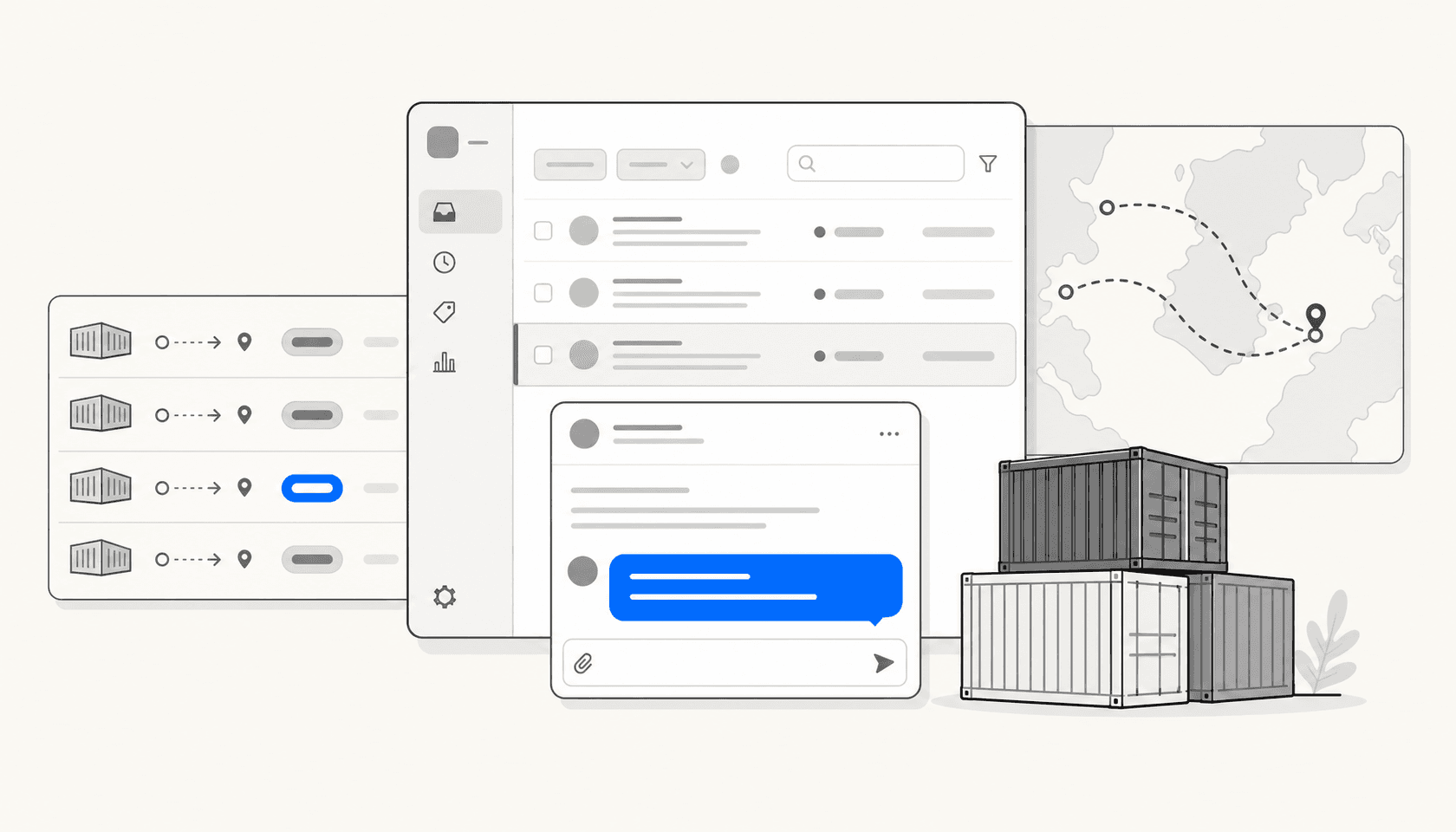
There is a particular pain to running customer support for a logistics company. The same five questions arrive thousands of times a day. Where is my shipment, why is it late, can I change the address, what does this status code mean, where is my refund. Each one is trivial to answer if your agent has tracking, the WMS, and the carrier portal open. Multiply that by peak season and tell me how often that is true.
A helpdesk for logistics has to do two boring things very well. It has to integrate with the systems where the answers actually live (TMS, WMS, carrier APIs, the order database), and it has to let agents and AI deflect the easy 70 percent so humans can focus on the messy 30. Pretty dashboards do not move that needle. Real integrations and a working AI layer do.
We pulled together the seven helpdesks that keep showing up on logistics RFPs in 2026, looked at what each one does for a freight or 3PL or last-mile team specifically, what it costs, and where it falls short. If you want to add an AI tier-zero on top of any of these without ripping out the helpdesk, eesel AI is built to do that, but more on that at the end.
What we looked for in a logistics helpdesk
Seven picks below. Here is the lens, so you can argue with the order.
- Real integrations with operations systems. A helpdesk that cannot read your tracking number, order status, or carrier event stream is a glorified inbox. The fastest tier-zero deflection gains in logistics come from connecting tickets to operational data.
- Omnichannel that includes voice. Logistics is still phone-heavy, especially for B2B carriers and freight forwarders. A helpdesk that punts on voice is going to leave a hole.
- AI deflection that is trustworthy. Most platforms ship an AI agent now. The bar is whether it gives a real answer grounded in your help articles and tracking, or whether it hallucinates an ETA. Grounded answers, with the source linked, are the only acceptable outcome.
- Pricing that survives a peak season. Per-agent pricing breaks when you hire seasonal staff. Per-resolution AI pricing breaks when volume spikes. Look at both.
- An honest mobile and offline experience. Drivers, dispatchers, and warehouse leads are not at desks. The agent app on a phone matters more than the marketing site implies.
We also weighed real customer signals. A wall of logos is marketing. A platform with more than 100,000 companies on it or 9,000 customer-operations teams is past the point where you have to worry about it being an experiment.
Quick comparison
| Tool | Best for | Standout for logistics | Pricing |
|---|---|---|---|
| Zendesk | Enterprise carriers, 3PLs, global ops | Resolution Platform plus 1,800+ marketplace apps; deep voice and AI Agents | From $19 / agent / month (Support Team); Suite Professional $115 |
| Freshdesk | Mid-market shippers wanting omnichannel without enterprise pricing | Freddy AI Agent across email, chat, voice; standalone vs Omni SKUs | From $19 / agent / month (Growth); Omni Pro $79 |
| Front | Ops, freight forwarding, dispatch teams that live in shared inboxes | Built explicitly for "complex customer operations" in logistics; Autopilot playbooks | Starter $25 / seat / month (10-seat cap); Pro $65; Enterprise $105 |
| HappyFox | Mid-market 3PLs and shippers wanting a logistics-shaped product | Dedicated Transport & Logistics solution, Smart Rules engine | Annual billed: Basic $24 / agent / month; Team $49; Pro $99; unlimited-agent plans from $1,999 / month |
| Zoho Desk | SMB carriers and asset-light 3PLs on a budget | Free plan, broad omnichannel, Zia AI, tight Zoho CRM integration | Free (3 agents); Standard $14; Enterprise $40 / agent / month |
| Kustomer | High-volume retail logistics and last-mile with conversation-CRM needs | Unified customer timeline, AI Agent Studio with procedures and tools | Sales-quoted; AI Agents for Customers $0.60 / engaged conversation |
| Help Scout | D2C shippers, boutique logistics teams, smaller fulfilment ops | Clean shared inbox, Docs knowledge base, simple AI Answers pricing | Free (5 users); Standard $25; Plus $45; Pro $75 |
Now to the actual write-ups. Each follows the same template (what it is, what stands out for logistics, pricing, who it is for, where it falls short) so you can skim or read end to end.
1. Zendesk
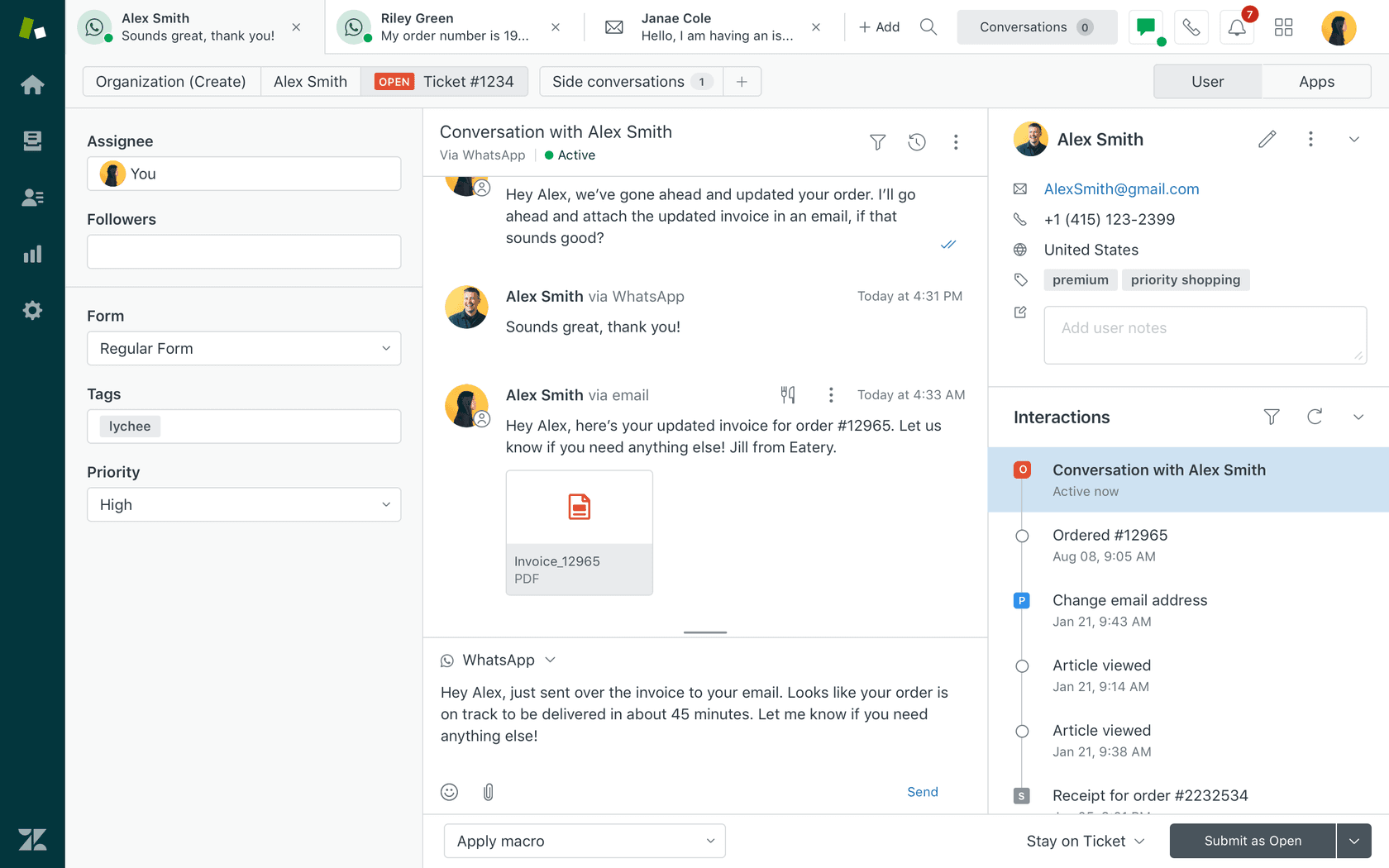
Zendesk is the default for a reason. Over 100,000 companies run their support on it, including names like Tesco, Stanley Black & Decker, Ingram Micro, and GrubHub on the customer wall. For a logistics team, the value is the marketplace and the routing engine. Zendesk has a 1,800+ app marketplace that includes connectors for shipping carriers, order systems, and most of the WMS and TMS platforms a freight or 3PL team is likely to be running. That matters because the ticket is only useful if it can pull the tracking, the order, and the customer context together on one screen.
The AI story has tightened up significantly. Zendesk's Resolution Platform is built around two layers: AI Agents that resolve tickets autonomously, and Copilot that supports human agents on the harder ones. In March 2026 Zendesk acquired Forethought, folding agentic AI into the platform and broadening the autonomous-resolution reach. AI is included at the Essential level on every Suite plan, with an Advanced AI Agents add-on sold via sales conversation.
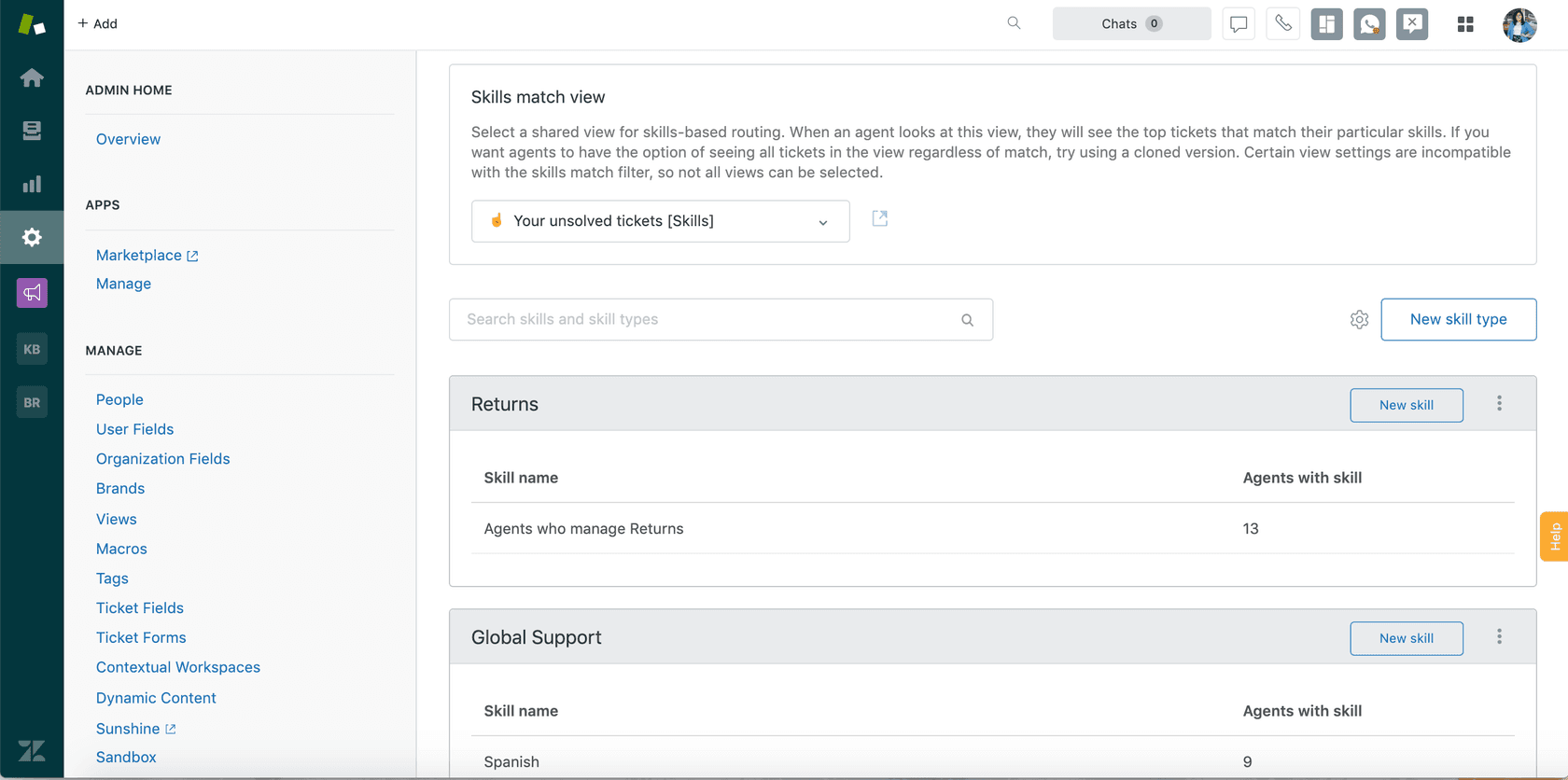
For logistics specifically, voice is where Zendesk stands out from the lighter platforms. If you handle B2B freight or have a dispatch desk, Zendesk Talk integrates with the same ticketing, recording, and AI Copilot that the email and chat side uses. Skills-based routing and macros do the rest of the heavy lifting on a peak-season volume curve.
Pricing. Five published Suite tiers and a basic Support Team plan, all per agent per month billed annually.
| Plan | $/agent/mo | AI tier | Included automated resolutions per agent per month |
|---|---|---|---|
| Support Team | $19 | Add-on only | 5 |
| Suite Team | $55 | Essential | 5 |
| Suite Professional | $115 | Essential | 10 |
| Suite Enterprise | $169 | Essential | 15 |
| Suite + Copilot Professional | $155 | Essential plus unlimited Copilot | 10 |
| Suite + Copilot Enterprise | $209 | Essential plus unlimited Copilot | 15 |
Beyond included allowances, Automated Resolutions are billed at $1.50 (committed) or $2 (pay-as-you-go) per AR. Advanced AI Agents pricing is sales-gated.
Who it is for. Mid-market and enterprise logistics teams running a real operation: multiple carrier integrations, multi-region support, voice, and a need for marketplace-scale extensibility. If you have an ERP, a TMS, and a WMS already talking to each other, Zendesk is the helpdesk most likely to slot in cleanly.
Where it falls short. Reviewers consistently flag pricing tier-locking (the most useful features sit on Pro and Enterprise) and a learning curve on Explore analytics. G2 lands at 4.3 / 5 from 6,816 reviews and Capterra at 4.4 / 5 from 4,077. If you are a small carrier or a single-region 3PL, Zendesk is overkill, and the bill will tell you so. Pair it with a focused AI deflection layer like eesel for Zendesk if you want to keep AR consumption (and surprise overage charges) under control.
2. Freshdesk
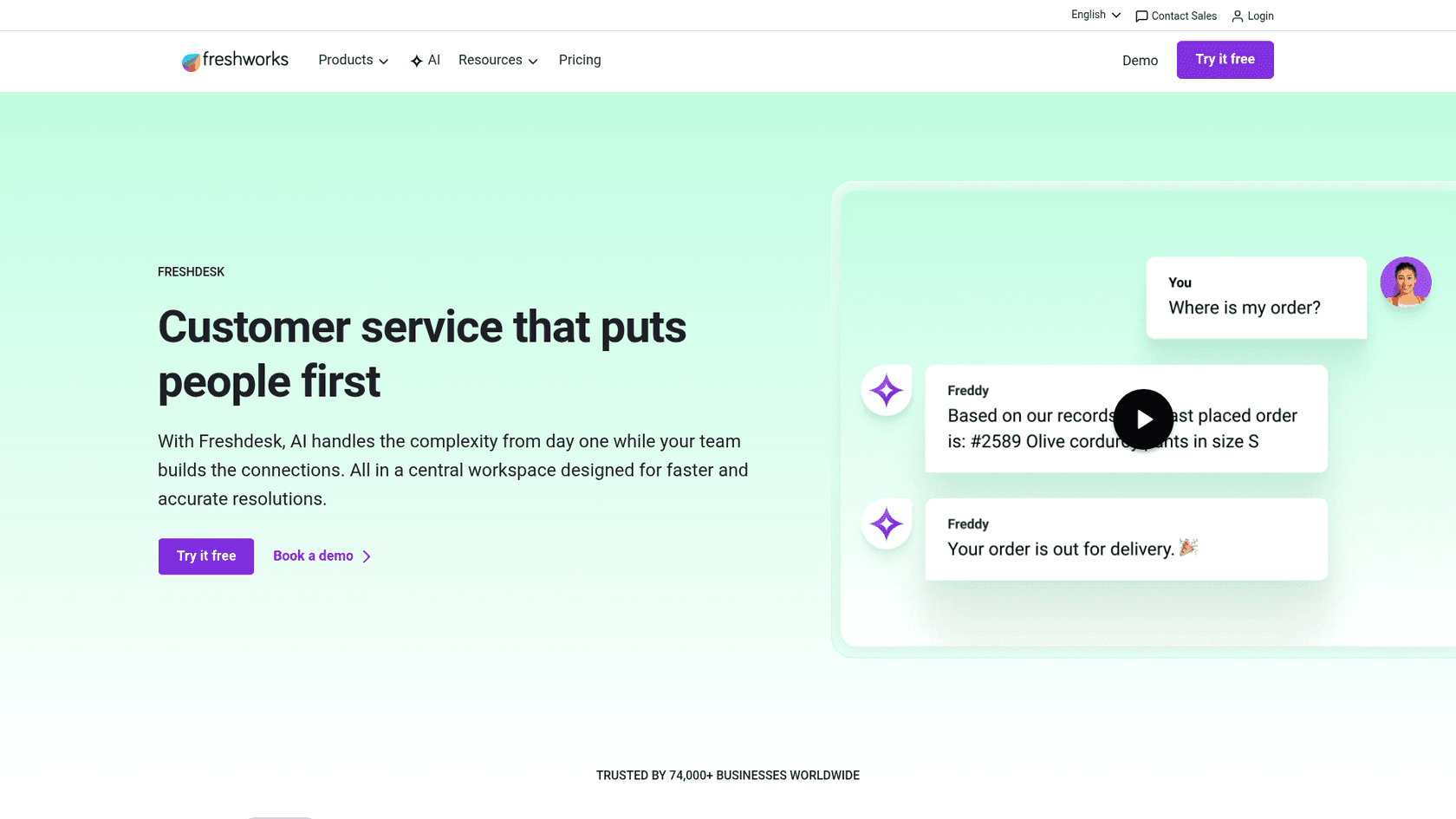
Freshdesk is the most-used Zendesk alternative for a reason. It hits the same omnichannel notes (email, chat, voice, social, WhatsApp) at a kinder entry price, with a faster onboarding curve. For a mid-market logistics team that wants serious capability without an enterprise procurement cycle, it is the natural choice. The Freshworks Q4 2025 earnings call disclosed that more than 8,000 customers are now using Freddy AI, and that Freddy AI Agent deflected more than 50 percent of tickets for the customers running it.
Freshdesk now ships in two parallel SKUs. Standalone Freshdesk is ticketing-led. Freshdesk Omni is the omnichannel bundle that pairs Freshdesk with Freshchat plus the AI layer. The split matters in practice because a long list of AI features (live translation, conversational knowledge base, proactive quality coach) are only available on Omni or Freshchat, not standalone Freshdesk. If you are evaluating, evaluate Omni.
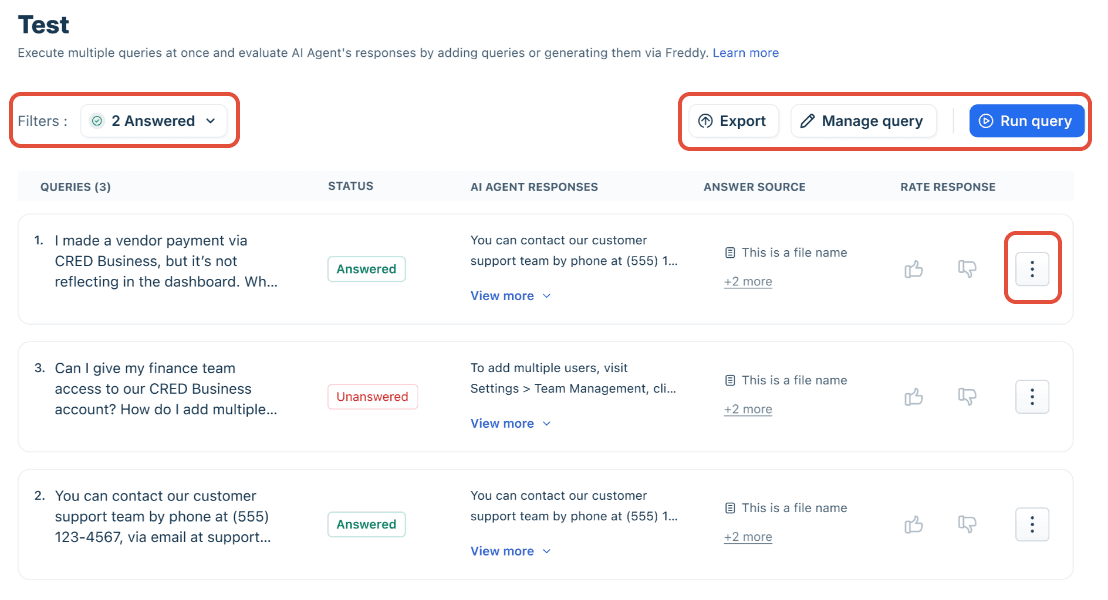
For logistics specifically, the Freddy AI Agent's 50+ pre-built Agentic Workflows include patterns that fit shipment and order workflows reasonably well, and the AI Agent Studio is one of the cleaner "no-code" admin surfaces among the helpdesk crowd. Freshcaller covers the voice side, which matters if you take dispatch calls.
Pricing. Two parallel ladders, a Freddy AI add-on track that crosses both.
| Plan | $/agent/mo (annual) | Notes |
|---|---|---|
| Freshdesk Free | $0 | 1-2 agents, 6 months only |
| Freshdesk Growth | $19 | Ticketing-led |
| Freshdesk Pro | $55 | Ticketing-led |
| Freshdesk Enterprise | $89 | Ticketing-led |
| Omni Growth | $29 | Omnichannel + AI |
| Omni Pro | $79 | Adds Copilot eligibility |
| Omni Enterprise | $119 | Adds Copilot eligibility |
The Freddy AI Copilot add-on is $29 / agent / month on Pro and Enterprise. Freddy AI Agent gives you 500 free sessions, then session packs (the Q4 2025 earnings disclosed a list-price increase from $0.10 to $0.50 per interaction, so model your costs against the new rate, not the old one).
Who it is for. Mid-market shippers, 3PLs, and freight forwarders that want omnichannel and AI without writing a Zendesk-sized cheque. Solid choice if you are growing past 10 agents and starting to hit the limits of a lighter helpdesk.
Where it falls short. Reviewers on G2 (where it sits at 4.4 / 5 from 3,728 reviews) consistently flag analytics and reporting flexibility as the weakest area, and click-depth on common actions is the second. The split between standalone Freshdesk and Omni is also a confusing buying decision: the AI Agent Studio docs make clear that knowledge ingestion is capped at 200 files and 10 URLs per agent, with no native connector for Confluence, Notion, or SharePoint. If your runbooks live in Confluence or a Drive folder, factor in either a manual export workflow or a layer like eesel that can read those sources directly.
3. Front
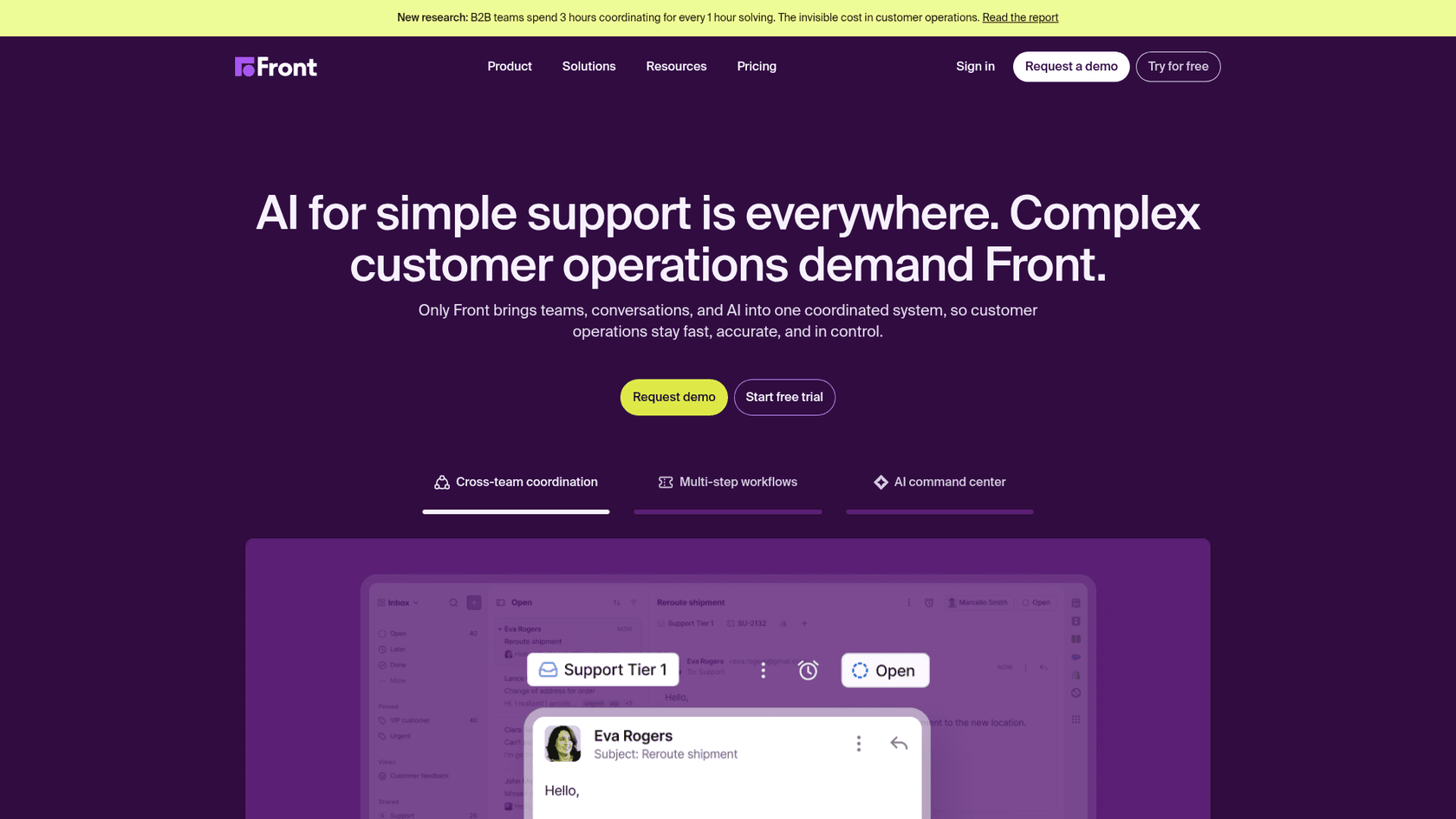
Front is the only platform on this list that explicitly markets itself for "complex customer operations in industries like logistics and manufacturing," and it is not just marketing. The product genuinely fits how freight, dispatch, and ops teams already work. They live in shared inboxes, they assign emails to colleagues, they need to see the whole conversation history with a customer, and they care about who replied last. Front nails that workflow. The platform is now trusted by more than 9,000 companies globally, with 4.7 stars on G2 across 2,429 reviews.
The shared-inbox primitive is what Front does better than anyone else. Multiple teammates can see and reply on the same thread, with internal @-mentions, shared drafts, and clear assignment so two reps do not double-reply to the same customer. For a freight forwarder running 24-hour ops across regions, that handoff is the actual product.
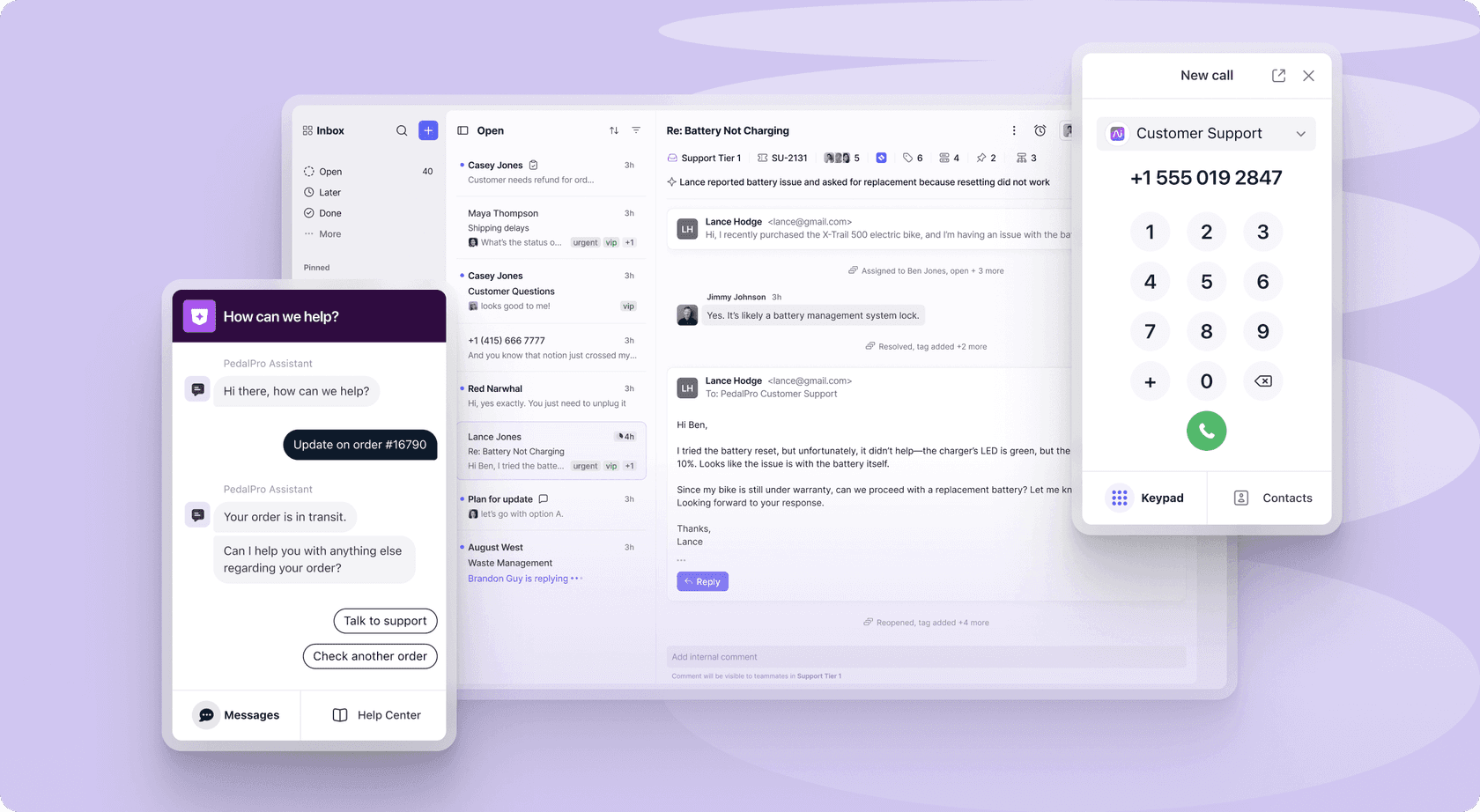
The AI layer has caught up. Front AI breaks into three pillars (Automate, Assist, Analyze): Autopilot is the autonomous agent that runs end-to-end "Playbooks" across systems and is claimed to resolve up to 70 percent of customer requests; Copilot is the agent-side helper that drafts replies grounded in conversation history and CRM data; Smart QA scores 100 percent of conversations for sentiment and quality. The integrations marketplace is 160+ and includes the operations tools logistics teams already use (Salesforce, Asana, Jira, plus industry-specific connectors).
Pricing. Three published tiers, annual.
| Plan | $/seat/month | Cap | Notable |
|---|---|---|---|
| Starter | $25 | Up to 10 seats, single channel type | Shared inbox, basic automations |
| Pro | $65 | Up to 50 seats | Omnichannel, advanced analytics |
| Enterprise | $105 | No seat cap | AI Copilot and Smart QA included in base |
AI Autopilot is sold as an add-on with usage-based pricing. There is a 14-day free trial of the Professional plan with no credit card.
Who it is for. Operations-led teams that work in email more than they would like to admit, including freight forwarders, NVOCCs, customs brokers, last-mile dispatchers, and 3PL account managers. If your team's actual workflow is "Lisa replies to the customer, Mark adds the tracking, Priya pulls the carrier on a separate thread," Front turns that into a single visible thread instead of a forwarded email mess.
Where it falls short. Recent feedback on Capterra calls out steep price increases and enforcement of seat minimums on Growth and Scale plans, so model the bill carefully if your team grows past one tier. A move to one-way Outlook sync has frustrated long-term Outlook-heavy users; if your back-office runs on Outlook, do a structured pilot before standardising. Front is also weaker on classic ticketing concepts (status, fields, multi-stage SLAs) than Zendesk or Freshdesk; if you need formal ticket workflow you will hit the edges.
4. HappyFox
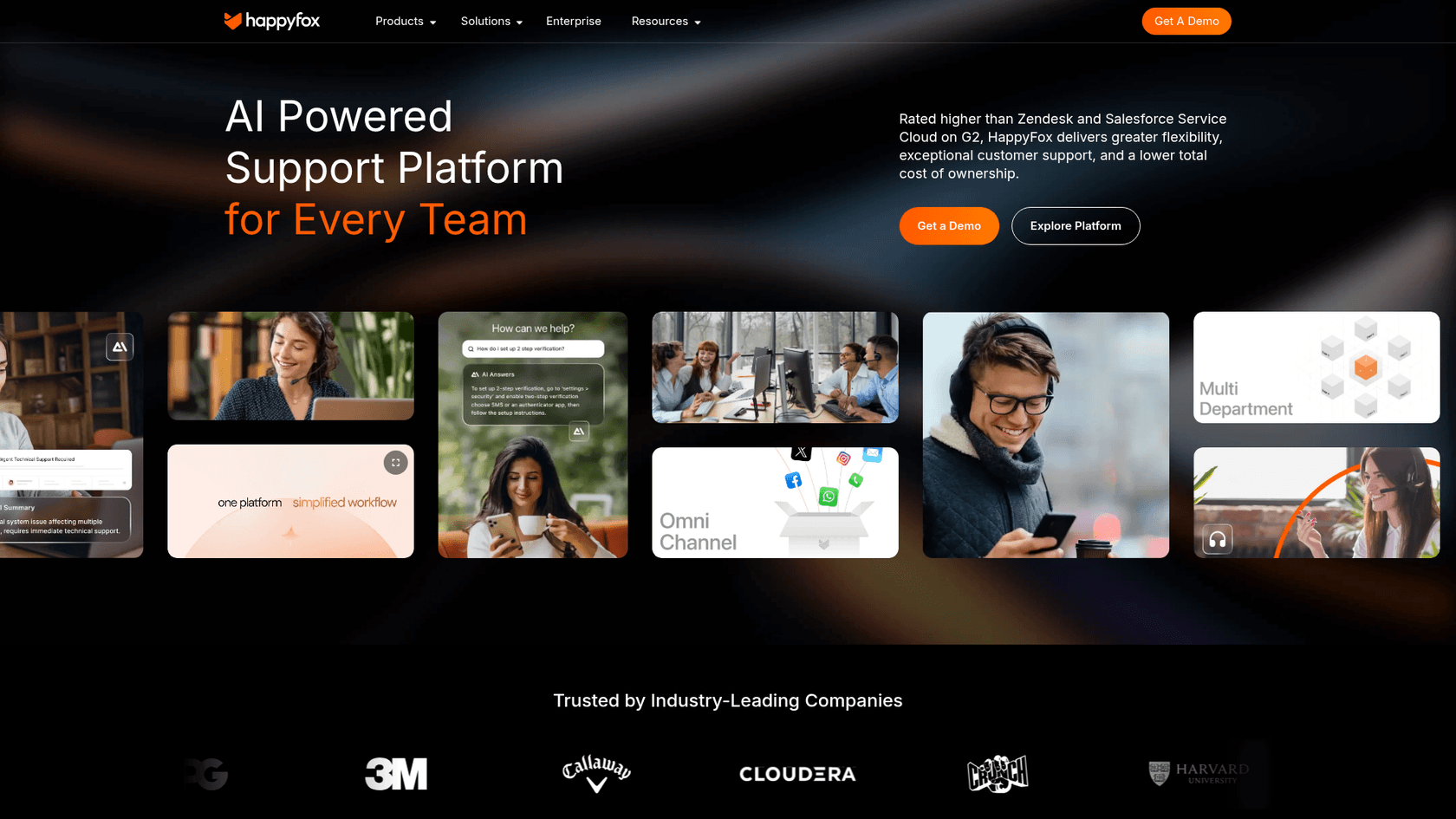
HappyFox is the only platform on this list with a dedicated transport and logistics solution page, which says something about how seriously they take the segment. The platform is now trusted by more than 12,000 companies in 70+ countries and posts 4.6 / 5 across 92 Capterra reviews. Reviewers consistently call it one of the most customizable help desks on the market.
The Smart Rules engine is the feature most often singled out as a differentiator. It is a powerful automation builder that handles complex ticket workflows (assignment, escalation, status, custom fields) without needing to bolt on a third-party tool. For a logistics team that runs SLA-bound responses across regions and shift patterns, the rules engine pays for itself fast.
The AI suite is structured into three pieces. HappyFox AI handles ticket summaries, response suggestions, and triage on the agent side. Assist AI is a conversational assistant for IT and HR teams that lives directly in Slack and Microsoft Teams (relevant for the internal helpdesk side of a logistics company, where dispatch, fleet, and warehouse leads need answers in chat). The chatbot side handles customer-facing automation. AI features are billed as a separate add-on, ranging from $14 to $39 per agent per month.
Pricing. HappyFox runs two distinct purchase models, which is not standard. All prices below are annual-billed (paid up front) so they line up with the unlimited-agent plans, which are annual-only.
| Plan | Price (annual billed) | Notes |
|---|---|---|
| Basic | $24 / agent / month | Max 5 agents, omnichannel ticket creation, SLA, KB |
| Team | $49 / agent / month | 5-agent minimum, multi-brand, custom roles |
| Pro | $99 / agent / month | 5-agent minimum, agent collision, task and asset management |
| Enterprise PRO | Contact sales | 5-agent minimum, agent scripting, 24/7 phone support |
| Growth (Unlimited Agent) | $1,999 / month | 20,000 tickets / year, 20 custom fields, 10 brands |
| Scale (Unlimited Agent) | $3,999 / month | 150,000 tickets / year, 100 custom fields |
| Scale Plus (Unlimited Agent) | $5,999 / month | 300,000 tickets / year, 200 custom fields, 25 brands |
| Ultimate (Unlimited Agent) | Contact sales | 1,000,000 tickets / year, 300 custom fields, 50 brands |
The 5-agent minimum on Basic knocks startups out of the cheapest tier. Unlimited-agent plans are paid annually or on a 2-year up-front commitment (no month-to-month) and are the right call for high-headcount, lower-volume teams — think a 200-driver carrier with seasonal dispatchers, where ticket volume sits well under the cap.
Who it is for. Mid-market 3PLs, freight forwarders, and carriers that want a helpdesk that already knows about SLAs, vendor-side comms, and shipment workflows out of the box. Customers in the segment include Whirlpool, Jet Aviation, and Sonepar on the public logo wall, with the transport-logistics page calling out shipping operations and vendor SLA tracking specifically.
Where it falls short. TechRadar's hands-on review calls out that HappyFox is "a powerful and easy to use system that isn't as competitively priced as it once was," and that comes through in user reviews too. Capterra reviewers note friction with the knowledge-base editor and challenges extracting specific metrics from reporting. The five-agent minimum is a real blocker for early-stage teams. Pair with eesel if you want AI deflection that can sit on top of HappyFox without paying the AI add-on per agent per month.
5. Zoho Desk
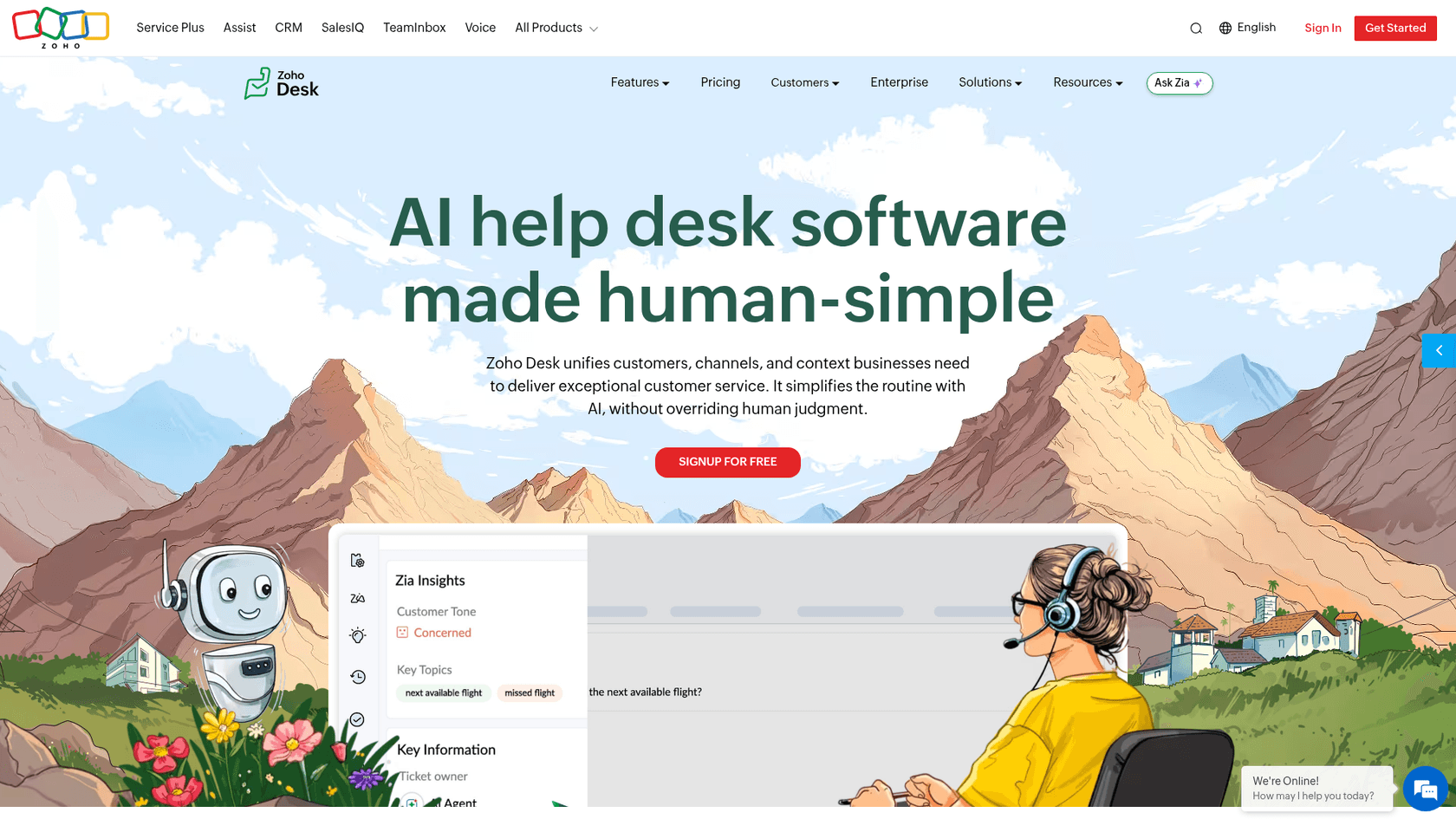
Zoho Desk is the value option on this list, and value is exactly what asset-light 3PLs and SMB carriers need when they are stitching together a tech stack. The platform is trusted by over 125,000 businesses globally and serves 33 million people daily, with 4.4 / 5 on G2. The Free tier covers up to three agents, which is enough for a single-region brokerage or a small fulfilment team to run real customer support without a credit card.
For logistics, the standout is omnichannel coverage. Zoho Desk centralises support from 10+ channels including WhatsApp, Instagram, Facebook, and telephony into a single inbox, which matters when a B2B shipper customer expects to reach you on WhatsApp Business and a B2C end-customer expects to reach you on Instagram DM. The Zoho marketplace lists 360+ apps, including the kind of CRM, accounting, and order-management tools an SMB logistics business already runs.
The AI side is built around Zia, Zoho's assistant. Zia drafts replies, summarises tickets, runs sentiment analysis, suggests knowledge-base articles inside the agent view, and powers an Answer Bot for customer-facing self-service. The honest caveat: most of the genuinely useful Zia features are gated to the Enterprise tier, so the $40 / agent / month price is what you should benchmark against, not the headline Standard $14.
Pricing. Five tiers, annual billing, USD.
| Plan | $/agent/mo (annual) | Notes |
|---|---|---|
| Free | $0 | 3 agents, basic ticketing, KB, mobile apps |
| Express | $7 | 5 agents, social channels, basic dashboards |
| Standard | $14 | Unlimited agents, IM, escalation SLAs |
| Professional | $23 | Round-robin, multi-brand, custom modules |
| Enterprise | $40 | Zia AI, advanced reporting, custom modules |
Who it is for. SMB carriers, brokers, asset-light 3PLs, and growing fulfilment teams that already use a Zoho product (CRM, Books, or Inventory) and want their helpdesk on the same data spine. Anyone who wants to start free and scale without a forklift upgrade.
Where it falls short. Capterra reviewers report that advanced automation features like Blueprints come with a steep learning curve, and that the mobile app's ticket-status sync can lag. The interface is generally praised but reviewers in technical roles describe it as cluttered at times. The biggest gap for a logistics buyer is depth of integrations outside the Zoho ecosystem; if your TMS or WMS is not on the marketplace and does not have a webhook, you will be doing more glue work than expected. eesel sits cleanly on top of Zoho Desk for AI deflection without forcing you onto Enterprise.
6. Kustomer
Kustomer takes a different shape from the rest of this list. It is a customer-service CRM, built on a unified customer timeline rather than a queue of tickets. For a high-volume retail logistics business (think DTC fulfilment, on-demand delivery, last-mile concierge), that timeline-first model maps better to how customers actually behave. The same person calls about a delivery, then chats about a refund, then DMs about the next order, and Kustomer keeps it on one timeline. The platform is now used by 600+ companies including Turo, Skims, sweetgreen, and HopSkipDrive, with 80% improvement in first response times cited as a headline metric.
The AI story is among the most ambitious on the list. Kustomer offers two distinct purchase paths: Kustomer AI sits on top of an existing helpdesk so you can deploy AI without ripping anything out, and Kustomer AI + Platform is the full platform replacement. The AI Agent Studio is a multi-agent builder with procedures, OpenAPI tools, observability traces, and (as of March 2026) bidirectional MCP support. AI for Reps adds Copilot and AI Summaries on the agent side, and Data Explorer is a natural-language reporting layer with 250+ prompt starters.
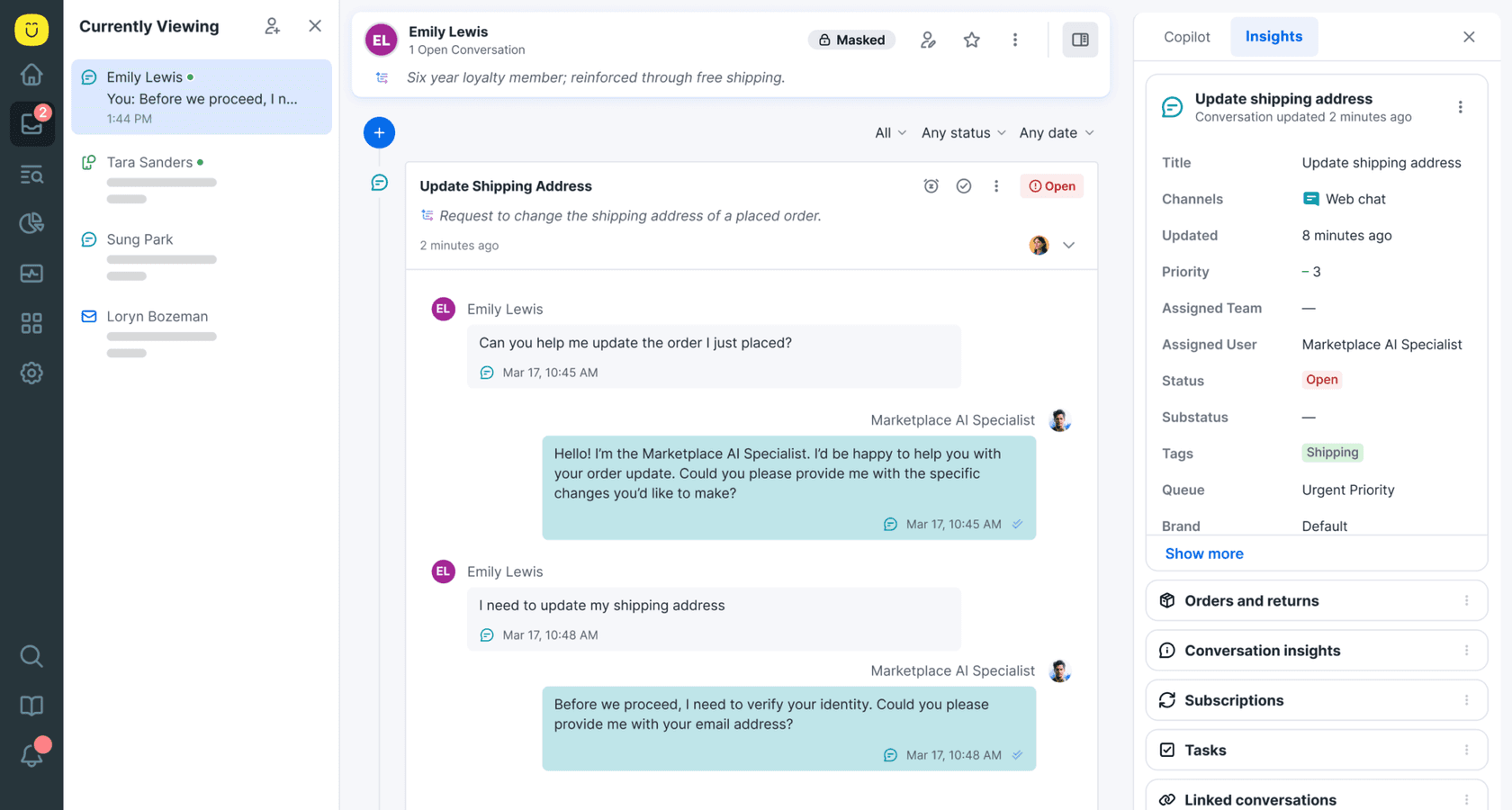
For logistics specifically, the unified timeline matters more than it sounds. Picking up an interaction mid-shipment when a customer has called twice, opened a chat, and emailed in a forwarded carrier notice, all about the same package, is the kind of context that decides whether the agent saves the relationship or torches it. Reviewers single out that timeline as the most-praised feature in G2 reviews.
Pricing. Sales-quoted, annual contract. The published numbers are usage-based add-ons.
| Item | Public price |
|---|---|
| Base platform fee | Sales-quoted |
| AI Agents for Customers | $0.60 per engaged conversation |
| AI Agents for Reps | $40 per user / month |
| HIPAA compliance | $25 per user / month |
| Kustomer Voice | $0.02 / minute starting |
| Outbound messages | $0.025 per message |
| Data storage | $50 per GB / month |
G2 reports a perceived cost of $$$$$ (top tier), and reviewers cite roughly 2 months to implement and 15 months to ROI.
Who it is for. High-volume retail logistics, DTC fulfilment with subscription patterns, on-demand delivery, and last-mile services where the conversation-CRM model maps to how customers actually behave. Mid-market and enterprise; G2's reviewer base is 354 mid-market vs. 118 SMB and 66 enterprise.
Where it falls short. The published price card stops short of base platform fees and per-seat license rates, so expect a structured procurement cycle. The top recurring complaint on G2 is performance lag, especially on the mobile app, and the knowledge-base authoring side is widely panned (a Quality Manager on G2 described it as "the biggest pain point... feels like an afterthought"). If you want the AI without the platform migration, the Kustomer AI tier is real, but most published case studies are full migrations from Zendesk.
7. Help Scout
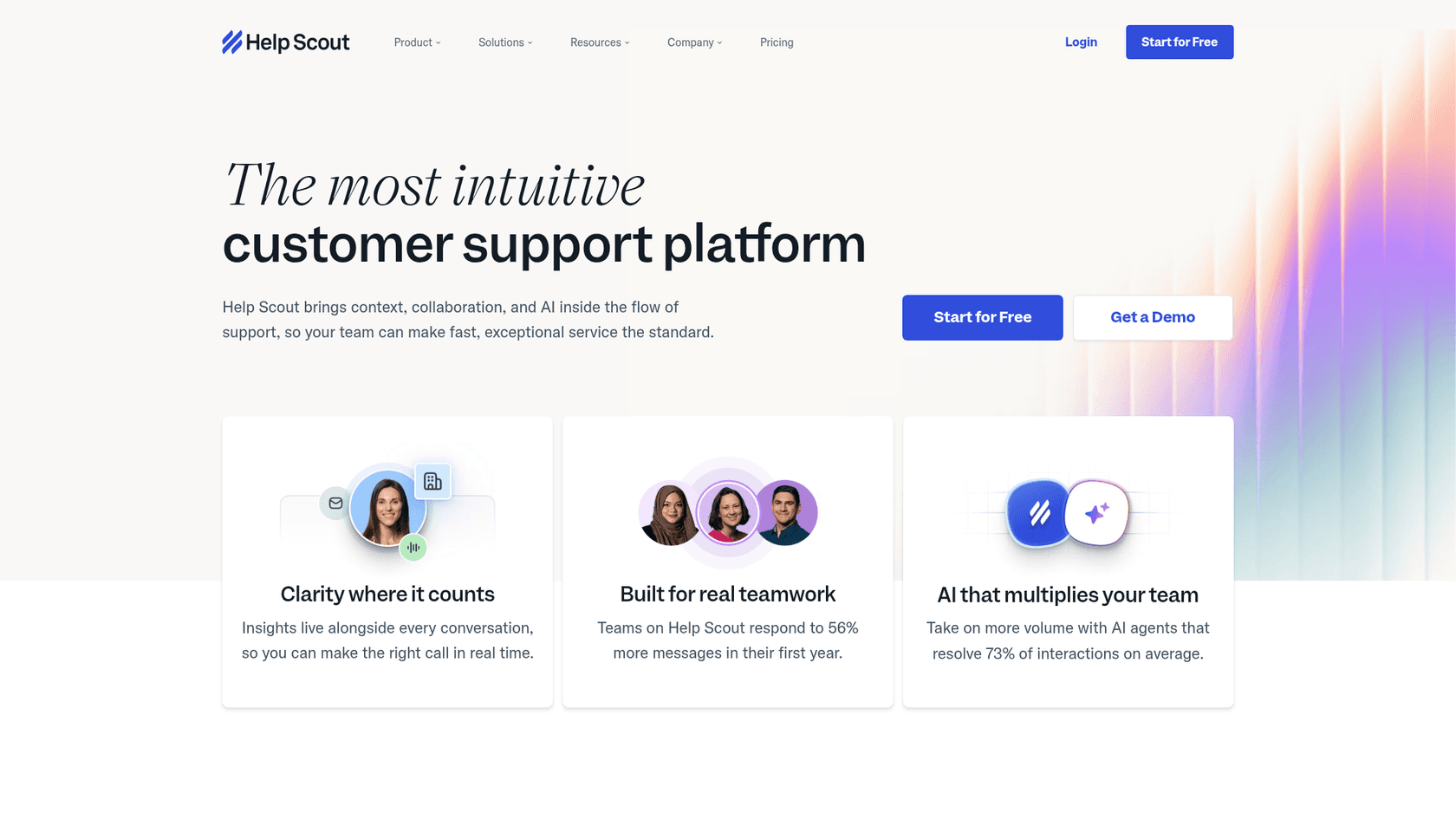
Help Scout is the lightweight pick. It is built around the philosophy that a customer should not feel like a ticket, and the product reflects that: a clean shared inbox, a no-nonsense knowledge base (Docs), and a chat widget (Beacon) that does not get in the way. The platform is trusted by 12,000+ companies including Buffer, Vimeo, Gusto, and Mixmax, with teams responding to 56 percent more messages in their first year on the platform.
For logistics, Help Scout fits a specific shape: D2C fulfilment, boutique freight, niche carriers, and asset-light 3PLs that are too small for Zendesk and want a more polished experience than the Zoho Desk Free tier. The interface is consistently called out as the most intuitive on the market, which means new agents (including peak-season hires) are productive in days, not weeks.
The AI suite has firmed up in the last 12 months. AI Answers is the autonomous resolution agent, with a claimed 73 percent average resolution rate on inbound conversations. AI Drafts writes replies grounded in conversation history. AI Summarize compresses long threads. The pricing model on AI Answers is the cleanest on this list: $0.75 per successful resolution after a 3-month free trial, no per-seat AI fee, no Pro-tier dependency.
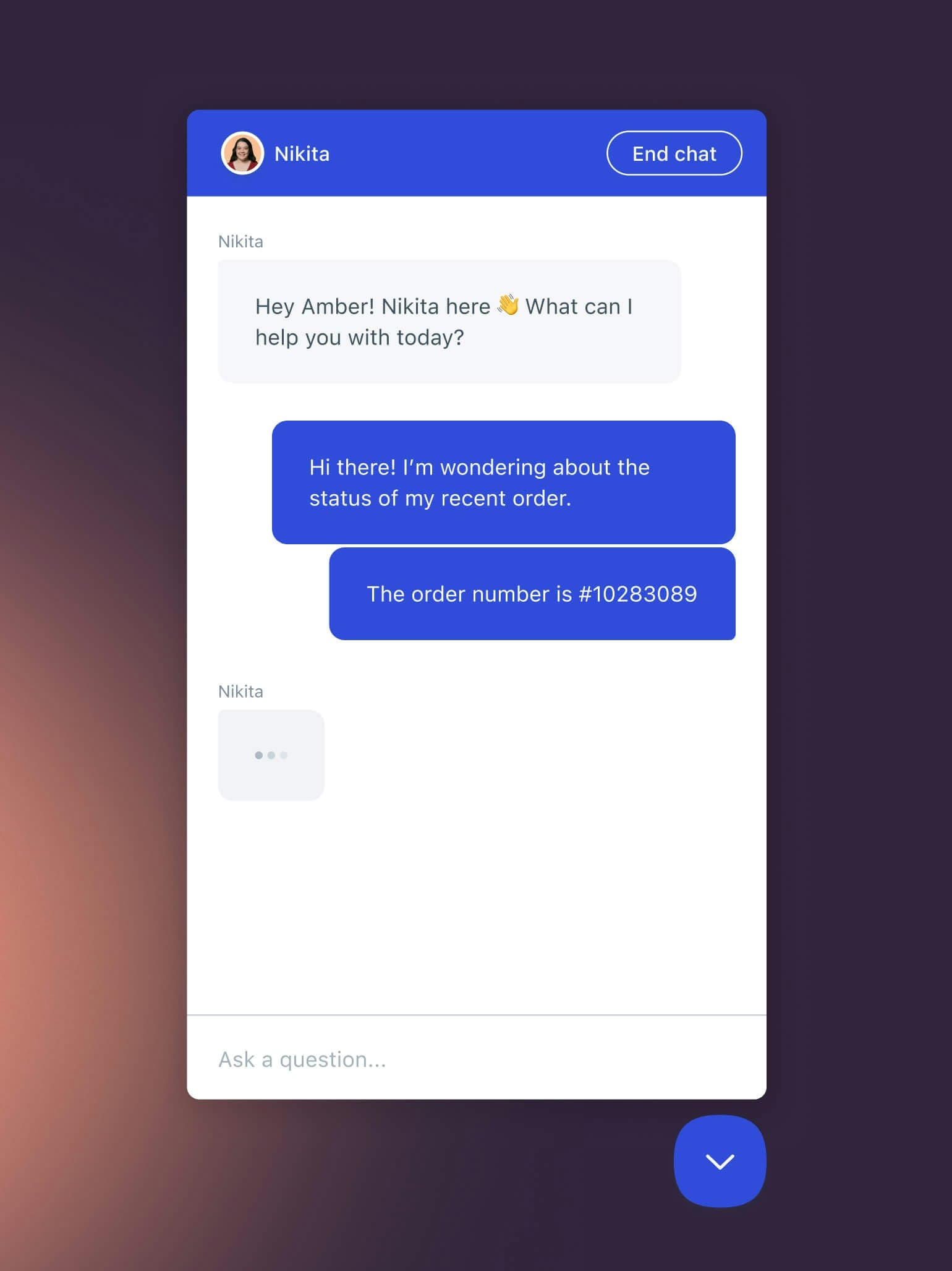
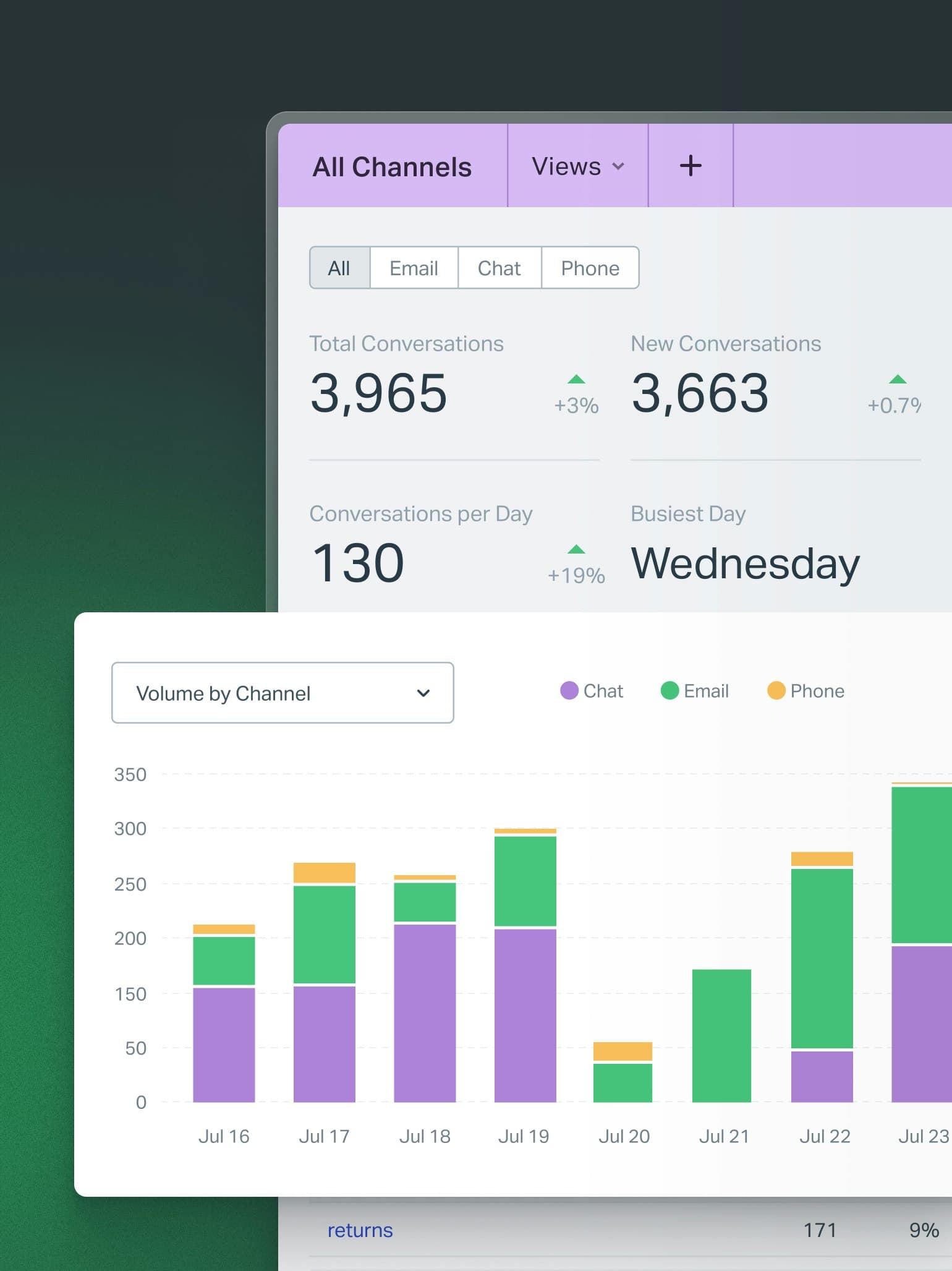
The Beacon widget above is exactly the surface a logistics customer hits first when they want a tracking update, and the inbox UI that pops out behind it is where your agents pick up the messy 30 percent.
Pricing. Per-user model with a contact-based AI Answers add-on.
| Plan | $/user/mo (annual) | Notes |
|---|---|---|
| Free | $0 | Up to 5 users, 100 contacts / month |
| Standard | $25 | All channels, 2 help centers |
| Plus | $45 | WhatsApp, advanced integrations, 3 help centers |
| Pro | $75 | 10-user minimum, HIPAA, 5 help centers |
| AI Answers | $0.75 / successful resolution | 3 months free; no per-seat AI fee |
Who it is for. D2C shippers, boutique logistics teams, smaller fulfilment ops, and asset-light 3PLs who want a calm, well-built helpdesk and a usage-based AI bill. Strong fit if your team is between 3 and 30 agents and you do not need voice or formal ITSM-style ticket fields.
Where it falls short. Reviewers on Capterra and G2 note that advanced reporting is limited on smaller plans and that some long-time users find recent UX updates harder for agents to navigate. Voice is the biggest functional gap; if your dispatch desk runs on phone, Help Scout is not the right fit. Help Scout also leans toward English-language support; if you serve a multilingual carrier base, evaluate the translation gaps before standardising.
How to actually choose
Almost every logistics support team's choice comes down to four practical questions:
- What ops systems do we need to read from? If it is enterprise-grade (SAP TM, Oracle OTM, Manhattan, BluJay), Zendesk's marketplace and Kustomer's API surface are the realistic options. If it is a TMS with a public API and webhooks, every platform on this list works.
- Voice or no voice? Zendesk, Freshdesk, Zoho Desk, and Kustomer all do voice natively. Front does email-led omnichannel with voice via integrations. HappyFox includes voice on higher tiers. Help Scout does not do voice.
- What is the seat count, and is it seasonal? Per-seat pricing punishes teams that scale up for peak. HappyFox's unlimited-agent plans, Help Scout's contact-based AI billing, and Zoho Desk's Free tier all soften the seasonal blow.
- Where does the AI bill end up? Per-resolution AI (Help Scout, Zendesk's pay-as-you-go AR, Kustomer's $0.60 per engaged conversation) is predictable. Per-seat AI add-ons (Freshdesk Copilot, Zoho Enterprise) are predictable up to a point. Per-session AI (Freshdesk's Freddy AI Agent) needs careful modelling, especially after the list price moved to $0.50.
A pragmatic 2026 pattern is increasingly common: pick the helpdesk that fits your stack on the agent side, then layer an AI deflection tool on top that reads your tracking system and your knowledge sources directly. That keeps the helpdesk choice low-stakes (you can change it without losing the AI investment) and keeps the AI bill bounded by deflection value rather than seat count. eesel AI is built for that pattern. It sits on top of Zendesk, Freshdesk, Front, HappyFox, Zoho Desk, Kustomer, and Help Scout, reads tracking and order data via API, and resolves the "where is my shipment" tier-zero questions before they hit a human.
Conclusion
There is no single best helpdesk for logistics. There is the best one for an enterprise carrier with multi-region voice, the best one for a freight forwarder living in shared inboxes, the best one for a small DTC shipper, and the best one for a 200-driver fleet during peak. The seven above are the ones we keep seeing on real RFPs.
If you want to test the AI deflection layer before you commit to a helpdesk migration, start a trial of eesel and connect it to your existing helpdesk and tracking system. You will know within a week whether the math works for your shipment volumes, and the helpdesk choice can stay calm and unrushed while you do.

Frequently Asked Questions
Share this article

Article by
Stevia Putri
Stevia Putri is a marketing generalist at eesel AI, where she helps turn powerful AI tools into stories that resonate. She’s driven by curiosity, clarity, and the human side of technology.