A practical guide to automated SEO: How to work smarter, not harder

Stevia Putri

Katelin Teen
Last edited January 12, 2026
If you're in SEO, you know the grind. It feels like a constant cycle of keyword research, content writing, audits, link building, and report analysis. You finish one task, and three more pop up. It can be pretty draining.
That's where automated SEO steps in. This isn't about letting a robot take the wheel of your entire strategy. It's about using smart tools to take over the tedious, repetitive jobs so you can spend your time on work that actually makes a difference. In this guide, we'll cover what automated SEO is, which tasks you can offload, the best tools out there, and how to build an automation plan that gets results.
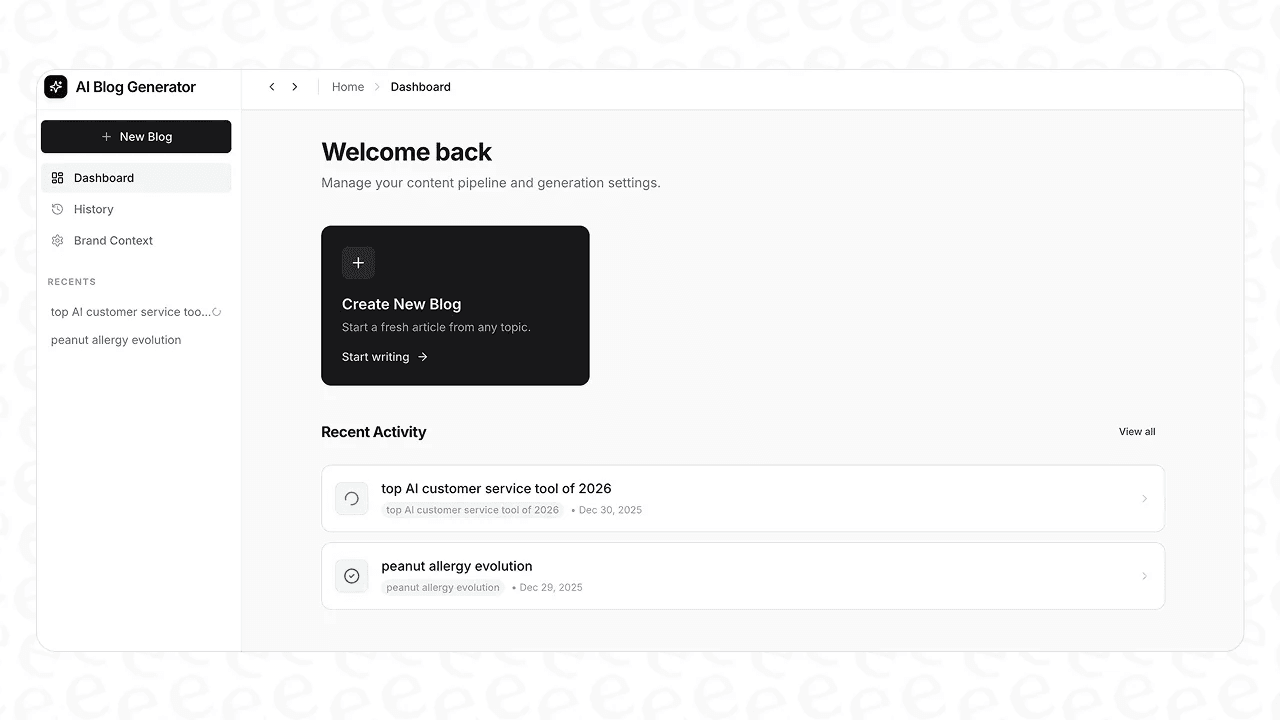
For many teams, the biggest time-suck is content creation. We get it, it takes forever. That's why we built the eesel AI blog writer. It does more than just generate a first draft; it creates a whole, publish-ready blog post. It’s the same tool we used to grow our blog from 700 to 750,000 impressions per day in just three months.
What is automated SEO?
Simply put, automated SEO is using software and AI to handle the repetitive, data-heavy parts of search engine optimization. It’s like having an incredibly efficient assistant who is a wizard with spreadsheets and runs on electricity, not caffeine.
But let's be clear: this isn't about firing your strategist. It's about giving them superpowers. Automation takes care of the grunt work, which lets you focus on bigger things like creative campaigns, brand strategy, and figuring out what your customers are actually looking for. Let the machines crunch the numbers so you can handle the critical and creative thinking.
The perks are pretty clear:
- Time savings: Think about all the hours you could get back each week if you weren't manually running technical crawls or piecing together performance reports.
- Improved accuracy: People make mistakes, especially when they're tired or staring at thousands of rows of data. Automation helps cut down on human error in tasks like rank tracking or site analysis.
- Scalability: You can manage a much larger website, or even a portfolio of client sites, without hiring a huge team. Automation lets you scale your efforts, not your payroll.
Key tasks for your automated SEO workflow
So, what parts of your daily routine can you actually hand off to a machine? SEO workflows generally break down into a few areas, and each has tasks that are perfect for automation.
Technical site monitoring and audits
This is all about using tools to crawl your site continuously and flag technical problems before they can damage your rankings. Instead of you manually checking for broken links each month, an automated tool can do it for you.
Tasks to automate:
- Finding broken links (404 errors) and messy redirect chains.
- Flagging pages that load slowly based on Core Web Vitals.
- Catching duplicate content issues or pages with missing meta tags.
For this, you can use tools like the Site Auditor from SearchAtlas, or more specialized crawlers like Screaming Frog and Sitebulb that can be set to run on a schedule.
Keyword research and rank tracking
This involves automating how you discover new keyword ideas and, just as important, how you monitor your performance for the keywords you're already targeting.
Tasks to automate:
- Generating long lists of relevant keywords, complete with search volume and difficulty scores.
- Tracking your keyword rankings daily or weekly to spot trends.
- Monitoring what your competitors are ranking for.
All-in-one platforms like Alli AI and SearchAtlas have this functionality built-in, alongside the well-known options like Semrush and Ahrefs.
Content creation and optimization
This is where things get really exciting. AI has completely changed the content game. It's now possible to streamline the whole process, from brainstorming an idea to having a complete article drafted and ready for your review.
Tasks to automate:
- Generating content briefs and outlines based on what's already ranking at the top.
- Optimizing existing articles for better readability and keyword focus.
- Creating full first drafts that are already aligned with what users are searching for.
This is an area where specialized tools really make a difference. While some platforms might just give you a block of text, the eesel AI blog writer produces a complete blog post with everything you need, including AI-generated images and infographics, relevant quotes, and proper formatting.
Link building and reporting
Even parts of the notoriously manual process of link building can be automated, not to mention the chore of putting together performance reports.
Tasks to automate:
- Link building: Automatically finding websites that could be good prospects for a backlink and getting alerts when your competitors earn a new one.
- Reporting: Creating live dashboards that pull data from Google Analytics, Search Console, and your rank tracker into one easy-to-read view.
Tools like SearchAtlas's outreach tool can help you find prospects, and Alli AI includes a link builder. For reporting, it's hard to beat the flexibility of Looker Studio (formerly Google Data Studio).
Top platforms for automated SEO
Alright, let's dive into a few of the top platforms available. Each one approaches automated SEO from a slightly different angle, so the best fit for you really depends on your biggest headache.
eesel AI blog writer: Content generation
- Best for: Marketing teams and agencies that need to produce high-quality blog content at scale without getting bogged down in writing and editing.
- Core function: It takes a single keyword and transforms it into a complete, SEO-optimized, and media-rich blog post. This isn't just a text generator; it's a full content production engine. It’s the exact tool we used to grow our blog traffic from 700 to 750,000 daily impressions in three months.
- Key differentiators:
- Context-aware research: The AI performs live research on your topic, ensuring the content is always fresh, accurate, and current.
- Automatic asset generation: It creates and embeds relevant images, charts, and data tables directly into the article, so you don't have to hunt for visuals.
- Authentic social proof: It automatically finds and integrates real user comments from Reddit and relevant YouTube videos, adding a layer of credibility.
- AEO optimized: The content is structured not just for traditional search engines (SEO) but also for AI Answer Engines like Google AI Overviews and Perplexity.
- Pricing: You can try it completely free to generate your first post. After that, the Early Bird plan is just $99 per month for 50 blog generations.
Alli AI: On-page and technical SEO at scale

- Best for: SEO agencies and businesses that manage a large number of websites. If you need to apply the same change across dozens of sites, this is your tool.
- Core function: Alli AI is a platform that lets you roll out on-page and technical SEO fixes across millions of pages from a single dashboard. It works with any CMS by adding a simple JavaScript snippet to your site.
- Key features:
- Bulk deployment: You can create one optimization rule, like a new template for title tags, and push it live to thousands of pages across all your sites instantly.
- AI crawler enablement: Its AI Search Visibility Engine is pretty neat. It helps AI crawlers from tools like ChatGPT and Claude understand the content on modern JavaScript sites (like those built with React or Vue), which can often look like blank pages to them.
- Live editor: It has a visual editor that lets you make quick SEO changes directly on a webpage and publish them without needing a developer.
- Limitations: While it's powerful for technical SEO at scale, it focuses on optimizing existing code and structure rather than generating new content.
- Pricing: Plans start at $299/month for the Business plan, which covers 5 sites and up to 1,250 pages.
SearchAtlas OTTO: Holistic SEO campaigns

- Best for: Teams looking for a single, all-in-one platform to manage just about everything: technical, on-page, off-page, and content.
- Core function: SearchAtlas uses an AI agent called OTTO SEO that connects to your site and essentially runs your SEO strategy for you. It handles everything from fixing technical issues to generating content and building links.
- Key features:
- Full-scope automation: OTTO manages technical fixes like meta tags and schema, optimizes on-page elements, generates new content, and even performs automated link building.
- Dynamic indexing: It automatically submits your newly optimized pages to Google to try and get them indexed more quickly.
- OTTO Deep Freeze: This feature allows you to keep all the optimizations live on your site even if you cancel your subscription, as long as you leave their pixel on your site.
- Limitations: The platform is comprehensive, so users new to SEO may need some time to learn all its features. As an all-in-one solution, teams looking for deep specialization in a single area, like content generation, may also consider dedicated tools for more granular control.
- Pricing: OTTO SEO is part of the Search Atlas subscription plans, which start at $99/month for one AI SEO Project.
How to build a smart automated SEO strategy
Jumping into automation can feel like a lot, but you don't have to automate everything at once. The trick is to be strategic about it.
Audit your workflow and identify bottlenecks
First, map out your current SEO process. What do you and your team spend the most time on each week? Is it writing first drafts? Pulling data for monthly reports? Combing through your site for broken links? Be honest about where your time is going. The tasks that are the most repetitive and time-consuming are the best candidates for automation.
The 2 things that used to take 90% of time. 1. Writing 2. Link Building

Start small with high-impact tasks
Don't try to automate your entire workflow in one go. Pick one or two areas to start. For most teams, the biggest time-sink with the highest potential return is content creation. Automating your first drafts can free up dozens of hours a month.
Here’s a simple way to look at it:
| Task Category | Time Spent per Week | Potential for Automation | Recommended Tool |
|---|---|---|---|
| Content Creation | 15+ hours | High | eesel AI blog writer |
| Technical Audits | 5-10 hours | High | SearchAtlas Site Auditor |
| SEO Reporting | 4-8 hours | High | Looker Studio, SearchAtlas Report Builder |
Maintain human oversight
This is the most important part. Automated SEO isn't a "set it and forget it" deal. You still need a human expert to guide the strategy, review the output, and give the final sign-off. An unreviewed AI-generated article can create more problems than it solves. Think of AI as your incredibly fast first drafter. It provides a great starting point, but it's your job to add the unique insights, personal stories, and brand voice that make the content truly valuable.
Not sure if there are any fully automated SEO tools that are worth it. Mostly because SEO still needs to be human-centric and a human needs to be in the driving seat making the decisions. Without that, AI will likely screw you.
To see these concepts in action, it can be helpful to hear from experts who are already using AI in their day-to-day SEO work. The video below offers a practical look at which tasks are ripe for automation and which still benefit from a human touch, reinforcing the importance of a balanced strategy.
Putting your SEO on autopilot the right way
Automated SEO isn't just a nice-to-have anymore; it's a key part of any modern marketing strategy. It helps you save time, reduce errors, and scale your efforts in ways that simply aren't possible by hand. It's all about working smarter, not harder, by letting intelligent tools handle the repetitive work.
The goal isn't to remove humans from the process. It's to free them up to focus on what they do best: strategy, creativity, and building genuine connections with customers.
Content creation is often the most powerful but also the most time-consuming piece of the SEO puzzle. That makes it the perfect place to begin your automation journey. The eesel AI blog writer was designed to solve this exact problem. Why not give it a try? You can generate your first publish-ready blog post completely for free and see for yourself how much time you can reclaim.

Frequently Asked Questions
Share this article

Article by
Stevia Putri
Stevia Putri is a marketing generalist at eesel AI, where she helps turn powerful AI tools into stories that resonate. She’s driven by curiosity, clarity, and the human side of technology.
