Anyword vs Semrush: Which tool is right for your content strategy?

Stevia Putri
Last edited January 18, 2026
Marketing teams have a tough job. You’re always trying to create content that connects with people and climbs the search rankings on Google.
The number of tools out there promising to make this easier is just dizzying, leaving you wondering where to put your budget for the best return.AI text writing tools: -Fraise -Writesonic -Jasper -Rytr -Anyword -Simplified -Peppertype -Scalenut -ChatGPT tool. Grammatical checkers: -Grammarly -Language tool (plugin). Content analyzers: -Surfer SEO -SE Ranking marketing content tool -BuzzSumo -Semrush checker -Marketing Hub

Often, it comes down to a fundamental choice: do you need a specialized AI writer that perfects your copy, or a huge SEO platform to guide your whole strategy? That’s really the core of the Anyword vs Semrush debate. Anyword is an AI copywriting tool built to get conversions, while Semrush is the industry heavyweight for all things SEO and digital marketing.
If I had to pick one tool that did everything pretty well it would be Semrush at the moment. Ahrefs has stronger SEO specific features (IMO) but isn't quite as complete for content marketing and other things.
In this guide, we'll pull back the curtain on both platforms, comparing them on the features that actually matter so you can make a smart decision for your team. For anyone who feels caught in the middle and wants to automate blog creation from start to finish, we'll also talk about a third option. Tools like the eesel AI blog writer were created to bridge that exact gap, blending SEO smarts with automated writing.
Anyword vs Semrush: What are these tools?
At a glance, you might think Anyword and Semrush are in the same category since they both deal with content. But they’re actually built to solve very different problems. It’s like comparing a specialist to a general practitioner; you need both, but for totally different reasons.
What is Anyword?
Anyword is an AI-powered copywriting platform. Its whole purpose is to help you generate marketing copy that gets people to act. We're talking about the text for your social media ads, landing page headlines, product descriptions, and email campaigns.
A key feature is its ability to generate multiple copy variations and give each one a predictive performance score. This score tries to estimate how well a piece of copy will land with a specific audience, which helps take some of the guesswork out of A/B testing. It’s all about crafting that perfect short-form message to get a click, a sale, or a signup.
What is Semrush?
Semrush, on the other hand, is an all-in-one SEO and digital marketing platform. It’s a massive tool that has become an industry standard for good reason. It is not designed just to help with writing but to provide a bird's-eye view of your entire online presence.
Marketers use it for deep keyword research, checking out competitor strategies, tracking backlinks, and running technical site audits to find and fix SEO problems. While its scope is huge, it does include a Content Marketing Toolkit. This part of the platform helps you research topics, create data-driven content briefs, and optimize your writing for on-page SEO.
Comparing core features
To really understand the difference, you have to look at who each tool is for and what they do on a daily basis. This is where their separate roles in a marketing workflow become obvious.
Anyword: Performance-driven copywriting
Anyword is zeroed in on one thing: generating copy that drives action. It’s less about long-term organic growth and more about getting immediate results.
You'd use Anyword when you need to quickly create dozens of ad copy variations for a Facebook campaign, write compelling product descriptions that sell, create social media posts that get likes and shares, or craft website headlines that stop visitors from leaving immediately. Its key features revolve around its copy intelligence, the predictive performance scores we mentioned, and brand voice management that keeps your copy consistent. This tool is a great fit for performance marketers, copywriters, and e-commerce managers. If your main goal is to boost conversion rates on specific marketing assets, Anyword was built for you.
Semrush: Holistic SEO
Semrush is the command center for your entire organic marketing strategy. It gives you the data you need to make smart decisions that will pay off over months and years.
Semrush is your go-to for in-depth keyword research to find what your audience is searching for, analyzing your competitors' top pages, running technical SEO audits to make sure your site is in good shape, tracking your keyword rankings, and building a content plan based on real data. Its strengths are its massive keyword database, powerful backlink analytics, topic research tools, and site audit capabilities. It's the definition of an "all-in-one" solution. Semrush is designed for SEO specialists, content strategists, and marketing agencies responsible for a company's overall online visibility. If you're managing the big picture, this is your tool.
Content creation capabilities
Alright, let's get down to it. How do these two tools actually help you create content? Their methods couldn't be more different.
Anyword's content generation
Its biggest advantages are speed and variety. In just a few minutes, you can have dozens of options for an ad or a headline, complete with scores to help you pick a winner. It’s excellent for direct-response marketing, where the goal is to get an immediate click or sale. However, Anyword is not built for creating long-form content. If you're trying to write a deeply researched, 2,000-word blog post, this isn't the right tool for that job. It shines with short, punchy copy, not comprehensive articles.
Semrush's content marketing toolkit
Semrush doesn't write for you. Instead, it acts as your super-smart SEO strategist, guiding you or your writer toward creating content that has the best possible chance of ranking.
The whole process is driven by data. You're not just guessing what Google wants to see; you're building content based on a detailed analysis of what's already performing well. It gives you an incredible foundation for a successful SEO content strategy. The main limitation is that Semrush doesn't do the writing. It provides the brief and the checklist, but a human still has to put in the hours to research, write, and edit the actual article. It’s an assistant, not an author.
The alternative for automated blog generation: eesel AI
So, what if you're stuck in the middle? You appreciate the SEO intelligence that Semrush offers, but you don't have the time or people to manually write every single blog post. And you need more than the short snippets that Anyword creates. You need full, long-form blog posts, and you need a lot of them.
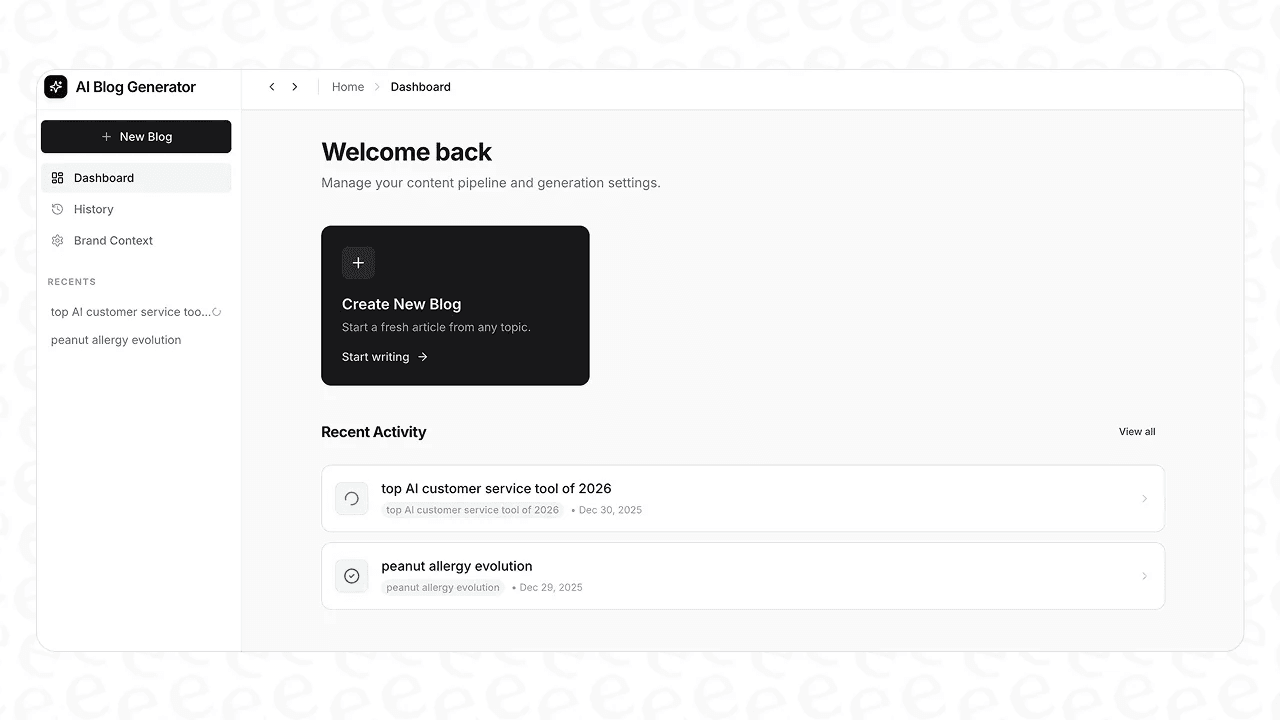
It was designed to solve this exact problem by turning a single keyword into a publish-ready, SEO-optimized blog post. This is not just hypothetical. It's the exact tool we used at eesel AI to grow our organic traffic from 700 to 750,000 daily impressions in just three months by publishing over 1,000 optimized blogs.
Here’s what makes it different:
- Complete content, not snippets: Unlike Anyword's focus on short copy, the eesel AI blog writer delivers a full article. You get an intro, a structured body with headings, a conclusion, and even an FAQ section, all from one keyword.
- Fully automated writing: It doesn't just give you a brief like Semrush. It does the heavy lifting of research and writing for you, turning a process that takes hours into one that takes minutes.
- Assets included: It saves time by automatically generating and including relevant images, tables, and infographics directly within the article. No more searching for stock photos.
- Rich media integration: To add more depth, it can embed relevant YouTube videos and pull real quotes from Reddit forums, making your content more engaging and trustworthy.
- Context-aware research: The AI is smart enough to understand what kind of blog post you're creating. If it's a comparison post, it will look for pricing data. If it's a review, it will pull technical specs.
For teams focused on scaling their content engine and driving organic traffic through high-quality blogs, it fills the gap that Anyword and Semrush leave open.
Pricing comparison: Anyword vs. Semrush
Pricing is always a big deal, so let's break down what you can expect to pay for each tool. Just a heads-up, this info is based on their public pricing pages in early 2026 and can always change.
Anyword pricing
Anyword offers a few different tiers, which makes it accessible for smaller teams and freelancers.
- Free: A plan to try out the basic features.
- Starter: Starts at $39 per month (billed annually) for one seat and includes basic copy generation tools.
- Teams: Starts at $49 per user per month (billed annually) and adds features like brand voice management and more advanced tools.
- Business: Custom pricing for larger organizations that need enterprise-level features, security, and support.
Semrush pricing
Semrush is positioned as a premium, all-in-one suite, and its price tag reflects that. It's a serious investment, but many teams find the comprehensive data is worth it.
- Pro: $129.95 per month. Aimed at freelancers and small teams, it gives you access to the core SEO, PPC, and research tools, but with limits on projects and reports.
- Guru: $249.95 per month. This is their most popular plan, designed for growing marketing agencies and SMBs. It includes everything in Pro plus features like the Content Marketing Toolkit, historical data, and branded reports.
- Business: $499.95 per month. Built for large agencies and enterprises, this plan offers the highest limits, API access, and more advanced reporting features.
While looking at features is important, seeing these tools in action can provide a different perspective. For a closer look at how AI writing tools like Anyword compare to others in the market, check out this video review.
Anyword vs Semrush: Which tool should you choose?
Here’s the final takeaway:
- Choose Anyword if: Your main job is to write and test high-converting, short-form copy. If you live and breathe A/B tests for ads, social media posts, and landing pages, Anyword will speed up your workflow significantly.
- Choose Semrush if: Your job is to manage the entire SEO and content strategy. If you're responsible for everything from keyword research and competitor analysis to technical audits and rank tracking, Semrush is your command center.
But if you've read this far and realized your biggest challenge is actually scaling the production of high-quality, long-form blog content to drive organic traffic, then neither tool is the perfect fit. You need a solution that combines data-driven SEO with automated writing.
To see how you can turn a single keyword into a complete, SEO-optimized blog post in minutes, try the eesel AI blog writer for free.

Frequently Asked Questions
Share this article

Article by
Stevia Putri
Stevia Putri is a marketing generalist at eesel AI, where she helps turn powerful AI tools into stories that resonate. She’s driven by curiosity, clarity, and the human side of technology.