AI SEO agents explained: A practical guide to automating your workflow

Stevia Putri
Written by

Stevia Putri

Reviewed by

Katelin Teen

Last edited February 2, 2026

Expert Verified

Image alt text

If you're in SEO, you know the drill. You're juggling algorithm updates, SERP analysis, keyword tracking, site audits, and somehow, you're also supposed to create content people actually want to read. It feels like you need a half-dozen different tools and a few extra hours in the day to keep all the plates spinning.

That's the problem AI SEO agents are trying to solve. They represent the next step for SEO tools, built not just to show you data, but to automate entire workflows. Think of them as an assistant that connects the dots between keyword research, content creation, and performance tracking, so you don't have to.

In this guide, we’ll get into what these agents are, what they can do, where they stumble, and how to pick one. We'll also show you how a specialized agent like the eesel AI blog writer can fix the single biggest bottleneck for any SEO strategy: creating great content at scale. It's the same tool we used to grow our own site from 70k to over 750,000 daily impressions in just three months.

The dashboard for the eesel AI blog writer, an example of AI SEO agents explained in the article.

To put it simply, the jump from old-school SEO tools to AI agents is a big one. Traditional tools give you ingredients, general AI chatbots give you a recipe, but AI SEO agents can actually start cooking for you. They connect to live data, understand task sequences, and take action, getting you from analysis to execution way faster.

What Are AI SEO Agents?

So, what is an "AI SEO agent," anyway? In short, it's an AI-powered assistant that can run related SEO tasks on its own, without you having to manage every single step. It’s designed to act on data, not just show it to you.

This is a major change from the tools most of us are used to.

How They Differ From Traditional SEO Tools

Your classic SEO tools like Ahrefs or SEMrush are fantastic for data. They give you domain authority, track keyword rankings, and find backlinks. But it's on you to sort through all that information and decide what to do next.

Here’s a quick example: imagine your traffic for a key page suddenly tanks.

  • A traditional tool will show you a graph with a steep downward line. It reports the problem.
  • An AI SEO agent can take it further. It might analyze the SERP for that keyword, see what competitors are doing, check your on-page SEO, and then suggest a specific plan to fix it. It helps solve the problem.

How They Differ From General AI Chatbots

So why not just use ChatGPT for all this? The main difference is the data. General chatbots are trained on a huge but static dataset. Their knowledge is essentially frozen at a certain point in time.

AI SEO agents, however, are built to connect to live, real-time data. They can see what the SERPs look like today, pull data from your Google Search Console, and analyze your competitors' newest content. This makes their advice timely and relevant, not just based on what the internet looked like a year ago.

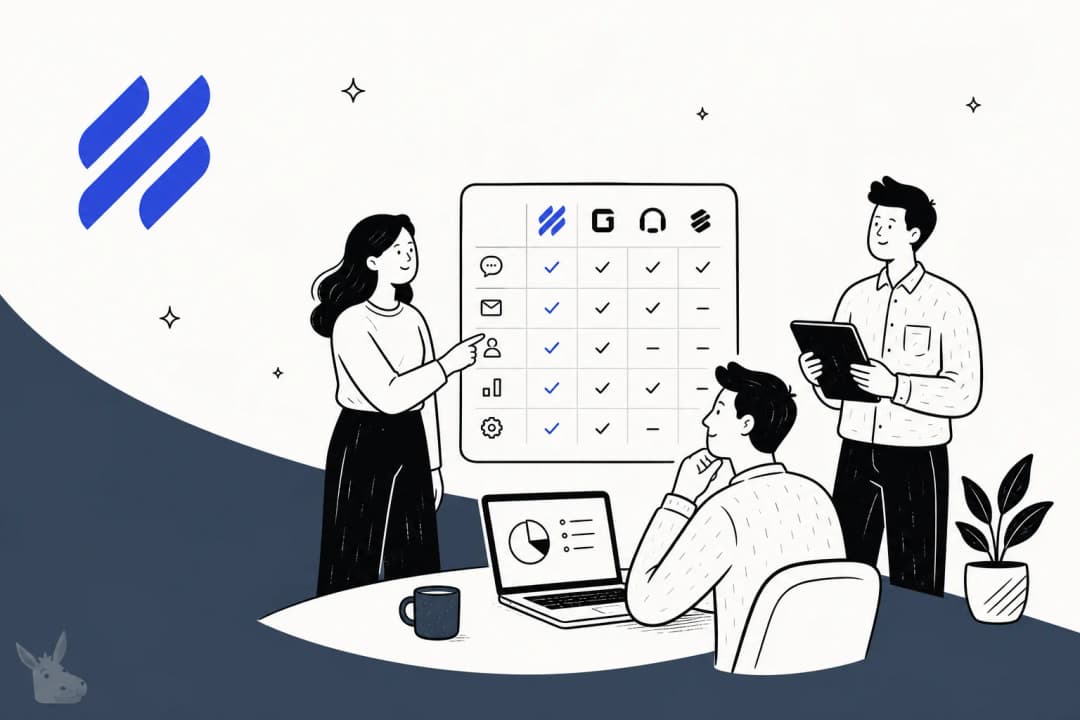
Here’s a quick breakdown:

CapabilityTraditional SEO ToolsGeneral AI Chatbots (e.g., ChatGPT)AI SEO Agents
Primary FunctionProvides raw data and reportsGenerates text and answers questionsAutomates multi-step workflows
Data AccessRelies on its own indexed databaseUses static, pre-trained dataConnects to live, real-time data (GSC, SERPs)
OutputDashboards and spreadsheetsConversational text or codeActionable plans, optimized content, alerts
AutonomyFully manual; requires user interpretationRequires specific prompts for each taskCan execute a sequence of tasks autonomously

An infographic comparing traditional SEO tools, general AI chatbots, and AI SEO agents explained across four key capabilities: function, data access, output, and autonomy.

Core Capabilities of AI SEO Agents

Now for the interesting part: what can these things actually do? Their skills usually fall into three main areas: research, execution, and monitoring.

Reddit
I've been automating SEO tasks like data analysis and content optimization for over a year now, and it's working quite well. The data analysis, in particular, works like a charm because I incorporate my own logic into SQL queries and then pass the results to my AI Agents. This approach has significantly improved my results.

Automated Research and Analysis

This is where AI agents can save you a ton of time. Instead of you spending hours sifting through spreadsheets, they can bring the insights to you.

  • Keyword research & clustering: Give an agent a broad topic, and it can return a list of valuable keywords, then automatically group them into logical topic clusters based on search intent. This helps you build topical authority much more efficiently.
  • SERP analysis: Before you write anything, an agent can analyze the top-ranking pages for your target keyword. It can identify common structures, formats, key themes, and questions being answered, giving you a data-driven blueprint for your content.
  • Technical SEO audits: Agents can crawl your site on a schedule, automatically flagging things like broken links, slow pages, missing alt text, or schema errors before they turn into bigger headaches.

Autonomous Content and On-Page Optimization

After the research, some agents can help with the actual work. This is where you'll see a lot of variation between different tools.

Reddit
I helped an eCommerce company with over 50,000 skus to improve their product descriptions using AI Agents. The one I made does in fact work. It isn't productized in any way though, just 5 n8n workflows I have that work together + a ton of hours prompt engineering & scraping competitors.
  • Content generation: Many agents can take a keyword and generate an outline or even a full first draft. But the quality can be hit-or-miss. Some give you a decent starting point, while others produce generic, robotic text that needs a total rewrite.
  • On-page SEO: These agents can make precise on-page tweaks, like rewriting title tags and meta descriptions to boost click-through rates or automatically adding schema markup to help you land rich snippets.
  • Internal linking: A good internal linking strategy is key for SEO, but it's a pain to manage by hand. An agent can scan your existing content and suggest relevant internal links for new posts, helping spread link equity and show Google how your content connects.

Performance Monitoring and Reporting

Finally, an agent can be your watchdog, keeping an eye on performance so you can focus on the bigger picture.

  • Continuous rank tracking: Instead of you manually checking your rankings, an agent can monitor them around the clock and alert you to any major drops or new opportunities.
  • Performance analysis: By connecting to your Google Search Console, an agent can spot underperforming pages. For instance, it might flag a post with high impressions but a low click-through rate, suggesting it’s a good candidate for a title and meta refresh.

Common Challenges With AI SEO Agents

As promising as this all sounds, AI SEO agents aren't magic. They're powerful, for sure, but you need to go in with clear eyes about what they can and can't do.

Why They Don't Replace Human Strategy

An agent can tell you that "best running shoes for beginners" is a high-volume keyword. But it can't tell you if that keyword fits your brand's voice, if it will attract the right customers, or if it makes sense for your larger business goals. The high-level strategy, brand nuance, and the final "should we do this?" call still has to come from a person.

The Risk of Inconsistent Content Quality

This is a significant challenge for some AI SEO agents. When a tool tries to perform many different functions, content creation may not be its strongest feature. The output can sometimes be generic, sound robotic, or lack deep insight, often requiring significant edits.

The Hidden Learning Curve

The dream is a "set it and forget it" tool, but the reality is usually more involved. Getting an AI agent to produce what you want often requires crafting very specific, detailed prompts and workflows. You might spend hours tweaking instructions just to get a decent result, which kind of defeats the purpose of saving time.

Reddit
Regarding AI Agents: They work great if you provide them with context and prepare the data properly. In my opinion, the most important part is testing prompts. You will always get an output from the AI Agents, but sometimes it’s just off. Completely useless or sentences that sound strange. So, if you want to create your own SEO Agents, make sure they have accurate data, clearly explain what you want them to do with it, and ideally use structured outputs.

Pro Tip
Run any optimization with different values for the temperature parameter. This allows you to use the same logic but obtain different outputs. This can be really useful for optimizing or creating new content, because you have more variations to choose from, allowing you to select the best one.

The Danger of Unchecked Automation

Handing a fully autonomous agent the keys to your live website can be a bit scary. Imagine an agent incorrectly adding schema across your entire site or "over-optimizing" a page with keywords until it reads like spam. These mistakes could seriously hurt your SEO. Human oversight and a final review before anything goes live is non-negotiable.

Reddit
yeah some ai seo tools help but for me the real results came when i combined them with a small growth setup, like someone actually checking what works, adjusting content + links + traffic, nothing fancy...

The Role of Specialist vs. Generalist Tools

The challenges mentioned highlight a key distinction in AI tools: the difference between a generalist vs. specialist. Generalist agents aim to cover a broad range of tasks, including technical audits, rank tracking, and content briefs. A specialist agent, in contrast, focuses on solving one problem exceptionally well.

For example, the eesel AI blog writer is a specialist agent designed for one specific, high-impact part of an SEO strategy: creating high-quality, publish-ready blog content.

A visual breakdown of the specialist features of the eesel AI blog writer, a tool for AI SEO agents explained in the post.

We built it to solve our own content scaling needs, and by using this tool, we grew our own site from our site's daily impressions in just three months.

A specialist approach often includes features tailored to a specific task. For example, the eesel AI blog writer focuses on:

  • Generating a complete, structured article: Instead of a rough wall of text, it generates a complete article with an introduction, headings, conclusion, and FAQs, all written in a natural, human-like tone.
  • Generating assets automatically: A huge time-waster in content creation is finding or making visuals. The eesel AI blog writer automatically generates and adds relevant images, tables, and infographics right into the post.
  • Adding built-in social proof: To build authority and keep readers hooked, it searches the web to find and embed relevant YouTube videos and real quotes from Reddit discussions directly into your article.

Instead of a complex interface that relies on prompts, you just give it a topic and your website URL for context, and it does the rest. It’s built to deliver a post that’s ready to publish, not a project that needs hours of editing.

And because we like transparent pricing, it's just $99 for 50 posts. Best of all, it's completely free to try, so you can see the quality for yourself.

Examples of Generalist AI SEO Tools

To give you a better sense of the landscape, here are a couple of popular all-in-one platforms. They’re powerful, but they show the trade-offs that come with being a jack-of-all-trades.

Writesonic SEO AI Agent

A screenshot of the Writesonic homepage, an all-in-one platform for AI SEO agents explained in this guide.

  • Focus: Writesonic is a broad platform covering tasks from SEO to Generative Engine Optimization, which focuses on optimizing brand visibility in AI search results. Its features include technical audits, brand mention tracking on platforms like ChatGPT and Perplexity, and content generation.

Jasper Agents

A screenshot of the Jasper homepage, a marketing platform with features for AI SEO agents explained in this article.

  • Focus: Jasper is an AI marketing platform with a Jasper Agents feature. This allows users to build custom workflows for multi-step tasks, such as optimizing campaign headlines or personalizing marketing assets. The agents feature is available as part of the custom-priced Business plan.

Working Smarter With AI SEO Agents

AI SEO agents are definitely more than just a passing trend. They offer a new way to handle SEO by automating entire workflows instead of just single tasks. They can save you a massive amount of time on research, analysis, and monitoring.

To see how experts are building complete automation playbooks, check out this video for a deep dive into the workflows that are already driving results.

A video from YouTube explaining how to use AI SEO agents to automate workflows and improve rankings.

But they’re not a replacement for a smart strategy. They work best when guided by human expertise. The best setup is usually a mix: let a human guide the big-picture decisions and review the final output, while a specialized AI agent does the heavy lifting.

If creating content is your main bottleneck, automating that one piece can unlock some serious growth.

Ready to automate the most time-consuming part of your SEO strategy? Generate a blog post free with the eesel AI blog writer.

Frequently Asked Questions

Their main job is to [automate multi-step SEO workflows](https://embedsocial.com/blog/ai-seo-agent/). Instead of just showing you data (like keyword rankings), they can act on it by performing a sequence of tasks, such as analyzing SERPs, suggesting on-page changes, or even drafting content.
Traditional tools like Ahrefs are great for providing data and reports. You still have to interpret that data and decide what to do. AI SEO agents are designed to take the next step, analyzing the data and executing tasks autonomously, moving you from analysis to action much faster.
No, they can't. An agent can identify a high-volume keyword, but it can't determine if that keyword aligns with your brand strategy or business goals. High-level strategy, nuance, and final decision-making still [require a human expert](https://www.brainz.digital/blog/ai-seo-agents/).
The biggest risk is inconsistent and low-quality content. Many generalist agents produce generic, robotic text that lacks real insight and requires heavy editing. This is why specialized tools focused purely on quality content generation are often a better choice.
Unlike general chatbots that use a static, outdated dataset, AI SEO agents connect to live data sources. They can pull real-time information from Google Search Console, current SERPs, and competitor websites, making their analysis and recommendations timely and relevant.

Share this post

Stevia undefined

Article by

Stevia Putri

Stevia Putri is a marketing generalist at eesel AI, where she helps turn powerful AI tools into stories that resonate. She’s driven by curiosity, clarity, and the human side of technology.