The 6 best AI-powered SEO tools for explosive growth in 2026

Amogh Sarda

Katelin Teen
Last edited January 12, 2026
SEO in 2026 is a whole different beast. It’s not just about climbing the blue links on Google anymore. Now, you have to show up in AI Overviews, get cited by ChatGPT, and be the go-to answer in all the new places people are looking for information.
With this shift, numerous new AI tools have emerged, each offering different capabilities and specializations.
What are AI-powered SEO tools?
At their core, ai-powered seo tools use artificial intelligence, machine learning, and natural language processing (NLP) to make search engine optimization less of a headache and more effective.
Think of them as a major upgrade from the traditional tools you might be used to. Instead of just pulling data, they analyze it, spot trends you might miss, and automate some seriously complex jobs. We're talking about generating entire blog posts, running technical audits, and figuring out competitor activity in AI search without you having to do much at all.
They generally fall into a few key categories, as this infographic illustrates:
- Content Creation & Optimization: Tools that write, refine, and optimize content to rank.
- Technical SEO & Indexing: Software that helps with the nuts and bolts, like getting your pages seen by Google faster.
- Generative Engine Optimization (GEO) & AI Visibility Tracking: A new breed of tools that track how you show up in AI answer engines.
- Automated Reporting & Analytics: Platforms that pull all your data together into reports that actually make sense.
An infographic showing the four main categories of AI-powered SEO tools: content creation, technical SEO, GEO, and reporting.
How we chose the tools for this list
I wanted this list to be genuinely useful, so I didn't just pick the tools with the flashiest ads. I set some ground rules to find the platforms that deliver real results.
- Proven results: I focused on tools that are actively used and recommended by SEO pros in the trenches. The goal was to find platforms that deliver tangible results, not just the ones with the biggest ad spend.
- Does one thing really well: Instead of looking for a single tool that does everything okay, I looked for tools that do one thing exceptionally well. Whether that's generating a complete blog post, tracking your brand in AI search, or automating client reports, specialization was key.
- Fits into your workflow: The best tools are the ones you actually use, and that means they need to fit into your existing setup. I picked tools that connect easily with platforms like Google Search Console, WordPress, and other data sources without a ton of hassle.
- Worth the money: Is the price tag justified by the results? I looked at whether these tools save you enough time and deliver enough impact to be worth the investment.
AI works best when used for research, outlining, and speeding up drafts while the real ranking power still comes from expertise, strategy, and links.

The best AI-powered SEO tools at a glance
If you're short on time, here's a quick rundown of our top picks.
| Tool | Best For | Pricing | Free Trial |
|---|---|---|---|
| eesel AI blog writer | Generating complete, SEO-optimized blog posts | From $99 for 50 blogs | Yes, free to try |
| Surfer SEO | On-page optimization of existing content | Starts at $99/month | No |
| Rankscale.ai | Tracking brand visibility in AI search engines | Starts at $20/month | Yes, free analysis |
| Whatagraph | Automated marketing intelligence and reporting | Starts at $229/month (billed annually) | Yes, forever-free plan |
| Indexly | Automating page indexing for faster visibility | Starts at $14/month | Yes, free plan available |
| Semrush | All-in-one SEO and AI visibility tracking | Starts at $199/month | Yes, free trial available |
A closer look at the 6 best AI-powered SEO tools
Now, let's get into the details. I spent time with each of these tools to figure out what they do best, where they fall short, and who they're really for.
1. eesel AI blog writer
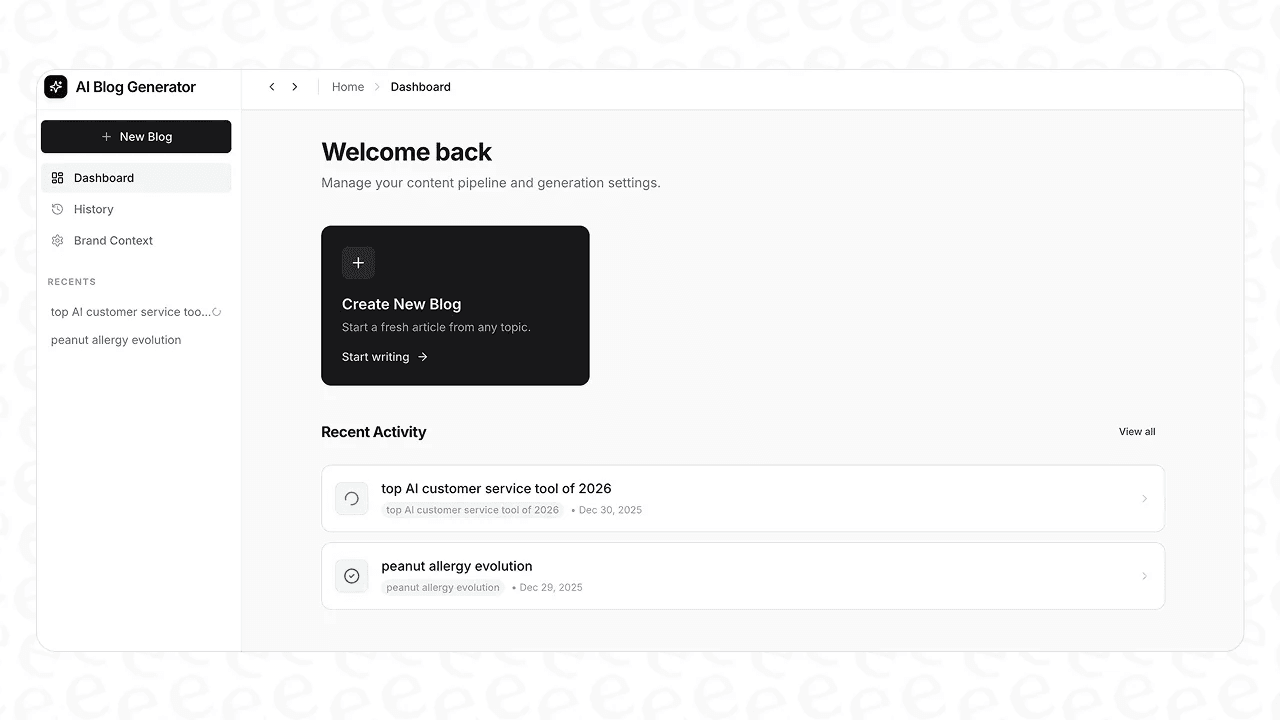
The eesel AI blog writer is a laser-focused tool that automates the whole content creation process from just a single keyword. What makes it different is that it actually learns from your website to create publish-ready, media-rich blog posts that sound like your brand, not some generic AI clone. It's the exact tool we used to grow our own traffic from 700 to over 750,000 impressions a day.
- Pros: Its biggest strength is that it generates complete blog posts, not just rough drafts. This means you get AI-generated images, infographics, and tables baked right in. It even pulls in relevant YouTube videos and real quotes from Reddit to make the content feel more authentic. Plus, its built-in Answer Engine Optimization (AEO) helps structure your content to get picked up by Google AI Overviews and other language models.
- Cons: It’s a content generation powerhouse, but that's its main focus. If you're looking for an all-in-one suite with features for technical audits, backlink analysis, or rank tracking, you'll need to look elsewhere.
- Pricing:
- Starts at $99 for 50 blog posts.
- It's completely free to try, so you can see the quality for yourself.
2. Surfer SEO
Surfer SEO has been the go-to for on-page optimization for a while, and it's easy to see why. It analyzes the top-ranking pages for your keyword and gives you a data-driven checklist on what terms to use, how to structure your post, and how long it should be. It’s perfect for polishing human-written content or beefing up a first draft from another AI tool.
- Pros: The real-time feedback in its Content Editor is super intuitive and integrates directly with Google Docs and WordPress, which is a nice touch. Its Topical Map feature is great for finding content gaps in your strategy, and the AI Humanizer can help smooth out any robotic-sounding text.
- Cons: Users should be mindful to maintain a natural writing style, as adhering strictly to all suggestions can sometimes result in over-optimized text. Also, its API access is locked behind the pricey Enterprise plan, which makes it tough for smaller teams to automate their workflows.
- Pricing:
- The Essential plan starts at $99/month.
- The Scale plan, with more features, is $219/month.
3. Rankscale.ai
Rankscale.ai is one of the first tools I've seen that's all-in on Generative Engine Optimization (GEO). Its whole purpose is to track how your brand shows up and ranks inside AI search engines like ChatGPT, Perplexity, and Google AI Overviews. You can monitor your performance for specific keywords, check different locations, and see how you're trending over time.
- Pros: The platform’s laser focus is its biggest strength. It gives you detailed data on things like Visibility Score, Sentiment, and how often you're being cited, so you can see exactly how you're perceived in AI-generated answers. The credit-based system is also pretty flexible, which is great for agencies or anyone with changing needs.
- Cons: It's a new tool in a new space, so it's very specialized. It only does GEO tracking, so you won't find any broader SEO features here. Its public API is also still in the works, which limits your integration options for now.
- Pricing:
- It uses a credit-based model.
- The Essentials plan starts at $20/month for 120 credits.
4. Whatagraph
Whatagraph handles the final, and often most tedious, part of any SEO campaign: reporting. It plugs into over 55 different marketing platforms (like Google Search Console, Ahrefs, and Semrush) to automatically create slick, easy-to-read reports for your clients or your boss.
- Pros: Whatagraph's AI features, like IQ Report Creation and IQ Summary, are a massive time-saver. It can turn hours of manual report building into a few clicks. The ability to pull in and blend data from different sources gives you a complete picture of performance that you just can't get from a spreadsheet. It’s built for marketers, not data analysts.
- Cons: It's a dedicated reporting platform, not an SEO tool for doing the work. You can’t do keyword research or run a site audit inside Whatagraph; you can only report on the data you get from your other tools.
- Pricing:
- There's a forever-free plan with limited credits.
- The Start plan is $229/month, but you have to pay for the full year upfront.
5. Indexly
Indexly is a technical SEO tool that focuses on one simple but vital job: getting your pages indexed by search engines as fast as possible. It automates the whole process of finding new or unindexed URLs and submitting them directly to search engines like Google, Bing, and Yandex.
- Pros: The "set it and forget it" auto-indexing feature is a huge help for big websites or e-commerce stores with thousands of pages. Its instant indexing feature is also perfect when you publish time-sensitive content and need it to show up right away. They're also expanding into AI visibility and LLM indexing, which is cool to see.
- Cons: This tool is highly specialized. It's fantastic for indexing, but it doesn't do anything else for technical SEO. You'll still need other tools to check things like site speed or schema markup.
- Pricing:
- A free plan is available.
- The Solo plan starts at just $14/month.
6. Semrush
Semrush is the Swiss Army knife of the SEO world, and it has invested heavily in AI. It does pretty much everything, from keyword research and site audits to competitor analysis. Now, with its Semrush One offering, it also tracks your visibility in AI search.
- Pros: The sheer breadth of its features is its biggest selling point. The AI Visibility Toolkit lets you see how your brand is mentioned across platforms like ChatGPT and Gemini. It’s a true command center if you want a single platform to manage your entire SEO and AI strategy.
- Cons: With so many features, it can be really overwhelming for beginners, and it comes with a steep price tag. While its content generation features are useful, those needing publish-ready articles might prefer a specialized tool like the eesel AI blog writer, which focuses specifically on that function.
- Pricing:
- The Semrush One Starter plan kicks off at $199/month.
- A free trial is available.
Tips for choosing the right AI-powered SEO tools
A bit much to take in? Here are a few practical tips to help you pick the right tool for the job.
- Figure out your biggest pain point first. Don't spring for a pricey all-in-one suite if your main problem is just getting content written. If content creation is slowing you down, a specialized tool like the eesel AI blog writer is a much smarter and more cost-effective choice. If reporting is eating up all your time, start with a tool like Whatagraph.
- Use the free trials and plans. Almost every tool on this list has a free trial or a forever-free plan. Use them. Get a feel for the interface, check the quality of the output, and see if it genuinely makes your life easier before you pull out your credit card.
- Think about your current workflow. How will a new tool actually fit into how you work? Tools that integrate with Google Docs, WordPress, or other platforms you already use are way more efficient than standalone apps that require you to copy and paste all day.
- Build a specialized stack. Modern SEO is complex. A smart strategy often involves combining a few best-in-class tools. You might pair a content tool with a GEO tracker like Rankscale.ai and a technical tool like Indexly to make sure all your bases are covered.
For a deeper dive into the practical applications of these tools, the following video provides a great overview of how to leverage free AI tools for your SEO strategy.
The bottom line on AI-powered SEO tools
AI-powered SEO tools have evolved beyond being a novelty. They are now an essential co-pilot for any marketing team that wants to keep up. They handle the tedious stuff, uncover insights you'd otherwise miss, and free you up to focus on strategy and high-impact work.
The "best" tool really just depends on the job you need to do. A smart approach is to build a small stack of specialized tools that are amazing at what they do, rather than trying to find one platform that does everything perfectly.
For teams looking to scale their content and really dominate search without hiring a dozen writers, automating the creation of high-quality, SEO-optimized content is the first and most impactful step you can take.
Why not try the eesel AI blog writer for free? You can see for yourself how it turns a single keyword into a complete, publish-ready article in just a few minutes.

Frequently Asked Questions
Share this article

Article by
Amogh Sarda
CEO of eesel AI. Amogh Sarda is obsessed with making the ultimate AI for customer service teams. He lives in Sydney, Australia and has previously worked at Atlassian and Intercom. Outside of work he’s usually surfing or on stage doing improv.
