The customer service world is stuck in a false debate. Teams keep asking whether AI or humans are better at support, as if they must pick sides. But here's the thing: the question isn't which one wins. It's about the right sequence.
The data tells a clear story. 85% of service leaders say AI is transforming customer experience, and 92% of teams using it report faster response times. Yet 95% of consumers still say human support matters when issues get complex or emotional. Customers want speed and empathy. They just want them at different moments.
The best approach isn't choosing between AI-first or human-first support. It's designing a smart handoff between them. Let's break down what each model actually means, when each works best, and how to combine them without the usual implementation headaches.
What is AI-first support?
AI-first support means AI handles every inquiry initially, escalating only the complex cases to humans. Think of it as a digital front desk that never sleeps.
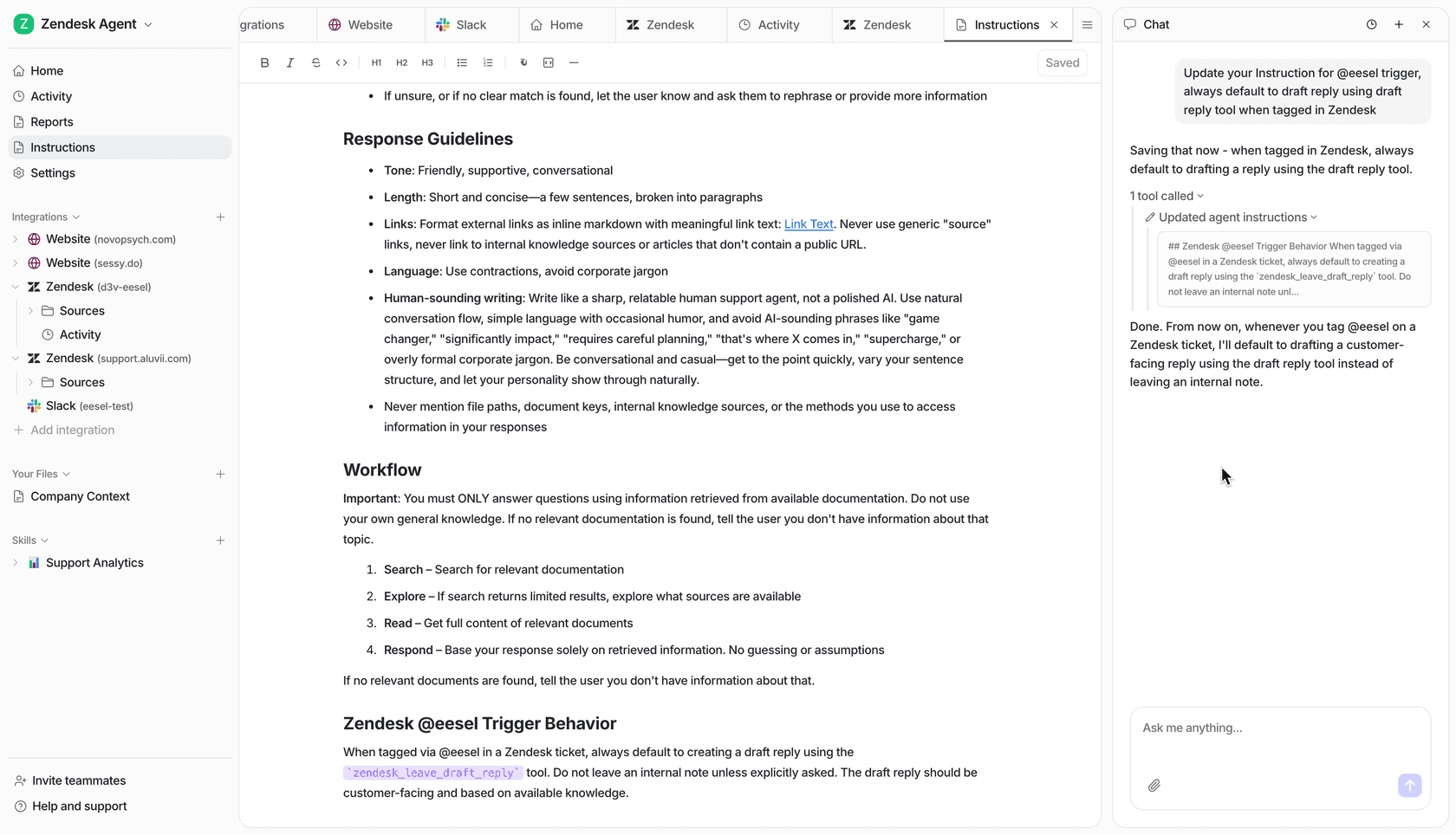
Here's how it works in practice: a customer submits a ticket through email, chat, or your help desk. The AI reads it, searches your knowledge base, past tickets, and connected documentation, then attempts to resolve it immediately. If the issue is straightforward, the customer gets an answer in seconds. If it's complex or emotional, the AI escalates to a human agent with full context (what the customer already tried, relevant order details, similar past cases).
The strengths of this approach are substantial:
- Instant response times. AI responds in seconds. Even the fastest human teams take a few minutes to read, think, and type.
- 24/7 availability. No holidays, sick days, or timezone constraints. Customers get help at 3 AM on a Sunday.
- 60-80% automation for routine queries. Password resets, order status checks, and FAQ responses don't need human judgment.
- Scalability without hiring. One AI agent can handle hundreds of conversations simultaneously.
AI-first support works best for low-risk, repetitive, high-volume work. Password resets, delivery tracking, appointment reminders, and basic troubleshooting are perfect candidates. When speed matters more than nuance, starting with AI makes sense. When customers need help, speed matters. AI's instant response capability is essential for meeting modern expectations for immediate service.
Our AI Agent operates on this principle, but with a key difference: it learns your business from day one by reading your existing tickets, help center, and macros. No training wizards or manual documentation uploads required.
What is human-first support?
Human-first support flips the model. Humans handle every inquiry, with AI assisting in the background. The AI might suggest replies, look up customer history, or summarize long ticket threads, but a person makes every decision and sends every response.
This approach prioritizes judgment over speed. Human agents bring empathy, emotional intelligence, and creative problem-solving that AI simply cannot replicate. They can read between the lines when a customer is frustrated but not explicitly saying so. They can make exceptions to policy when the situation warrants it. They can build genuine relationships that drive loyalty.
The strengths here are just as significant:
- Guaranteed empathy. Every interaction gets human emotional intelligence.
- Better judgment for complex issues. Out-of-policy exceptions, nuanced billing disputes, and sensitive situations require human discretion.
- Relationship building. Customers remember when agents go above and beyond.
- Higher resolution rates. A controlled experiment by Better Proposals found humans achieved 100% complete resolution versus 63% for AI alone.
Human-first support is essential for high-stakes, emotional, or complex situations. Billing disputes, fraud concerns, VIP customer issues, and complaints all benefit from a human touch. When empathy and judgment matter more than speed, humans should lead.
Our AI Copilot supports this approach by drafting replies for agent review, looking up order information in real time, and helping agents respond faster without sacrificing the human element.
AI first support vs human first support: a direct comparison
| Dimension | AI-First Support | Human-First Support |
|---|---|---|
| First response | Seconds | Seconds to 4 minutes |
| Availability | 24/7 | Limited to business hours |
| Resolution rate | 63% complete | 100% complete |
| Cost per interaction | Low | High |
| Empathy | Limited | Strong |
| Scalability | Unlimited | Requires hiring |
| Best for | Routine, repetitive | Complex, emotional |
The comparison reveals a clear pattern. AI wins on speed, scale, and cost. Humans win on judgment, empathy, and resolution quality. The gap in response time is smaller than most expect (good human teams respond in under 4 minutes), but the gap in resolution quality is significant.
Here's the short version: AI is better at handling volume. Humans are better at handling complexity. The mistake most teams make is forcing one approach to do the other's job.
The hybrid approach: best of both worlds
The consensus among CX leaders is clear: smooth AI-to-human transitions are critical, yet most organizations still struggle with execution. The technology exists. The handoff is the hard part.
A true hybrid model works like this:
- AI handles frontline triage. It categorizes, tags, and routes tickets automatically. Simple issues get resolved instantly.
- Seamless handoff to humans. When complexity or emotion enters the conversation, the AI passes everything to a human agent with full context.
- Context travels with the customer. No repeating themselves. The human knows what the AI already tried.
The benefits are substantial. You get efficiency without compromising experience. Human agents get real-time assistance from AI that suggests replies and surfaces relevant information. Customer effort scores drop because people aren't stuck explaining their problem twice. Organizations that successfully blend AI and human support typically see improvements in both efficiency and customer satisfaction metrics.
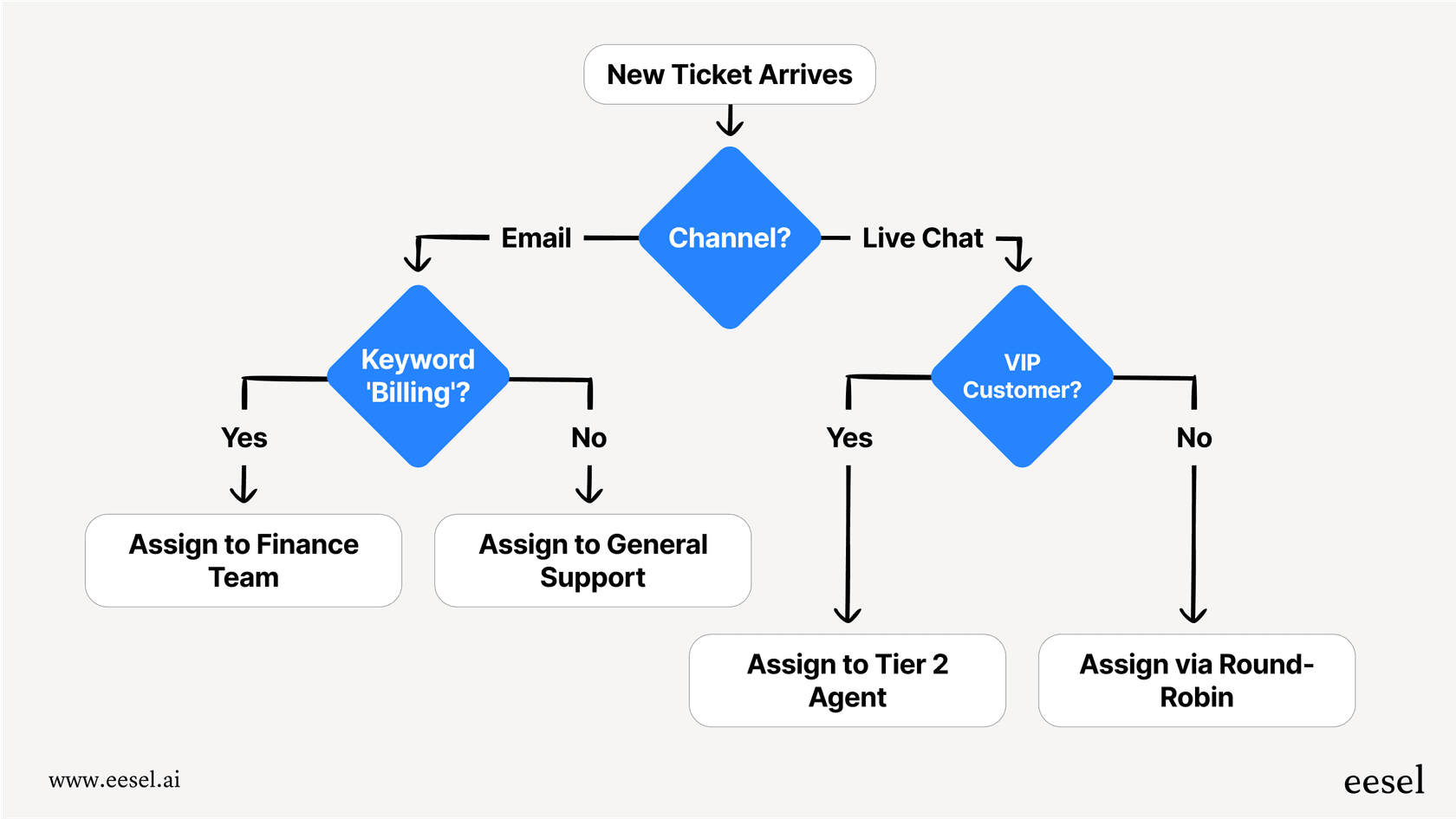
The challenge is execution. Most AI systems bolt onto existing help desks awkwardly. Agents end up managing work across multiple tabs. Customers get trapped in bot loops with no clear exit. The promise of "seamless" handoffs rarely matches reality.
Our AI Triage handles the routing layer automatically, keeping queues clean and ensuring tickets reach the right people immediately.
When to use AI as your first responder
Start with AI when the work is low-risk, repetitive, and high-volume. Specific scenarios include:
- Password resets and account updates. These need speed, not nuance.
- Order status and tracking inquiries. Customers want instant answers about where their package is.
- Knowledge base lookups. When the answer exists in your documentation, AI can surface it faster than a human can search.
- Appointment reminders and proactive notifications. Preventing tickets before they happen.
- Routing and triage. Sorting requests by topic, urgency, and complexity before a human sees them.
The test is simple: if speed matters more than nuance, start with AI. For more on automating ticket classification, see our guide on how to use AI to classify or tag support tickets.
When humans must take the lead
Humans should handle complex, sensitive, or high-emotion situations. This includes:
- Billing disputes and fraud concerns. Customers need reassurance from a real person when money is at stake.
- Technical troubleshooting. Complex problems often require clarifying questions and experience-based pattern recognition.
- Out-of-policy exceptions. Long-term customers with unique situations deserve human judgment, not rigid rule enforcement.
- VIP customer issues. High-value relationships warrant white-glove treatment.
- Complaints and escalations. Angry customers need empathy, not automation.
Chewy provides an excellent example here. The pet supply company issues refunds when customers report a pet's death, sends sympathy cards and flowers to bereaved owners, and empowers agents to make decisions that build loyalty for life. That's not something AI can replicate.
The test is equally simple: if empathy and judgment matter more than speed, start with humans.
Implementing a progressive AI first support strategy
Most teams approach AI implementation backwards. They try to configure a tool, flip a switch, and hope for the best. Then they're surprised when adoption is slow and results are uneven.
We think about it differently. AI should be treated as a teammate you hire, not a tool you configure. Like any new hire, it should start with guidance and level up based on proven performance.
Here's how that works in practice:
Step 1: Onboard in minutes. Connect your help desk (we integrate with Zendesk, Freshdesk, and 100+ other platforms). Our AI reads your past tickets, help center articles, macros, and connected documentation. It learns your tone, policies, and common issues immediately. No manual training. No documentation uploads. No configuration wizards.
Step 2: Start with guidance. Have the AI draft replies that agents review before sending. Limit it to specific ticket types or queues. Set business hours when it can respond. This is not a limitation. It is how you verify the AI understands your business before expanding its role.
Step 3: Level up to autonomy. As the AI proves itself, expand its scope. Let it send replies directly for certain ticket types. Extend to 24/7 coverage. Define escalation rules in plain English ("Always escalate billing disputes to a human" or "For VIP customers, CC the account manager"). Eventually, it can handle full frontline support while escalating only the edge cases you define.
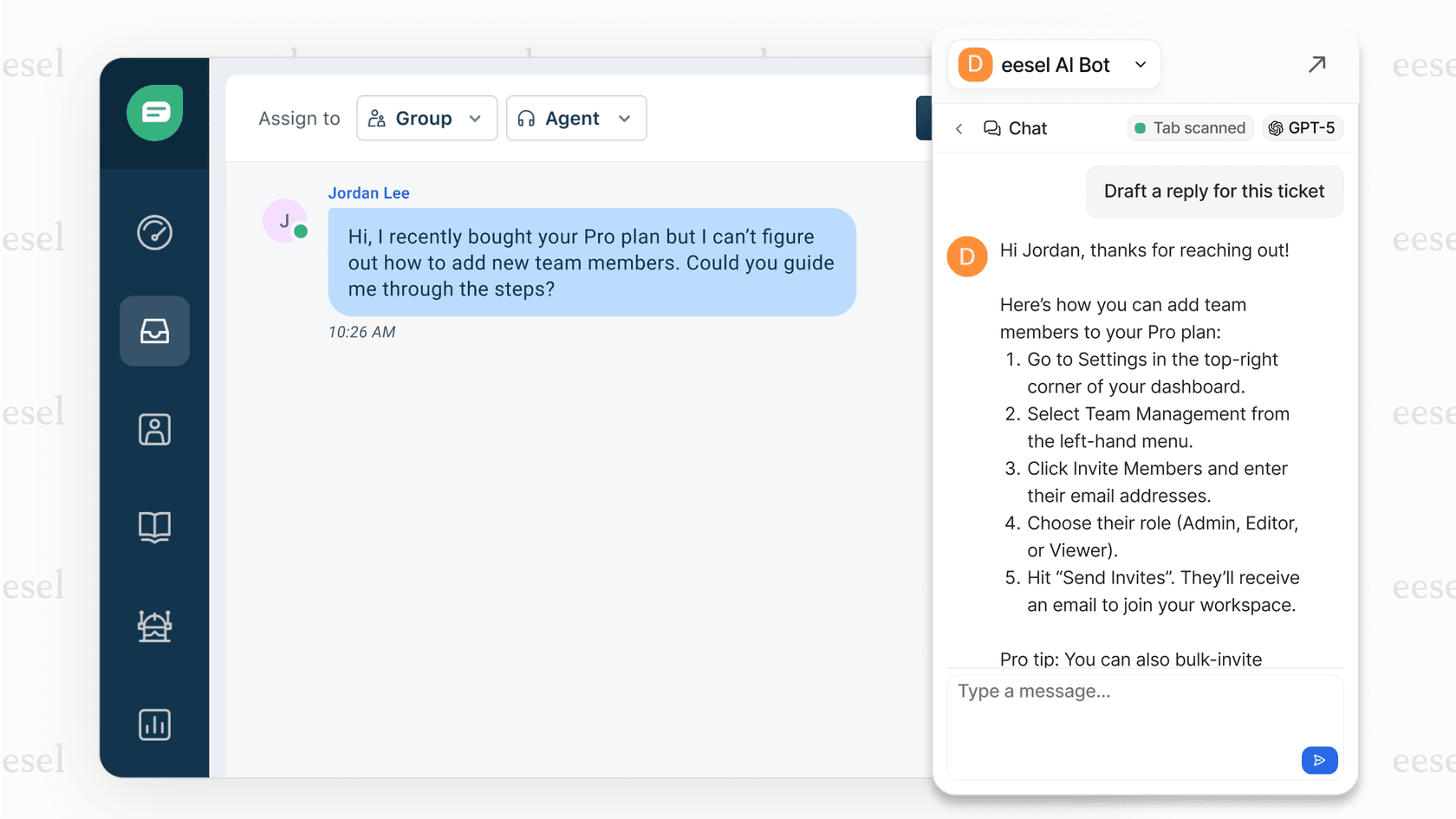
This progressive approach lets you see how the AI performs before it's customer-facing. You control the pace of adoption based on actual results, not vendor promises.
Choosing the right AI first support approach for your team
The right model depends on your specific situation. Consider three factors:
Your ticket mix. What percentage of your tickets are routine versus complex? High volumes of simple requests favor AI-first. Mostly complex issues favor human-first with AI assistance.
Your volume. AI-first requires upfront setup that pays off at scale. If you're handling 50 tickets a week, the investment may not justify the return. If you're handling 5,000, automation becomes essential.
Your brand. Relationship-focused brands (high-end retail, B2B services, healthcare) may prefer human-first with AI supporting from the background. Transactional brands (e-commerce, utilities, SaaS) often benefit more from AI-first with human escalation.
The eesel AI difference is flexibility. Start with AI Copilot drafting for review, then graduate to AI Agent autonomy as confidence grows. You're not locked into one approach. You evolve based on what works.
Check our pricing to see how the teammate model compares to per-seat alternatives. Spoiler: we charge per interaction, not per agent, so your costs scale with actual usage rather than team size.

Frequently Asked Questions
Share this article

Article by
Stevia Putri
Stevia Putri is a marketing generalist at eesel AI, where she helps turn powerful AI tools into stories that resonate. She’s driven by curiosity, clarity, and the human side of technology.