I tested 15+ AI digital marketing tools: My 6 top picks for 2026

Stevia Putri
Last edited January 7, 2026

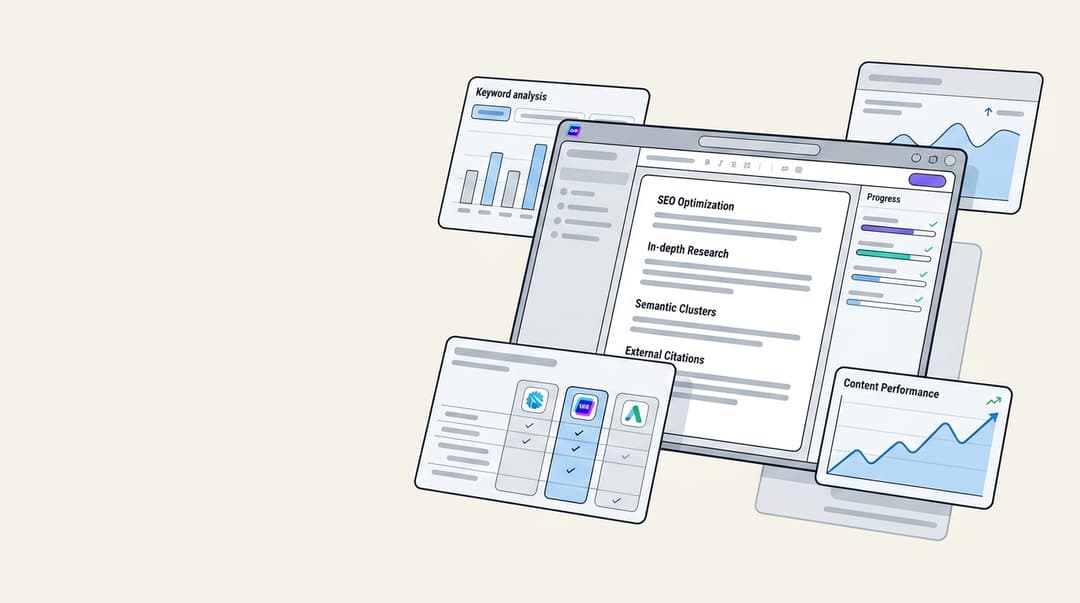
With new AI marketing tools emerging daily, it can be challenging to distinguish between genuinely useful platforms and passing trends. To help marketing teams navigate this landscape, this guide explores some of the top tools available. The capabilities of these tools have evolved significantly; some can now generate entire, publish-ready articles, fundamentally changing content workflows. For example, the eesel AI blog writer helped one site grow its traffic from 700 to over 750,000 impressions a day in just three months.
In this post, we'll cover what these tools are, key criteria for selecting them, a comparison of leading options, and a detailed look at six tools that can enhance a marketing workflow.
What are AI digital marketing tools?
Basically, AI digital marketing tools are apps that use artificial intelligence and machine learning to automate and improve marketing tasks. This covers everything from creating content and handling SEO to running ads and analyzing the customer experience.
They've evolved a lot from the simple, rule-based automation we used to have. Today’s systems are smart enough to create, analyze, and optimize with very little human input, acting as much more than a basic assistant.
Their main goal is to help marketers work more efficiently, make smarter decisions with data, and deliver personalized experiences on a scale that just wasn't possible before. For instance, they can help you analyze user behavior to find frustrating spots on your website or automatically generate a dozen different ad creatives to see what resonates with your audience.
Key criteria for selecting AI digital marketing tools
This list was compiled by evaluating each tool against several practical criteria to ensure it delivers real value. Here's what to look for:
-
Real-World Impact: Does the tool solve a real, time-sucking marketing problem? Is it a "nice-to-have" or something that becomes indispensable?
-
Ease of Use: Can a busy marketer get it up and running quickly without needing weeks of training or a degree in data science?
-
Quality of Output: Is the AI-generated work high-quality and ready to use, or does it need a ton of human editing?
-
Workflow Integration: How well does it play with other essential tools like WordPress, Google Docs, or ad platforms?
-
Value for Money: Is the price fair for the features it offers and the results it brings in?
A comparison of popular AI digital marketing tools
For a quick look, here’s a high-level comparison of top picks. We’ll get into the nitty-gritty of each one in the next section.
| Tool | Best For | Key Feature | Starting Price |
|---|---|---|---|
| eesel AI blog writer | Automated SEO blog generation | Creates publish-ready articles with assets & social proof | Free to try, then $99/mo. for 50 blogs |
| Jasper AI | Team copywriting & brand consistency | Brand IQ for voice, tone, and style guides | $59/month (billed annually) |
| Surfer SEO | On-page SEO optimization & writing | Real-time Content Score & AI article generation | $79/month (billed annually) |
| Smartly.io | Cross-channel ad automation at scale | AI-powered creative and media buying unification | Custom |
| Gumloop | No-code AI workflow automation | Drag-and-drop visual builder with 120+ integrations | Free plan available |
| FullStory | Digital experience intelligence | AI-summarized session replays | Custom |
6 AI digital marketing tools for 2026
After extensive testing, these six tools stand out for their capabilities and impact on marketing workflows. Here’s a closer look at why each one is on the list.
1. eesel AI blog writer
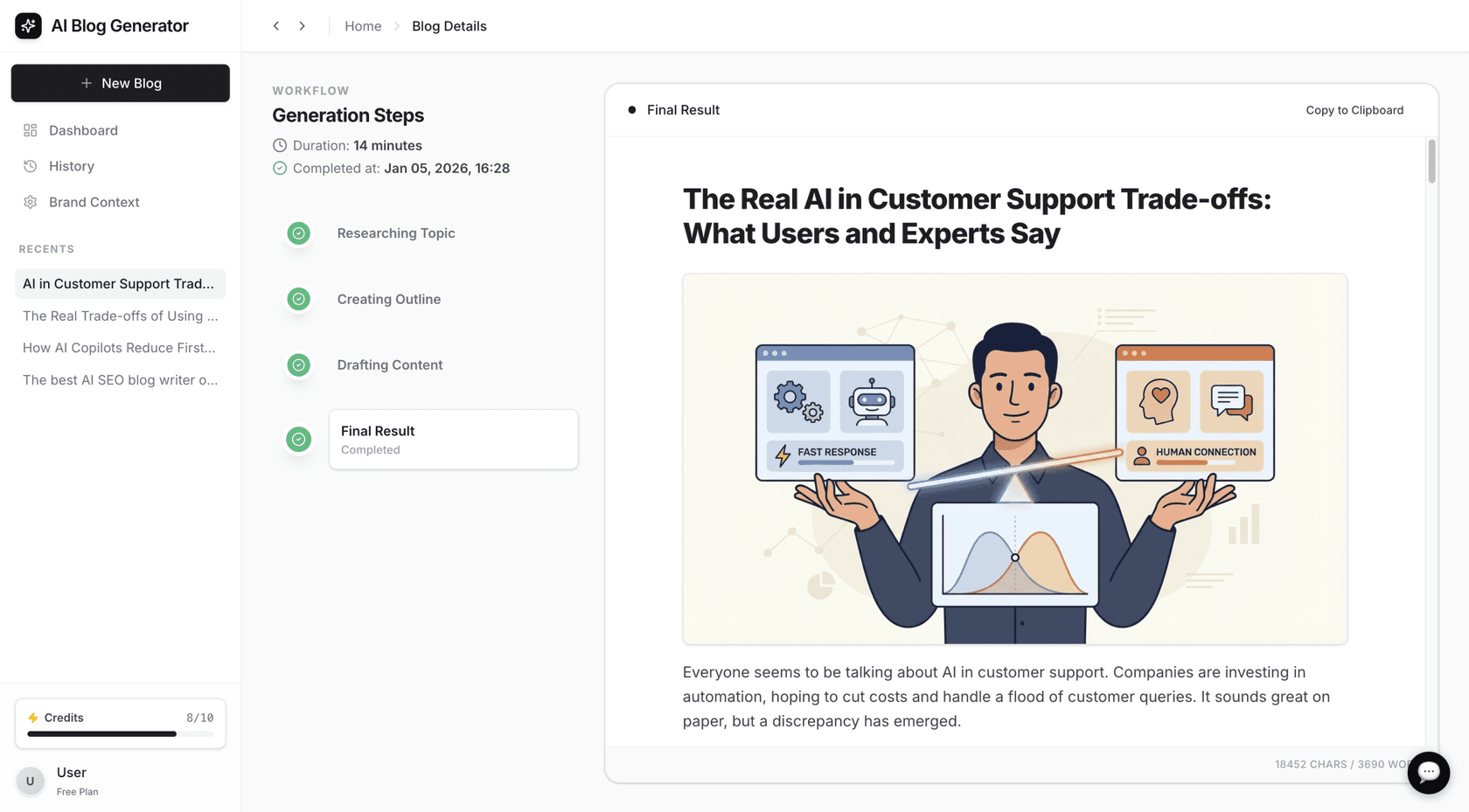
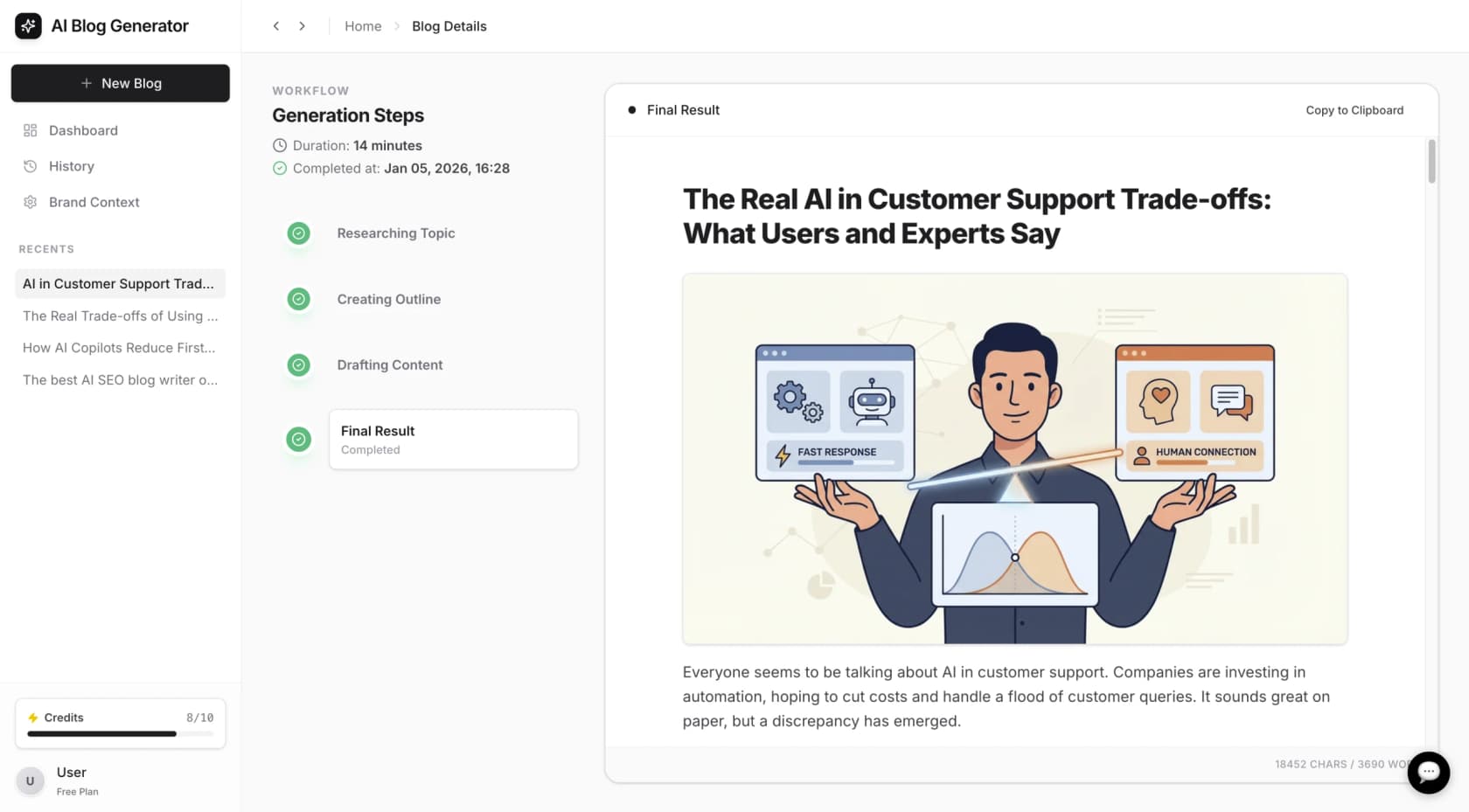
The eesel AI blog writer is a specialized tool that turns a single keyword into a full, ready-to-publish blog post. It does more than just generate a text draft; it automatically includes headings, AI-generated images, internal links, and even social proof like relevant Reddit quotes and YouTube videos.
Why it’s on the list: This tool can be an engine for significant organic growth. It’s built specifically for performance, focusing on search intent and AEO (Answer Engine Optimization) to ensure the content it creates is designed to rank and bring in traffic. It functions less like an AI writer and more like a complete content generation system.
Pros: Its ability to produce a fully-formed, media-rich article in minutes can cut production time significantly. It’s effective for scaling a content program without a drop in quality. Cons: The tool is highly specialized for creating blog content and is not designed for other copywriting tasks like ad copy or social media captions.
Pricing: It’s completely free to try. The Early Bird paid plan starts at $99 per month for 50 blog generations.
2. Jasper AI
Jasper AI is an AI content platform built for marketing teams. Its most impressive feature is Brand IQ, which lets you set and enforce a specific brand voice, tone, and style across all the content you create.
Why it’s on the list: For teams that need to keep their brand messaging consistent across different channels and writers, Jasper is a great choice. Its platform flags things that are off-brand and suggests better replacements, which helps cut down on review cycles and keeps everyone aligned. This is a big help for larger companies that need solid content governance.
Pros: Jasper's main strength is its versatility and strong brand controls, making it a capable platform for a wide range of copywriting tasks. Cons: The platform can have a learning curve, and its content may require human editing to be publish-ready.
Pricing: The Pro plan starts at $59 per seat per month when you pay annually, or $69 per month if you go with monthly billing.
3. Surfer SEO
Surfer SEO is an AI-powered tool that analyzes the top-ranking search results for your keyword to give you a data-driven brief for your content. It’s not just for analysis, though; it also includes Surfer AI to generate articles based on its own findings.
Why it’s on the list: It helps remove the guesswork from on-page SEO. Its real-time "Content Score" gives you a live look at how optimized your content is as you write. For marketers who prefer to write content themselves (or have a team of writers), Surfer provides the perfect blueprint to give their work the best possible chance of ranking. It analyzes over 500 web signals to inform its suggestions, which is incredibly detailed.
Pros: The biggest benefit is its highly effective, actionable SEO advice that provides a clear path to ranking content. Cons: Some writers may find the data-driven approach restrictive. The tool also focuses heavily on text optimization and less on generating visuals.
Pricing: The Essential plan starts at $79 per month when billed annually, or $99 per month if you pay monthly.
4. Smartly.io
Smartly.io is an AI advertising platform that automates social advertising, from producing creative to optimizing campaigns. It’s really built for brands and agencies managing large ad accounts across platforms like Meta, TikTok, and Pinterest.
Why it’s on the list: For performance marketing teams, Smartly.io is a powerful tool. It unifies creative and media from the start, letting you generate thousands of ad variations and then letting the AI figure out the winning combinations in real-time. It has some neat features like "Creative Predictive Potential," which uses AI to guess how effective your creative might be before you even launch a campaign.
Pros: It offers massive efficiency gains for managing large, complex ad campaigns and saves significant manual work. Cons: As an enterprise-level solution, it may be too complex and expensive for most small businesses.
Pricing: Smartly.io offers custom pricing based on your ad spend and needs, so you'll have to chat with their sales team.
5. Gumloop
Gumloop is an interesting AI automation platform that lets you build intelligent workflows with a simple drag-and-drop interface. It connects over 120 different apps with large language models like GPT-4 and Claude to do tasks that go way beyond just moving data from one app to another.
Why it’s on the list: It feels like the next step in marketing automation. You can build "Workflows" for structured, repeatable tasks or "Agents" that can actually reason through problems on their own. For instance, you could build a workflow to automatically monitor social media for brand mentions, analyze the sentiment, and then generate a weekly report.
Pros: Gumloop's intuitive interface makes it easy to create powerful automations without coding knowledge. Cons: As a newer platform, its library of direct integrations may be more limited than established competitors, though it is expanding.
Pricing: Gumloop has a generous free plan that gives you 2,000 credits per month. Paid plans start at a very reasonable $37 per month.
6. FullStory
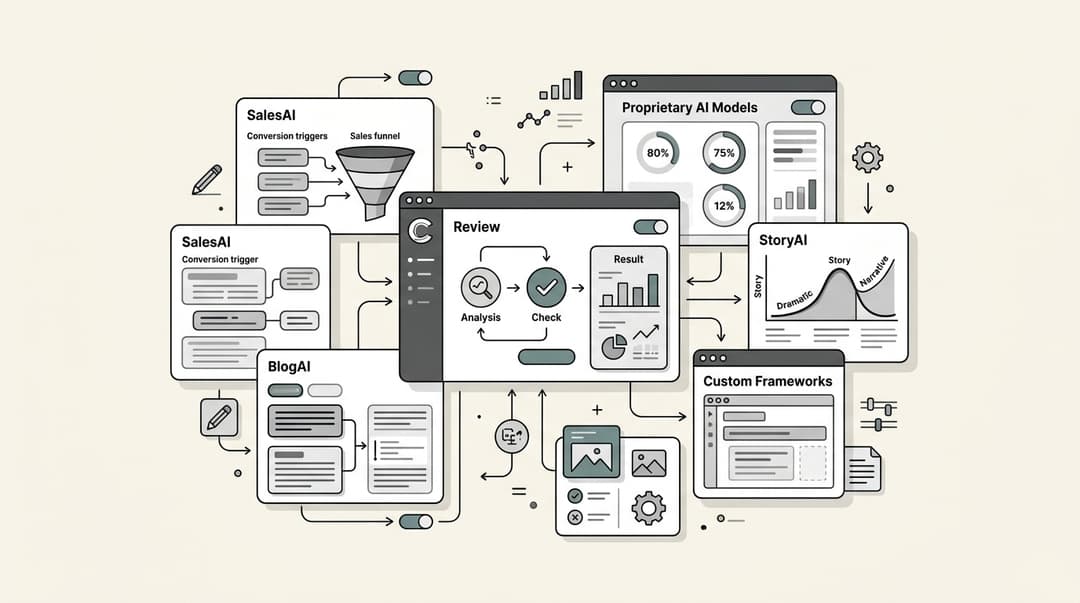
FullStory is a digital experience intelligence platform that helps you see your website or app through your users' eyes. It uses tagless autocapture to record user interactions, and its AI, called "StoryAI," to analyze them. It can automatically summarize sessions and point out key moments where users are getting stuck.
Why it’s on the list: It gives you the "why" behind your analytics. Instead of just seeing a drop-off in your conversion funnel in Google Analytics, you can watch session replays to see exactly what's causing the problem. It can identify things like "rage clicks," where frustrated users are clicking repeatedly, which is a goldmine for UX improvements. The AI-powered summaries save hours of manual review.
Pros: The insight from session replays is unmatched for improving user experience and conversion rates. Cons: The sheer amount of data it captures can be overwhelming without dedicated resources to analyze the findings.
Pricing: FullStory provides custom, quote-based pricing, so you’ll need to connect with them for a quote.
Tips for choosing your AI digital marketing tools
-
Start with One Problem: Don't try to change your entire marketing stack at once. Find your single biggest bottleneck, whether it's content creation, ad management, or lead nurturing, and find one great tool to solve it.
-
Keep a Human in the Loop: The best AI tools work with you, not for you. Always plan for a human to review, refine, and approve the final output. This helps you maintain quality and protect your brand's reputation.
-
Test with Real Tasks: During a free trial, don't just click around. Use the tool to complete a real task on your to-do list. Try writing a blog post you actually need or optimizing a real landing page. This is the fastest way to see if it really fits your workflow.
-
Don't Forget Integration: A powerful tool that doesn't connect with your existing systems can create more work than it saves. Before you commit, check for integrations with your CMS, CRM, and other platforms.
To see some of these tools in action and discover others that can enhance your marketing efforts, the video below offers a great overview of top AI platforms that go beyond basic content generation.
Each of the tools highlighted offers unique strengths for specific marketing challenges. The best choice depends entirely on your team's primary needs, whether that's scaling content creation, optimizing ad spend, or improving the customer experience. For teams focused on content, a tool like the eesel AI blog writer can be particularly effective for systematically building a library of SEO-optimized articles. Since many of these platforms offer free trials, the most effective way to find the right fit is to test them with real-world tasks from your workflow. You can try the eesel AI blog writer for free to see how it works.

Frequently asked questions
The main benefits are increased efficiency, data-driven decision-making, and the ability to deliver personalized customer experiences at scale. They automate repetitive tasks like content creation, ad management, and data analysis, freeing up marketers to focus on strategy.
Absolutely. Many AI tools are designed with small businesses in mind, offering free plans or affordable pricing. Tools like eesel AI for content generation or Gumloop for automation can help smaller teams compete with larger companies by saving time and resources.
Start by identifying your biggest marketing bottleneck. Are you struggling with content creation, SEO, or ad performance? Look for a tool that solves that specific problem. Always take advantage of free trials to test the tool with real-world tasks before committing.
It varies. Some tools are plug-and-play and integrate seamlessly with common platforms like WordPress or Google Docs. Others, especially enterprise-level solutions, might require more setup. Always check a tool's integration capabilities before you buy.
Always keep a human in the loop. AI is a powerful assistant, but it's not a replacement for human oversight. A person should always review, edit, and approve AI-generated content to ensure it meets quality standards and aligns with your brand's voice.
Share this article

Article by
Stevia Putri
Stevia Putri is a marketing generalist at eesel AI, where she helps turn powerful AI tools into stories that resonate. She’s driven by curiosity, clarity, and the human side of technology.