
If you're in edtech marketing, you know the struggle. You're trying to write content that's smart enough for a professor but also skimmable for a busy school admin. And, of course, it has to be perfectly optimized for Google. Producing high-quality articles and guides that build trust and bring in traffic is a massive job.
AI is here to help, but not all AI tools are created equal, especially for a niche as specific as education technology. I tested the top platforms to find the best AI blog writer for edtech. One of them, the eesel AI blog writer, had some notable results. Its creators used it to go from 700 to 750,000 daily impressions in just three months.
Let's get into it.
If you aren't currently working in partnership with some version of AI, you are falling behind.
What is an AI blog writer for edtech?
An AI blog writer for the edtech world isn't just a simple text generator. It's more like a specialized content partner. It has to understand complex educational concepts, sound like an authority, and speak to everyone from teachers and IT directors to principals and parents.
The right tool does more than just write for you. It helps you build content that's factually correct, educationally sound, and actually useful. It knows that an article on "gamification in the classroom" needs more than just buzzwords; it needs real substance. A good AI writer can save your marketing team a ton of time on research and writing, so they can focus on strategy instead of a blinking cursor. This visual breaks down what a specialized AI writer brings to the table.
How I chose the best AI blog writer for edtech tools
To keep things fair, I used the same checklist for every tool. Here’s what I was looking for:
- Content Quality & Relevance: How well did the AI tackle tricky educational topics? Did the final article sound like it was written by someone who understands the subject?
- SEO & AEO Features: Did the tool optimize for Google and the new AI Answer Engines (like Google's AI Overviews)? I checked for things like keyword integration, article structure, and metadata.
- Ease of Use: How fast could I go from a single keyword to a blog post ready for publishing? The smoother, the better.
- Feature Set: I wanted more than just text. I was looking for a tool that could build a whole article with images, charts, tables, and maybe even some relevant social media posts.
- Value for Money: Does the price make sense for what you get?
AI blog writer for edtech: A quick comparison
Before we get into the details, here’s a quick side-by-side look at the top five tools. This table should give you a general idea before we jump into the full reviews.
| Feature | eesel AI blog writer | HubSpot AI Blog Writer | Contentpen.ai | Jenni AI | Brisk Teaching |
|---|---|---|---|---|---|
| Best For | Automated SEO & AEO content for growth | Teams looking for an integrated, reliable ecosystem | Bulk blog production on autopilot | Research-heavy, academic content | Creating classroom materials |
| Key Feature | Full posts with assets & social embeds | Seamless integration with HubSpot's CRM & Breeze AI | Bulk generation & direct WordPress publishing | AI-powered research & citations | Lesson plan & quiz generation |
| Starting Price | Free to try, then $4 per post | Free tools, paid tiers from $15/mo | $39/month | Free plan, Pro from $12/month | Free plan available |
5 popular AI blog writers for edtech
Okay, let's get into the specifics. Here’s my hands-on experience with each of these platforms.
1. eesel AI blog writer
The eesel AI blog writer is an option for edtech companies focused on growth. The company used this tool to grow their own site from 700 to 750,000 daily impressions in three months.

It focuses on a simple and powerful workflow. You provide a keyword, and it returns a complete, ready-to-publish blog post. A key feature is its context-aware research. It aims to go beyond surface-level information to create content that's genuinely informative. It also automatically adds AI-generated images, infographics, and even relevant YouTube videos and Reddit quotes. This can be particularly useful for an edtech audience that appreciates rich, engaging content.
- Pros: It delivers a fully structured, SEO-optimized article with visuals. It's designed for marketing teams that need to produce high-quality content at scale.
- Cons: It is a specialized tool focused on long-form blog posts. If you need a general AI tool for writing tweets or ad copy, this isn't it.
Pricing
- You can try it completely free.
- Pricing is $4 per blog post.
2. HubSpot AI Blog Writer
If your edtech company is looking for a mature and robust solution, the HubSpot AI Blog Writer is an excellent choice. HubSpot has built an incredible ecosystem, and their AI tools are designed to work seamlessly with the rest of their platform. A key advantage is the smooth integration with the entire HubSpot CRM and analytics, allowing you to create content and measure its impact in one unified place.
Their AI assistant, Breeze, is a highly capable tool built directly into the blog editor. It helps you draft sections, refine your tone, and ensure your content aligns with your overall marketing strategy. It’s part of a trusted, enterprise-grade platform that powers thousands of successful companies worldwide.
- Pros: The integrated workflow is a massive benefit for teams that want their content tied directly to their CRM data. HubSpot offers a reliable and scalable platform with a huge marketplace of integrations. It's also fantastic for maintaining a consistent, professional brand voice.
- Cons: HubSpot offers tiered plans to match different team sizes, so while the free tools are great, advanced features are part of the premium tiers. The tool is designed to be a high-quality writing assistant, meaning it prioritizes editorial control over automated bulk generation.
Pricing
- You can use basic AI features in HubSpot's free tools.
- For advanced features, HubSpot offers tiered plans starting at $15 per seat, per month, ensuring there is a plan for every growth stage.
3. Contentpen.ai
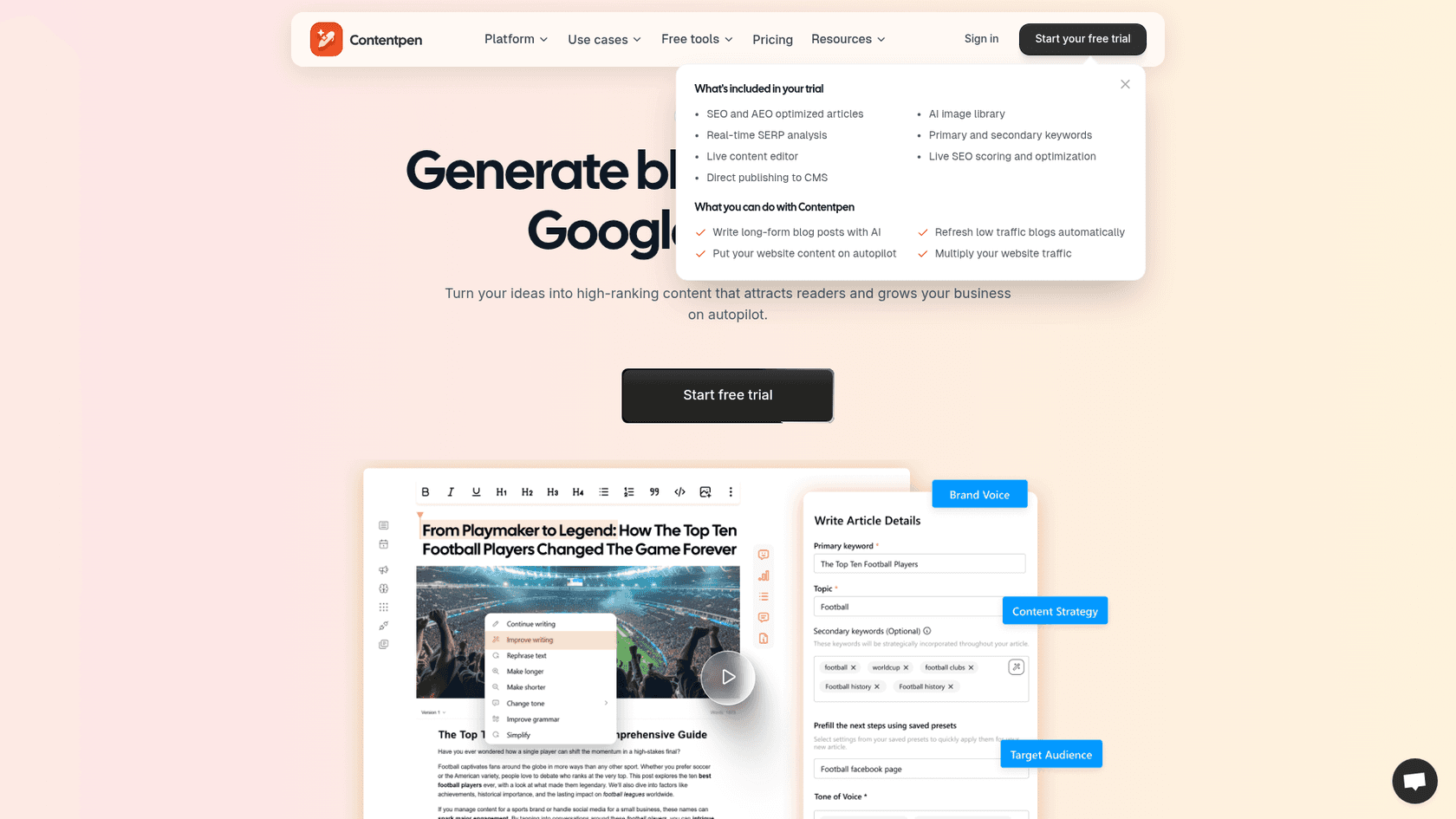
Contentpen.ai is designed for edtech teams that want to automate their content workflow. It’s built to automate the blogging process, from keyword research and content planning to writing articles and publishing to WordPress. Its "autopilot" feature is focused on generating a lot of content on a regular schedule.
It’s all about efficiency. You can load it up with topics and let it work, filling out your content calendar for months. This can be a help for small marketing teams trying to keep up a consistent publishing schedule.
- Pros: The tool's primary advantage is its ability to produce content in high volume. The ability to generate articles in bulk and refresh old content can support SEO efforts.
- Cons: The high level of automation may result in content that feels generic. You will likely need to spend some time editing each article to add the specific insights an edtech audience is looking for. It also offers less control over the final piece compared to other tools.
Pricing
- Starter: $39/month for 10 articles.
- Premium: $79/month for 30 articles.
- Agency: $199/month for 100 articles.
4. Jenni AI
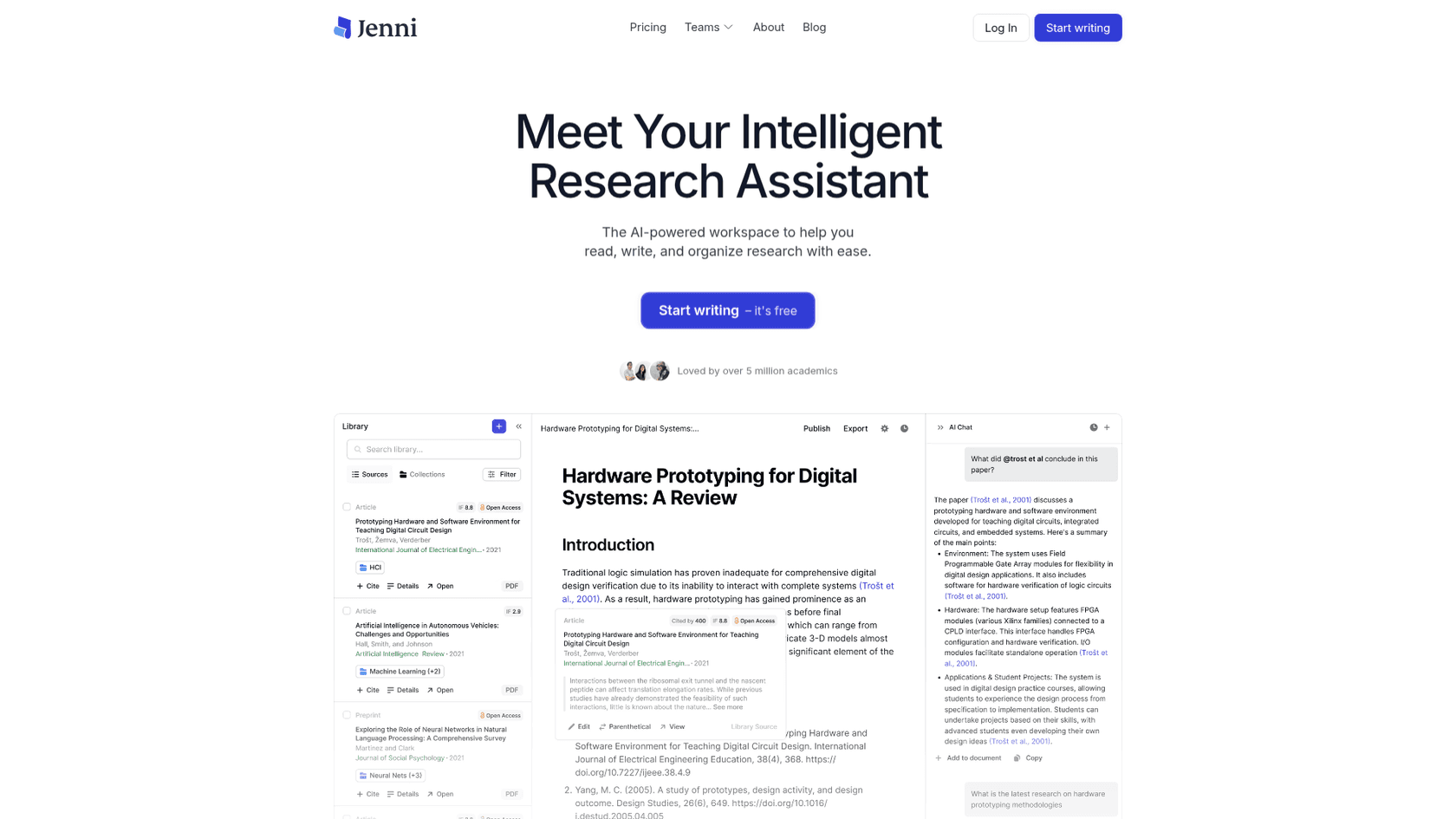
Jenni AI is a bit different from the others here. It's less of a blog writer and more of a research assistant. This makes it a suitable fit for edtech companies that create deeply researched content like whitepapers, academic articles, or detailed reviews. It’s trusted by academics, so it’s designed for serious work.
It helps you find credible sources, cite them correctly in over 2,600 different styles, and even writes along with you using a handy AI autocomplete feature. A notable feature is its ability to summarize research papers you upload.
- Pros: Jenni AI’s main strength is its academic focus. The ability to create content with proper citations can build trust with an educational audience.
- Cons: It's a hands-on tool that requires more effort than a one-click generator and isn't built for marketing tasks like SEO optimization.
Pricing
- There's a free plan with daily limits, like 10 AI autocompletes per day.
- The Unlimited plan is $12/month if you pay annually.
5. Brisk Teaching
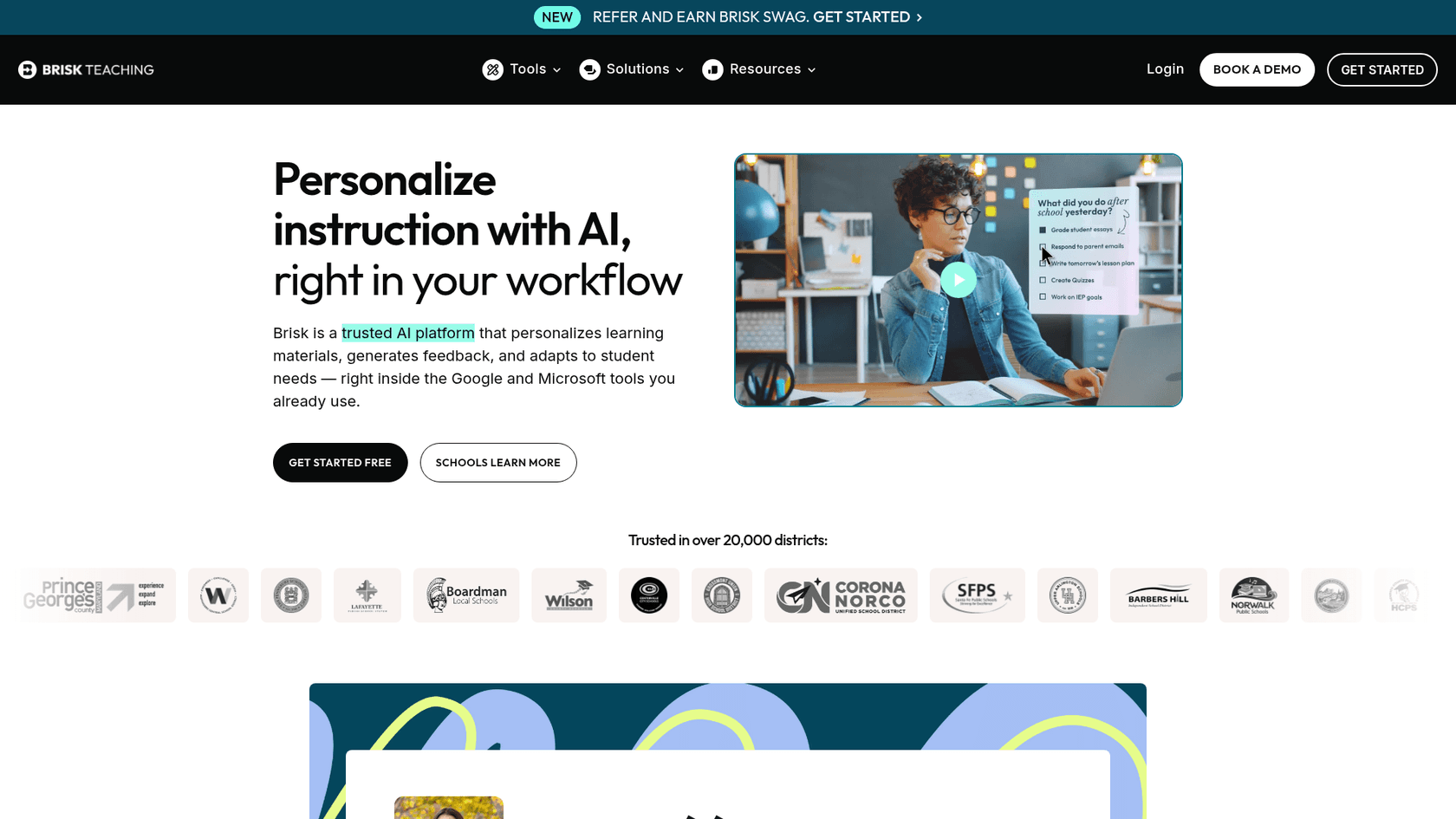
Brisk Teaching is an AI tool for teachers, not a dedicated AI blog writer for edtech. Its job is to help educators create lesson plans, make quizzes, and give students personalized feedback, all inside platforms they already use like Google Docs and Microsoft Word.
It is effective at what it does, like changing a reading level or creating practice questions on the spot. It’s a tool made to save teachers time and help them support their students better.
- Pros: For creating classroom materials, Brisk is effective. It’s intuitive, practical, and designed for a teacher's workflow.
- Cons: It's not a marketing tool. It has none of the SEO features, content structuring, or asset generation needed to create an article that will rank on Google and attract customers. For that job, a dedicated marketing content tool is needed.
Pricing
- A "Brisk Educator Free" plan is available.
- They offer custom pricing for schools and districts.
Tips for choosing the right AI blog writer for edtech
Feeling a bit lost? Here are a few tips to help you pick the right tool.
- Know your goal: What are you trying to do? If you want to drive organic traffic and get leads, you need a tool built for SEO and content marketing. If you're creating a curriculum, you need an instructional tool.
I use ChatGPT to help with writing objectives, generating assignment/scenario ideas and quiz questions. It’s also helpful for creating video storyboards out of existing content. It’s really saved me time there.
 Reddit
 - Think about your workflow: How does your team operate? If you already use a powerful platform like HubSpot, their integrated AI assistant might be the perfect fit to keep everything in one place. Alternatively, a standalone generator like the eesel AI blog writer can handle everything from start to finish.
- Check the output: Use the free trials to generate a sample article on a topic your audience cares about. Does it sound credible? Is it well-structured? How much editing will it need?
- Look for more than text: A good blog post in 2026 needs more than just words. To give your readers a better experience, look for tools that can automatically add images, tables, and videos.
For a broader look at the AI tools available to educators, this video provides a helpful overview of different platforms and how they can be used in the classroom.
[YOUTUBE_VIDEO: https://www.youtube.com/embed/6GZ9EjfrfL8] This video from EdTech Throwdown breaks down 12 powerful AI tools to enhance the classroom.
Choosing the right AI blog writer for edtech
After reviewing these platforms, it’s clear they each have their place. An edtech marketing team has a very specific job: create trustworthy, high-quality content at scale that also shows up in search results.
HubSpot remains the gold standard for teams that want a mature, all-in-one platform with a reliable ecosystem. For those specifically looking to scale organic growth with automated assets, the eesel AI blog writer is a complementary option to consider. Its combination of in-depth research, automatic asset creation, and SEO and AEO optimization is designed to help scale a blog for growth.
Ready to scale your edtech blog? Try eesel AI for free and generate your first publish-ready article in minutes.