IT teams know the frustration. You fix the same server issue for the third time this month, patch it, close the ticket, and wait for it to happen again. That's where problem management comes in. It's the ITIL practice of finding and fixing root causes so incidents stop repeating.
AI is changing how teams approach this work. Instead of manually scanning incident queues for patterns, AI can spot connections humans might miss. Instead of digging through old tickets for similar issues, AI surfaces them instantly. Freshservice has built these capabilities into their platform through Freddy AI.
This guide covers how Freshservice approaches AI-powered problem management, what features are available, and how it compares to modern alternatives like eesel AI.
What is problem management in ITIL?
Problem management is one of the core practices in the ITIL framework. While incident management focuses on restoring service quickly, problem management asks why the incident happened in the first place.
Think of it this way: incident management is calling the fire department to put out a fire. Problem management is figuring out why fires keep starting and fixing the electrical wiring.
ITIL defines three key terms you will encounter:
- Problem: The unknown underlying cause of one or more incidents
- Known error: A problem with a documented root cause and workaround
- Workaround: A temporary fix that reduces impact while you develop a permanent solution
Problem management happens in two modes. Reactive problem management kicks in after you notice a pattern of related incidents. Proactive problem management looks for potential issues before they cause incidents at all.
The business case is straightforward. Research suggests over 13% of incidents are repeats. When you eliminate root causes, you reduce ticket volume, cut downtime, and free your team to work on improvements instead of fighting the same fires repeatedly.
Freshservice includes problem management as a core capability, with AI-powered features available through Freddy AI on their Enterprise plan.
How Freshservice approaches AI-powered problem management
Freshservice is an ITSM platform that combines service desk, asset management, and operations management in one system. The platform is built around ITIL best practices, so problem management is a native capability rather than an afterthought.
The AI layer is called Freddy AI. It comes in three modules:
- Freddy AI Agent handles employee self-service through chat
- Freddy AI Copilot assists human agents with replies and summaries
- Freddy AI Insights provides proactive analytics and root cause analysis for leaders
For problem management specifically, the relevant capabilities sit across all three modules. Freddy AI Copilot helps agents identify patterns and find similar historical issues. Freddy AI Insights can proactively flag potential problems before they escalate. And the underlying platform connects incidents, problems, changes, and assets so you can trace relationships.
Freshservice integrates with monitoring tools, development platforms like Jira, and communication channels like Slack and Microsoft Teams. This matters because problem management often requires data from multiple sources to identify root causes.
There is an alternative worth considering. While Freshservice takes a traditional ITSM approach with AI layered on top, eesel AI treats AI as the foundation. Instead of configuring workflows, you hire eesel as an AI teammate that learns your business from existing data. The system can start with guidance (drafting replies for review) and level up to autonomous handling as it proves itself. We will explore this difference more later.
Key AI features for problem management in Freshservice
Freshservice's AI capabilities for problem management fall into four main areas. Here is what each one actually does.
Automated problem detection and incident linking
Freshservice can scan incoming incidents and flag when similar issues start clustering. When the system detects a pattern, it suggests creating a problem record and links all related incidents together. This gives you a complete view of scope without manually combing through tickets.
The platform also connects related records automatically. When you're investigating a problem, you can see linked incidents, changes, and configuration items in the CMDB without switching contexts.
Root cause analysis assistance
Freddy AI Copilot includes a "Similar Incident Suggester" that surfaces historical tickets with comparable symptoms. This helps agents learn from past resolutions instead of starting investigations from scratch.
The platform provides a timeline view showing all activities related to a problem from detection through resolution. Combined with the CMDB, this helps trace how different components interact and which changes might have triggered the issue.
Freshservice also offers "Intelligent Related Changes" that highlights change requests potentially connected to the current problem. This is useful because many IT problems trace back to recent deployments or configuration updates.
Knowledge capture and known error database
When you resolve a problem, Freshservice can auto-generate known error articles containing the root cause, workaround, and permanent solution. These feed into a searchable database that agents can reference when similar incidents occur.
The AI can also suggest relevant knowledge content during ticket resolution. If an agent is working on an incident that matches a known error, the system surfaces the workaround automatically.
Predictive insights and proactive problem management
Freddy AI Insights monitors service desk activity and proactively identifies issues before they escalate. The system delivers analytics through natural language prompts, so you can ask questions like "show me trending issues this week" instead of building custom reports.
According to Freshservice's benchmark data, teams using Freddy AI Copilot see a 77% decrease in average resolution time and 41% faster first response times. The AI Agent deflects up to 66% of incoming tickets through self-service.
The ITIL problem management process in Freshservice
Freshservice structures problem management around the standard ITIL workflow. Here is how it works in practice.
Step 1: Problem detection
Problems emerge in three main ways. You might notice a pattern in the incident queue (multiple users reporting the same symptom). Monitoring tools might flag unusual activity. Or a service desk agent might realize an issue isn't isolated.
Freshservice can automate some of this detection. The system scans for repeat incidents and flags them for review. When similar tickets cluster, it suggests creating a problem record.
Step 2: Problem logging and categorization
Once detected, problems get logged with standard fields: type, impact, urgency, priority, and links to related incidents. Freshservice connects incident tickets to the problem record so you can see the full scope in one place.
Step 3: Investigation and diagnosis
This is where root cause analysis happens. Teams review system logs, check configurations against the CMDB, and analyze how components connect. Freshservice supports standard RCA techniques like the 5 Whys method and fishbone diagrams.
The AI Copilot assists by suggesting similar historical incidents and relevant knowledge articles. This can shortcut investigations by pointing toward proven solutions.
Step 4: Resolution and workaround documentation
When you find a root cause, you document it along with any workaround that reduces impact. Freshservice creates known error database entries automatically from resolved problems, capturing what worked for future reference.
Step 5: Problem closure and review
After verifying the fix works, you formally close the problem record. Many organizations conduct post-problem reviews to capture lessons learned and improve future responses.
Freshservice pricing and AI capabilities
Freddy AI is only available on the Enterprise plan. Here is the complete pricing breakdown:
| Plan | Price (Annual Billing) | Problem Management | AI Features |
|---|---|---|---|
| Starter | $19/agent/month | Not included | None |
| Growth | $49/agent/month | Included | None |
| Pro | $99/agent/month | Included | None |
| Enterprise | Custom pricing | Included | Full Freddy AI suite |
Key limitation: If you want AI assistance for problem management, you need Enterprise. The Growth and Pro plans include problem management as a process, but without Freddy AI capabilities like similar incident suggestions, automated insights, or AI-powered reply assistance.
Enterprise includes 1,200 Freddy AI Agent sessions per license per year. A session counts as one unique user's interaction within a 24-hour period. Sessions reset at the start of each billing cycle.
Freshservice offers a 14-day free trial with no credit card required. This lets you test the platform, though you will need to contact sales to evaluate Freddy AI features.
eesel AI: A modern approach to AI problem management
While Freshservice layers AI onto a traditional ITSM foundation, eesel AI takes a different approach. It is designed as an AI teammate you hire, not a tool you configure.
Here is how the model works. You connect eesel to your help desk (Zendesk, Freshdesk, Jira, or others). It immediately learns from your past tickets, help center articles, macros, and connected documentation. There is no manual training or configuration wizard. What takes a human weeks to learn, eesel learns in minutes.
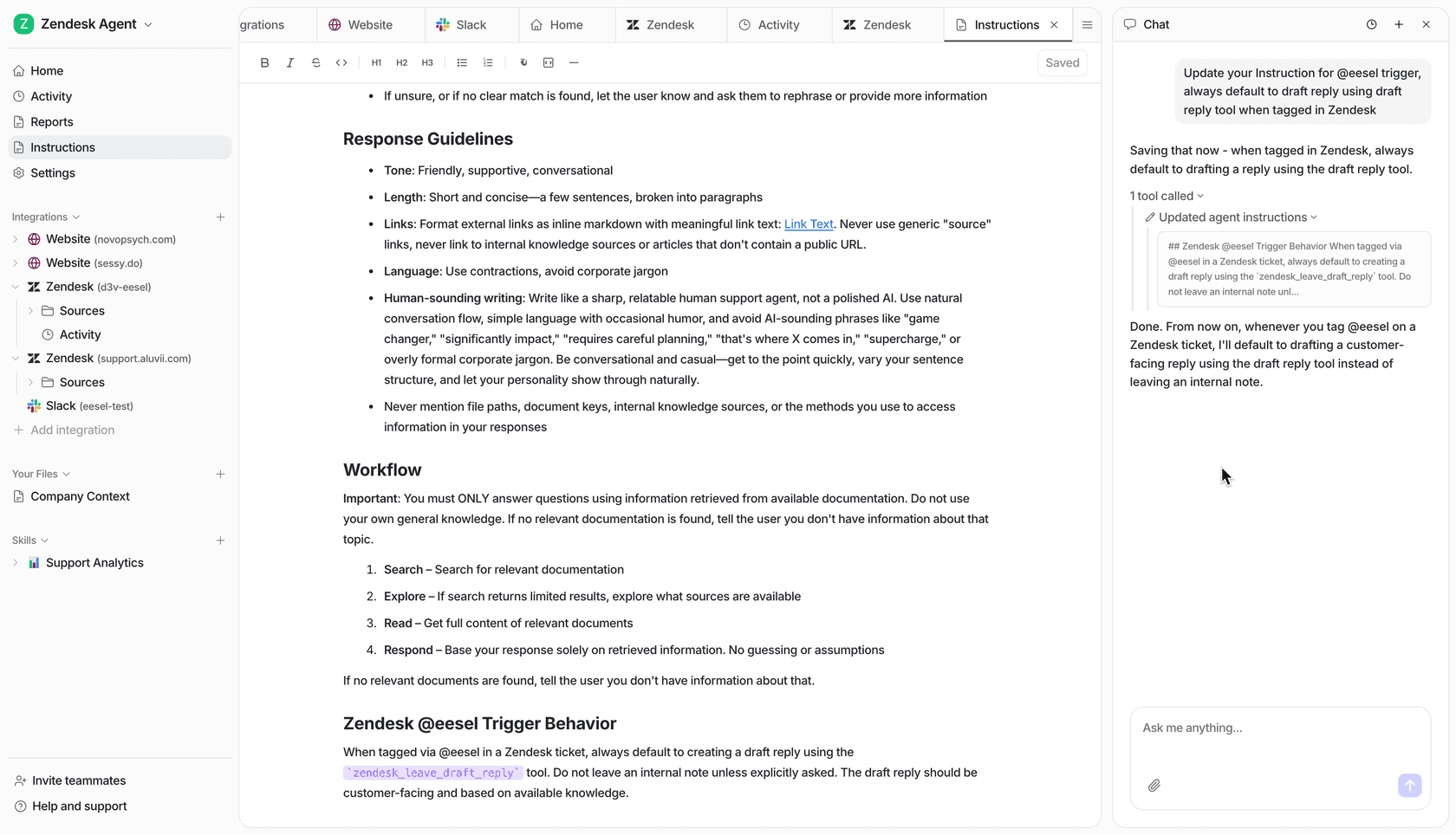
Instead of flipping a switch and hoping the AI works, you start with guidance. eesel drafts replies that your agents review before sending. You define which ticket types it handles and when it operates. As eesel proves itself, you expand its scope: sending replies directly, handling more complex issues, working 24/7, escalating only the edge cases you define.
For problem management specifically, eesel's AI Triage product tags, routes, merges, and closes tickets automatically. The AI Agent handles frontline support end-to-end. You can also explore how eesel AI works for IT service management specifically. The key difference is control: you define escalation rules and behavior in plain English rather than configuring workflows.
| Capability | Freshservice | eesel AI |
|---|---|---|
| Setup time | Weeks of configuration | Minutes to connect |
| AI included | Enterprise plan only | All plans include AI |
| Pricing model | Per agent per month | Flat rate by interactions |
| ITIL compliance | Full ITIL alignment | Flexible, not restricted |
| Control method | Workflow configuration | Plain English instructions |
| Testing | Limited simulation | Bulk simulation on past tickets |
eesel AI pricing:
| Plan | Monthly Price | Annual Price | Interactions | Key Features |
|---|---|---|---|---|
| Team | $299 | $239/month | 1,000/month | AI Copilot, Slack, basic training |
| Business | $799 | $639/month | 3,000/month | AI Agent, past ticket training, triage |
| Custom | Contact sales | Custom | Unlimited | Multi-agent orchestration, custom integrations |
Unlike Freshservice's per-agent model, eesel charges by interactions (each time the AI processes a message). This can be more predictable for teams with fluctuating ticket volumes.
Implementing AI problem management: Best practices
Whether you choose Freshservice, eesel AI, or another platform, these practices help ensure success.
Start with clear problem identification criteria. Define when an incident becomes a problem. Common triggers: more than five related incidents in a week, or any high-impact issue that repeats.
Document everything in your known error database. Every workaround and solution should be captured. This knowledge compounds over time, making future resolutions faster.
Conduct regular problem reviews. Weekly or bi-weekly meetings to review open problems, study patterns, and prioritize investigations. Some teams combine this with Change Advisory Board meetings.
Link problems to change requests. When fixes require system changes, connect problem tickets to change records. This creates an audit trail from detection through resolution.
Maintain human oversight. AI assists with pattern recognition and suggestions, but complex problems still need human judgment. The most effective implementations combine AI efficiency with human expertise.
Build feedback loops. When AI suggestions are wrong, correct them. The system learns from these corrections and improves over time.
Choosing the right AI problem management solution
The right choice depends on your organization's specific situation.
Freshservice fits when:
- You need full ITIL compliance and certification
- You are already using Freshworks products
- You want an integrated ITSM, ITOM, and ITAM platform
- You have ITIL-trained staff to configure workflows
- Budget allows for Enterprise pricing to access AI features
eesel AI fits when:
- You want AI capabilities without Enterprise pricing
- You prefer quick setup over extensive configuration
- Your team thinks in terms of "hiring a teammate" rather than "deploying a tool"
- You want to test AI on past tickets before going live
- You prefer defining behavior in plain English over workflow builders
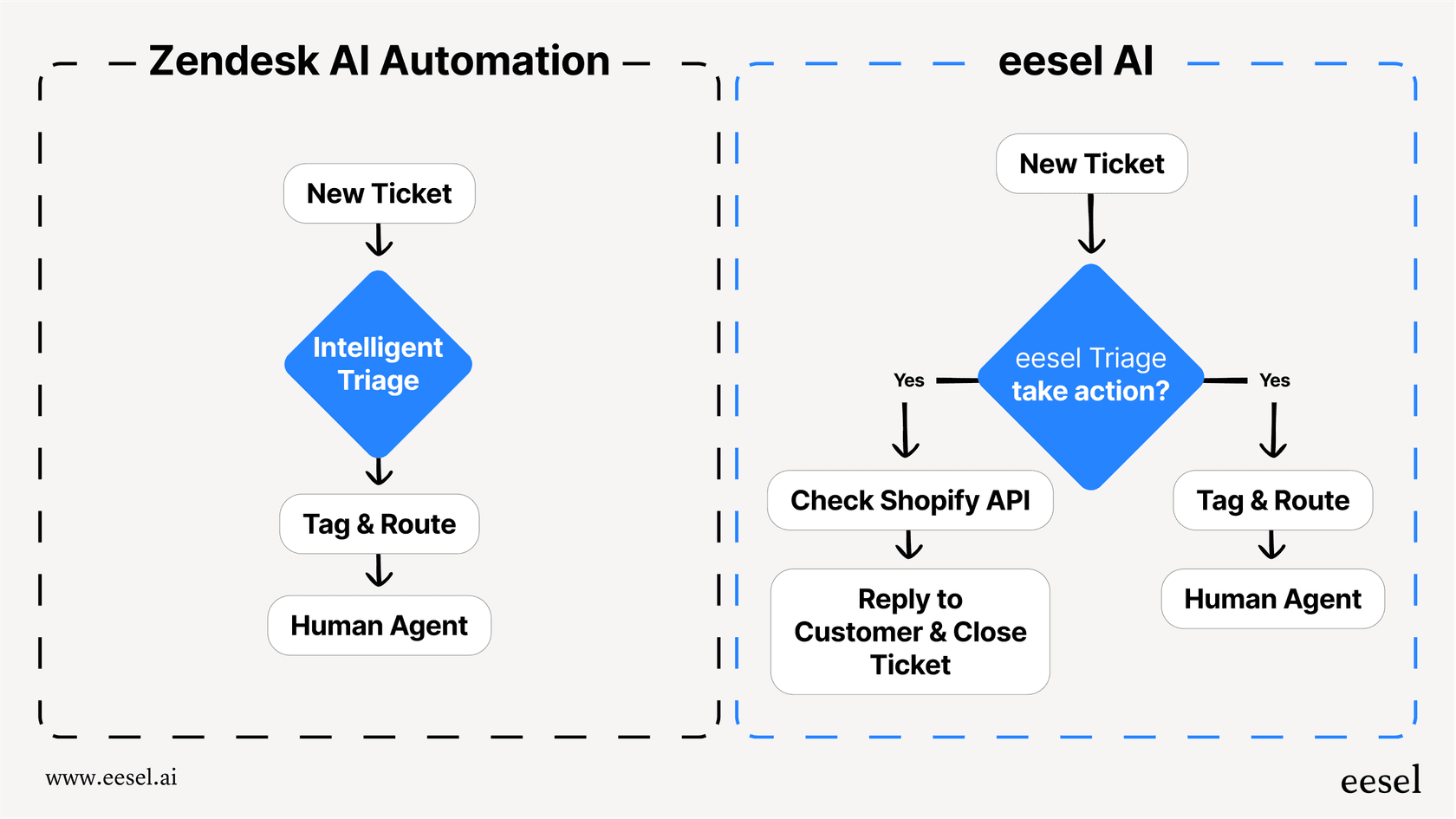
Both platforms handle problem management. The difference is philosophy: Freshservice applies AI to traditional ITSM processes, while eesel AI reimagines support around an AI-native teammate model.
If you're evaluating options, consider starting with a simulation. eesel lets you run AI against thousands of past tickets to see how it would perform before touching real customers. This "prove it first" approach reduces risk and builds confidence before full deployment. Learn more about eesel AI's approach to AI for IT operations or explore customer support automation solutions.