AI support vs in-house support: A practical comparison for 2026

Stevia Putri
Last edited March 23, 2026
Every support leader faces the same question eventually: do you build an internal AI team to handle automation, or buy a solution from a vendor? It's a strategic decision that shapes how your team operates for years.
The stakes are higher in 2026 than they've ever been. The AI market is projected to hit $1 trillion by 2030, talent is scarce, and customers expect instant, accurate responses. Make the wrong choice and you'll waste months and millions. Make the right one and you'll transform your support operation.
Most guides frame this as a binary decision. Build in-house for control. Buy outsourced for speed. But what if there's a third option? One that gives you the control of an internal team with the speed of a vendor solution? Let's break it down.
What the "build vs buy" decision really means for support teams
The classic dilemma looks simple on the surface. Building in-house means hiring data scientists, ML engineers, and support specialists who work exclusively on your AI projects. Buying means partnering with an external provider who brings pre-built technology and expertise.
But the reality is messier. Building in-house gives you control, but it also means managing recruitment, infrastructure, training, and retention. Buying gives you speed, but you trade some control and face vendor dependency risks.
The decision matters more now because AI has moved from experimental to essential. According to Bain & Company, a widening talent gap is threatening executives' AI ambitions. The competition for skilled AI professionals is fierce, and salaries reflect that reality.
This is where the traditional framing starts to break down. The choice isn't just about control versus speed. It's about finding an approach that fits your specific situation: your timeline, your budget, your risk tolerance, and your internal capabilities.
At eesel AI, we've seen teams struggle with both extremes. Some spend a year building internal capabilities only to realize they could've deployed in weeks. Others rush into vendor relationships and find themselves locked into solutions that don't quite fit. The key is understanding what you're really trading off.
The case for building an in-house AI support team
There are legitimate reasons to build internally. Full control over your AI strategy, data, and intellectual property isn't trivial. When AI is core to your competitive advantage, keeping it close makes sense.
An internal team develops deep domain knowledge. They understand your customers, your products, and your company culture in ways an external vendor never will. This translates into AI solutions that feel native to your business, not grafted on from outside.
Integration is smoother too. Your team can embed AI directly into existing workflows and systems without the friction of coordinating with an external party. For regulated industries handling sensitive data, keeping everything in-house simplifies compliance with GDPR, HIPAA, and other frameworks.
Long-term, you are building institutional knowledge. The expertise your team accumulates compounds over time. As they develop a deeper understanding of your business, they become increasingly capable of identifying new opportunities for AI integration.
But here's the reality check. Building in-house is expensive and slow. AI development costs range from $40,000 for a basic MVP to well over $4 million for advanced large language model applications. Experienced machine learning engineers command salaries that often exceed $200,000 per year.
Beyond salaries, you are looking at recruitment costs, benefits, infrastructure including cloud computing resources and specialized software licenses, and ongoing training to keep your team current. The time investment is equally significant. Recruiting, onboarding, and ramping up a team can take six months to a year before you see meaningful output.
For businesses that need to move quickly, this timeline can be a serious constraint. And if you're considering this route, it's worth looking at the best AI helpdesk tools available to understand what you'd be competing against.
The case for AI support solutions
On the flip side, partnering with an AI support provider offers immediate advantages. You skip the learning curve entirely. External teams bring pre-built frameworks, proven processes, and experienced specialists who have solved similar problems before.
Speed to value is the biggest draw. While building in-house takes months, an outsourced solution can deploy in weeks. You get access to specialized expertise without the cost of full-time hires. This is particularly valuable if you lack internal AI expertise or you're new to AI adoption.
Costs are more predictable too. Instead of runaway hiring expenses and infrastructure investments, you pay structured subscription or project fees. You convert variable internal costs into more predictable operational expenses, which simplifies budgeting.
Scalability is another benefit. Need to ramp up for a product launch? Scale down after a seasonal spike? External solutions adapt to your needs without the HR overhead of hiring and layoffs. The vendor handles continuous updates, security patches, and improvements. You benefit from their R&D investments without managing them.
The reality check here is about control and alignment. You inevitably cede some direct control over the day-to-day development process. Communication can be challenging due to geographical distance, time zone differences, or cultural nuances. External teams might lack deep understanding of your company's specific workflows or the nuances of your target market.
Vendor dependency is a real risk too. Switching providers later can require significant planning and transition time. And while upfront costs are lower, ongoing fees add up. Over a multi-year horizon, the total cost of ownership can exceed building internally.
If you're exploring this route, our AI Agent product offers a middle ground that addresses some of these concerns.
A direct comparison across what matters most
Here's how the two approaches stack up on the factors that typically drive decisions:
| Factor | In-House Team | AI Support Solution |
|---|---|---|
| Time to first result | 6-24 months | Weeks to months |
| Upfront cost | $40K-$4M+ | Lower, predictable |
| Ongoing costs | Salaries, infrastructure, training | Subscription/project fees |
| Control | Complete | Shared |
| IP ownership | Full | Negotiated |
| Expertise level | Depends on hire quality | Specialized, proven |
| Flexibility | Fixed headcount | Scale up/down |
| Best for | Core product, long-term strategy | Fast deployment, pilots |
The analysis is straightforward. If AI is central to your product and you have the resources to attract and retain top talent, building in-house builds lasting competitive advantage. You own the IP, control the roadmap, and develop deep institutional knowledge.
If you need results quickly, lack internal expertise, or want to test AI's impact before making major investments, an external solution gets you there faster with less risk. You trade some control for speed and expertise.
But here's what most comparisons miss. The hybrid approach is increasingly common for a reason. Many organizations start with external expertise to prove value and create runbooks, then gradually bring operations in-house as they build skills. Others maintain a core internal team for strategic work while outsourcing specific projects or maintenance.
The question isn't just which approach wins. It's which approach wins for your specific situation right now.
Why the binary choice might be limiting you
The traditional build versus buy framing assumes you must choose between two imperfect options. Either you sacrifice speed for control, or you sacrifice control for speed. But what if you didn't have to choose?
This is where the "AI teammate" concept changes the equation. Instead of thinking about AI as a tool you configure or a vendor you hire, think about it as a teammate you bring on board. Like any new hire, an AI teammate learns your business, starts with guidance, and levels up to work autonomously.
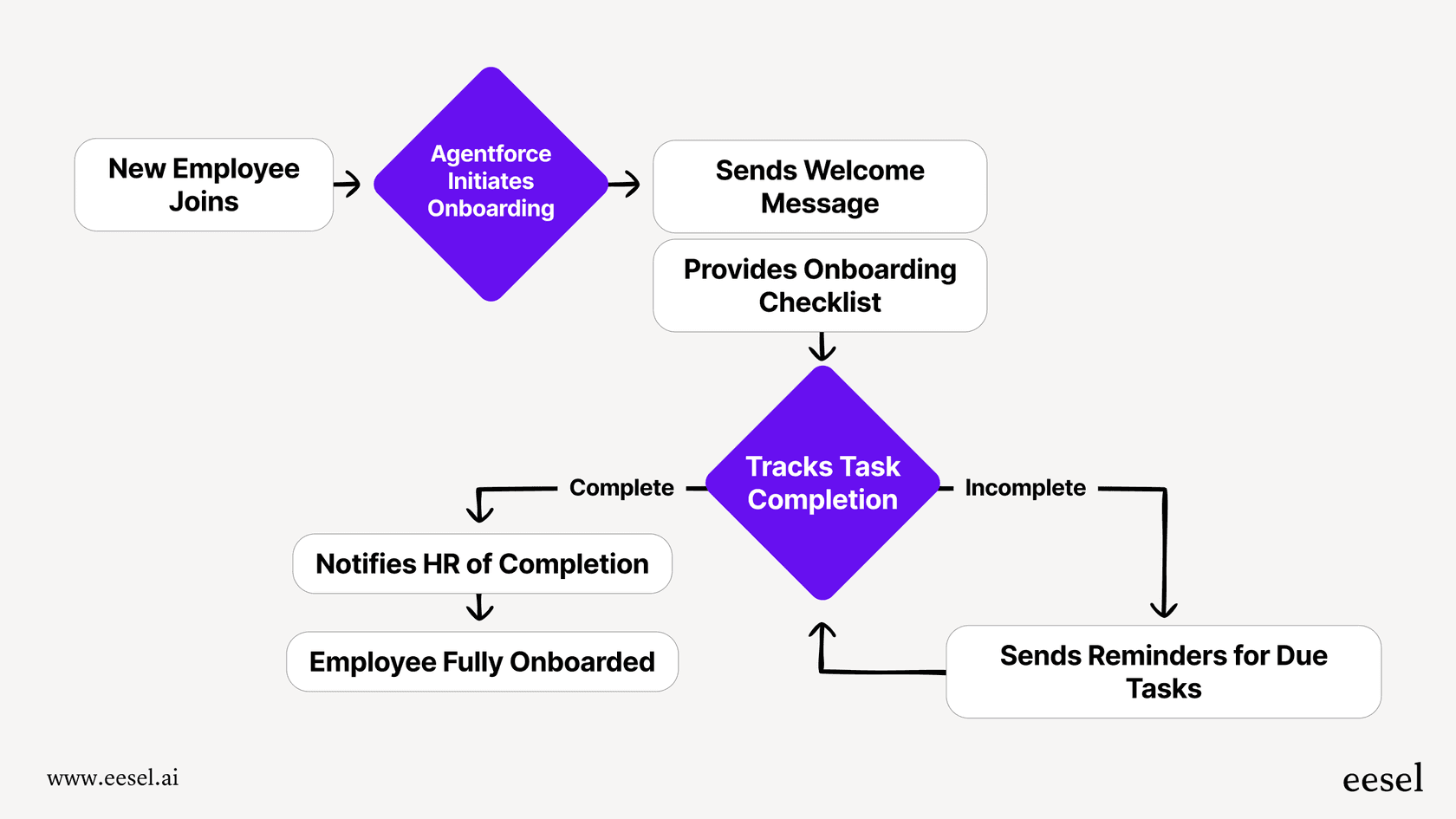
At eesel AI, we've built our entire approach around this mental model. Here's how it works:
You connect eesel to your help desk, and it immediately learns from your past tickets, help center articles, macros, and connected docs. No manual training, no documentation uploads, no configuration wizards. The AI reads your existing data and understands your business context, tone, and common issues from day one.
Like any new hire, eesel starts with oversight. You can have it draft replies that agents review before sending, limit it to specific ticket types, or set business hours when it can respond. This isn't a limitation. It's how you verify the AI understands your business before expanding its role.
As eesel proves itself, you expand its scope. Drafts become direct sends. Simple FAQs expand to full frontline support. Business hours expand to 24/7 coverage. You decide when to promote eesel based on actual performance.
The key difference is you don't need AI expertise to get started. You don't spend months recruiting. You don't manage infrastructure. But unlike a traditional vendor, you maintain direct control, and the AI continuously learns your specific context.
For more on implementing this approach, see our practical guide to AI and automation in customer support. Our pricing is structured around interactions, not seats, which means you pay for what you use rather than committing to fixed headcount.
How to decide what's right for your situation
The right choice depends on answering a few key questions honestly:
Is AI support core to your product or a supporting capability? If AI is a key differentiator for your product, building in-house protects your IP and builds lasting advantage. If it is a supporting capability that improves efficiency, external solutions or the teammate model may be a better fit.
How fast do you need results? If you're under pressure to show ROI this quarter, a 12-month hiring cycle isn't viable. External solutions or the teammate model deliver value in weeks.
What's your risk tolerance? Building in-house means owning all the risks: recruitment failures, project delays, talent departures. External solutions transfer some risk to the vendor, but introduce dependency risks. The teammate model offers a middle path: start supervised, expand based on proven performance.
Do you have (or can you attract) AI talent? Be realistic. Senior AI engineers are in high demand. If you can't offer competitive compensation and interesting projects, you'll struggle to build a strong internal team.
How sensitive is your data? For highly regulated industries, in-house may be non-negotiable. But modern AI solutions offer robust security, encryption, and compliance certifications. Evaluate specific vendors rather than assuming external equals insecure.
Red flags that suggest one approach over another:
- If your leadership expects results in 90 days, do not build in-house
- If you have no one on staff who can evaluate AI work, you need external expertise
- If AI is your core product advantage, do not outsource your differentiation
- If you cannot clearly articulate what success looks like, start with a pilot before building a team
The teammate model makes the most sense when you want the speed of a vendor solution with the contextual learning of an internal hire. It's particularly effective for support teams that need to move fast but can't afford to sacrifice quality or control.
For a deeper look at automation strategies, check out our guide to customer support automation.
Making AI support work for your team
Regardless of which approach you choose, certain factors determine success:
Clear goals and metrics. Define what success looks like before you start. Is it faster response times? Higher resolution rates? Reduced ticket volume? Specific goals let you measure progress and adjust course.
Data quality and accessibility. AI is only as good as the data it learns from. Clean, well-organized historical tickets and documentation are essential. If your data is a mess, fix that first.
Change management and team buy-in. Your human agents need to understand how AI helps them, not threatens them. Involve them early, address concerns directly, and position AI as a tool that handles routine work so they can focus on complex issues.
Continuous monitoring and iteration. AI isn't a set-it-and-forget-it solution. Models drift, customer needs change, and your business evolves. Plan for ongoing monitoring, feedback loops, and regular updates.
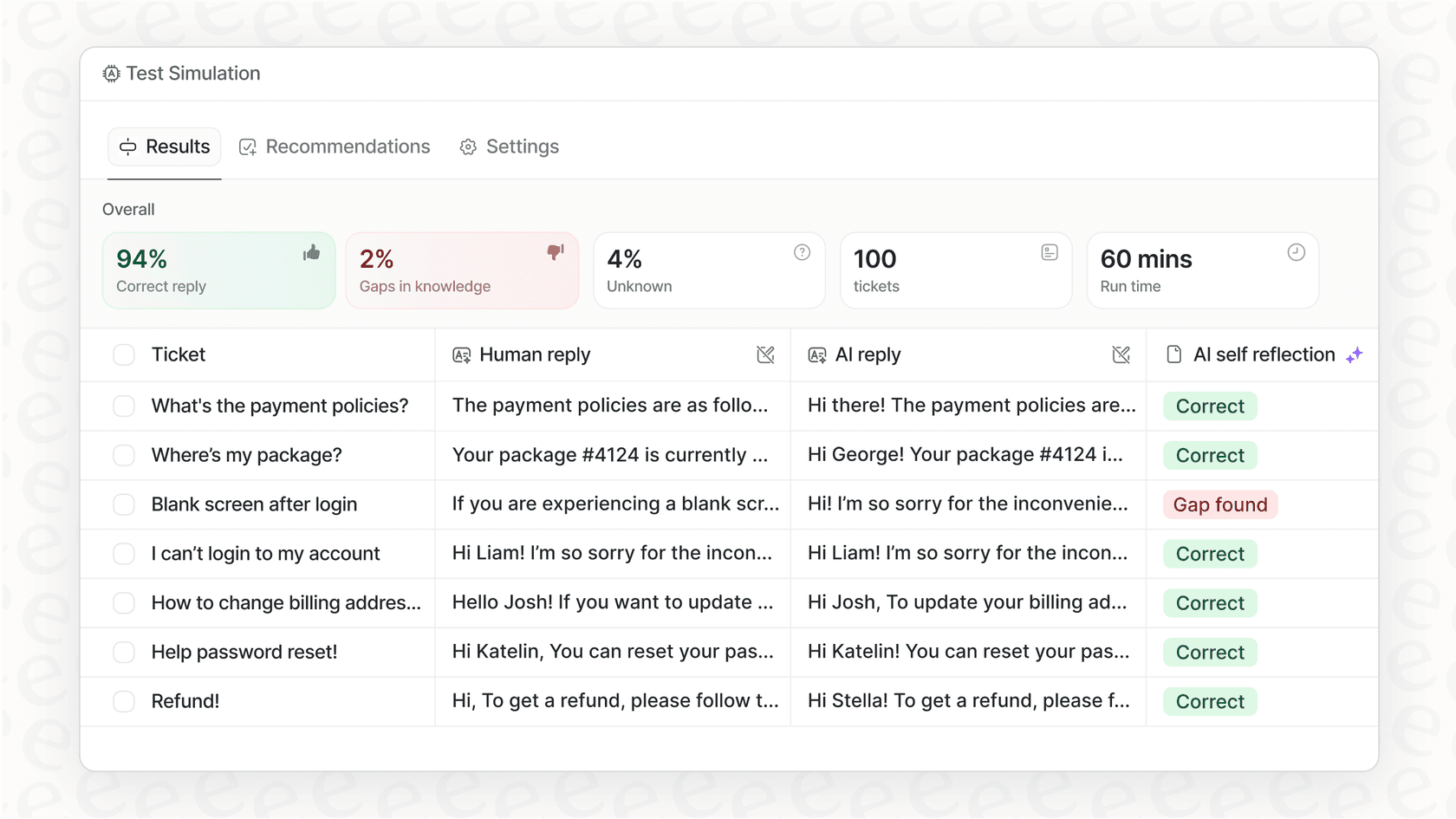
One practice that separates successful deployments from failed ones: simulation. Before going live, run your AI on historical tickets to see how it would have performed. Measure resolution rates, identify gaps, tune prompts. Gain confidence before touching real customers.
The build versus buy decision isn't permanent. Many teams start with external solutions, prove value, and gradually build internal capabilities. Others build internally for core functions and use vendors for specialized needs. The key is starting somewhere and learning fast.
If you're ready to explore the AI teammate approach, visit eesel AI to see how it works for your specific support environment. You can run simulations on your historical data, start with guided oversight, and level up to full autonomy on your own timeline.

Frequently Asked Questions
Share this article

Article by
Stevia Putri
Stevia Putri is a marketing generalist at eesel AI, where she helps turn powerful AI tools into stories that resonate. She’s driven by curiosity, clarity, and the human side of technology.